Map of Germany showing where the Rego arms are recorded
The Rego arms were recorded in Bavaria, c. 1765.
Bavaria was a country of old landed families and walled market towns. Estates passed down the same line for centuries, and both the landowners and the leading townsmen kept arms, which is why so many Bavarian names sit in the registers.
This is where the arms were entered in the register. Families often moved to other parts of the country, so the same name can turn up in more than one region.
The body that granted and recorded arms in Germany in this period.
Francis I, Holy Roman Emperor
Sovereign of the period
Francis I, Holy Roman Emperor
1745–1765
Reigning in Germany when the Rego arms are first recorded.
How Arms Worked in Germany
In the Holy Roman Empire, coats of arms were often granted to individuals by the Emperor or his representatives. These arms were then passed down through the generations to all legitimate descendants of the original holder. Younger branches of a family usually kept the same shield design without needing to change it, as the arms belonged to the entire lineage.
Granting authority
The Holy Roman Emperor held the sole power to grant new coats of arms throughout his vast imperial territories.
How they got arms
Families typically obtained their coats of arms through a formal imperial grant or by proving their noble status to the authorities.
Where arms were recorded
These grants were officially recorded in the Imperial Chancery registers, which began keeping formal records of such honors during the Middle Ages.
The family's standing
Recorded among the armigerous families of Bavaria.
Origin & History of the Rego Family in Germany
The family name Rego has deep roots in the historical landscape of Bavaria, where records confirm the presence of family members as early as 1765. During this period, Bavaria was part of the Holy Roman Empire, a time when many families were closely tied to the agricultural rhythms and local governance of their specific villages. The name itself likely evolved from regional dialects or nicknames used to identify individuals based on their occupation or their specific place of residence within the Bavarian countryside. As the family established themselves in the region, they became part of the social fabric of small towns, participating in local trade and community life. Because surnames were still becoming standardized during the eighteenth century, the Rego name served as a vital link for families to track their lineage and maintain their identity across generations in a rapidly changing German state.
Coat of Arms & Family Crest Details
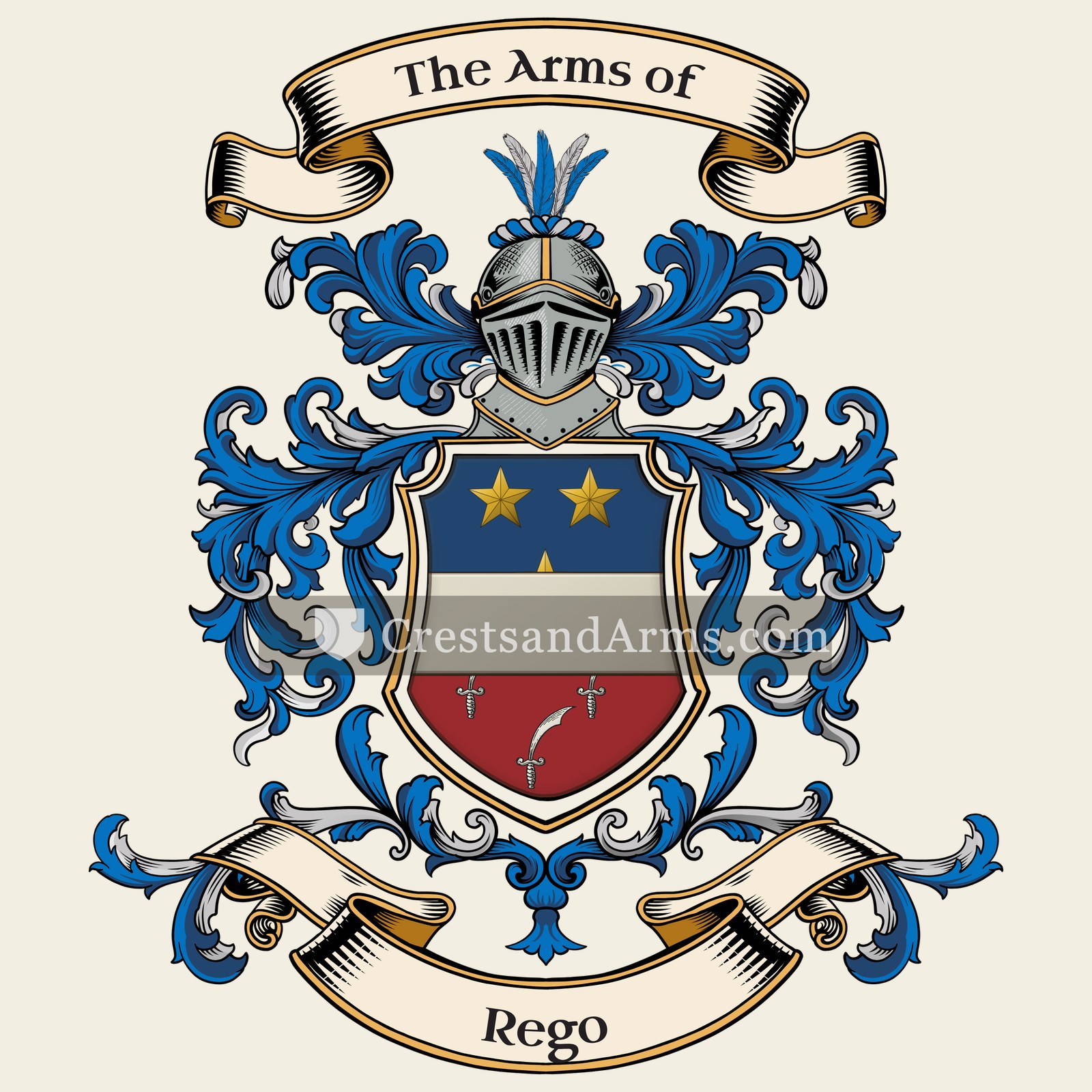
Symbols on this shield
bendDefence, and the scarf of a commander
fessThe military belt, and readiness to serve
mulletThe third son, and a divine quality from above
swordJustice, and military honour
Colours
Blue (Azure)Means: Loyalty and truth
Red (Gules)Means: Military strength
Silver (Argent)Means: Peace and sincerity
Gold (Or)Means: Generosity
Historical info
Source
J. B. Rietstap, Armorial Général, Gouda: G. B. van Goor Zonen, 1884–87
Blazon (the actual original written record)
“Coupé: au 1 d'azur à trois étoiles mal-ordonnées d'or; au 2 de gu. à trois épées d'arg., garnies d'or, posées en bandes, rangées en barre. A la fasce d'arg., br. sur le coupé.”
VeniceVenice, c. 1775
Digital archive packCoat of arms PNG, gold border print PDF, vector SVG and the certificate of authenticity. Sent to your email in minutes.
Map of Italy showing where the Rego arms are recorded
The Rego arms were recorded in Venice, c. 1775.
Venice ran on trade, and its great families were merchants before they were anything else. The city kept a formal list of its noble houses, and a name on that list carried arms as a matter of record.
This is where the arms were entered in the register. Families often moved to other parts of the country, so the same name can turn up in more than one region.
The body that granted and recorded arms in Italy in this period.
Alvise Giovanni Mocenigo
Sovereign of the period
Alvise Giovanni Mocenigo
1763–1778
Reigning in Germany when the Rego arms are first recorded.
How Arms Worked in Italy
In the Italian states, coats of arms were often used by noble families to show their status and history. These symbols were passed down through the generations to all legitimate male descendants. Younger branches of a family usually kept the original design but sometimes added small changes to distinguish their specific line from the main branch.
Granting authority
Various local rulers and city governments controlled the use of coats of arms across the different Italian states.
How they got arms
Families often assumed their own arms or received them as official grants from local lords, popes, or city councils.
Where arms were recorded
Arms were recorded in local city archives or private family books rather than in one single national register.
The family's standing
Recorded among the armigerous families of Venice.
Origin & History of the Rego Family in Italy
The history of the Rego family in Italy is deeply connected to the vibrant social and commercial life of Venice during the late eighteenth century. By 1775, members of the family were established within the Venetian Republic, a period when the city served as a major hub for Mediterranean trade and cultural exchange. The name likely evolved as a localized variation of regional terms, potentially linked to the Latin word *regere*, which implies leadership or guidance. During this era, families like the Regos often integrated into the city’s complex administrative and merchant classes, contributing to the daily operations of a society defined by its maritime power. Living in Venice allowed the family to participate in a unique urban environment where artistic innovation and international diplomacy were part of everyday life. This historical presence highlights the family's role as part of the diverse population that sustained the Venetian state before the political shifts of the nineteenth century.
Related Branches & Arms
Root word
Regen
Derived from the Germanic word for rain or counsel.
This name
RegoA topographic name for someone living near a rain-fed stream or a descendant of a wise counselor.
also spelled
Regao
Rego
Regaux
Documented Sources
J. B. Rietstap, Armorial Général, Gouda: G. B. van Goor Zonen, 1884–87


 stagPeace and harmony, and one who will not fight unprovoked
 stagPeace and harmony, and one who will not fight unprovoked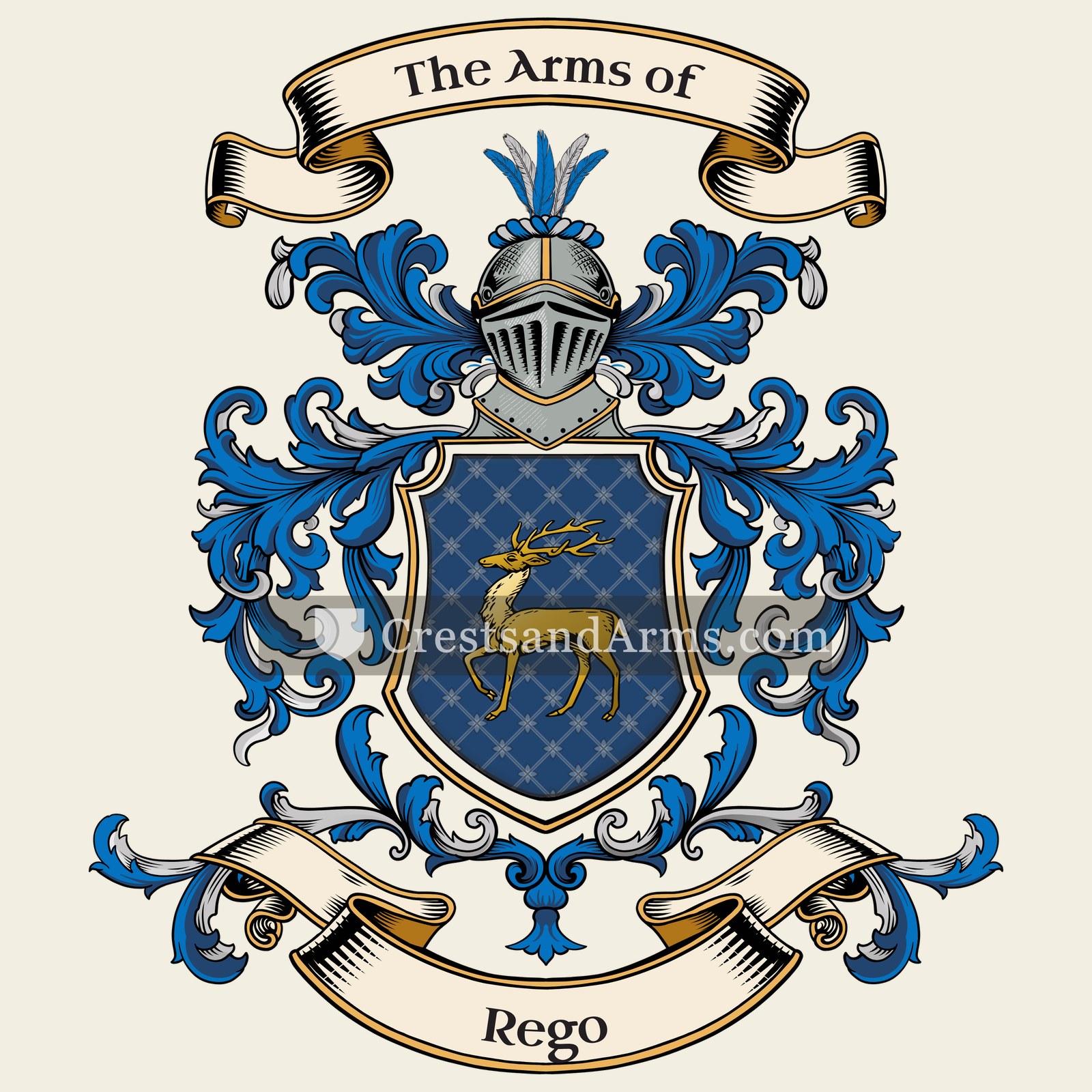


 bendDefence, and the scarf of a commander
 fessThe military belt, and readiness to serve
 mulletThe third son, and a divine quality from above
 swordJustice, and military honour