Map of Poland showing where the Rehbock arms are recorded
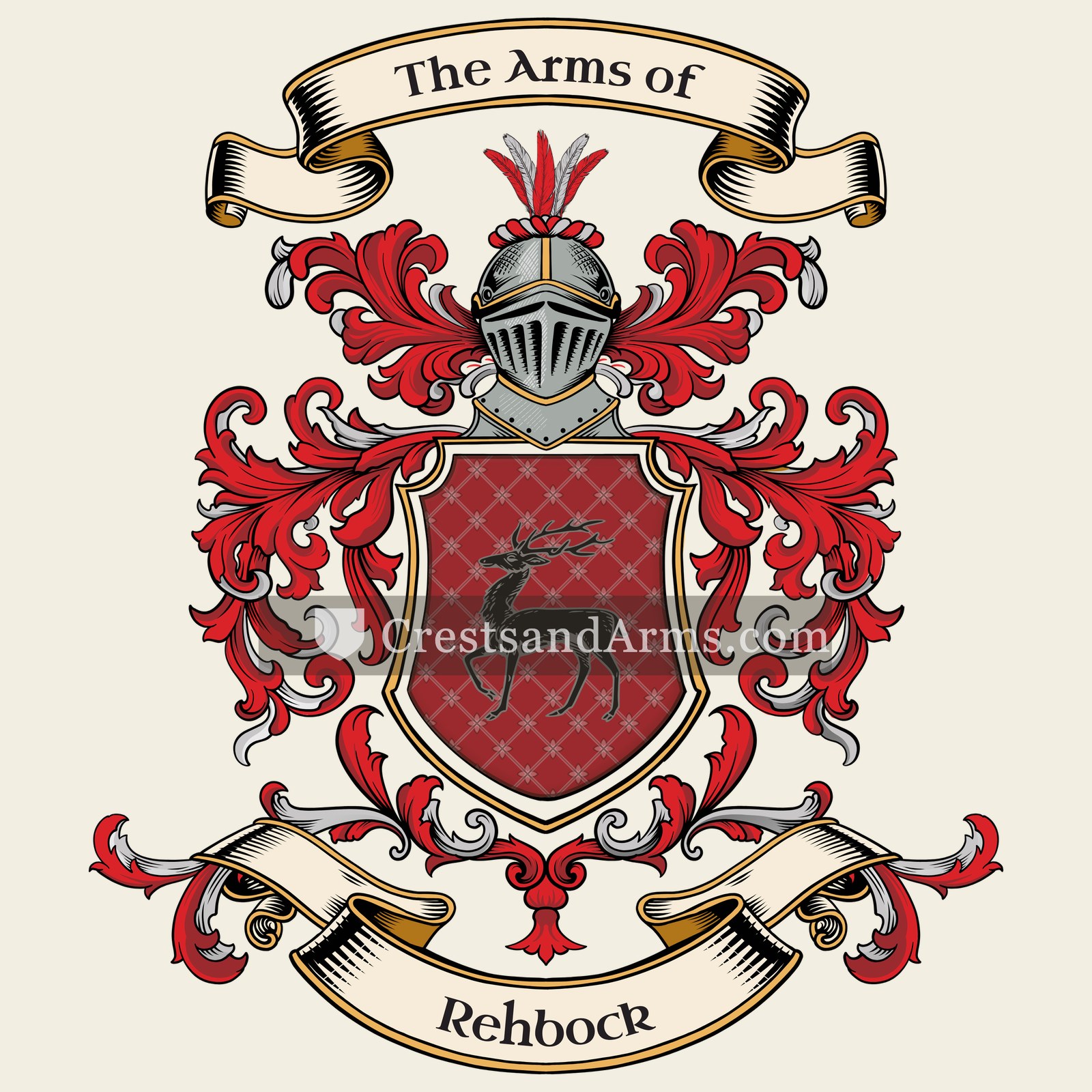
The Rehbock arms were recorded in Livonia, c. 1772.
Livonia was Baltic country held by a small number of landed families who kept their estates for centuries. Land there passed down whole rather than being divided, and long unbroken tenure is what fills a register.
This is where the arms were entered in the register. Families often moved to other parts of the country, so the same name can turn up in more than one region.
Region
Livonia
First recorded
1772
Granting Authority for the Rehbock Arms
Ennoblement by the Sejm
Author: Olek Remesz · CC BY-SA 3.0
The body that granted and recorded arms in Poland in this period.
Stanisław August Poniatowski
Sovereign of the period
Stanisław August Poniatowski
1764–1795
Reigning in Poland when the Rehbock arms are first recorded.
How Arms Worked in Poland
Polish noble families shared a single coat of arms across many different surnames, creating large clans rather than individual designs. These symbols were held collectively by all members of the clan regardless of their specific family name. When a new family joined the nobility, they were adopted into an existing clan and began using that group's established shield.
Granting authority
The Sejm, which was the Polish parliament, held the power to grant noble status and the right to bear arms.
How they got arms
Families typically received their coat of arms through a formal act of ennoblement granted by the Sejm for distinguished service.
Where arms were recorded
These grants were officially recorded in the Crown Metrica, which served as the central archive for state documents starting in the sixteenth century.
The family's standing
Recorded among the armigerous families of Livonia.
Origin & History of the Rehbock Family in Poland
The name Rehbock is a German occupational or descriptive surname that translates literally to roebuck, which is a type of small deer. Families carrying this name likely earned it through a connection to the land, perhaps as hunters, foresters, or people who lived near areas where these animals were common. By 1772, records confirm that members of the Rehbock family were established in Livonia, a historical region that spanned parts of modern-day Estonia and Latvia. During this period, Livonia was a melting pot of Baltic German, Estonian, and Latvian cultures under the influence of the Russian Empire. The presence of the family in this region suggests they were part of the German-speaking minority that often served in administrative, clerical, or land-owning roles within the Baltic provinces. Over time, the family adapted to the unique social and political landscape of the Baltic frontier while maintaining their Germanic roots.
Related Branches & Arms
Root word
Reh + Bock
German words for deer and male goat or buck.
This name
RehbockA descriptive surname referring to a roe deer buck, likely used as a nickname for a swift person.
also spelled
Rehboc
Rehbok
Documented Sources
J. B. Rietstap, Armorial Général, Gouda: G. B. van Goor Zonen, 1884–87
Bahlow, Hans, Deutsches Namenlexikon: Familien- und Vornamen nach Ursprung und Sinn erklärt, 1967
Hupel, August Wilhelm, Topographische Nachrichten von Lief- und Ehstland, 1774
Kasekamp, Andres, A History of the Baltic States, 2010
National Archives of Estonia (Eesti Rahvusarhiiv), Livonian Consistory Records (Liivimaa konsistooriumi fond)
Digital archive packCoat of arms PNG, gold border print PDF, vector SVG and the certificate of authenticity. Sent to your email in minutes.


 stagPeace and harmony, and one who will not fight unprovoked
 stagPeace and harmony, and one who will not fight unprovoked