Map of Germany showing where the Rezin arms are recorded
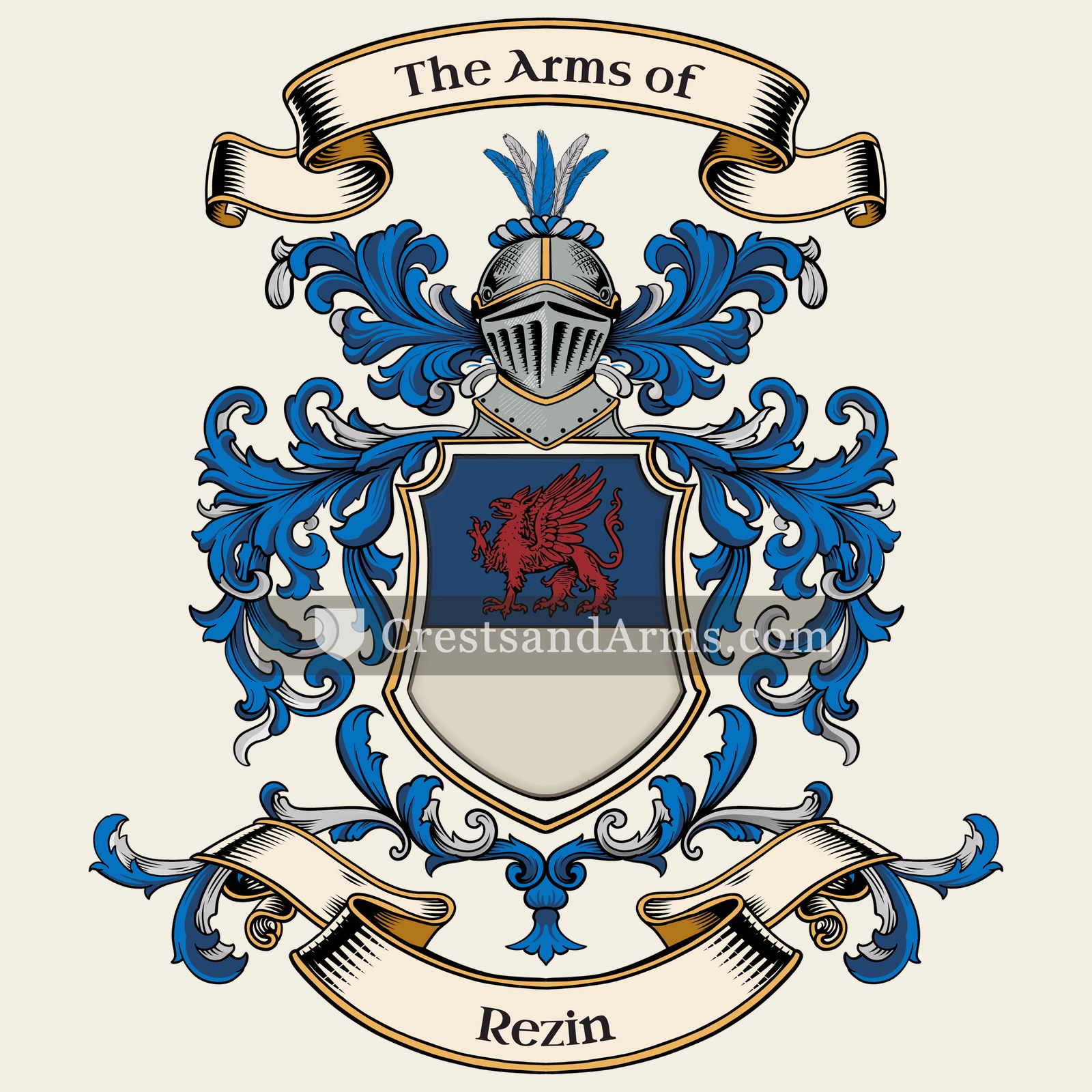
The Rezin arms were recorded in Pomerania, c. 1765.
Pomerania was flat farming country on the Baltic coast, held in large estates by a small number of families. They kept their land for generations, and generations of landholding is what fills the registers.
This is where the arms were entered in the register. Families often moved to other parts of the country, so the same name can turn up in more than one region.
The body that granted and recorded arms in Germany in this period.
Francis I, Holy Roman Emperor
Sovereign of the period
Francis I, Holy Roman Emperor
1745–1765
Reigning in Germany when the Rezin arms are first recorded.
How Arms Worked in Germany
In the Holy Roman Empire, coats of arms were often granted to individuals by the Emperor or his representatives. These arms were then passed down through the generations to all legitimate descendants of the original holder. Younger branches of a family usually kept the same shield design without needing to change it, as the arms belonged to the entire lineage.
Granting authority
The Holy Roman Emperor held the sole power to grant new coats of arms throughout his vast imperial territories.
How they got arms
Families typically obtained their coats of arms through a formal imperial grant or by proving their noble status to the authorities.
Where arms were recorded
These grants were officially recorded in the Imperial Chancery registers, which began keeping formal records of such honors during the Middle Ages.
The family's standing
Recorded among the armigerous families of Pomerania.
Origin & History of the Rezin Family in Germany
The family name Rezin finds its historical roots in the region of Pomerania, a coastal area along the Baltic Sea that was historically divided between German and Polish cultural influences. By 1765, records confirm that members of the Rezin family were established residents within this territory, likely working as farmers or tradespeople in the rural landscape. The name itself is thought to be derived from older Slavic or Germanic linguistic roots, which often identified people by their location or their occupation. During the eighteenth century, Pomerania was a place of significant social change and migration, as families navigated the complex political shifts between the Kingdom of Prussia and surrounding powers. Because the region was a crossroads for trade and agriculture, the Rezin family lived in a society that valued land ownership and local community ties. This early presence in Pomerania suggests that the family was part of the foundational population that helped shape the development of the region during the late modern period.
Related Branches & Arms
Root word
Regin
Old Germanic term meaning counsel or advice.
This name
RezinDerived from a Germanic personal name meaning wise counselor or advisor.
also spelled
Rexyn
Rexen
Documented Sources
J. B. Rietstap, Armorial Général, Gouda: G. B. van Goor Zonen, 1884–87
Landesarchiv Greifswald, Generalhufenklassifikation von Vorpommern
Archiwum Państwowe w Szczecinie, Akta miasta Szczecina
Heitz, Gerhard, Ländliche Struktur und sozialer Wandel in Vorpommern vom 14. bis zum 19. Jahrhundert, 1954
Brückner, Alexander, Die Slaven in Deutschland, 1884
Digital archive packCoat of arms PNG, gold border print PDF, vector SVG and the certificate of authenticity. Sent to your email in minutes.


 griffinValour and vigilance, guarding great treasure
 griffinValour and vigilance, guarding great treasure