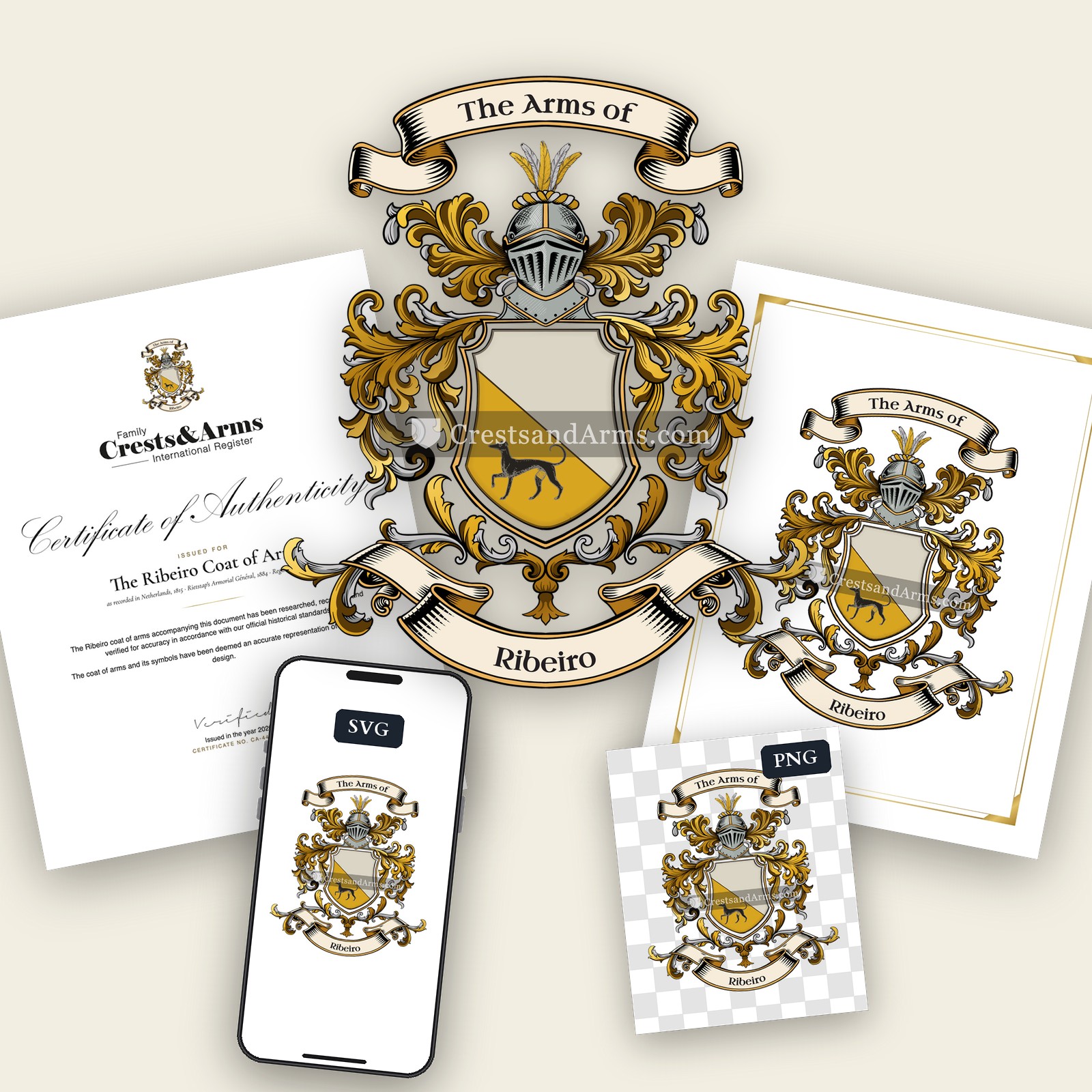
A record of documented arms, meaning and origin, researched for the Ribeiro family lines. Documented in 2 countries.
Reg. 4443 · Dutch, P–S
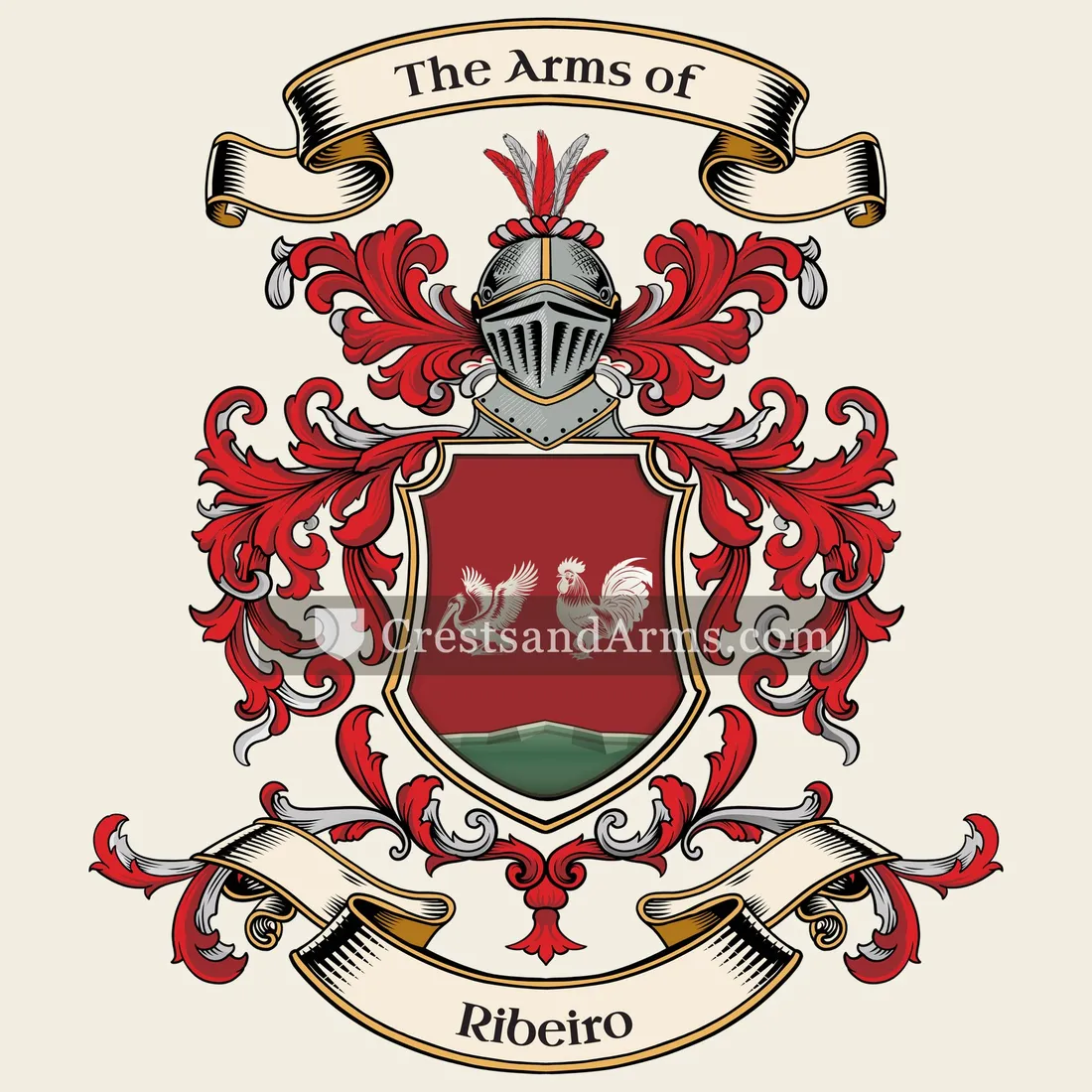
Meaning of the Ribeiro family crest colors & symbols
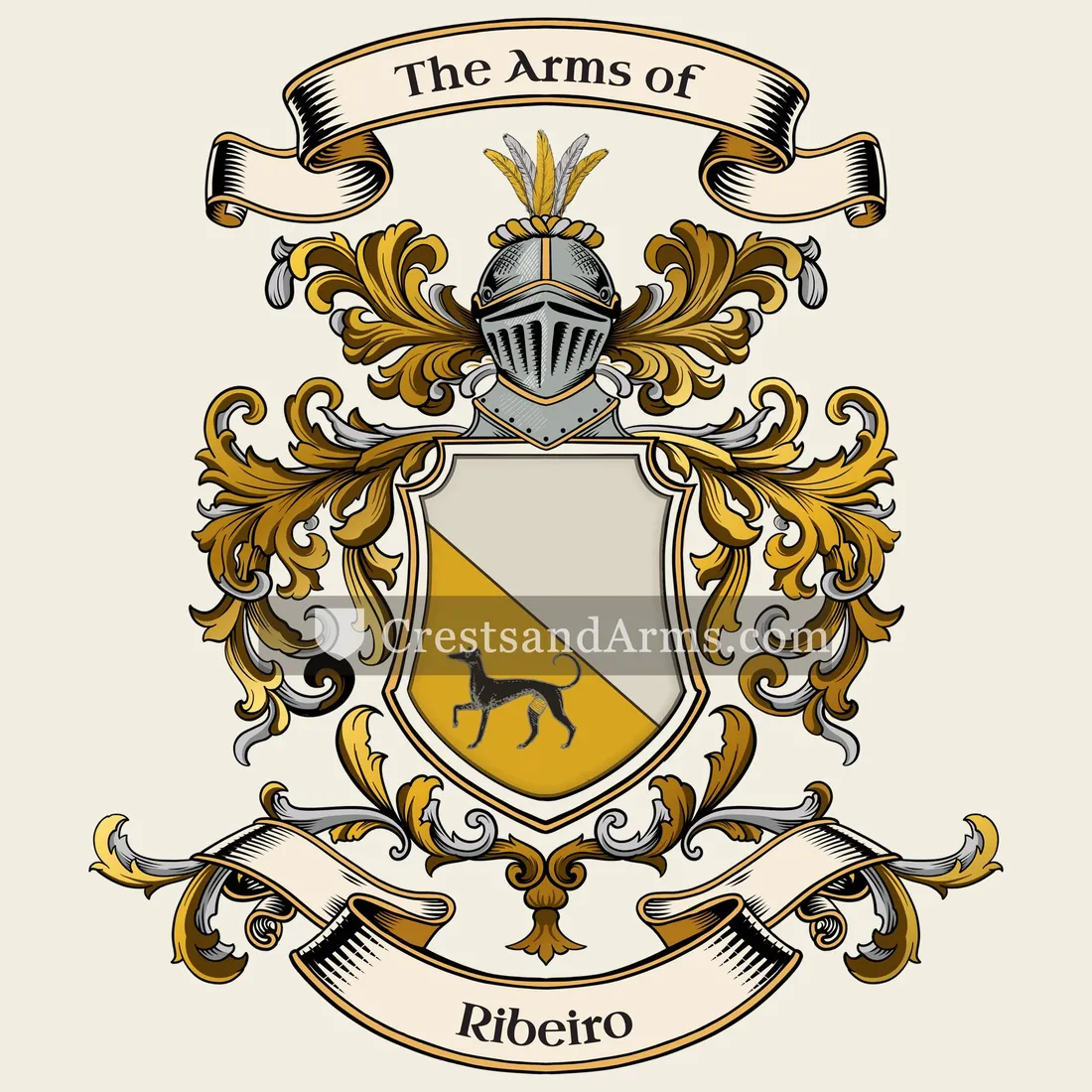
Symbols on this shield
greyhoundCourage, vigilance and loyalty
Colours
Gold (Or)Means: Generosity
Silver (Argent)Means: Peace and sincerity
Black (Sable)Means: Constancy
Historical info
Source
J. B. Rietstap, Armorial Général, Gouda: G. B. van Goor Zonen, 1884–87
Blazon (the actual original written record)
“Taillé d'or sur arg.; à un chien ramp. taillé de sa. sur l'or et de gu., sur l'arg., coll. d'or. C.: le chien, iss., entre deux prob. coupées, à dextre d'or sur sa., à sen. d'arg. sur sa. L.: à dextre d'or et de sa., à sen. d'arg. et de gu.”
Netherlandsc. 1815
Digital archive packCoat of arms PNG, gold border print PDF, vector SVG and the certificate of authenticity. Sent to your email in minutes.
Map of Netherlands showing where the Ribeiro arms are recorded
The Ribeiro arms were recorded in Netherlands, c. 1815.
Arms such as these were typically recorded in Friesland.
Friesland was low, wet country on the northern coast of the Netherlands, farmed by families who had held the same land for centuries. Free landholders were unusually common there, and a free landholder could carry arms.
This is where the arms were entered in the register. Families often moved to other parts of the country, so the same name can turn up in more than one region.
Region
Friesland
First recorded
1815
Granting Authority for the Ribeiro Arms
Hoge Raad van Adel
Photograph made by me · CC BY-SA 3.0
The body that granted and recorded arms in Netherlands in this period.
William I of the Netherlands
Sovereign of the period
William I of the Netherlands
1815–1840
Reigning in Netherlands when the Ribeiro arms are first recorded.
How Arms Worked in Netherlands
In the Netherlands, coats of arms were often used by noble families and those who held specific public offices. These arms were passed down through the generations to legitimate descendants. Younger branches of a family usually kept the original design without needing to add special marks. This system ensured that the family identity remained clear and consistent over many years.
Granting authority
The Hoge Raad van Adel is the official body that regulates and manages noble titles and coats of arms in the Netherlands.
How they got arms
Families typically obtained their coats of arms through official royal grants or by proving their long-standing historical use of the symbols.
Where arms were recorded
Coats of arms are officially recorded in the registers held by the Hoge Raad van Adel, which began its work in 1814.
The family's standing
Recorded among the armigerous families of Netherlands.
Origin & History of the Ribeiro Family in Netherlands
The surname Ribeiro is traditionally of Portuguese origin, meaning by the river, but its presence in the Netherlands offers a unique glimpse into the movement of people during the early nineteenth century. By 1815, records confirm that members of the family had established themselves in the province of Friesland. This period was a time of significant administrative change in the Netherlands, as the country transitioned into the United Kingdom of the Netherlands following the Napoleonic Wars. It is likely that these early ancestors arrived in the region due to shifting trade routes or military movements that brought individuals from across Europe into the northern provinces. Once settled in Friesland, the family integrated into the local society, adapting to the Dutch naming customs and legal requirements of the era. Their presence in this specific northern region highlights how families with roots in southern Europe could relocate and build new lives in the distinct cultural landscape of the Dutch countryside.
Meaning of the Ribeiro family crest colors & symbols
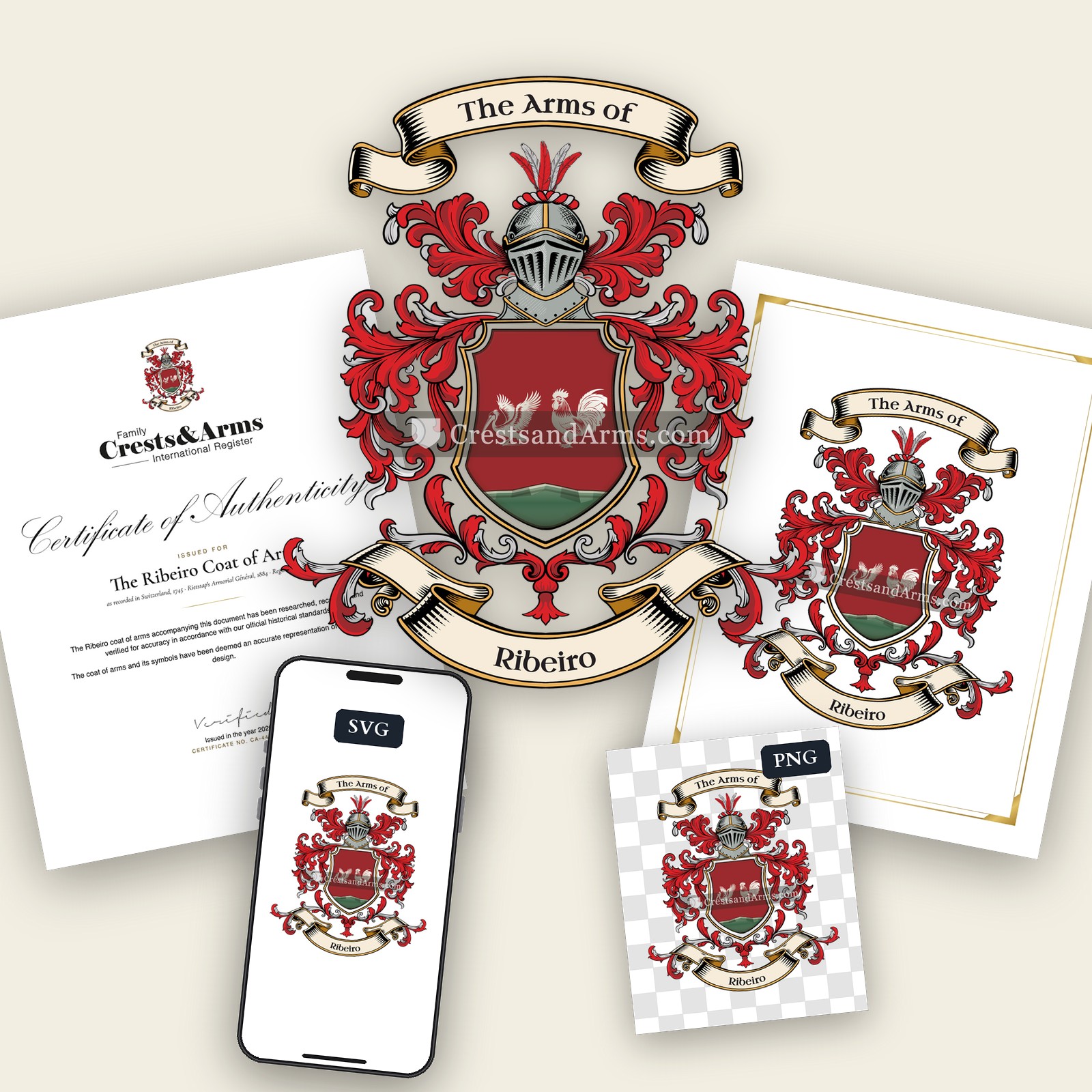
Symbols on this shield
mountThe ground held, and steadfastness upon it
pelicanSelf-sacrifice and devotion to one's children
cockCourage, vigilance and readiness for battle
Colours
Red (Gules)Means: Military strength
Green (Vert)Means: Hope
Silver (Argent)Means: Peace and sincerity
Historical info
Source
J. B. Rietstap, Armorial Général, Gouda: G. B. van Goor Zonen, 1884–87
Blazon (the actual original written record)
“De gu. à un pélican d'arg., bq. et m. d'or, se becquetant la poitrine, avec ses petits d'arg. sur une terrasse de sin. C.: un pélican iss. d'arg., bq. d'or, se becquetant la poitrine.”
SwitzerlandBâle, c. 1745
Digital archive packCoat of arms PNG, gold border print PDF, vector SVG and the certificate of authenticity. Sent to your email in minutes.
Map of Switzerland showing where the Ribeiro arms are recorded
The Ribeiro arms were recorded in Bâle, c. 1745.
This is where the arms were entered in the register. Families often moved to other parts of the country, so the same name can turn up in more than one region.
The body that granted and recorded arms in Switzerland in this period.
How Arms Worked in Switzerland
In Switzerland, coats of arms were not restricted to the nobility and were often adopted by common citizens and families. These symbols were passed down through generations to show family identity. When branches of a family grew, they often changed small details of the design to distinguish their own line from the original group.
Granting authority
Cantonal and civic authorities managed the use of coats of arms within their specific regions and local jurisdictions.
How they got arms
Families typically assumed their own coats of arms based on local custom rather than receiving them from a central monarch.
Where arms were recorded
Arms were recorded in various cantonal and civic registers starting from the fourteenth century throughout the Swiss region.
The family's standing
Recorded among the armigerous families of Switzerland.
Origin & History of the Ribeiro Family in Switzerland
The surname Ribeiro originates from the Portuguese language and translates to someone who lived near a riverbank. While the name is deeply rooted in the Iberian Peninsula, its presence in Switzerland marks an interesting chapter of migration and integration. By 1745, records confirm that members of the Ribeiro family were established in the city of Bâle. At this time, Bâle was a thriving center for trade and intellectual exchange, attracting merchants and skilled workers from across Europe. Families like the Ribeiros often arrived in Swiss cities seeking new economic opportunities or fleeing political instability in their home countries. Once they settled in Bâle, these early family members became part of the local social fabric, adapting their traditions to the customs of their new home while maintaining the distinct identity of their ancestral name.
Ribeiro Meaning & Related Branches
Root word
riparius
Latin term referring to someone living on the bank of a river.
This name
RibeiroA topographic surname for a person who resided near a riverbank or stream.
also spelled
Reeber
Documented Sources
J. B. Rietstap, Armorial Général, Gouda: G. B. van Goor Zonen, 1884–87
Tresoar (Fries Historisch en Letterkundig Centrum), Burgerlijke Stand van Friesland (1811-1950)
Noordhoff, L.J., De bevolking van Friesland in de negentiende eeuw, 1972
Digital archive packCoat of arms PNG, gold border print PDF, vector SVG and the certificate of authenticity. Sent to your email in minutes.


 greyhoundCourage, vigilance and loyalty
 greyhoundCourage, vigilance and loyalty


 mountThe ground held, and steadfastness upon it
 pelicanSelf-sacrifice and devotion to one's children
 cockCourage, vigilance and readiness for battle