A record of documented arms, meaning and origin, researched for the Rieve family lines. Documented in 3 countries.
Reg. 9660 · Dutch, P–S
Coat of Arms & Family Crest Details
Symbols on this shield
bendDefence, and the scarf of a commander
greyhoundCourage, vigilance and loyalty
Colours
Silver (Argent)Means: Peace and sincerity
Black (Sable)Means: Constancy
Historical info
Source
J. B. Rietstap, Armorial Général, Gouda: G. B. van Goor Zonen, 1884–87
Blazon (the actual original written record)
“D'arg. à un lévrier ramp. de sa., coll. d'or. Cq. cour. C.: un vol d'arg., l'aile dextre ch. d'une barre de sa. et l'aile sen. d'une bande du même (Arm.v.G.)”
Netherlandsc. 1815
Digital archive packCoat of arms PNG, gold border print PDF, vector SVG and the certificate of authenticity. Sent to your email in minutes.
Map of Netherlands showing where the Rieve arms are recorded
The Rieve arms were recorded in Netherlands, c. 1815.
Arms such as these were typically recorded in Friesland.
Friesland was low, wet country on the northern coast of the Netherlands, farmed by families who had held the same land for centuries. Free landholders were unusually common there, and a free landholder could carry arms.
This is where the arms were entered in the register. Families often moved to other parts of the country, so the same name can turn up in more than one region.
Region
Friesland
First recorded
1815
Granting Authority for the Rieve Arms
Hoge Raad van Adel
Photograph made by me · CC BY-SA 3.0
The body that granted and recorded arms in Netherlands in this period.
William I of the Netherlands
Sovereign of the period
William I of the Netherlands
1815–1840
Reigning in Netherlands when the Rieve arms are first recorded.
How Arms Worked in Netherlands
In the Netherlands, coats of arms were often used by noble families and those who held specific public offices. These arms were passed down through the generations to legitimate descendants. Younger branches of a family usually kept the original design without needing to add special marks. This system ensured that the family identity remained clear and consistent over many years.
Granting authority
The Hoge Raad van Adel is the official body that regulates and manages noble titles and coats of arms in the Netherlands.
How they got arms
Families typically obtained their coats of arms through official royal grants or by proving their long-standing historical use of the symbols.
Where arms were recorded
Coats of arms are officially recorded in the registers held by the Hoge Raad van Adel, which began its work in 1814.
The family's standing
Recorded among the armigerous families of Netherlands.
Origin & History of the Rieve Family in Netherlands
The family name Rieve has deep roots in the northern regions of the Netherlands, particularly within the province of Friesland. By the early 19th century, records confirm that members of the family were well-established in this area, which was a time of significant transition for the Dutch population. During this period, the Napoleonic administration mandated that all citizens adopt fixed surnames to improve census accuracy and tax collection. While the name Rieve likely evolved from older Germanic naming traditions or local geographical descriptors, its presence in Friesland by 1815 suggests the family was part of a stable, land-holding, or trade-oriented class that helped shape the local community. These early ancestors lived through a time when the Netherlands was transforming into a modern kingdom, and their documented presence serves as a vital link to the social and administrative history of the Frisian people.
Coat of Arms & Family Crest Details
Symbols on this shield
bendDefence, and the scarf of a commander
bearStrength, cunning and protection of kin
Colours
Gold (Or)Means: Generosity
Red (Gules)Means: Military strength
Black (Sable)Means: Constancy
Historical info
Source
J. B. Rietstap, Armorial Général, Gouda: G. B. van Goor Zonen, 1884–87
Blazon (the actual original written record)
“D'or à la bande de gu., ch. d'un ours pass. de sa.”
Switzerlandc. 1745
Digital archive packCoat of arms PNG, gold border print PDF, vector SVG and the certificate of authenticity. Sent to your email in minutes.
Map of Switzerland showing where the Rieve arms are recorded
The Rieve arms were recorded in Switzerland, c. 1745.
Arms such as these were typically recorded in Bern.
Bern was the largest of the Swiss cantons and ran itself, with its own council and its own courts. Its governing families held office for generations, and office of that kind carried a shield with it.
This is where the arms were entered in the register. Families often moved to other parts of the country, so the same name can turn up in more than one region.
The body that granted and recorded arms in Switzerland in this period.
How Arms Worked in Switzerland
In Switzerland, coats of arms were not restricted to the nobility and were often adopted by common citizens and families. These symbols were passed down through generations to show family identity. When branches of a family grew, they often changed small details of the design to distinguish their own line from the original group.
Granting authority
Cantonal and civic authorities managed the use of coats of arms within their specific regions and local jurisdictions.
How they got arms
Families typically assumed their own coats of arms based on local custom rather than receiving them from a central monarch.
Where arms were recorded
Arms were recorded in various cantonal and civic registers starting from the fourteenth century throughout the Swiss region.
The family's standing
Recorded among the armigerous families of Switzerland.
Origin & History of the Rieve Family in Switzerland
The family name Rieve has deep roots in the Swiss canton of Bern, where records confirm members of the family were established by the year 1745. During this period, Bern was a powerful city-state governed by a strict social structure, and families like the Rieves were often integrated into the local agricultural or craft-based economy. The name itself is thought to be linked to the regional dialects of the German-speaking areas of Switzerland, possibly relating to local geography or specific trade roles held by ancestors. Living in Bern during the mid-18th century meant that the family was part of a society undergoing significant growth and transition as the city solidified its influence over the surrounding countryside. By maintaining a presence in this region, the Rieve family became part of the long-standing demographic history of the Swiss plateau, contributing to the local culture and community life that defined the era.
Coat of Arms & Family Crest Details
Symbols on this shield
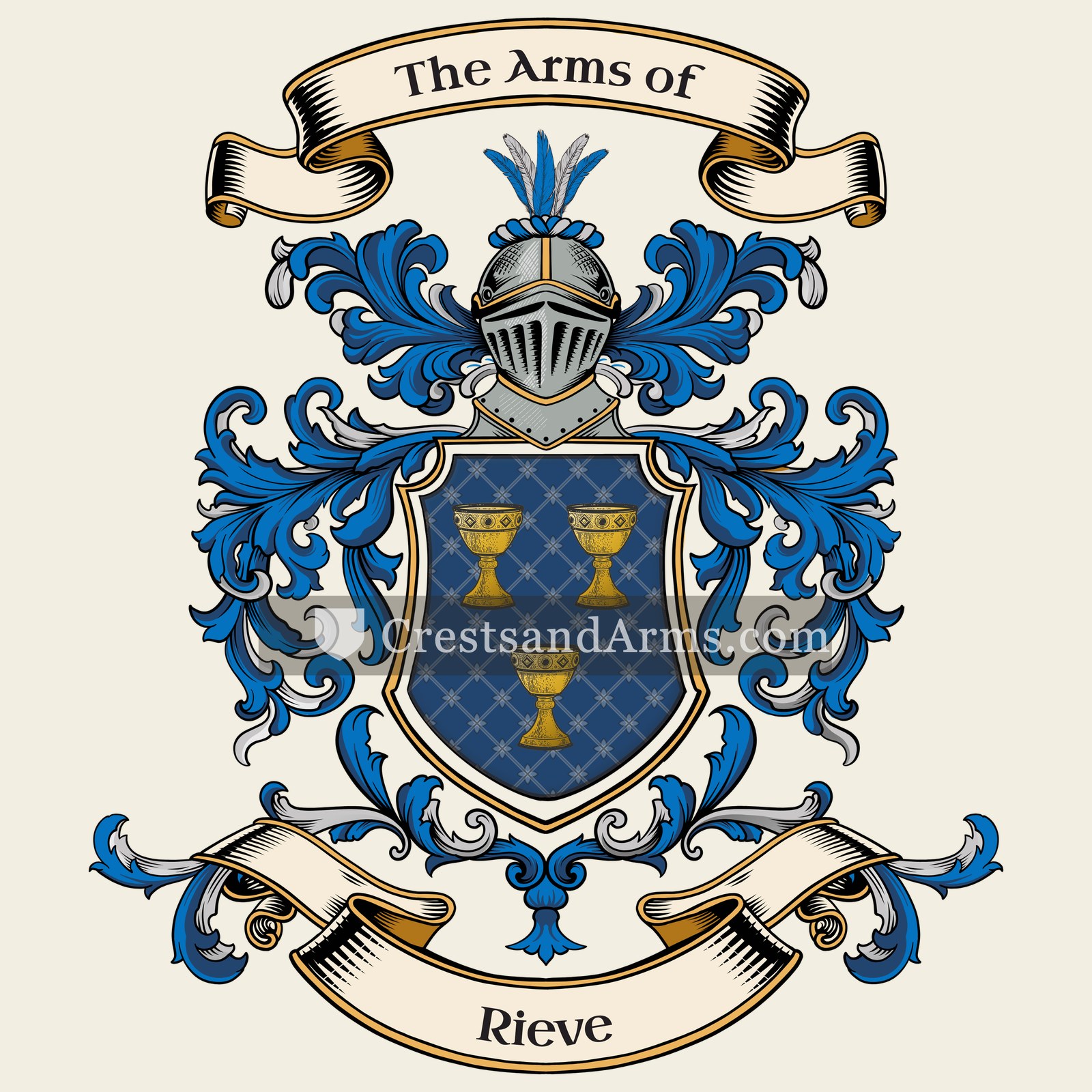
cupFaith, office, and a trust discharged
Colours
Blue (Azure)Means: Loyalty and truth
Gold (Or)Means: Generosity
Historical info
Source
Sir Bernard Burke, The General Armory of England, Scotland, Ireland and Wales, London: Harrison & Sons, 1884
Blazon (the actual original written record)
“Az. three covered cups or”
Englandc. 1620
Digital archive packCoat of arms PNG, gold border print PDF, vector SVG and the certificate of authenticity. Sent to your email in minutes.
Map of England showing where the Rieve arms are recorded
The Rieve arms were recorded in England, c. 1620.
Arms such as these were typically recorded in York.
Yorkshire is the largest of the English counties, and it held more gentry families than any other. Land there was split among a great many households rather than a few, so a great many of them carried arms.
This is where the arms were entered in the register. Families often moved to other parts of the country, so the same name can turn up in more than one region.
The body that granted and recorded arms in England in this period.
James VI and I
Sovereign of the period
James VI and I
1603–1625
Reigning in Netherlands when the Rieve arms are first recorded.
How Arms Worked in England
English heraldry allowed arms to be shared by all legitimate descendants of the original owner. These symbols were treated as personal property that moved through the generations to all children. While the eldest son kept the original design, other family members could use the same shield without needing to change it or register their own unique versions.
Granting authority
The College of Arms in London has regulated the use of coats of arms throughout England and Wales since 1484.
How they got arms
Families typically obtained their coats of arms through a formal grant from the Crown or by proving their ancient right to them.
Where arms were recorded
All official coats of arms are recorded in the registers kept at the College of Arms, which date back to the fifteenth century.
The family's standing
Recorded among the armigerous families of England.
Origin & History of the Rieve Family in England
The Rieve family name has deep roots in the historic city of York, where records confirm members of the family were living as early as 1620. During the seventeenth century, York was a bustling center of trade and religious life, and families like the Rieves often occupied roles tied to the local merchant guilds or the parish administration of the city’s many ancient churches. The name itself likely evolved from regional dialects in Northern England, where phonetic variations were common as families moved between rural villages and the urban environment of York. By settling in such a prominent administrative hub, the early Rieves were part of a growing class of citizens who helped define the social fabric of the region during a time of significant political change in England. Their presence in the city archives suggests they were established residents who contributed to the local economy and community life long before the industrial shifts of later centuries.
Related Branches & Arms
Root word
Rieven
To tear, pull, or rip apart.
This name
RieveA topographic or occupational name referring to someone who cleared land or worked with textiles.
also spelled
Ryve
Rivee
Rives
Reev
Ryves
Documented Sources
J. B. Rietstap, Armorial Général, Gouda: G. B. van Goor Zonen, 1884–87
Tresoar (Fries Historisch en Letterkundig Centrum), Burgerlijke Stand van Friesland (1811-1950)
Centraal Bureau voor Genealogie, Naamsaannemingsregisters (1811-1825)
Digital archive packCoat of arms PNG, gold border print PDF, vector SVG and the certificate of authenticity. Sent to your email in minutes.


 bendDefence, and the scarf of a commander
 greyhoundCourage, vigilance and loyalty
 bendDefence, and the scarf of a commander
 greyhoundCourage, vigilance and loyalty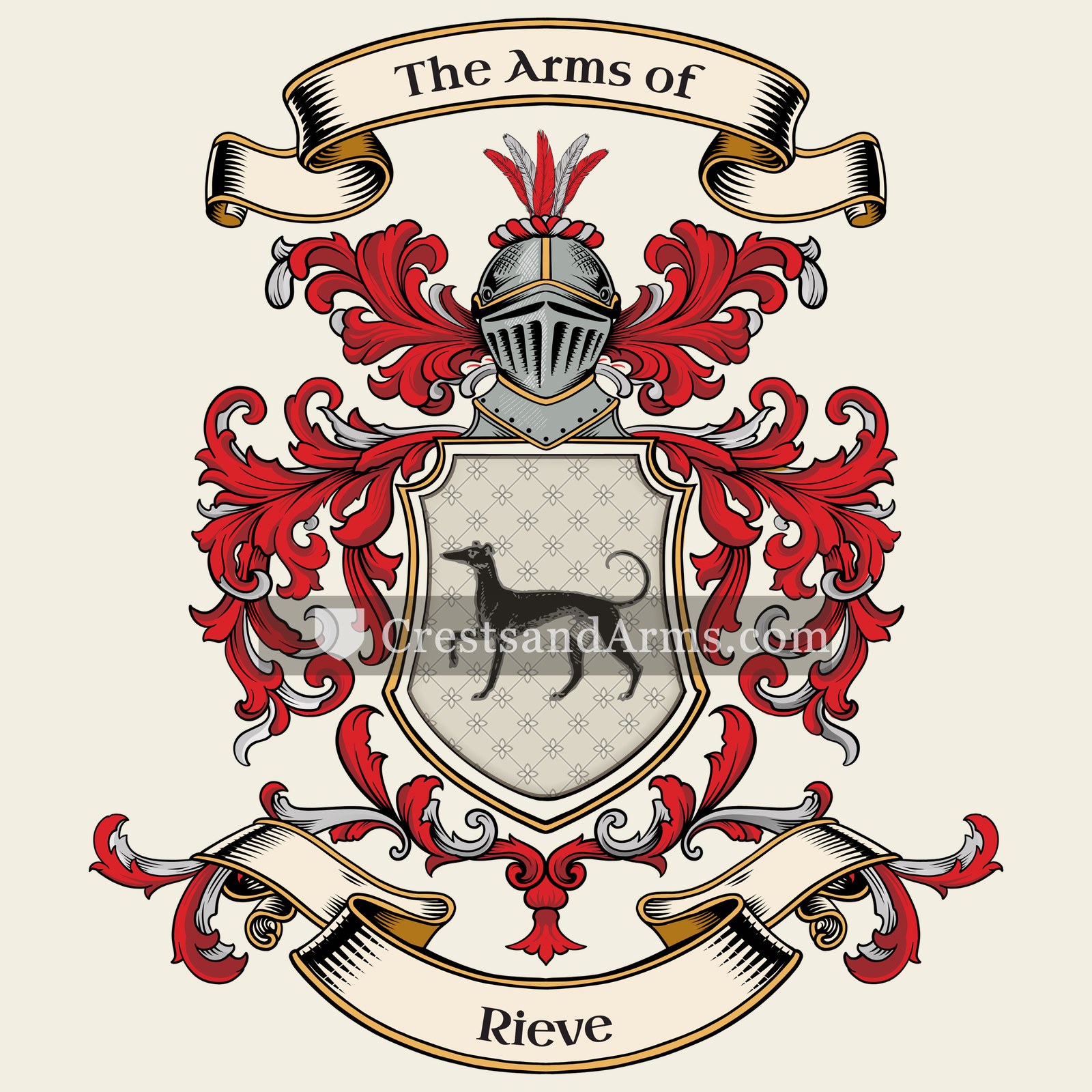


 bearStrength, cunning and protection of kin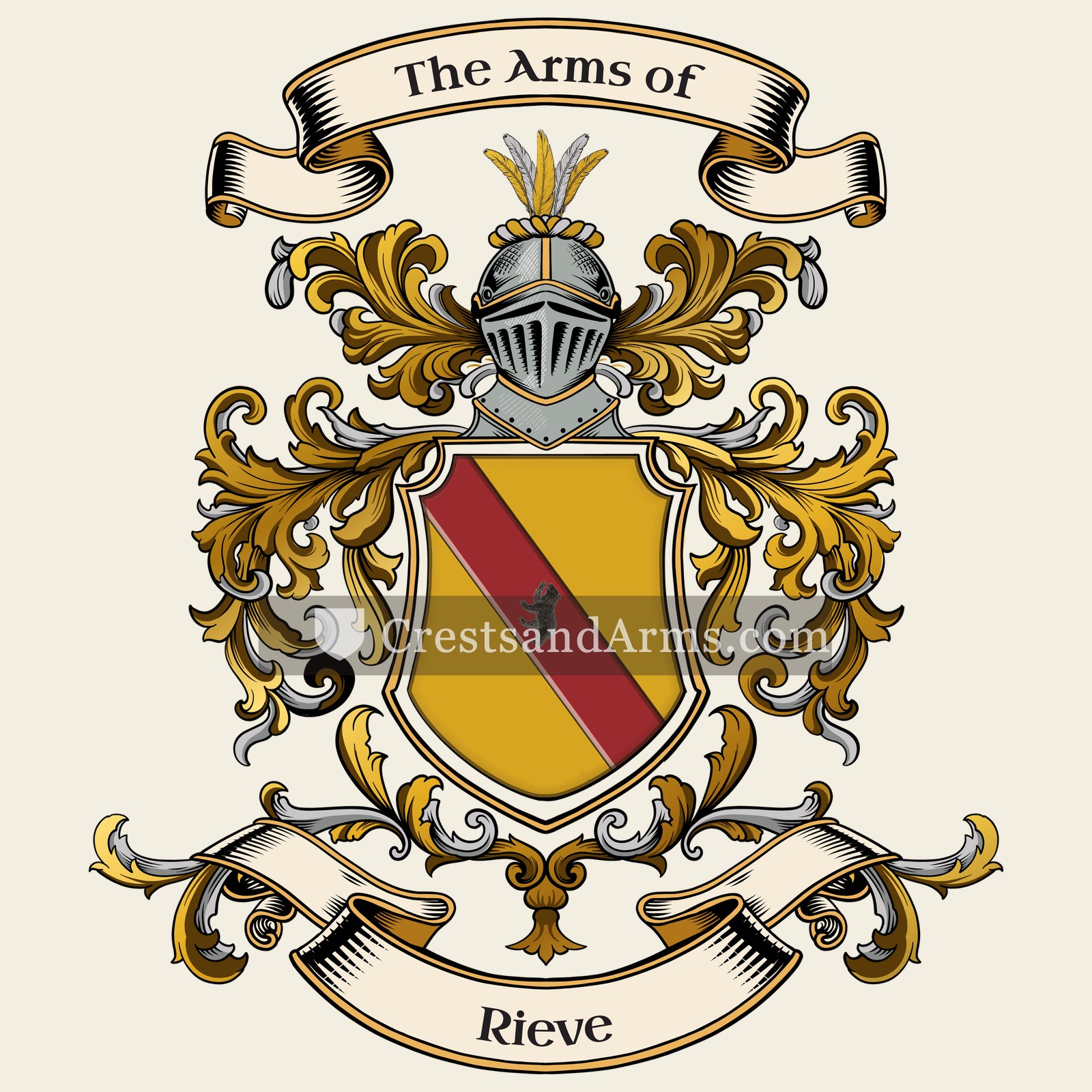

 cupFaith, office, and a trust discharged