Map of England showing where the Riggi arms are recorded
The Riggi arms were recorded in Cumberland, c. 1620.
Cumberland was rough border country in the north-west, facing Scotland across a disputed line. Its families held land in return for keeping it defended, and men who fought carried shields of their own.
This is where the arms were entered in the register. Families often moved to other parts of the country, so the same name can turn up in more than one region.
The body that granted and recorded arms in England in this period.
James VI and I
Sovereign of the period
James VI and I
1603–1625
Reigning in England when the Riggi arms are first recorded.
How Arms Worked in England
English heraldry allowed arms to be shared by all legitimate descendants of the original owner. These symbols were treated as personal property that moved through the generations to all children. While the eldest son kept the original design, other family members could use the same shield without needing to change it or register their own unique versions.
Granting authority
The College of Arms in London has regulated the use of coats of arms throughout England and Wales since 1484.
How they got arms
Families typically obtained their coats of arms through a formal grant from the Crown or by proving their ancient right to them.
Where arms were recorded
All official coats of arms are recorded in the registers kept at the College of Arms, which date back to the fifteenth century.
The family's standing
Recorded among the armigerous families of Cumberland.
Origin & History of the Riggi Family in England
The Riggi family name has roots in the rugged landscape of Cumberland, England, where records confirm members of the family were established by the year 1620. During the early 17th century, this region was defined by its proximity to the Scottish border and a challenging climate that shaped the daily lives of its inhabitants. Families in this area often lived in small, tight-knit rural communities that relied on agriculture and local trade to survive. Because the name Riggi appears in regional records during this period, it suggests that the family was part of the local social fabric that navigated the transition from the late Elizabethan era into the Stuart period. These early ancestors likely lived as tenant farmers or tradespeople, contributing to the development of the northern English countryside through their labor and community involvement. While the name is relatively rare, its presence in Cumberland archives provides a clear link to the historical identity of the region during a time of significant social and political change in England.
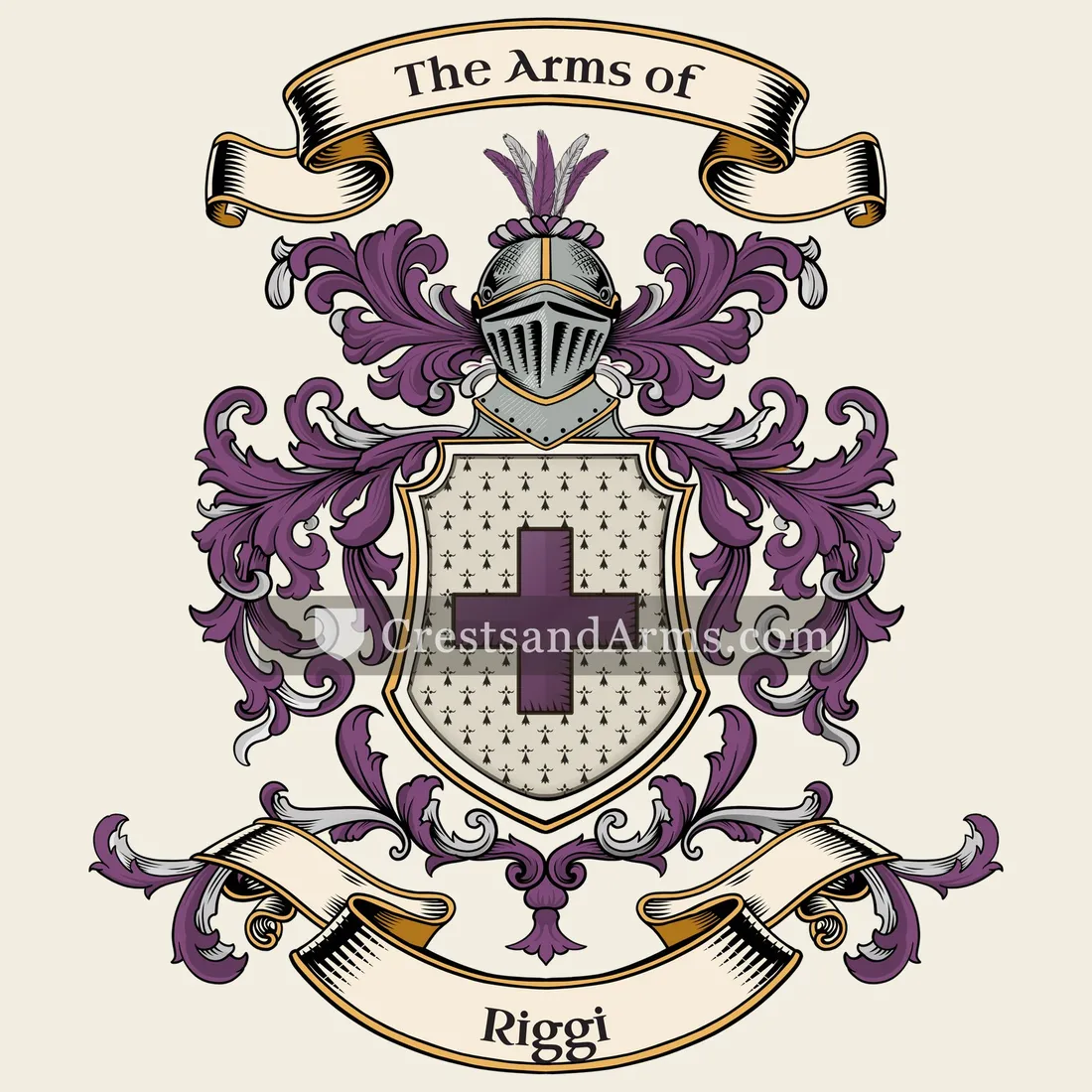
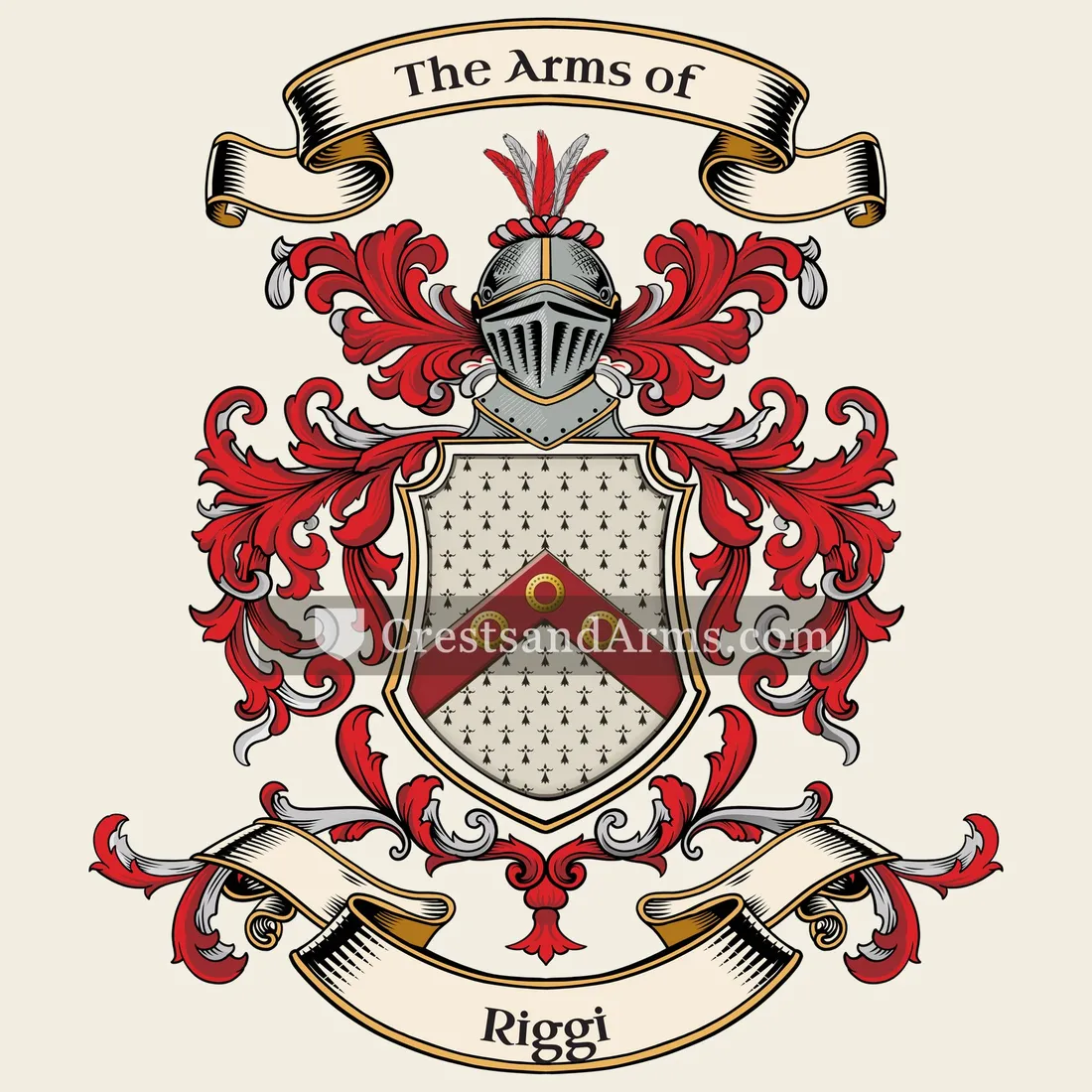
Meaning of the Riggi family crest colors & symbols
Symbols on this shield
cross symbolChristian faith and service
Colours
ErmineMeans: Dignity
Purple (Purpure)Means: Royal majesty
Historical info
Source
Sir Bernard Burke, The General Armory of England, Scotland, Ireland and Wales, London: Harrison & Sons, 1884
Blazon (the actual original written record)
“Erm. a cross flory purp”
Scotlandc. 1748
Digital archive packCoat of arms PNG, gold border print PDF, vector SVG and the certificate of authenticity. Sent to your email in minutes.
Map of Scotland showing where the Riggi arms are recorded
The Riggi arms were recorded in Scotland, c. 1748.
Arms such as these were typically recorded in Edinburgh.
Edinburgh was the seat of Scotland's government, its courts and its heralds. Families with business there settled nearby, and being close to where arms were recorded is exactly why so many of them appear.
This is where the arms were entered in the register. Families often moved to other parts of the country, so the same name can turn up in more than one region.
The body that granted and recorded arms in Scotland in this period.
George II of Great Britain
Sovereign of the period
George II of Great Britain
1727–1760
Reigning in England when the Riggi arms are first recorded.
How Arms Worked in Scotland
Scottish heraldry is unique because it treats a coat of arms as a piece of personal property protected by law. Only one person can own a specific design at any given time. When a family grows, the head keeps the original shield while other relatives must apply for their own distinct version with slight changes to prove their specific identity.
Granting authority
The Court of the Lord Lyon acts as the official body that regulates and controls all heraldic matters throughout Scotland.
How they got arms
Individuals obtain a legal right to their arms through a formal petition process that confirms their identity and family connection.
Where arms were recorded
All valid coats of arms are officially entered into the Public Register of All Arms and Bearings starting from 1672.
The family's standing
Recorded among the armigerous families of Scotland.
Origin & History of the Riggi Family in Scotland
The history of the Riggi name in Scotland is deeply tied to the urban development of Edinburgh during the mid-eighteenth century. While the name likely has roots in Mediterranean regions, its documented appearance in the Scottish capital by 1748 suggests that early family members were part of the growing professional and merchant classes during the Scottish Enlightenment. At this time, Edinburgh was undergoing a period of significant social and architectural expansion, moving from the cramped conditions of the Old Town toward the planned streets of the New Town. Families with this surname were likely integrated into the city’s bustling trade networks, which relied on the exchange of goods and ideas between Scotland and the wider European continent. By establishing themselves in a city known for its intellectual rigor and legal institutions, these early ancestors helped weave the name into the fabric of Scottish urban life during a transformative era of history.
Riggi Meaning & Related Branches
Root word
Ricard
A Germanic name composed of elements meaning powerful and brave ruler.
This name
RiggiA diminutive form of Richard, historically used as a patronymic surname indicating son of Richard.
also spelled
Rygg
Rygge
Documented Sources
Sir Bernard Burke, The General Armory of England, Scotland, Ireland and Wales, London: Harrison & Sons, 1884
Cumberland Archives, Cumberland Quarter Sessions Records: Order Books, 1620
Ferguson, R.S., A History of Cumberland, 1890
Digital archive packCoat of arms PNG, gold border print PDF, vector SVG and the certificate of authenticity. Sent to your email in minutes.


 chevronProtection, and faithful service completed
 ringFidelity, and a promise kept
 chevronProtection, and faithful service completed
 ringFidelity, and a promise kept


 cross symbolChristian faith and service