Map of Belgium showing where the Rioux arms are recorded
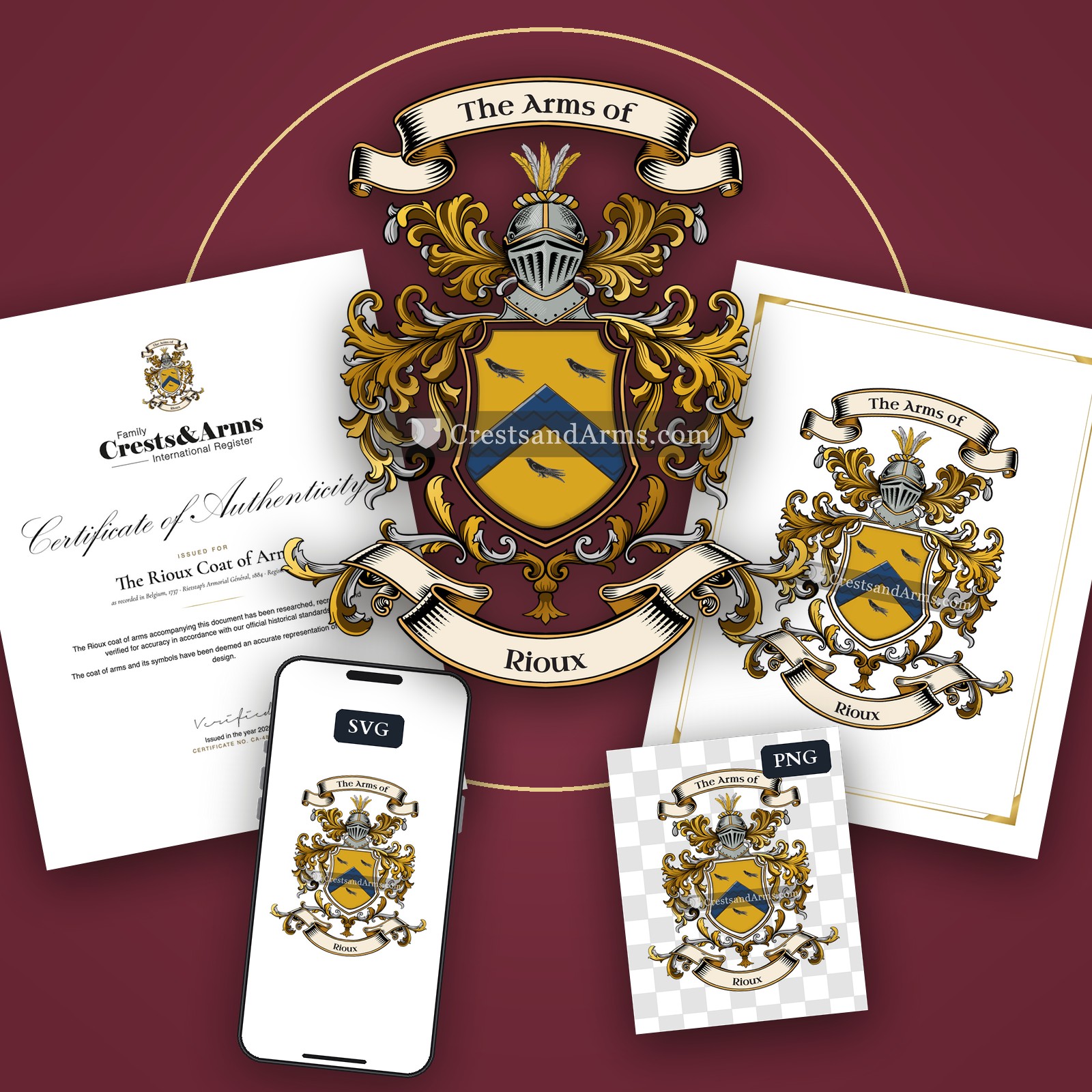
The Rioux arms were recorded in Belgium, c. 1737.
Arms such as these were typically recorded in Brabant.
Brabant lay at the heart of the Low Countries, where the trade routes met. Its towns were wealthy and its landowners many, and both kinds of family kept arms, which is why the region is so heavily represented.
This is where the arms were entered in the register. Families often moved to other parts of the country, so the same name can turn up in more than one region.
The body that granted and recorded arms in Belgium in this period.
Charles VI, Holy Roman Emperor
Sovereign of the period
Charles VI, Holy Roman Emperor
1711–1740
Reigning in Belgium when the Rioux arms are first recorded.
How Arms Worked in Belgium
In Belgium, a coat of arms is considered personal property that is passed down through the male line to legitimate descendants. Families often use the same shield design across generations to show their shared heritage. If a branch of the family wants to change the design, they must apply for an official update to their specific version of the arms.
Granting authority
The Conseil héraldique is the official body that regulates and approves all coats of arms in Belgium.
How they got arms
Families obtain their coats of arms through formal royal grants or by confirming their historical right to use existing designs.
Where arms were recorded
All approved coats of arms are officially recorded in the public registers of the Conseil héraldique since 1844.
The family's standing
Recorded among the armigerous families of Belgium.
Origin & History of the Rioux Family in Belgium
The history of the Rioux family in Belgium is rooted in the social and administrative landscape of the eighteenth century, specifically within the historic Duchy of Brabant. By 1737, records confirm that members of the family were established in this region, which was then part of the Austrian Netherlands. During this period, Brabant served as a central hub for trade and agriculture, and families like the Rioux often integrated into the local parish systems and municipal record-keeping structures. The name itself reflects the linguistic shifts common in the Low Countries, where French and Dutch influences frequently intersected in legal and civil documentation. As residents of Brabant, the early Rioux family members lived through a time of significant transition, navigating the complex tax rolls and baptismal registries that defined life under the Habsburg administration. Their presence in these official documents highlights their role as active participants in the local community long before the modern borders of Belgium were fully formed.
Meaning of the Rioux family crest colors & symbols
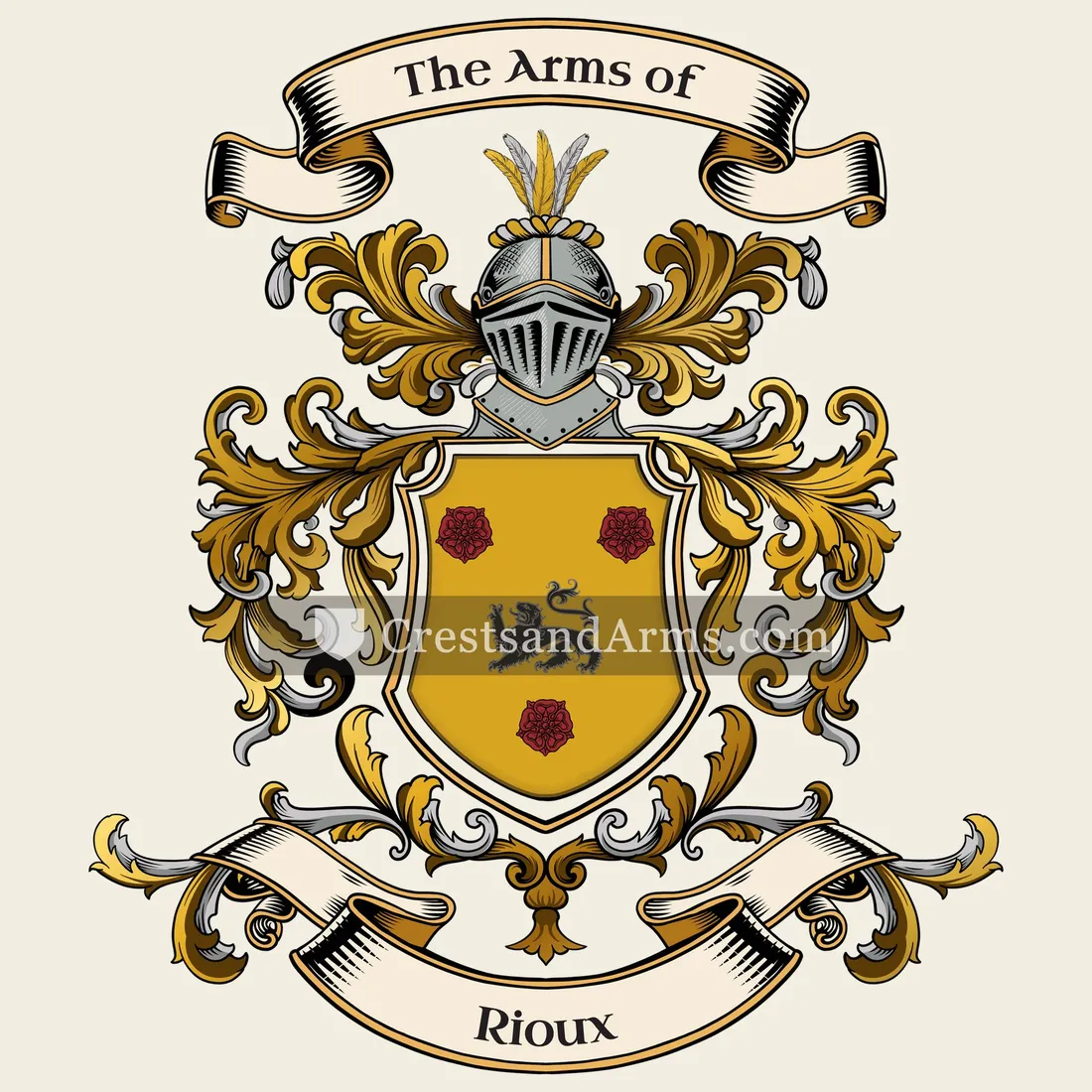
Symbols on this shield
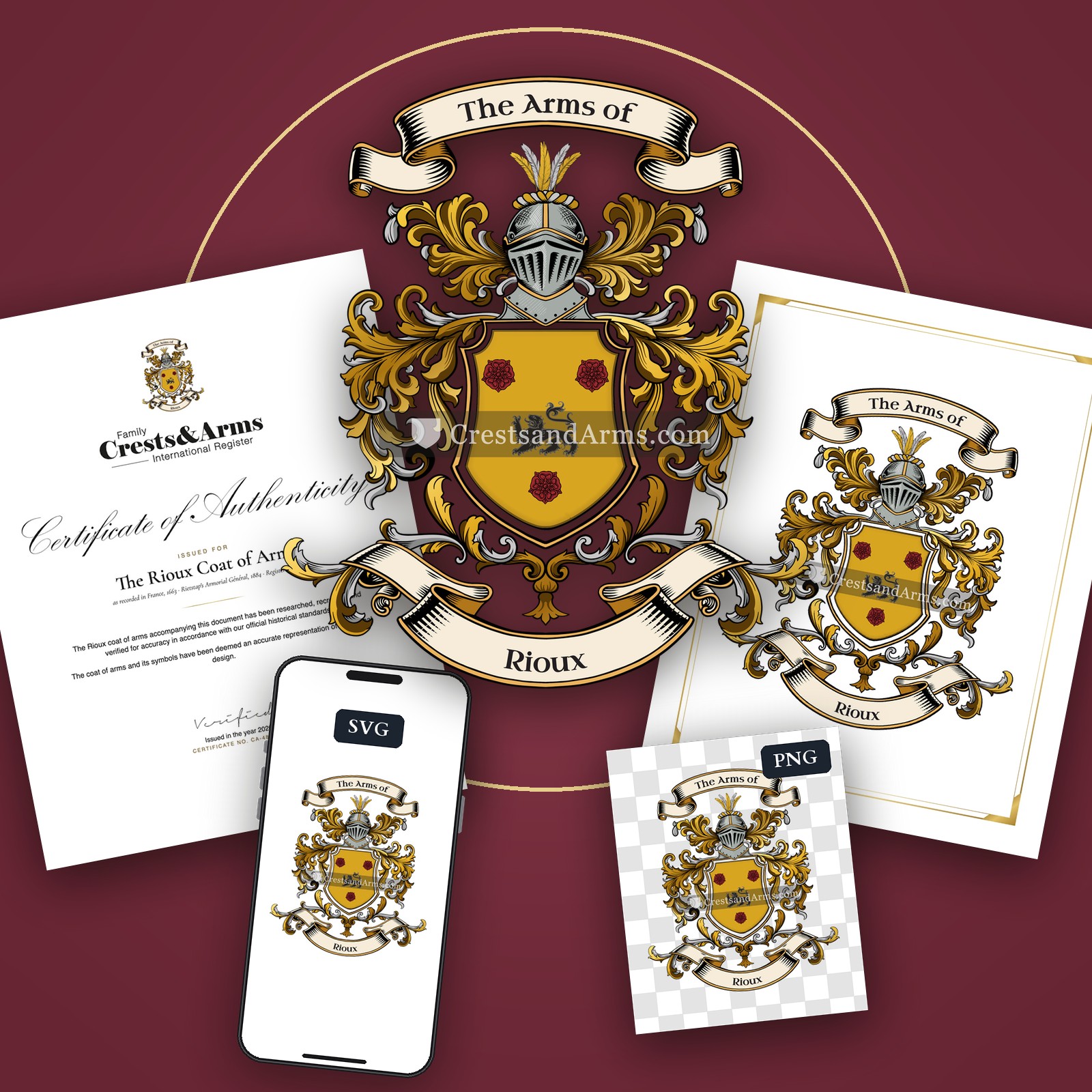
lionCourage, strength and royalty
roseThe seventh son, and beauty with grace
Colours
Gold (Or)Means: Generosity
Black (Sable)Means: Constancy
Red (Gules)Means: Military strength
Historical info
Source
J. B. Rietstap, Armorial Général, Gouda: G. B. van Goor Zonen, 1884–87
Blazon (the actual original written record)
“D'or au lion de sa., arm. et lamp. de gu., adextré de trois roses aussi de gu., posées entre ses jambes.”
PicardiePicardie, c. 1663
Digital archive packCoat of arms PNG, gold border print PDF, vector SVG and the certificate of authenticity. Sent to your email in minutes.
Map of France showing where the Rioux arms are recorded
The Rioux arms were recorded in Picardie, c. 1663.
Picardie lay on the northern road into France and saw armies pass through it repeatedly. Its landowners were soldiers as often as farmers, and a soldier needed a shield he could be recognised by.
This is where the arms were entered in the register. Families often moved to other parts of the country, so the same name can turn up in more than one region.
The body that granted and recorded arms in France in this period.
Louis XIV of France
Sovereign of the period
Louis XIV of France
1643–1715
Reigning in Belgium when the Rioux arms are first recorded.
How Arms Worked in France
In France, a coat of arms was a mark of honor that passed down through the male line to all legitimate descendants. Families often used the same shield without changes to show their shared heritage. If a branch wanted to stand out, they could add a small mark to their shield to show their specific place in the family tree.
Granting authority
The Juge d'armes de France acted as the official authority that regulated and verified coats of arms across the country.
How they got arms
Families typically inherited their arms from ancestors, though they could also receive them through royal grants or by proving their noble status.
Where arms were recorded
Coats of arms were officially recorded in the Armorial Général de France, which began its main collection in the year 1696.
The family's standing
Recorded among the armigerous families of Picardie.
Origin & History of the Rioux Family in France
The surname Rioux finds its roots in the historical province of Picardie, located in northern France. By the mid-17th century, the family was well-established in this region, which was known for its fertile farmland and strategic position near the coast. The name itself is believed to be a variation of the Old French word *riou*, which referred to a small stream or a brook. This suggests that the earliest ancestors likely lived near a local waterway or were identified by the landscape surrounding their home. During the 1660s, many families in Picardie faced the pressures of a changing economy and the centralizing power of the French monarchy. These conditions encouraged some individuals to seek new opportunities, eventually leading to the migration of the Rioux lineage across the Atlantic to the French colonies in North America.
Meaning of the Rioux family crest colors & symbols
Symbols on this shield
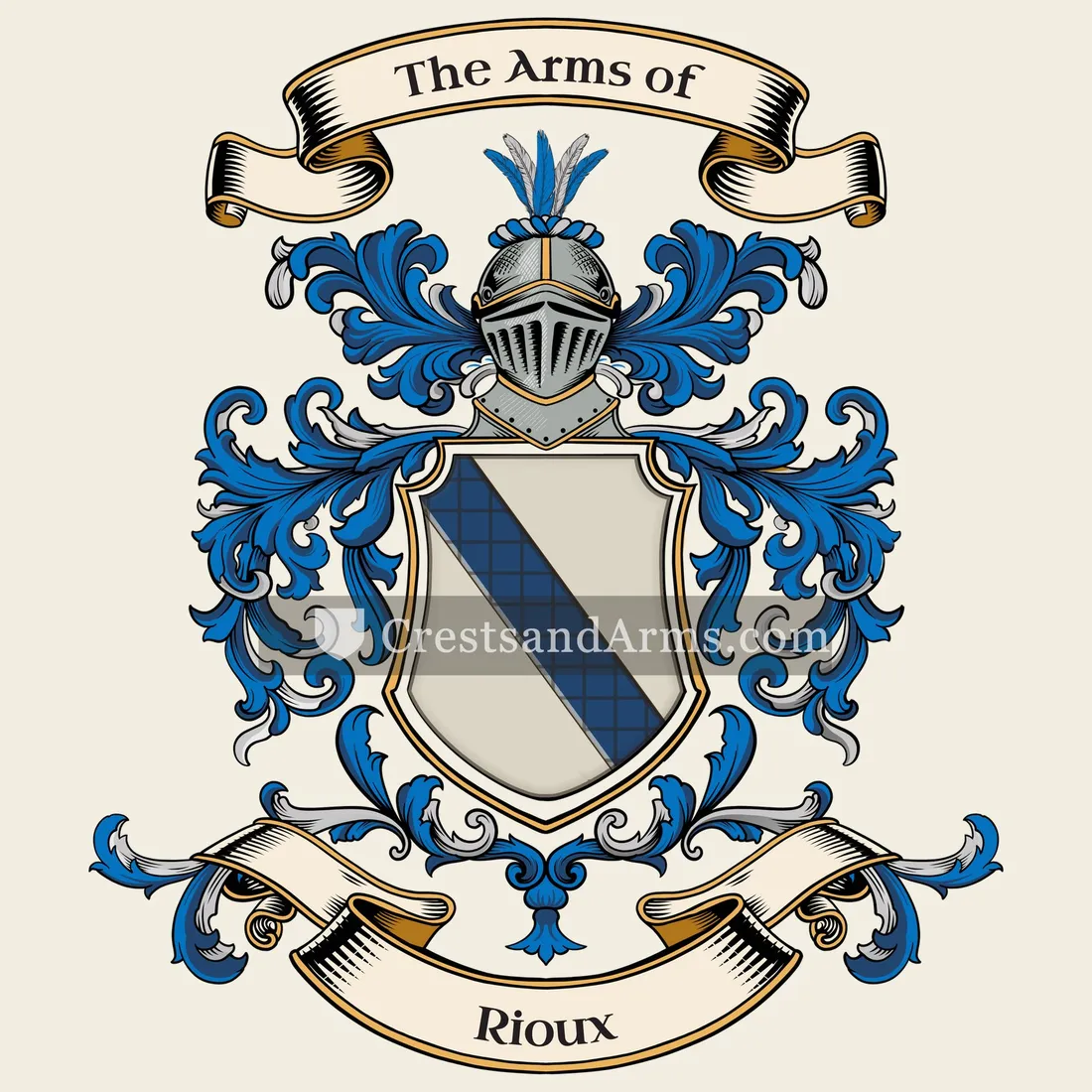
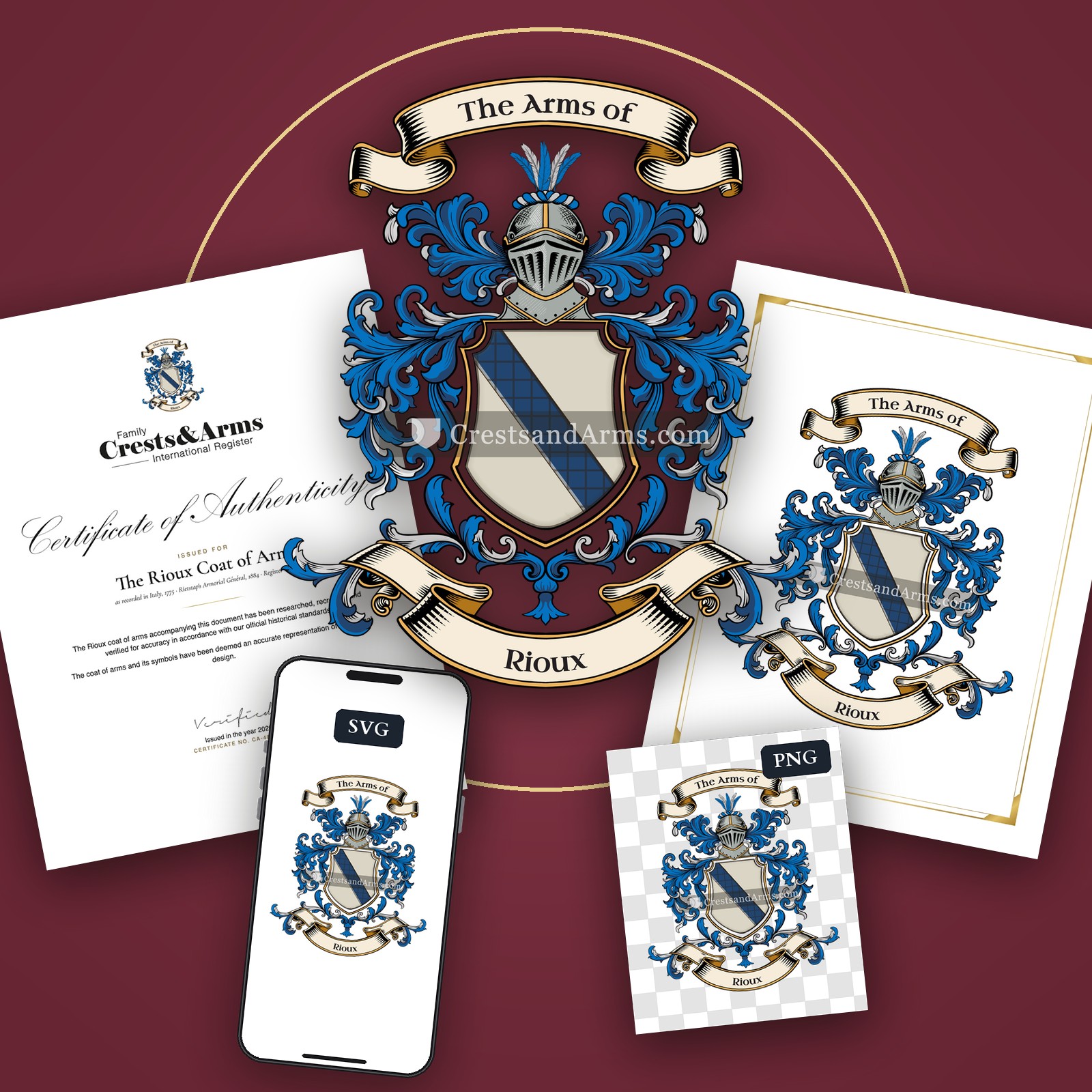
bendDefence, and the scarf of a commander
Colours
Silver (Argent)Means: Peace and sincerity
Blue (Azure)Means: Loyalty and truth
Historical info
Source
J. B. Rietstap, Armorial Général, Gouda: G. B. van Goor Zonen, 1884–87
Blazon (the actual original written record)
“D'arg. à la bande d'azur,”
NaplesNaples, c. 1775
Digital archive packCoat of arms PNG, gold border print PDF, vector SVG and the certificate of authenticity. Sent to your email in minutes.
Map of Italy showing where the Rioux arms are recorded
The Rioux arms were recorded in Naples, c. 1775.
Naples was the largest city in Italy and the seat of a kingdom. Its noble houses were numerous, and the kingdom kept formal lists of the families entitled to arms, which is why so many appear in the records.
This is where the arms were entered in the register. Families often moved to other parts of the country, so the same name can turn up in more than one region.
The body that granted and recorded arms in Italy in this period.
Alvise Giovanni Mocenigo
Sovereign of the period
Alvise Giovanni Mocenigo
1763–1778
Reigning in Belgium when the Rioux arms are first recorded.
How Arms Worked in Italy
In the Italian states, coats of arms were often used by noble families to show their status and history. These symbols were passed down through the generations to all legitimate male descendants. Younger branches of a family usually kept the original design but sometimes added small changes to distinguish their specific line from the main branch.
Granting authority
Various local rulers and city governments controlled the use of coats of arms across the different Italian states.
How they got arms
Families often assumed their own arms or received them as official grants from local lords, popes, or city councils.
Where arms were recorded
Arms were recorded in local city archives or private family books rather than in one single national register.
The family's standing
Recorded among the armigerous families of Naples.
Origin & History of the Rioux Family in Italy
The history of the Rioux family in Italy is deeply tied to the vibrant urban culture of Naples during the late eighteenth century. By 1775, members of the family were well-established residents of this bustling port city, which served as a major crossroads for trade and intellectual exchange in Southern Italy. During this period, Naples was the capital of the Kingdom of the Two Sicilies and acted as a magnet for families seeking opportunities in commerce, administration, and the arts. The presence of the Rioux name in local records suggests that the family integrated into the social fabric of the city, likely participating in the professional or merchant classes that defined Neapolitan life before the turn of the century. Their residence in such a prominent cultural hub indicates that the family was part of the dynamic movement of people that characterized the Mediterranean world during the Enlightenment.
Rioux Meaning & Related Branches
Root word
Riou
Derived from the Old French word for a river or stream.
This name
RiouxA topographic surname for someone who lived near a river or stream.
also spelled
Roo
Documented Sources
J. B. Rietstap, Armorial Général, Gouda: G. B. van Goor Zonen, 1884–87
Archives de l'État à Bruxelles, Registres paroissiaux du Duché de Brabant
Pirenne, Henri, Histoire de Belgique, 1900
Warlop, Ernest, The Flemish Nobility before 1300, 1975
Digital archive packCoat of arms PNG, gold border print PDF, vector SVG and the certificate of authenticity. Sent to your email in minutes.


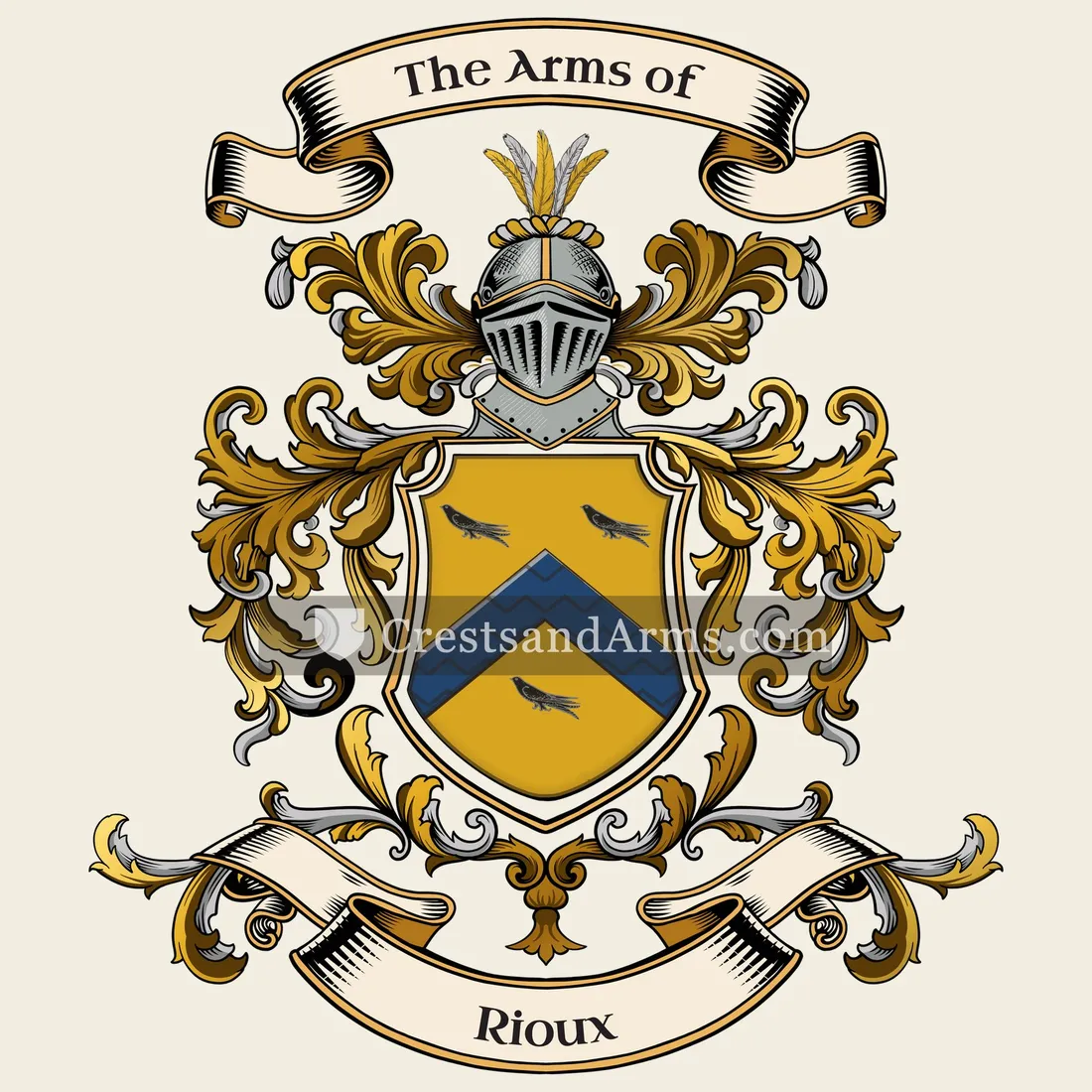
 chevronProtection, and faithful service completed
 martletA younger son, who must win his own land
 chevronProtection, and faithful service completed
 martletA younger son, who must win his own land


 lionCourage, strength and royalty
 roseThe seventh son, and beauty with grace


 bendDefence, and the scarf of a commander