Map of Belgium showing where the Risher arms are recorded
The Risher arms were recorded in Hainaut, c. 1737.
Hainaut sat on the border between France and the Low Countries and was fought over for centuries. Families there held their land under arms and expected to defend it, so a shield was a working thing.
This is where the arms were entered in the register. Families often moved to other parts of the country, so the same name can turn up in more than one region.
The body that granted and recorded arms in Belgium in this period.
Charles VI, Holy Roman Emperor
Sovereign of the period
Charles VI, Holy Roman Emperor
1711–1740
Reigning in Belgium when the Risher arms are first recorded.
How Arms Worked in Belgium
In Belgium, a coat of arms is considered personal property that is passed down through the male line to legitimate descendants. Families often use the same shield design across generations to show their shared heritage. If a branch of the family wants to change the design, they must apply for an official update to their specific version of the arms.
Granting authority
The Conseil héraldique is the official body that regulates and approves all coats of arms in Belgium.
How they got arms
Families obtain their coats of arms through formal royal grants or by confirming their historical right to use existing designs.
Where arms were recorded
All approved coats of arms are officially recorded in the public registers of the Conseil héraldique since 1844.
The family's standing
Recorded among the armigerous families of Hainaut.
Origin & History of the Risher Family in Belgium
The Risher family name traces its roots to the historic region of Hainaut, a territory that was once a powerful county and later a central part of the Austrian Netherlands. By 1737, records confirm that members of the family were firmly established within this region, which was known for its dense forests, coal mining, and complex feudal history. During the eighteenth century, Hainaut served as a strategic crossroads for trade and military movement between France and the Low Countries. Families living in this area often navigated a landscape shaped by shifting borders and the influence of both French and Germanic cultures. The presence of the Risher name in local administrative documents from this period suggests that the family was integrated into the rural or merchant classes that sustained the regional economy. Through their residence in Hainaut, the early Rishers lived through a time of significant transition as the region moved from traditional agricultural practices toward the early stages of the industrial growth that would define the area for centuries.
Coat of Arms & Family Crest Details
Symbols on this shield
lionCourage, strength and royalty
boars headA fierce fighter who battles to the end
Colours
Green (Vert)Means: Hope
Gold (Or)Means: Generosity
Black (Sable)Means: Constancy
Historical info
Source
J. B. Rietstap, Armorial Général, Gouda: G. B. van Goor Zonen, 1884–87
Blazon (the actual original written record)
“Ec.: aux 1 et 4 de sin. au lion d'or; aux 2 et 3 d'or à trois hures de sanglier de sa.”
FranceParis, c. 1663
Digital archive packCoat of arms PNG, gold border print PDF, vector SVG and the certificate of authenticity. Sent to your email in minutes.
Map of France showing where the Risher arms are recorded
The Risher arms were recorded in Paris, c. 1663.
This is where the arms were entered in the register. Families often moved to other parts of the country, so the same name can turn up in more than one region.
The body that granted and recorded arms in France in this period.
Louis XIV of France
Sovereign of the period
Louis XIV of France
1643–1715
Reigning in Belgium when the Risher arms are first recorded.
How Arms Worked in France
In France, a coat of arms was a mark of honor that passed down through the male line to all legitimate descendants. Families often used the same shield without changes to show their shared heritage. If a branch wanted to stand out, they could add a small mark to their shield to show their specific place in the family tree.
Granting authority
The Juge d'armes de France acted as the official authority that regulated and verified coats of arms across the country.
How they got arms
Families typically inherited their arms from ancestors, though they could also receive them through royal grants or by proving their noble status.
Where arms were recorded
Coats of arms were officially recorded in the Armorial Général de France, which began its main collection in the year 1696.
The family's standing
Recorded among the armigerous families of France.
Origin & History of the Risher Family in France
The family name Risher carries a history that connects to the vibrant urban life of seventeenth-century Paris. By 1663, records confirm that members of the family were already established residents within the city walls. During this era, Paris was a center of rapid growth and shifting social structures under the reign of King Louis XIV. Families like the Rishers often lived in dense neighborhoods where they participated in the local trades and civic duties that kept the capital functioning. While the exact origins of the name remain a subject of study, its presence in the heart of France suggests that the family was part of the middle-class workforce that navigated the complex bureaucracy and cultural changes of the time. Their early life in Paris reflects the broader experience of urban citizens who helped shape the identity of the city before many of their descendants eventually moved toward other parts of the world.
Coat of Arms & Family Crest Details
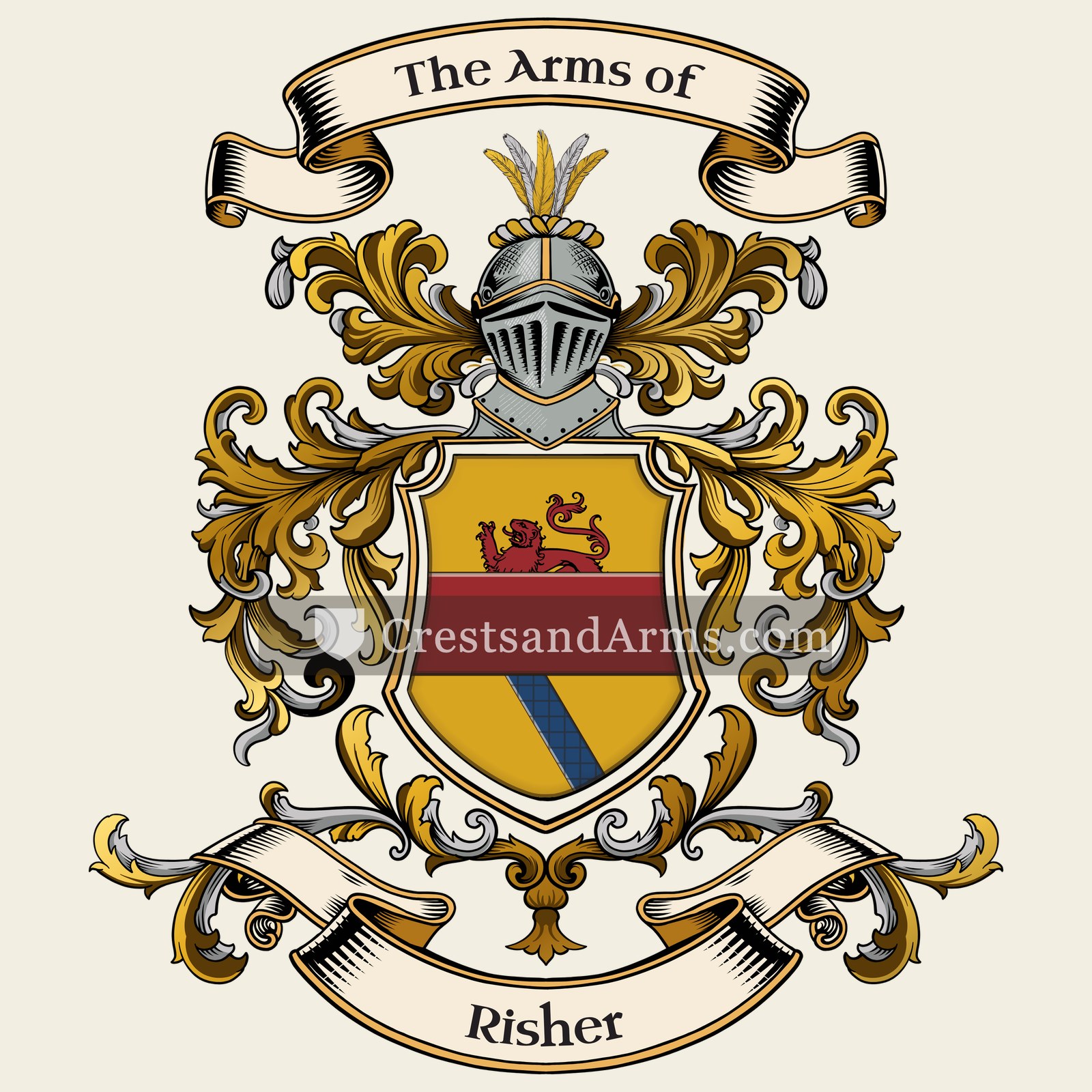
Symbols on this shield
bendDefence, and the scarf of a commander
fessThe military belt, and readiness to serve
lionCourage, strength and royalty
Colours
Gold (Or)Means: Generosity
Red (Gules)Means: Military strength
Blue (Azure)Means: Loyalty and truth
Historical info
Source
J. B. Rietstap, Armorial Général, Gouda: G. B. van Goor Zonen, 1884–87
Blazon (the actual original written record)
“Coupé: au 1 d'or au lion de gu., tenant une épée; au 2 d'or à deux bandes d'azur. A la fasce diminuée de gu., br. sur le coupé. Trois cq. cour. C.: 1º le lion, iss. et cont.; 2º une aigle de sa.; 3º un bras, arm. au nat., la main de carn. supp. une couronne d'or. L.: à dextre d'or et de gu., à sen. d'or et d'azur.”
Austriac. 1829
Digital archive packCoat of arms PNG, gold border print PDF, vector SVG and the certificate of authenticity. Sent to your email in minutes.
Map of Austria showing where the Risher arms are recorded
The Risher arms were recorded in Austria, c. 1829.
Arms such as these were typically recorded in Tyrol.
Tyrol was mountain country in western Austria, where the valleys were held by families who had been there a very long time. Old tenure counted for more than money, and old families carried arms.
This is where the arms were entered in the register. Families often moved to other parts of the country, so the same name can turn up in more than one region.
Region
Tyrol
First recorded
1829
Granting Authority for the Risher Arms
Imperial and Royal chancery
Sodacan · CC BY-SA 3.0
The body that granted and recorded arms in Austria in this period.
Francis II, Holy Roman Emperor
Sovereign of the period
Francis II, Holy Roman Emperor
1804–1835
Reigning in Belgium when the Risher arms are first recorded.
How Arms Worked in Austria
Austrian coats of arms were often linked directly to noble titles granted by the Emperor. These symbols belonged to the entire family line rather than just one individual. When a family grew, new branches kept the original design without needing to change it. This system allowed all members of a noble house to share the same identity across many generations.
Granting authority
The Imperial and Royal chancery managed all heraldic matters and controlled the official granting of arms throughout the Austrian lands.
How they got arms
Families typically received their arms through a formal imperial decree that often accompanied the elevation of a person to noble status.
Where arms were recorded
Official records of these grants were kept in the Imperial Register of Nobility which began its formal documentation process in 1453.
The family's standing
Recorded among the armigerous families of Austria.
Origin & History of the Risher Family in Austria
The Risher family name finds its historical roots in the rugged, mountainous landscape of the Tyrol region in western Austria. By the early 19th century, records confirm that members of the family were well-established in this area, which served as a vital crossroads for trade and travel between the German-speaking lands and Italy. The name likely evolved from local occupational or geographic descriptions common to the Alpine valleys, where families often identified themselves by their specific trade or the unique features of their mountain homes. Living in Tyrol during the 1820s meant the family experienced a time of significant transition as the region adjusted to the aftermath of the Napoleonic Wars and the consolidation of the Austrian Empire. These early ancestors were part of a resilient community that relied on agriculture, forestry, and regional commerce to thrive in a challenging high-altitude environment. Their presence in the official registers of the time highlights a lineage deeply connected to the social and economic fabric of the Austrian Alps.
Related Branches & Arms
Root word
Risch
A German term referring to a marsh or a rush plant.
This name
RisherAn occupational or topographic name for someone who lived near a marshy area or grew rushes.
also spelled
Rycher
Richier
Risher
Ricker
Rychere
Documented Sources
J. B. Rietstap, Armorial Général, Gouda: G. B. van Goor Zonen, 1884–87
State Archives in Mons (Archives de l'État à Mons), Registres paroissiaux de la province de Hainaut
Duvosquel, Jean-Marie, La région du Hainaut au XVIIIe siècle, 1989
Hocquet, Jean-Claude, Histoire du Hainaut, 1996
Digital archive packCoat of arms PNG, gold border print PDF, vector SVG and the certificate of authenticity. Sent to your email in minutes.


 paleMilitary strength, and a fortified defence
 paleMilitary strength, and a fortified defence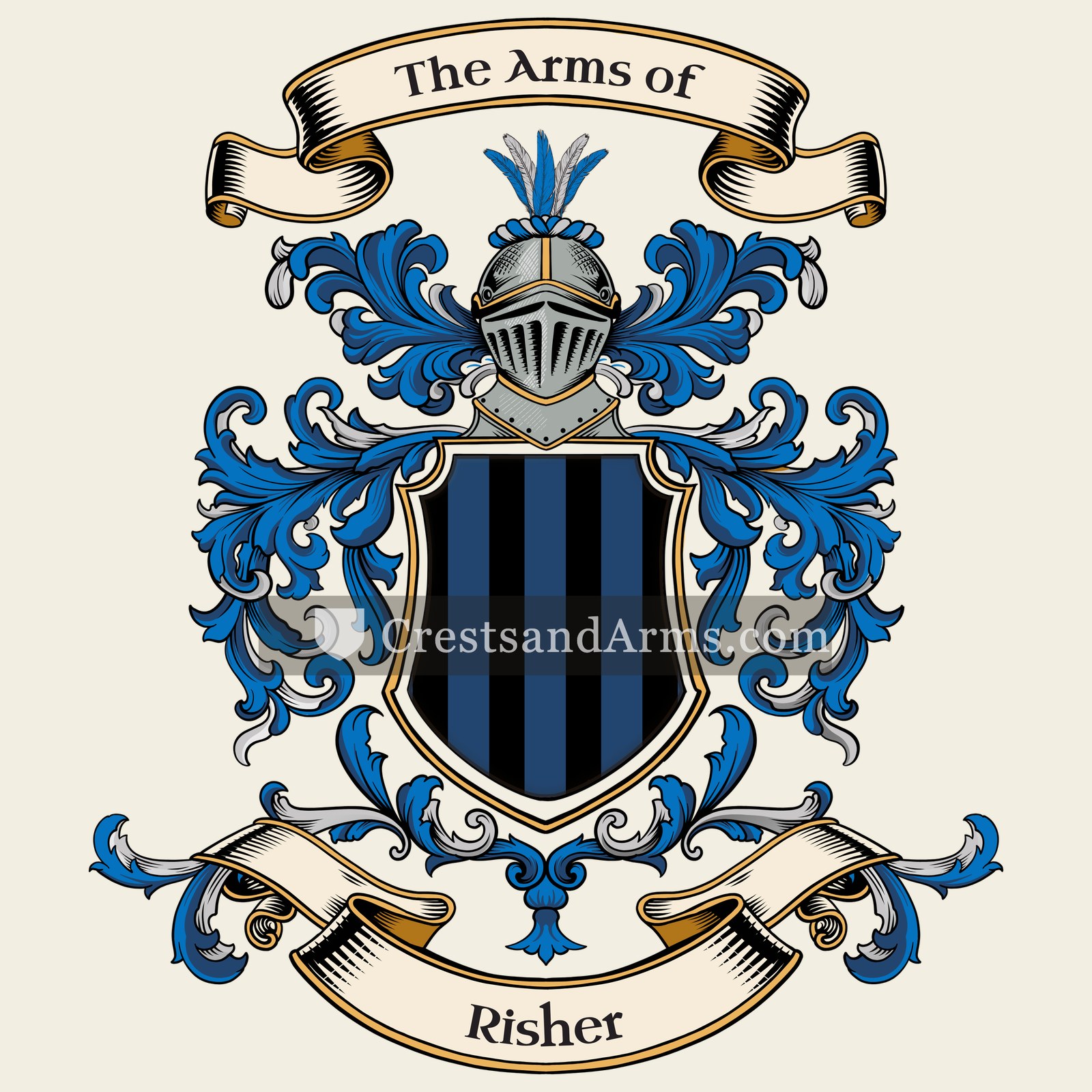


 lionCourage, strength and royalty
 boars headA fierce fighter who battles to the end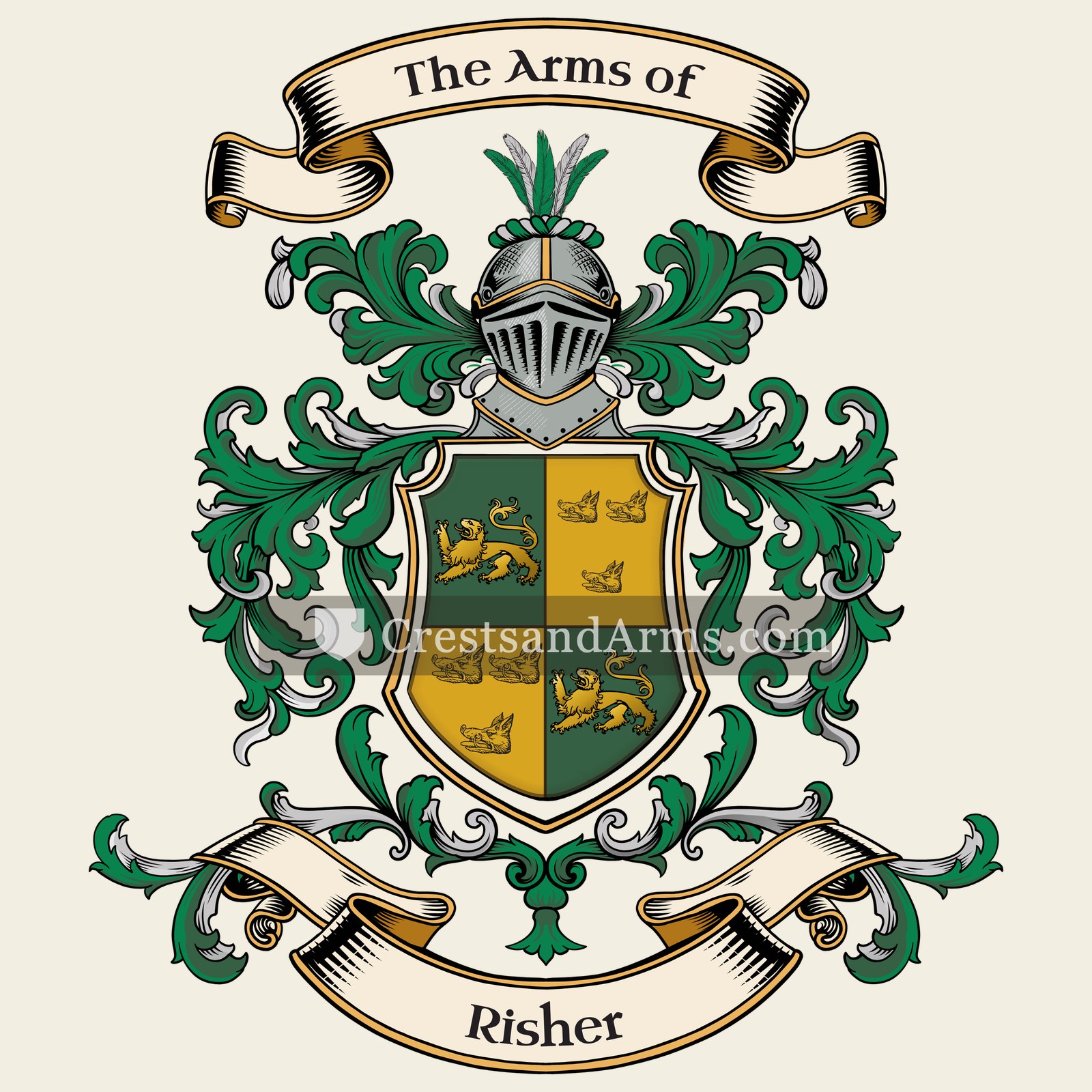


 bendDefence, and the scarf of a commander
 fessThe military belt, and readiness to serve