Map of France showing where the Riveros arms are recorded
The Riveros arms were recorded in France, c. 1725.
Arms such as these were typically recorded in Bretagne.
More families held coats of arms in Bretagne than anywhere else in France. The land was divided into many small estates rather than a few large ones, so far more households counted as gentry, and each needed a shield of its own to be told apart.
This is where the arms were entered in the register. Families often moved to other parts of the country, so the same name can turn up in more than one region.
The body that granted and recorded arms in France in this period.
Louis XV of France
Sovereign of the period
Louis XV of France
1715–1774
Reigning in France when the Riveros arms are first recorded.
How Arms Worked in France
In France, a coat of arms was a mark of honor that passed down through the male line to all legitimate descendants. Families often used the same shield without changes to show their shared heritage. If a branch wanted to stand out, they could add a small mark to their shield to show their specific place in the family tree.
Granting authority
The Juge d'armes de France acted as the official authority that regulated and verified coats of arms across the country.
How they got arms
Families typically inherited their arms from ancestors, though they could also receive them through royal grants or by proving their noble status.
Where arms were recorded
Coats of arms were officially recorded in the Armorial Général de France, which began its main collection in the year 1696.
The family's standing
Recorded among the armigerous families of France.
Origin & History of the Riveros Family in France
The family name Riveros carries a history deeply rooted in the rugged landscapes of western France. By the year 1725, records confirm that members of the family were established in the province of Bretagne. This region was known for its distinct cultural identity and close connection to the Atlantic coast. The name itself suggests a historical link to those who lived near rivers or managed water resources, which was a common way for families to identify themselves in rural communities during that era. Life in 18th-century Bretagne was shaped by maritime trade and local agriculture, providing a stable environment for the family to grow. As the family became part of the local social fabric, they contributed to the unique heritage of the Breton people. This early presence in France serves as the foundation for the family story before their later movements across the globe.
Meaning of the Riveros family crest colors & symbols
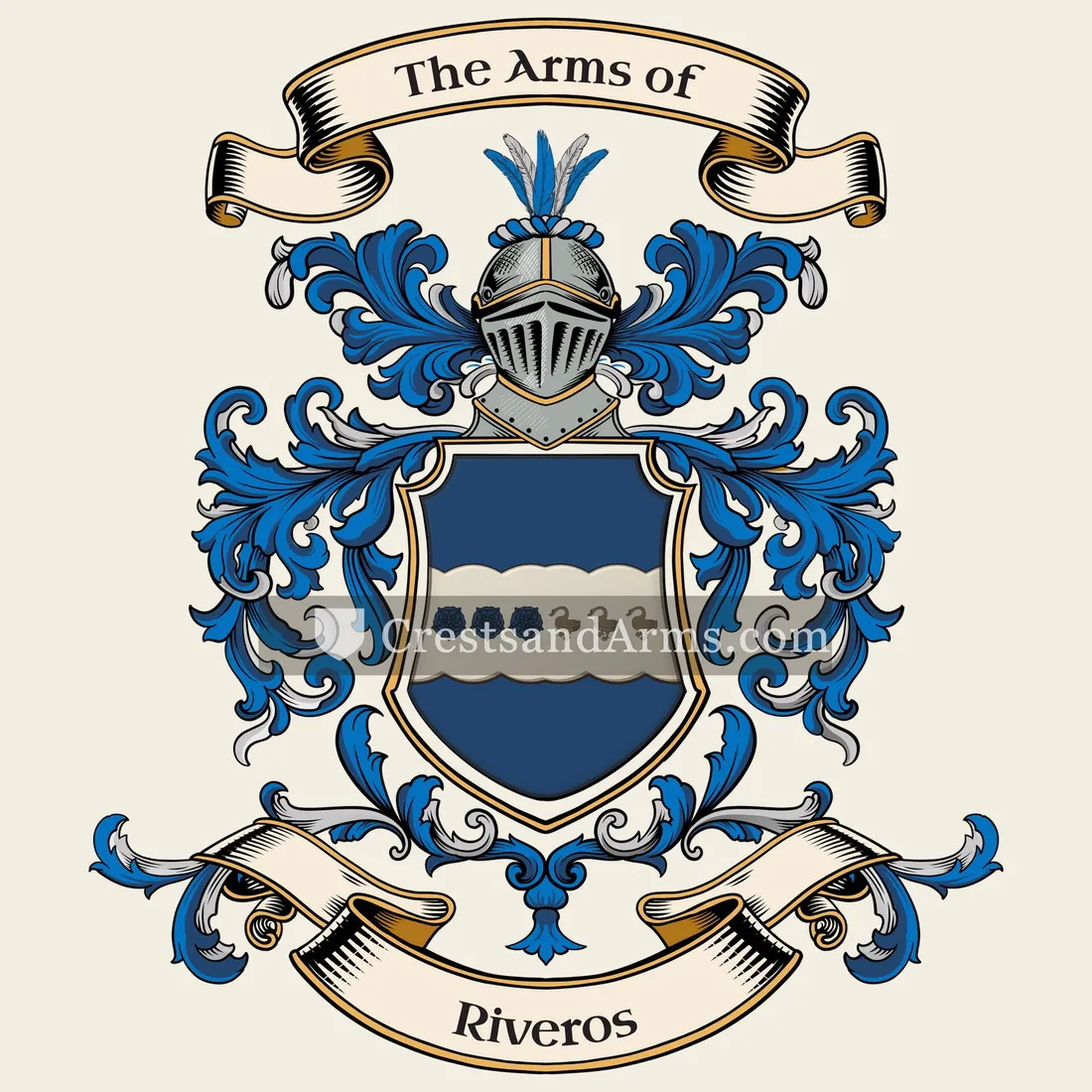
Symbols on this shield
fessThe military belt, and readiness to serve
roseThe seventh son, and beauty with grace
swanGrace, light and the poet's art
Colours
Blue (Azure)Means: Loyalty and truth
Silver (Argent)Means: Peace and sincerity
Historical info
Source
Sir Bernard Burke, The General Armory of England, Scotland, Ireland and Wales, London: Harrison & Sons, 1884
Blazon (the actual original written record)
“Az. on a fess engr. ar. surmounted of another gu. charged with three roses of the second, as many swans sans legs ppr”
Englandc. 1568
Digital archive packCoat of arms PNG, gold border print PDF, vector SVG and the certificate of authenticity. Sent to your email in minutes.
Map of England showing where the Riveros arms are recorded
The Riveros arms were recorded in England, c. 1568.
Arms such as these were typically recorded in York.
Yorkshire is the largest of the English counties, and it held more gentry families than any other. Land there was split among a great many households rather than a few, so a great many of them carried arms.
This is where the arms were entered in the register. Families often moved to other parts of the country, so the same name can turn up in more than one region.
The body that granted and recorded arms in England in this period.
Elizabeth I of England
Sovereign of the period
Elizabeth I of England
1558–1603
Reigning in France when the Riveros arms are first recorded.
How Arms Worked in England
English heraldry allowed arms to be shared by all legitimate descendants of the original owner. These symbols were treated as personal property that moved through the generations to all children. While the eldest son kept the original design, other family members could use the same shield without needing to change it or register their own unique versions.
Granting authority
The College of Arms in London has regulated the use of coats of arms throughout England and Wales since 1484.
How they got arms
Families typically obtained their coats of arms through a formal grant from the Crown or by proving their ancient right to them.
Where arms were recorded
All official coats of arms are recorded in the registers kept at the College of Arms, which date back to the fifteenth century.
The family's standing
Recorded among the armigerous families of England.
Origin & History of the Riveros Family in England
The family name Riveros carries a distinct history that traces back to the northern English city of York during the late sixteenth century. Records confirm that members of the family were established in this region by 1568, a time when York served as a vital hub for trade and religious administration. During this period, families with names like Riveros often integrated into the local urban landscape by participating in the bustling merchant guilds or the skilled craft sectors that defined the city. Because York was a major center for northern commerce, the presence of the family suggests they were likely involved in the economic life of the city during the reign of Queen Elizabeth I. By settling in such a prominent location, the early Riveros family became part of the social fabric of northern England, contributing to the diverse community that inhabited the walled city during the Renaissance.
Riveros Meaning & Related Branches
Root word
Ripa
Latin term referring to the bank of a river or stream.
This name
RiverosA topographic surname for someone who lived near a riverbank or water edge.
also spelled
Ryvers
Riveres
Rivvers
Ryver
Documented Sources
J. B. Rietstap, Armorial Général, Gouda: G. B. van Goor Zonen, 1884–87
Archives départementales du Morbihan, Registres paroissiaux et d'état civil
Galloudec, Louis, Histoire de la Bretagne, 1925
Le Moyne de La Borderie, Arthur, Histoire de Bretagne, 1896
Digital archive packCoat of arms PNG, gold border print PDF, vector SVG and the certificate of authenticity. Sent to your email in minutes.


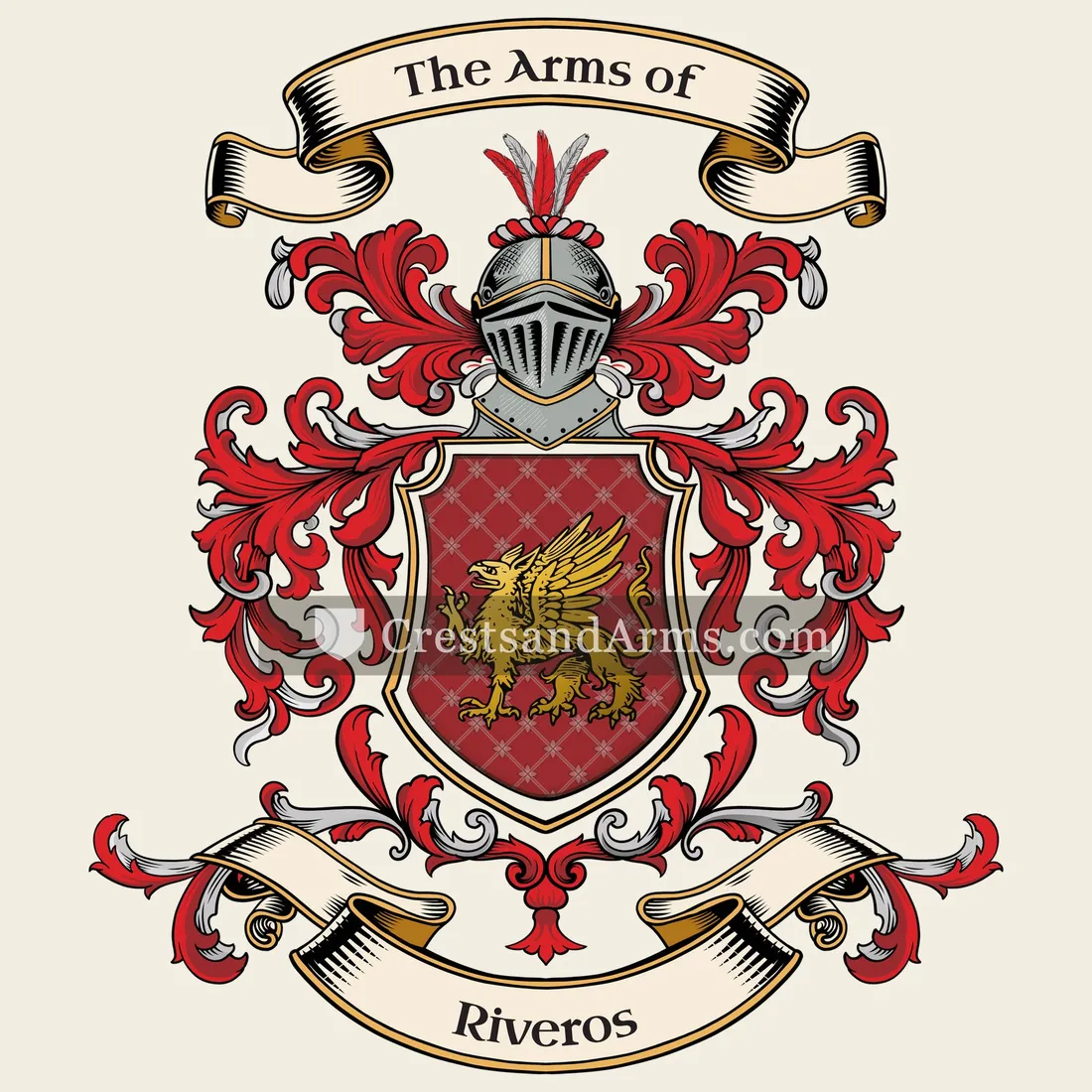
 griffinValour and vigilance, guarding great treasure
 griffinValour and vigilance, guarding great treasure


 fessThe military belt, and readiness to serve
 roseThe seventh son, and beauty with grace
 swanGrace, light and the poet's art