Map of Spain showing where the Robaina arms are recorded
The Robaina arms were recorded in Valence Dauphiné, c. 1722.
This is where the arms were entered in the register. Families often moved to other parts of the country, so the same name can turn up in more than one region.
The body that granted and recorded arms in Spain in this period.
Philip V of Spain
Sovereign of the period
Philip V of Spain
1714–1724
Reigning in Spain when the Robaina arms are first recorded.
How Arms Worked in Spain
In Spain, a coat of arms was considered a form of property that belonged to the entire family line. These arms were passed down from a father to all his children equally. Younger branches of the family usually kept the original design without needing to add any special marks to distinguish their specific line.
Granting authority
The Cronista Rey de Armas was the official body that regulated and granted coats of arms throughout Spain.
How they got arms
Families often obtained their arms through royal grants or by proving their noble status to the official heraldic authority.
Where arms were recorded
Coats of arms were officially recorded in the registers of the Cronista Rey de Armas starting in 1496.
The family's standing
Recorded among the armigerous families of Spain.
Origin & History of the Robaina Family in Spain
The surname Robaina carries a deep connection to the historical movement of families across the borders of Western Europe. While the name is often associated with later generations in the Canary Islands and Cuba, its roots trace back to the region of Valence in the Dauphiné province of France. By 1722, records confirm that members of the family were firmly established in this area, living within a landscape shaped by centuries of French and Spanish cultural exchange. During this period, the Dauphiné served as a vital crossroads for travelers and families moving between the Mediterranean coast and the interior of the continent. It is likely that the family name evolved through these regional migrations, eventually spreading as individuals sought new opportunities in different territories. This history reflects the broader patterns of European families who moved across shifting political boundaries to build their lives in new provinces.
Coat of Arms & Family Crest Details
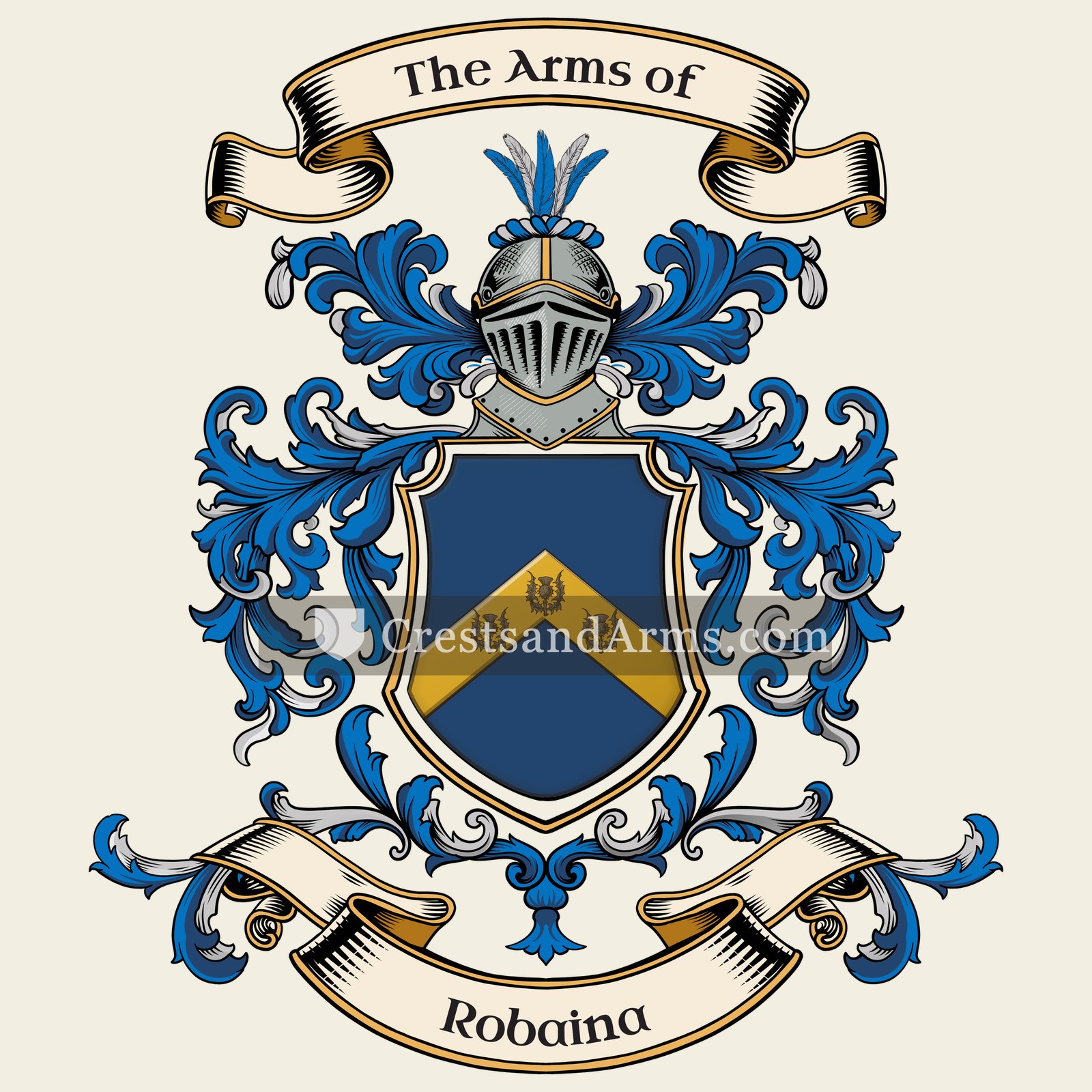
Symbols on this shield
chevronProtection, and faithful service completed
plant thistleDefiance, and the defence of Scotland
Colours
Blue (Azure)Means: Loyalty and truth
Gold (Or)Means: Generosity
Historical info
Source
Sir Bernard Burke, The General Armory of England, Scotland, Ireland and Wales, London: Harrison & Sons, 1884
Blazon (the actual original written record)
“Az. on a chev. or, three thistles ppr”
ChesterGrove Hill · Chester, c. 1620
Digital archive packCoat of arms PNG, gold border print PDF, vector SVG and the certificate of authenticity. Sent to your email in minutes.
Map of England showing where the Robaina arms are recorded
The Robaina arms were recorded in Chester, c. 1620.
Cheshire was governed apart from the rest of England for much of its history, with its own courts and its own gentry. That separateness bred a strong local landed class, and landed families carried arms.
This is where the arms were entered in the register. Families often moved to other parts of the country, so the same name can turn up in more than one region.
The body that granted and recorded arms in England in this period.
James VI and I
Sovereign of the period
James VI and I
1603–1625
Reigning in Spain when the Robaina arms are first recorded.
How Arms Worked in England
English heraldry allowed arms to be shared by all legitimate descendants of the original owner. These symbols were treated as personal property that moved through the generations to all children. While the eldest son kept the original design, other family members could use the same shield without needing to change it or register their own unique versions.
Granting authority
The College of Arms in London has regulated the use of coats of arms throughout England and Wales since 1484.
How they got arms
Families typically obtained their coats of arms through a formal grant from the Crown or by proving their ancient right to them.
Where arms were recorded
All official coats of arms are recorded in the registers kept at the College of Arms, which date back to the fifteenth century.
The family's standing
Recorded among the armigerous families of Chester.
Origin & History of the Robaina Family in England
The history of the Robaina name in England is rooted in the bustling city of Chester during the early seventeenth century. By 1620, records indicate that members of the family were already established within this historic walled city, which served as a major hub for trade and regional administration. During this period, Chester was a gateway for movement between England and neighboring regions, suggesting that the family likely integrated into the local merchant or artisan classes that defined the city’s economy. Life in Chester at this time was shaped by the restoration of civic order and the growth of local industries, providing a stable environment for families to settle and grow. While the name carries distinct linguistic origins from outside of England, its presence in Chester highlights how families moved across borders to participate in the evolving social and economic landscape of early modern Britain.
Related Branches & Arms
Root word
Rubens
Latin for red or reddish in color.
This name
RobainaA habitational surname referring to a person from a place characterized by reddish soil.
also spelled
Robyn
Robinson
Robyns
Documented Sources
J. B. Rietstap, Armorial Général, Gouda: G. B. van Goor Zonen, 1884–87
Archives départementales de la Drôme, Registres paroissiaux et d'état civil de la commune de Valence
Dauzat, Albert, Dictionnaire étymologique des noms et prénoms de France, 1951
Moreri, Louis, Le Grand Dictionnaire historique ou le mélange curieux de l'histoire sacrée et profane, 1759
Digital archive packCoat of arms PNG, gold border print PDF, vector SVG and the certificate of authenticity. Sent to your email in minutes.


 handFaith, sincerity and justice
 handFaith, sincerity and justice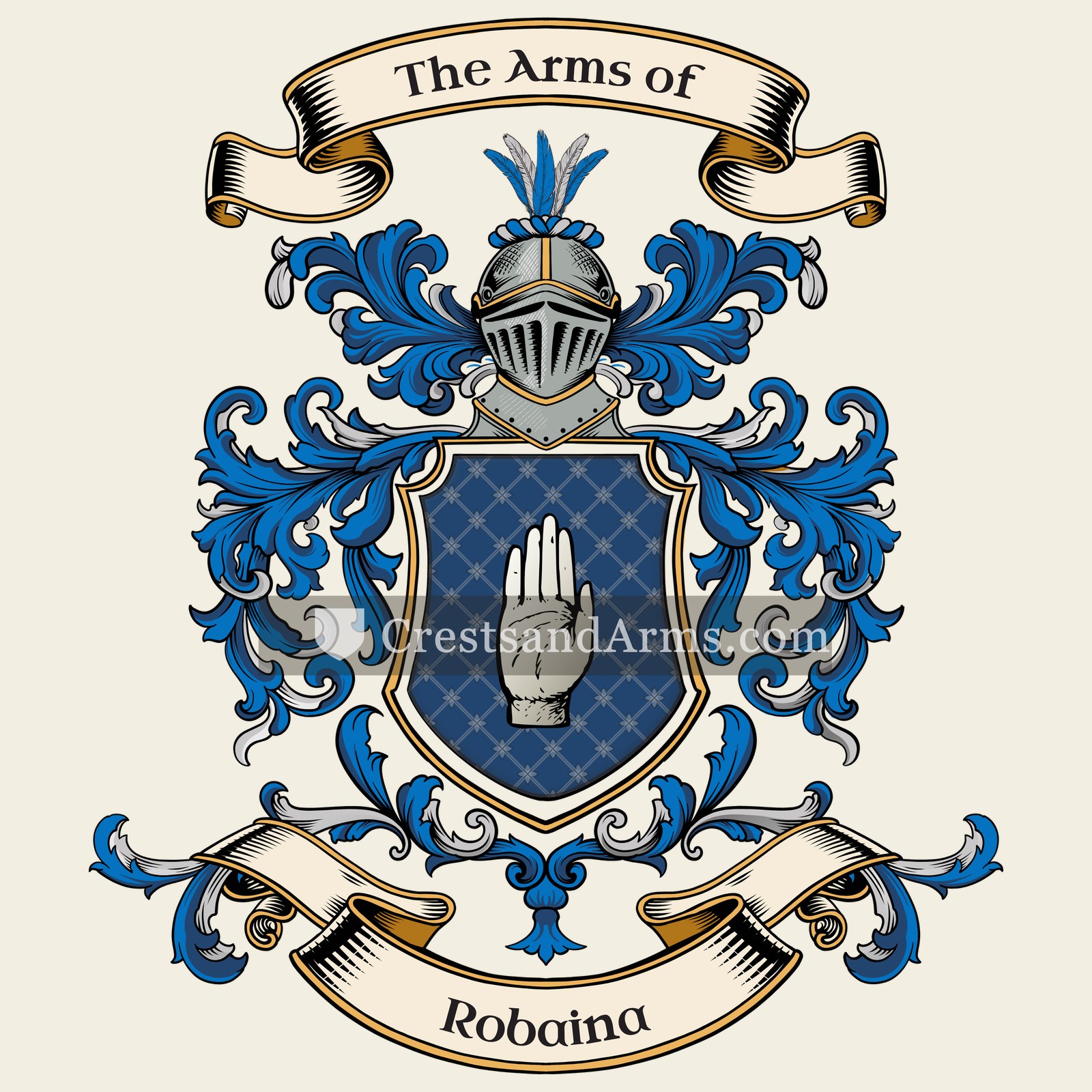


 chevronProtection, and faithful service completed
 plant thistleDefiance, and the defence of Scotland