Map of Netherlands showing where the Roelofs arms are recorded
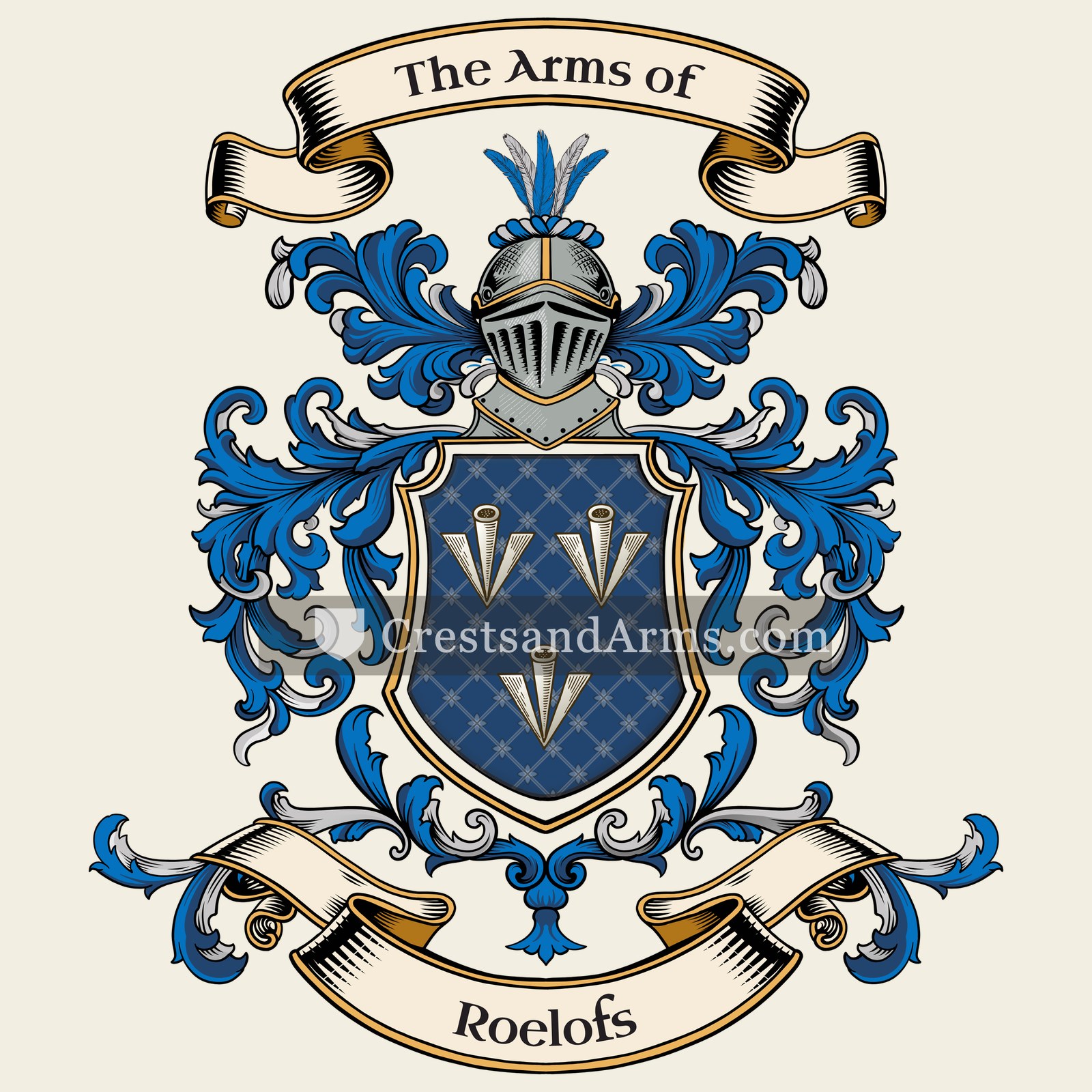
The Roelofs arms were recorded in Amsterdam, c. 1815.
This is where the arms were entered in the register. Families often moved to other parts of the country, so the same name can turn up in more than one region.
Region
Amsterdam
Town
Amsterdam
First recorded
1815
Granting Authority for the Roelofs Arms
Hoge Raad van Adel
Photograph made by me · CC BY-SA 3.0
The body that granted and recorded arms in Netherlands in this period.
William I of the Netherlands
Sovereign of the period
William I of the Netherlands
1815–1840
Reigning in Netherlands when the Roelofs arms are first recorded.
How Arms Worked in Netherlands
In the Netherlands, coats of arms were often used by noble families and those who held specific public offices. These arms were passed down through the generations to legitimate descendants. Younger branches of a family usually kept the original design without needing to add special marks. This system ensured that the family identity remained clear and consistent over many years.
Granting authority
The Hoge Raad van Adel is the official body that regulates and manages noble titles and coats of arms in the Netherlands.
How they got arms
Families typically obtained their coats of arms through official royal grants or by proving their long-standing historical use of the symbols.
Where arms were recorded
Coats of arms are officially recorded in the registers held by the Hoge Raad van Adel, which began its work in 1814.
The family's standing
Recorded among the armigerous families of Netherlands.
Origin & History of the Roelofs Family in Netherlands
The surname Roelofs is a patronymic name, which means it was originally created to identify a person as the son of someone named Roelof. The name Roelof itself is a shortened version of the Germanic name Rudolf, which combines words meaning fame and wolf. By the time the family was firmly established in Amsterdam in 1815, the use of fixed surnames had become a legal requirement in the Netherlands due to reforms introduced during the Napoleonic era. Before this period, many families in the region used patronymics that changed with each generation, but the Roelofs line eventually adopted the name as a permanent family identifier. Living in Amsterdam during the early nineteenth century placed the family at the center of a rapidly changing city that was transitioning from a period of French occupation to the newly formed Kingdom of the Netherlands. This era was marked by significant growth in trade and urban development, providing a stable environment for families to solidify their identities and record their histories in official civil registries.
Related Branches & Arms
Root word
Hrodulf
Derived from Germanic elements meaning glorious wolf.
This name
RoelofsA patronymic surname meaning son of Roelof, which is a Dutch form of Rudolph.
also spelled
Roeloffs
Rolofs
Related arms
Roeloffsvariant spelling
Documented Sources
J. B. Rietstap, Armorial Général, Gouda: G. B. van Goor Zonen, 1884–87
Meertens, P.J., De betekenis van de Nederlandse familienamen, 1950


 bendDefence, and the scarf of a commander
 arrowReadiness for battle, and affliction endured
 bendDefence, and the scarf of a commander
 arrowReadiness for battle, and affliction endured