Map of Germany showing where the Roessler arms are recorded
The Roessler arms were recorded in Nuremberg, c. 1765.
This is where the arms were entered in the register. Families often moved to other parts of the country, so the same name can turn up in more than one region.
The body that granted and recorded arms in Germany in this period.
Francis I, Holy Roman Emperor
Sovereign of the period
Francis I, Holy Roman Emperor
1745–1765
Reigning in Germany when the Roessler arms are first recorded.
How Arms Worked in Germany
In the Holy Roman Empire, coats of arms were often granted to individuals by the Emperor or his representatives. These arms were then passed down through the generations to all legitimate descendants of the original holder. Younger branches of a family usually kept the same shield design without needing to change it, as the arms belonged to the entire lineage.
Granting authority
The Holy Roman Emperor held the sole power to grant new coats of arms throughout his vast imperial territories.
How they got arms
Families typically obtained their coats of arms through a formal imperial grant or by proving their noble status to the authorities.
Where arms were recorded
These grants were officially recorded in the Imperial Chancery registers, which began keeping formal records of such honors during the Middle Ages.
The family's standing
Recorded among the armigerous families of Germany.
Origin & History of the Roessler Family in Germany
The surname Roessler originates from the German word "Rössler," which historically referred to someone who worked with horses or served as a horse-dealer. During the Middle Ages, many German surnames were tied to a person's trade, and this name likely identified a family involved in the vital horse-trading industry of the Holy Roman Empire. By the mid-18th century, the family had established a notable presence in the city of Nuremberg. In 1765, Nuremberg was a bustling center of commerce and craft, serving as a hub for merchants who traveled across Central Europe. Families like the Roesslers were often part of the urban middle class, contributing to the city's reputation for skilled labor and trade. Living in a major center like Nuremberg suggests that early members of the family were likely integrated into the city’s complex guild systems and local economy, which relied heavily on the movement of goods and livestock.
Meaning of the Roessler family crest colors & symbols
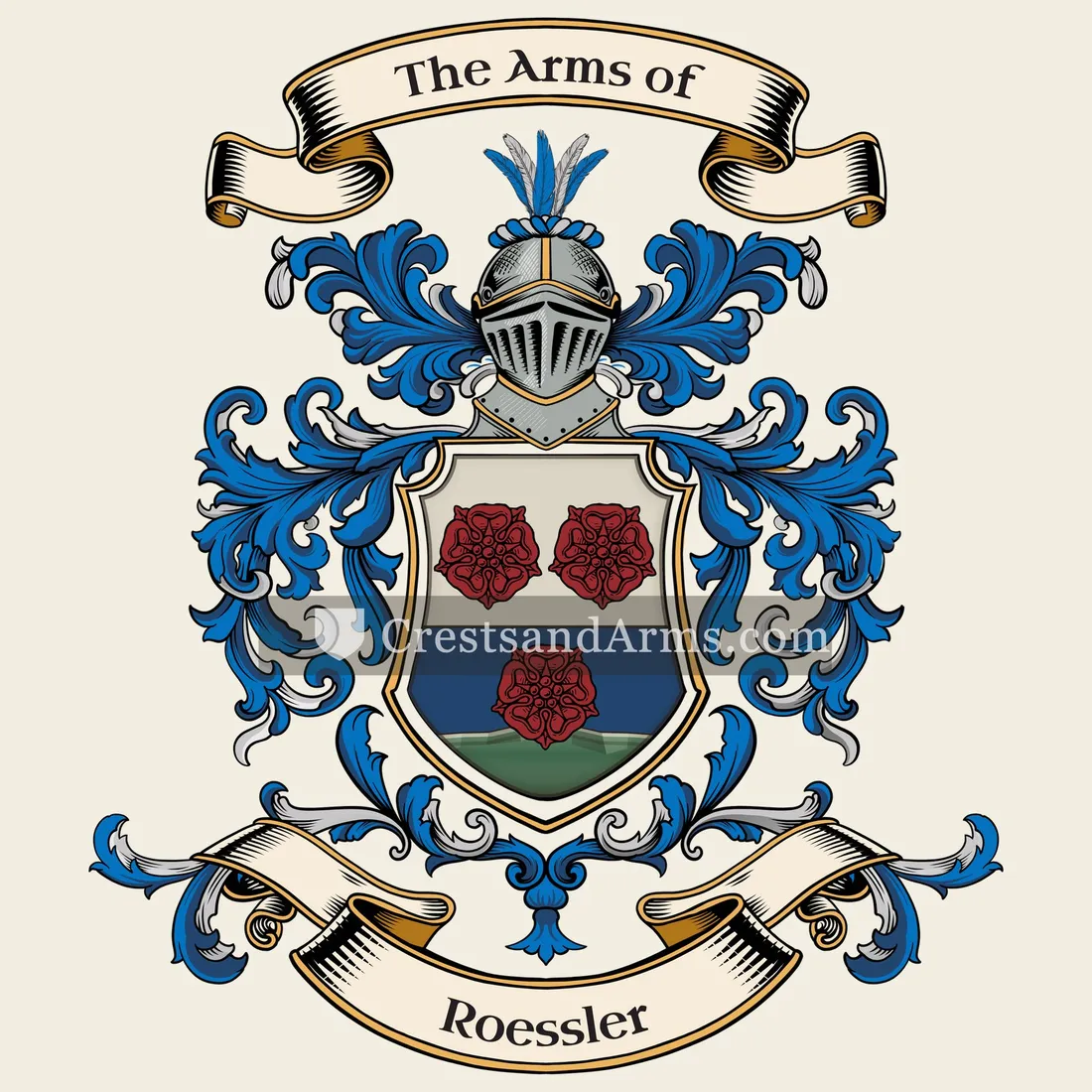
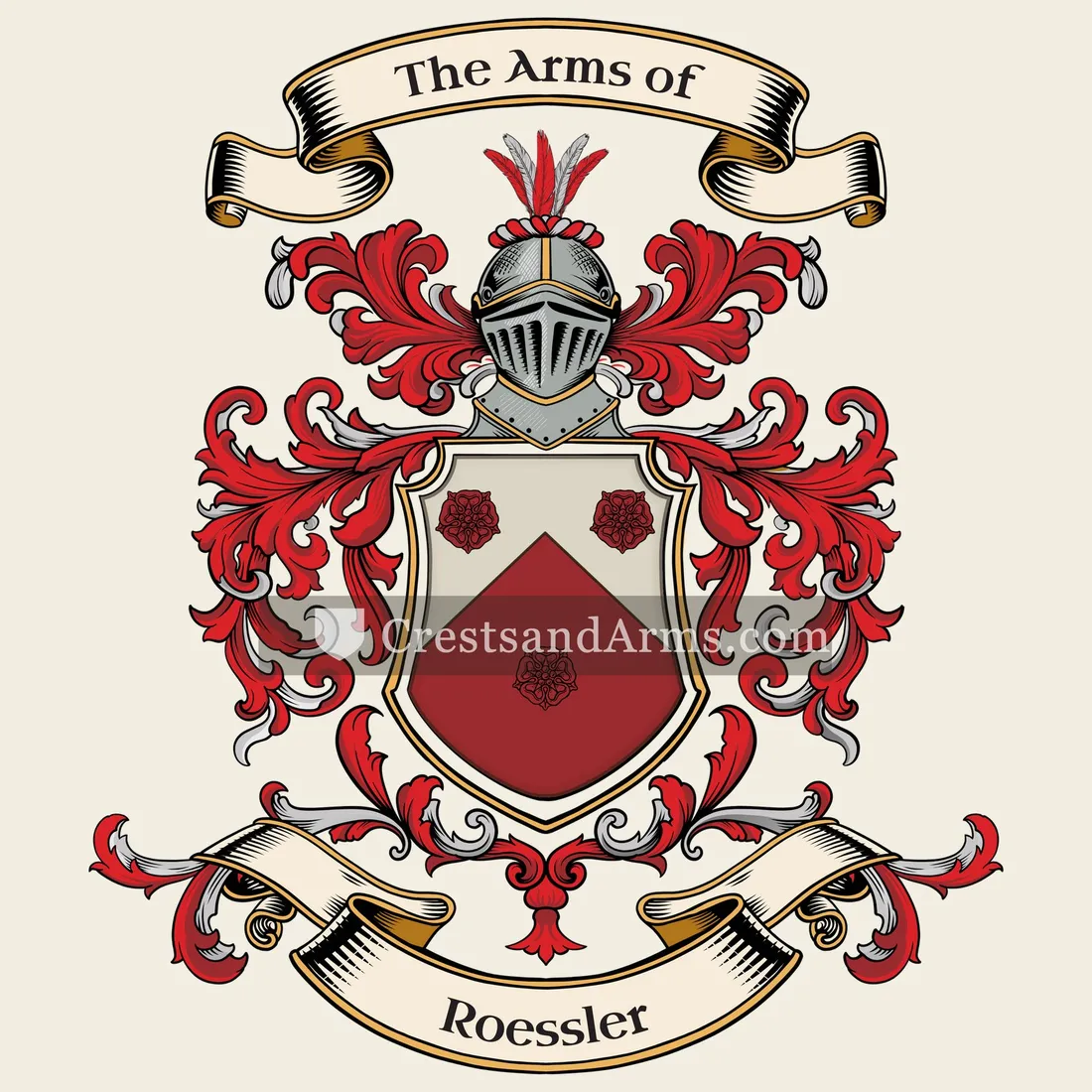
Symbols on this shield
roseThe seventh son, and beauty with grace
Colours
Silver (Argent)Means: Peace and sincerity
Red (Gules)Means: Military strength
Historical info
Source
J. B. Rietstap, Armorial Général, Gouda: G. B. van Goor Zonen, 1884–87
Blazon (the actual original written record)
“D'arg. chapé-ployé de gu.; à trois roses doubles de l'un à l'autre, bout. d'or. Cq. cour. C.: un vol, aux armes de l'écu.”
Austriac. 1507
Digital archive packCoat of arms PNG, gold border print PDF, vector SVG and the certificate of authenticity. Sent to your email in minutes.
Map of Austria showing where the Roessler arms are recorded
The Roessler arms were recorded in Austria, c. 1507.
Arms such as these were typically recorded in Tyrol.
Tyrol was mountain country in western Austria, where the valleys were held by families who had been there a very long time. Old tenure counted for more than money, and old families carried arms.
This is where the arms were entered in the register. Families often moved to other parts of the country, so the same name can turn up in more than one region.
Region
Tyrol
First recorded
1507
Granting Authority for the Roessler Arms
Imperial and Royal chancery
Sodacan · CC BY-SA 3.0
The body that granted and recorded arms in Austria in this period.
How Arms Worked in Austria
Austrian coats of arms were often linked directly to noble titles granted by the Emperor. These symbols belonged to the entire family line rather than just one individual. When a family grew, new branches kept the original design without needing to change it. This system allowed all members of a noble house to share the same identity across many generations.
Granting authority
The Imperial and Royal chancery managed all heraldic matters and controlled the official granting of arms throughout the Austrian lands.
How they got arms
Families typically received their arms through a formal imperial decree that often accompanied the elevation of a person to noble status.
Where arms were recorded
Official records of these grants were kept in the Imperial Register of Nobility which began its formal documentation process in 1453.
The family's standing
Recorded among the armigerous families of Austria.
Origin & History of the Roessler Family in Austria
The family name Roessler finds its roots in the mountainous landscape of the Austrian Tyrol, where records confirm the presence of family members as early as 1507. The name itself is derived from the Middle High German word for a horseman or a breeder of horses, suggesting that the earliest ancestors likely held a specific trade or social role related to animal husbandry. During the sixteenth century, the Tyrol region served as a vital crossroads for trade routes connecting northern Europe to Italy. Families living in these alpine valleys often occupied positions as local administrators, skilled craftsmen, or farmers who managed the difficult terrain. As the family established their presence in these communities, they became part of the social fabric that defined the Tyrol during the late Middle Ages and the early Renaissance. This period of history was marked by significant shifts in local governance and economic growth, allowing families like the Roesslers to settle and grow within the unique cultural environment of the Austrian Alps.
Roessler Meaning & Related Branches
Root word
Rösel
A diminutive form of the Middle High German word for rose.
This name
RoesslerAn occupational name for a gardener or someone who lived near rose bushes.
also spelled
Rosseler
Rosler
Documented Sources
J. B. Rietstap, Armorial Général, Gouda: G. B. van Goor Zonen, 1884–87
Bahlow, Hans, Deutsches Namenlexikon: Familien- und Vornamen nach Ursprung und Sinn erklärt, 1967
Heintze, Albert, Die deutschen Familien-Namen: geschichtlich, geographisch, sprachlich, 1903
Stadtarchiv Nürnberg, Bürgerbücher der Stadt Nürnberg, 1765
Digital archive packCoat of arms PNG, gold border print PDF, vector SVG and the certificate of authenticity. Sent to your email in minutes.


 mountThe ground held, and steadfastness upon it
 roseThe seventh son, and beauty with grace
 mountThe ground held, and steadfastness upon it
 roseThe seventh son, and beauty with grace