Map of Austria showing where the Roll arms are recorded
The Roll arms were recorded in Austria, c. 1486.
Arms such as these were typically recorded in Tyrol.
Tyrol was mountain country in western Austria, where the valleys were held by families who had been there a very long time. Old tenure counted for more than money, and old families carried arms.
This is where the arms were entered in the register. Families often moved to other parts of the country, so the same name can turn up in more than one region.
Region
Tyrol
First recorded
1486
Granting Authority for the Roll Arms
Imperial and Royal chancery
Sodacan · CC BY-SA 3.0
The body that granted and recorded arms in Austria in this period.
Frederick III, Holy Roman Emperor
Sovereign of the period
Frederick III, Holy Roman Emperor
1452–1493
Reigning in Austria when the Roll arms are first recorded.
How Arms Worked in Austria
Austrian coats of arms were often linked directly to noble titles granted by the Emperor. These symbols belonged to the entire family line rather than just one individual. When a family grew, new branches kept the original design without needing to change it. This system allowed all members of a noble house to share the same identity across many generations.
Granting authority
The Imperial and Royal chancery managed all heraldic matters and controlled the official granting of arms throughout the Austrian lands.
How they got arms
Families typically received their arms through a formal imperial decree that often accompanied the elevation of a person to noble status.
Where arms were recorded
Official records of these grants were kept in the Imperial Register of Nobility which began its formal documentation process in 1453.
The family's standing
Recorded among the armigerous families of Austria.
Origin & History of the Roll Family in Austria
The family name Roll has deep roots in the mountainous region of Tyrol, where records confirm members of the family were established by 1486. During this period, the name was closely tied to the rugged landscape and the social structures of the late Middle Ages. Families with this name often lived in small alpine communities where they worked as landowners or skilled tradespeople. Because Tyrol served as a vital crossroads for trade between Italy and the rest of the Holy Roman Empire, the Roll family likely benefited from the movement of goods and ideas through the mountain passes. As the centuries progressed, the name became a permanent fixture in local tax rolls and parish registers. These documents show that the family integrated into the local economy and participated in the civic life of their villages. By settling in this region, the early members of the family helped shape the unique cultural identity of the Tyrolean people.
Meaning of the Roll family crest colors & symbols
Symbols on this shield
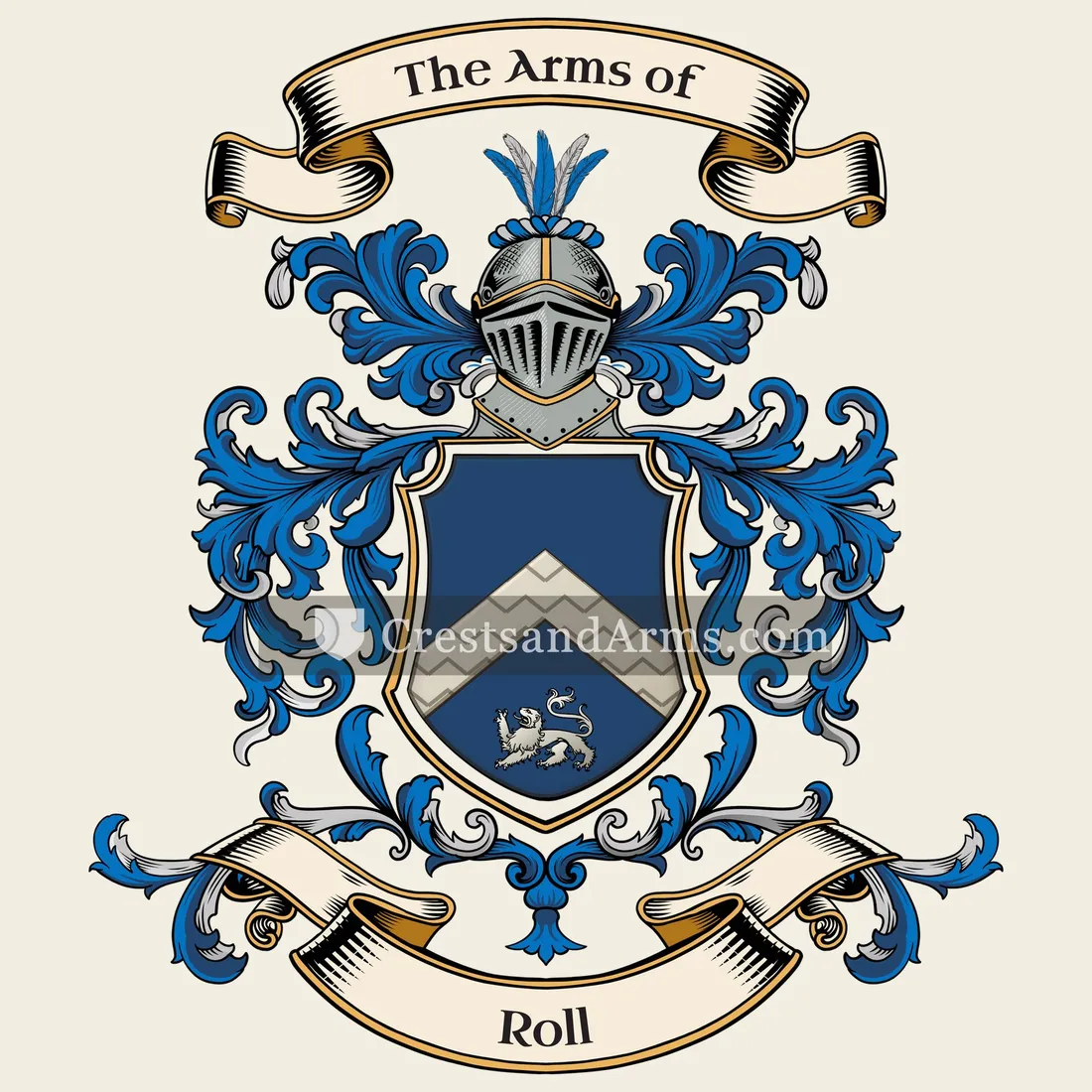
chevronProtection, and faithful service completed
lionCourage, strength and royalty
Colours
Blue (Azure)Means: Loyalty and truth
Silver (Argent)Means: Peace and sincerity
Historical info
Source
J. B. Rietstap, Armorial Général, Gouda: G. B. van Goor Zonen, 1884–87
Blazon (the actual original written record)
“D'azur au chev. d'arg., acc. en p. d'un lion du même.”
GascogneGascogne, c. 1663
Digital archive packCoat of arms PNG, gold border print PDF, vector SVG and the certificate of authenticity. Sent to your email in minutes.
Map of France showing where the Roll arms are recorded
The Roll arms were recorded in Gascogne, c. 1663.
Gascogne was south-western country of small estates and stubborn independence, long fought over by France and England. Its gentry were numerous and poor, and even a small holding was enough for a shield of one's own.
This is where the arms were entered in the register. Families often moved to other parts of the country, so the same name can turn up in more than one region.
The body that granted and recorded arms in France in this period.
Louis XIV of France
Sovereign of the period
Louis XIV of France
1643–1715
Reigning in Austria when the Roll arms are first recorded.
How Arms Worked in France
In France, a coat of arms was a mark of honor that passed down through the male line to all legitimate descendants. Families often used the same shield without changes to show their shared heritage. If a branch wanted to stand out, they could add a small mark to their shield to show their specific place in the family tree.
Granting authority
The Juge d'armes de France acted as the official authority that regulated and verified coats of arms across the country.
How they got arms
Families typically inherited their arms from ancestors, though they could also receive them through royal grants or by proving their noble status.
Where arms were recorded
Coats of arms were officially recorded in the Armorial Général de France, which began its main collection in the year 1696.
The family's standing
Recorded among the armigerous families of Gascogne.
Origin & History of the Roll Family in France
The history of the Roll family in France is deeply rooted in the southwestern region of Gascogne. By the year 1663, records confirm that members of the family were already established in this area, which was known for its distinct culture and strong local traditions. The name likely evolved from regional linguistic patterns common to the Gascon dialect, where names often shifted to reflect the specific identity of a household or a trade. Living in Gascogne during the seventeenth century meant the family navigated a landscape shaped by rural agriculture and the complex social structures of the French provinces. As they settled into their communities, the family became part of the local fabric, contributing to the agricultural and social life of the region. Their presence in Gascogne serves as a starting point for understanding how the family name persisted through generations of French history.
Meaning of the Roll family crest colors & symbols
Symbols on this shield
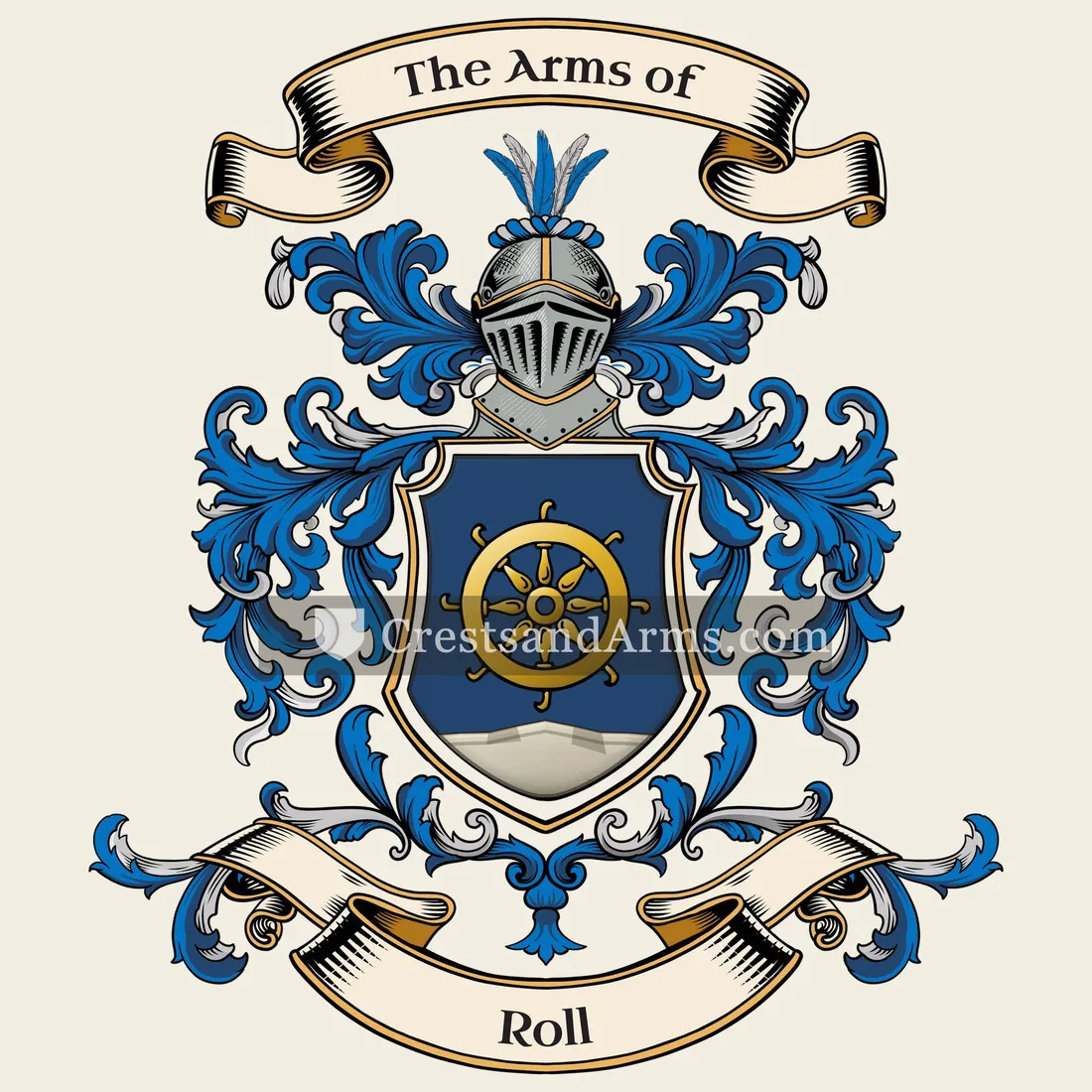
mountThe ground held, and steadfastness upon it
wheelFortune's turning, and the carter's trade
Colours
Blue (Azure)Means: Loyalty and truth
Silver (Argent)Means: Peace and sincerity
Gold (Or)Means: Generosity
Historical info
Source
J. B. Rietstap, Armorial Général, Gouda: G. B. van Goor Zonen, 1884–87
Blazon (the actual original written record)
“D'azur à une roue d'or, surmontant une terrasse rocheuse d'arg. C.: la roue, soutenue de la terrasse. L. d'or et d'azur.”
SwitzerlandNeufchâtel, c. 1745
Digital archive packCoat of arms PNG, gold border print PDF, vector SVG and the certificate of authenticity. Sent to your email in minutes.
Map of Switzerland showing where the Roll arms are recorded
The Roll arms were recorded in Neufchâtel, c. 1745.
This is where the arms were entered in the register. Families often moved to other parts of the country, so the same name can turn up in more than one region.
The body that granted and recorded arms in Switzerland in this period.
How Arms Worked in Switzerland
In Switzerland, coats of arms were not restricted to the nobility and were often adopted by common citizens and families. These symbols were passed down through generations to show family identity. When branches of a family grew, they often changed small details of the design to distinguish their own line from the original group.
Granting authority
Cantonal and civic authorities managed the use of coats of arms within their specific regions and local jurisdictions.
How they got arms
Families typically assumed their own coats of arms based on local custom rather than receiving them from a central monarch.
Where arms were recorded
Arms were recorded in various cantonal and civic registers starting from the fourteenth century throughout the Swiss region.
The family's standing
Recorded among the armigerous families of Switzerland.
Origin & History of the Roll Family in Switzerland
The history of the Roll family in Switzerland is deeply rooted in the region of Neuchâtel, where records confirm their presence as early as 1745. During the eighteenth century, Neuchâtel was a unique principality that maintained a complex political connection to the Prussian monarchy while operating under its own local customs and social structures. Families like the Rolls often integrated into the local economy through skilled trades, agriculture, or service within the growing administrative sectors of the region. As the family established itself in this area, they became part of the distinct cultural fabric of the Jura Mountains, where life was defined by the seasonal rhythms of the landscape and the influence of the Reformation. Over the following decades, the name became associated with the steady development of the local community, reflecting the broader patterns of migration and social stability that characterized the Swiss cantons during this era.
Roll Meaning & Related Branches
Root word
Rollo
A Germanic name meaning famous wolf or renowned wolf.
This name
RollAn occupational name for a person who worked with rolls of parchment or cloth.
also spelled
Rol
Role
Related arms
Rolvariant spelling
Rolevariant spelling
Documented Sources
J. B. Rietstap, Armorial Général, Gouda: G. B. van Goor Zonen, 1884–87
Tiroler Landesarchiv, Tiroler Steuerkataster 1486
Huter, Franz, Tiroler Urkundenbuch, 1937
Obermair, Hannes, Bozen Süd – Bolzano Nord: Schriftlichkeit und urkundliche Überlieferung der Stadt Bozen bis 1500, 2005
Digital archive packCoat of arms PNG, gold border print PDF, vector SVG and the certificate of authenticity. Sent to your email in minutes.


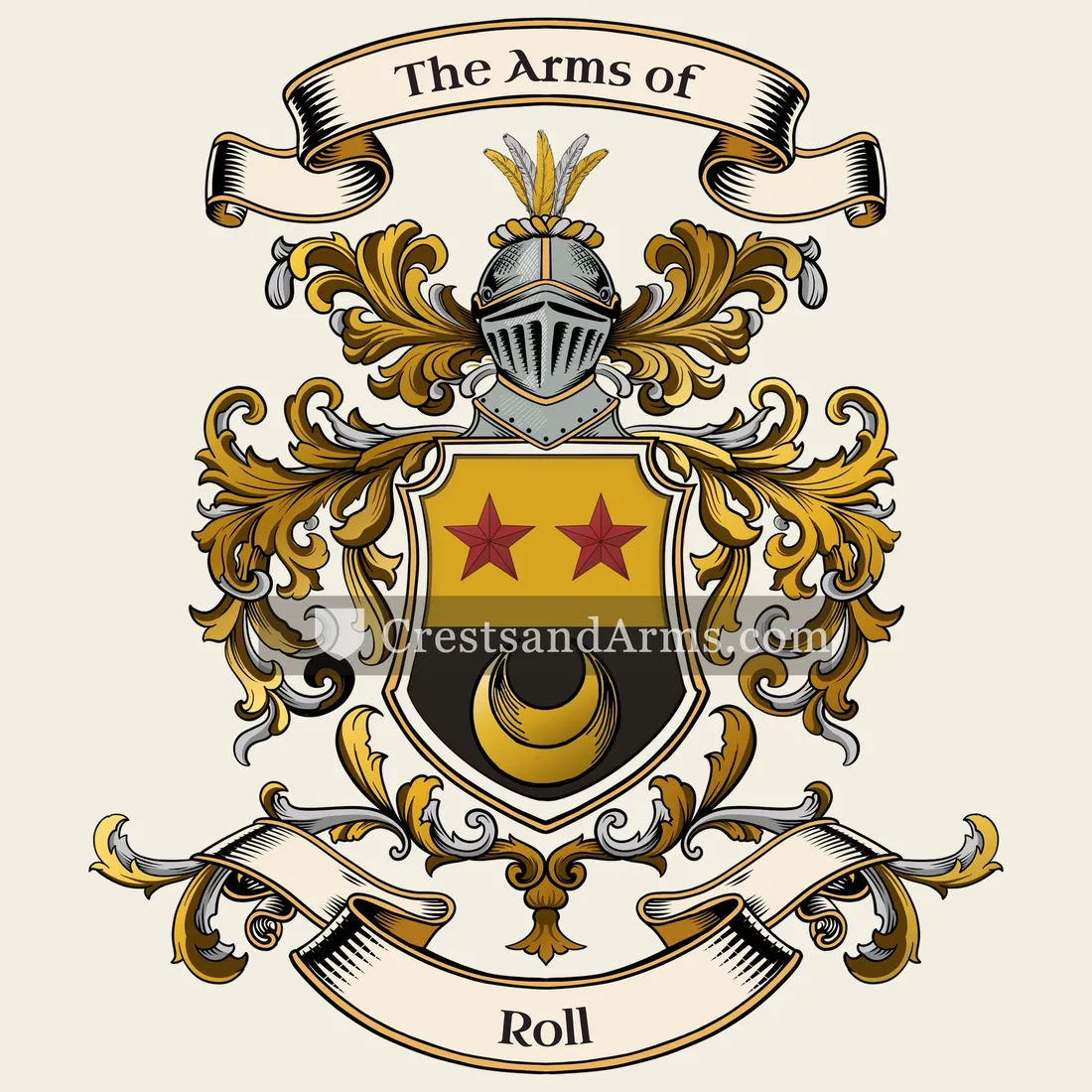
 mulletThe third son, and a divine quality from above
 crescentHonour by the sovereign, and the second son
 mulletThe third son, and a divine quality from above
 crescentHonour by the sovereign, and the second son


 chevronProtection, and faithful service completed
 lionCourage, strength and royalty


 mountThe ground held, and steadfastness upon it
 wheelFortune's turning, and the carter's trade