A record of documented arms, meaning and origin, researched for the Romano family lines. Documented in 2 countries.
Reg. 7724 · Spanish, P–S
Coat of Arms & Family Crest Details
Symbols on this shield
cross symbolChristian faith and service
cantonA mark of honour granted by the sovereign
saltireResolution, and St Andrew's cross
fleur de lisPurity, light, and the sixth son
saltire coupedResolution, and the cross of St Andrew
Colours
Gold (Or)Means: Generosity
Red (Gules)Means: Military strength
Blue (Azure)Means: Loyalty and truth
Historical info
Source
J. B. Rietstap, Armorial Général, Gouda: G. B. van Goor Zonen, 1884–87
Blazon (the actual original written record)
“D'or à la croix florencée de gu., acc. de quatre fleurs-de-lis d'azur dans les cantons de l'écu; à la bord. de gu., ch. de huit flanchis d'or [V. Barco.]”
AndalusiaAndalusia, c. 1722
Digital archive packCoat of arms PNG, gold border print PDF, vector SVG and the certificate of authenticity. Sent to your email in minutes.
Map of Spain showing where the Romano arms are recorded
The Romano arms were recorded in Andalusia, c. 1722.
Andalusia was the last part of Spain taken back from the Moors, and the land was shared out among the men who took it. A grant of land came with a grant of arms, so the region produced a great many.
This is where the arms were entered in the register. Families often moved to other parts of the country, so the same name can turn up in more than one region.
The body that granted and recorded arms in Spain in this period.
Philip V of Spain
Sovereign of the period
Philip V of Spain
1714–1724
Reigning in Spain when the Romano arms are first recorded.
How Arms Worked in Spain
In Spain, a coat of arms was considered a form of property that belonged to the entire family line. These arms were passed down from a father to all his children equally. Younger branches of the family usually kept the original design without needing to add any special marks to distinguish their specific line.
Granting authority
The Cronista Rey de Armas was the official body that regulated and granted coats of arms throughout Spain.
How they got arms
Families often obtained their arms through royal grants or by proving their noble status to the official heraldic authority.
Where arms were recorded
Coats of arms were officially recorded in the registers of the Cronista Rey de Armas starting in 1496.
The family's standing
Recorded among the armigerous families of Andalusia.
Origin & History of the Romano Family in Spain
The surname Romano carries a deep connection to the Mediterranean world, reflecting a legacy that links individuals to the ancient Roman Empire. In the context of Spain, the name often served as a marker for families who maintained ties to the cultural or administrative traditions of Rome long after the empire dissolved. By the early 18th century, records confirm that members of the Romano family were established in the Andalusia region. During this period, Andalusia was a vibrant center of trade and agriculture, and families like the Romanos were often involved in the local economy or the management of land. Because the name was historically used to distinguish people who traveled from Italy or identified with Roman heritage, those living in southern Spain in 1722 likely represented a lineage that had integrated into Spanish society over several generations. This presence in Andalusia suggests that the family had successfully transitioned from their ancestral roots into the complex social fabric of the Spanish Enlightenment era.
Coat of Arms & Family Crest Details
Symbols on this shield
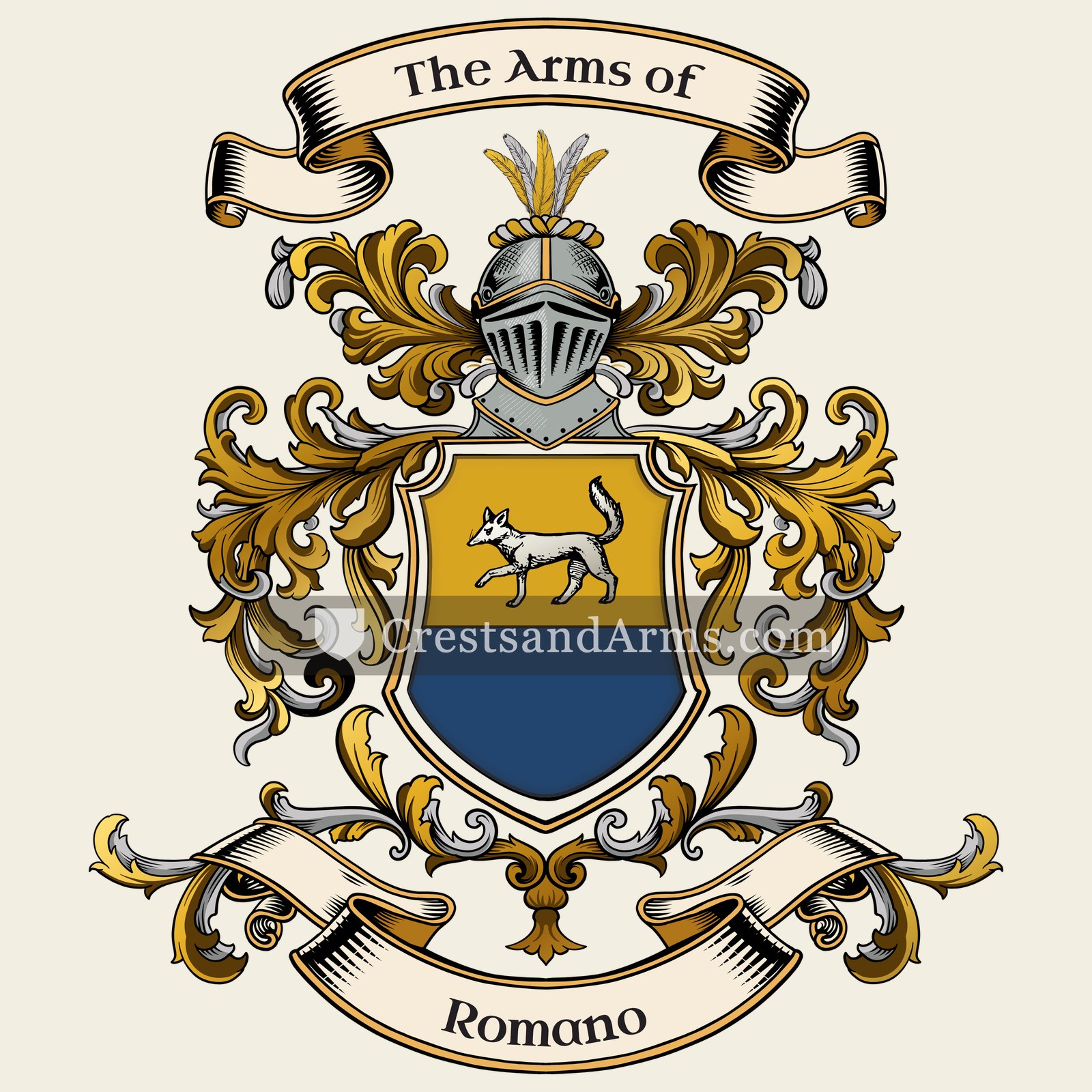
foxWit and wisdom in defence
Colours
Gold (Or)Means: Generosity
Blue (Azure)Means: Loyalty and truth
Silver (Argent)Means: Peace and sincerity
Historical info
Source
J. B. Rietstap, Armorial Général, Gouda: G. B. van Goor Zonen, 1884–87
Blazon (the actual original written record)
“Coupé d'or sur azur; à un renard (dolce) ramp. d'arg., br. sur le coupé.”
VeniceVenice, c. 1775
Digital archive packCoat of arms PNG, gold border print PDF, vector SVG and the certificate of authenticity. Sent to your email in minutes.
Map of Italy showing where the Romano arms are recorded
The Romano arms were recorded in Venice, c. 1775.
Venice ran on trade, and its great families were merchants before they were anything else. The city kept a formal list of its noble houses, and a name on that list carried arms as a matter of record.
This is where the arms were entered in the register. Families often moved to other parts of the country, so the same name can turn up in more than one region.
The body that granted and recorded arms in Italy in this period.
Alvise Giovanni Mocenigo
Sovereign of the period
Alvise Giovanni Mocenigo
1763–1778
Reigning in Spain when the Romano arms are first recorded.
How Arms Worked in Italy
In the Italian states, coats of arms were often used by noble families to show their status and history. These symbols were passed down through the generations to all legitimate male descendants. Younger branches of a family usually kept the original design but sometimes added small changes to distinguish their specific line from the main branch.
Granting authority
Various local rulers and city governments controlled the use of coats of arms across the different Italian states.
How they got arms
Families often assumed their own arms or received them as official grants from local lords, popes, or city councils.
Where arms were recorded
Arms were recorded in local city archives or private family books rather than in one single national register.
The family's standing
Recorded among the armigerous families of Venice.
Origin & History of the Romano Family in Italy
The surname Romano carries a deep connection to the history of the Italian peninsula, as it originally functioned as a descriptive label for individuals who hailed from the city of Rome. During the medieval period, people often adopted names based on their place of origin to distinguish themselves in growing urban centers. By the time the family established a documented presence in Venice in 1775, the name had already evolved from a simple geographic identifier into a formal hereditary surname. In the context of 18th-century Venice, a family bearing this name would have been part of a complex social landscape defined by trade, maritime power, and the unique administrative structures of the Venetian Republic. As the family navigated life in this famous city of canals, their name served as a link to their ancestral roots while they participated in the vibrant economic and cultural life of the late Venetian era.
Related Branches & Arms
Root word
Romanus
A Latin term meaning a citizen of Rome.
This name
RomanoRefers to a person who originated from Rome or the Roman Empire.
also spelled
Romani
Romanu
Romanno
Related arms
Lunasame arms
Barcosimilar arms
Karstichsimilar arms
Romanivariant spelling
Documented Sources
J. B. Rietstap, Armorial Général, Gouda: G. B. van Goor Zonen, 1884–87
Moll, Francesc de Borja, Els llinatges catalans, 1959
Faure, Roberto, Diccionario de apellidos españoles, 2001
Archivo General de Simancas, Registro del Sello de Corte
Archivo de la Real Chancillería de Granada, Pleitos de Hidalguía
Digital archive packCoat of arms PNG, gold border print PDF, vector SVG and the certificate of authenticity. Sent to your email in minutes.


 cross symbolChristian faith and service
 cantonA mark of honour granted by the sovereign
 saltireResolution, and St Andrew's cross
 fleur de lisPurity, light, and the sixth son
 saltire coupedResolution, and the cross of St Andrew
 cross symbolChristian faith and service
 cantonA mark of honour granted by the sovereign
 saltireResolution, and St Andrew's cross
 fleur de lisPurity, light, and the sixth son
 saltire coupedResolution, and the cross of St Andrew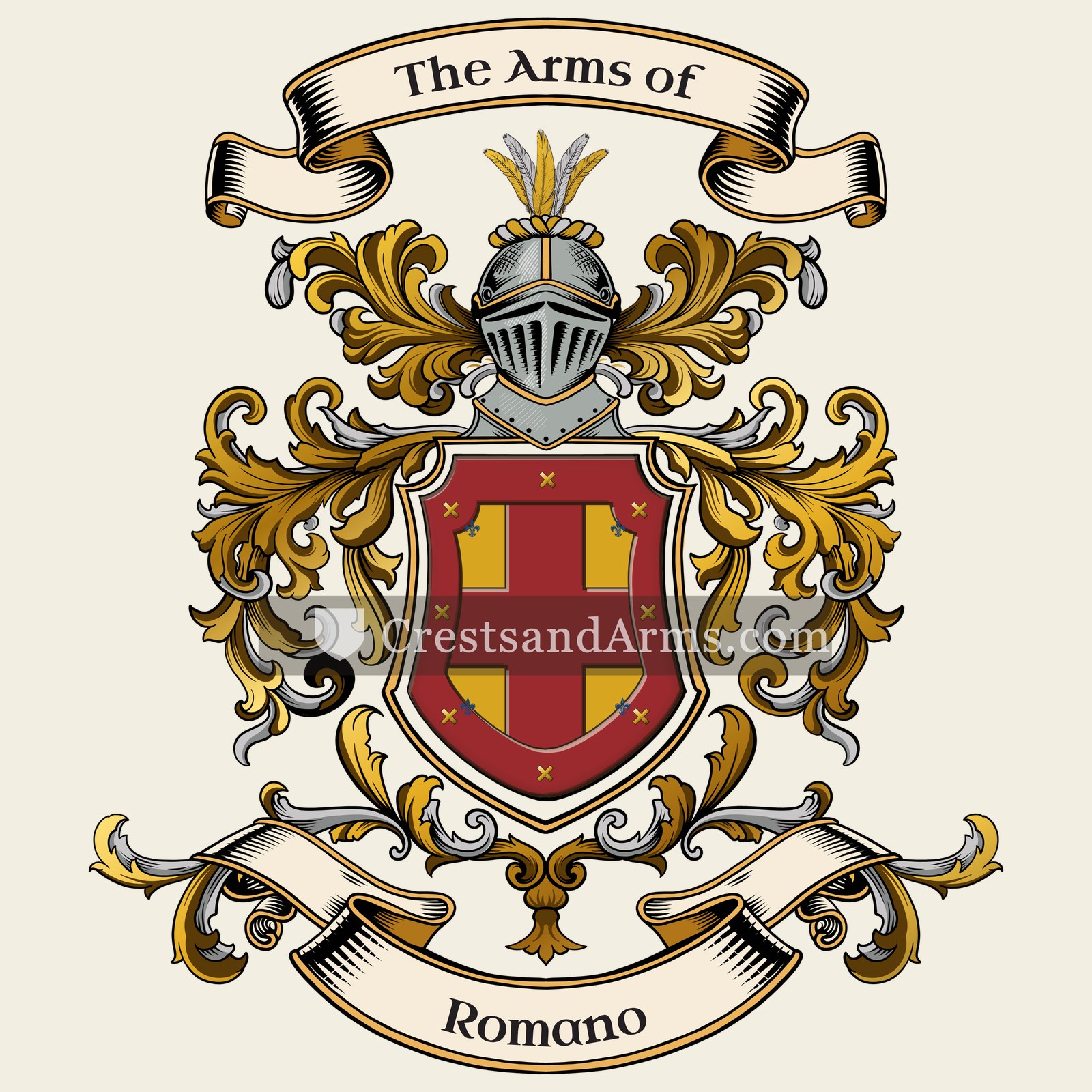


 foxWit and wisdom in defence