Map of Netherlands showing where the Rooks arms are recorded
The Rooks arms were recorded in Amsterdam, c. 1815.
This is where the arms were entered in the register. Families often moved to other parts of the country, so the same name can turn up in more than one region.
Region
Amsterdam
Town
Amsterdam
First recorded
1815
Granting Authority for the Rooks Arms
Hoge Raad van Adel
Photograph made by me · CC BY-SA 3.0
The body that granted and recorded arms in Netherlands in this period.
William I of the Netherlands
Sovereign of the period
William I of the Netherlands
1815–1840
Reigning in Netherlands when the Rooks arms are first recorded.
How Arms Worked in Netherlands
In the Netherlands, coats of arms were often used by noble families and those who held specific public offices. These arms were passed down through the generations to legitimate descendants. Younger branches of a family usually kept the original design without needing to add special marks. This system ensured that the family identity remained clear and consistent over many years.
Granting authority
The Hoge Raad van Adel is the official body that regulates and manages noble titles and coats of arms in the Netherlands.
How they got arms
Families typically obtained their coats of arms through official royal grants or by proving their long-standing historical use of the symbols.
Where arms were recorded
Coats of arms are officially recorded in the registers held by the Hoge Raad van Adel, which began its work in 1814.
The family's standing
Recorded among the armigerous families of Netherlands.
Origin & History of the Rooks Family in Netherlands
The surname Rooks has deep roots in the Netherlands, where it functioned as a descriptive name often linked to a person’s physical traits or their connection to the natural world. By the early 19th century, members of the Rooks family were firmly established in Amsterdam, a city that served as a bustling center for trade and social mobility during the transition into the Kingdom of the Netherlands. In 1815, the year the country officially became a kingdom, families like the Rooks were part of a growing urban population that navigated the shift from Napoleonic rule to a new national identity. These early residents of Amsterdam likely worked in the city’s diverse industries, contributing to the local economy as the nation rebuilt itself after years of conflict. The presence of the family in the city records at this time highlights their integration into the fabric of Dutch society during a pivotal moment in European history.
Coat of Arms & Family Crest Details
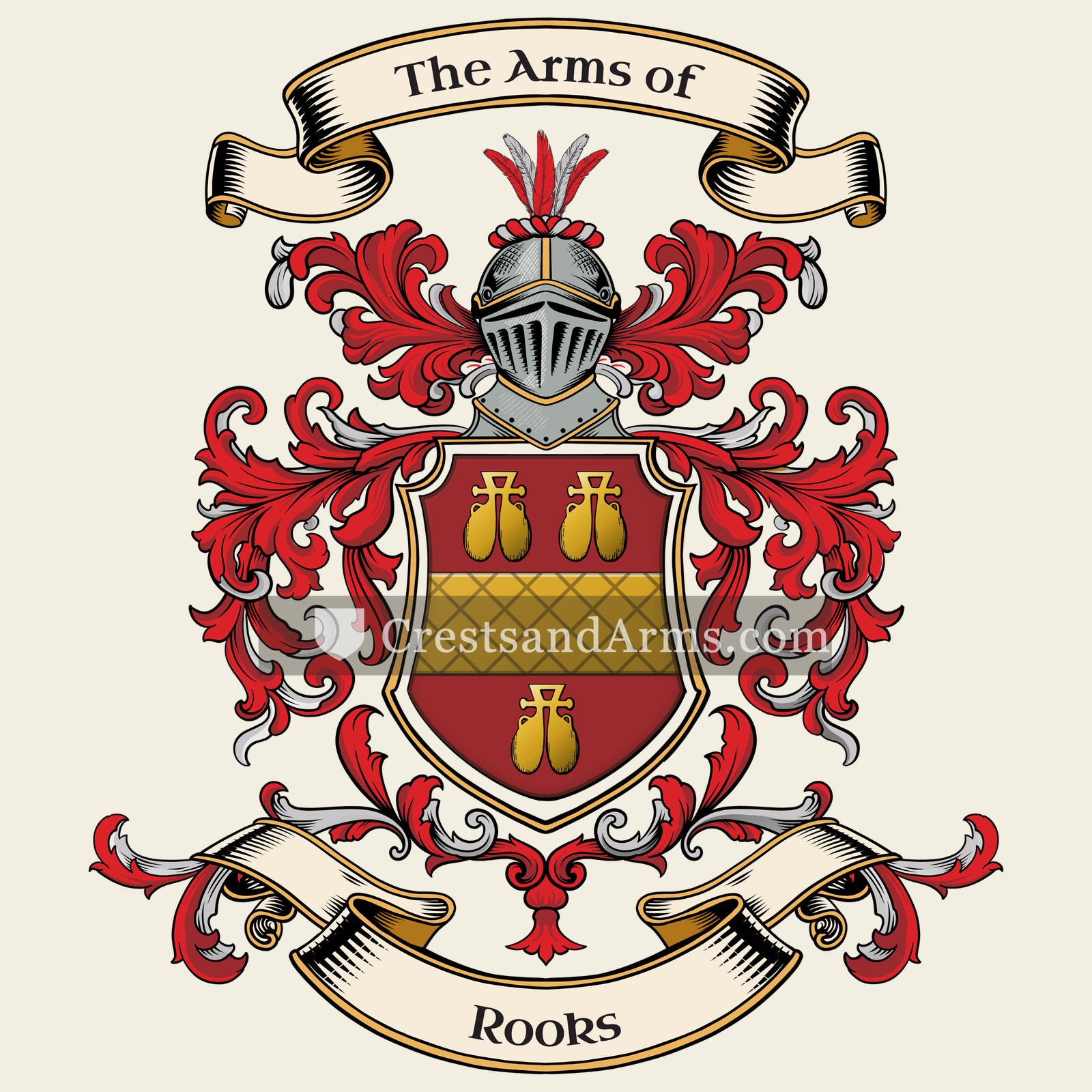
Symbols on this shield
chiefAuthority, wisdom and dominion
roundelA coin, and one who has been to the crusades
roseThe seventh son, and beauty with grace
lionCourage, strength and royalty
eagleNobility, strength and a keen mind
Colours
Blue (Azure)Means: Loyalty and truth
Red (Gules)Means: Military strength
Silver (Argent)Means: Peace and sincerity
Gold (Or)Means: Generosity
Historical info
Source
J. B. Rietstap, Armorial Général, Gouda: G. B. van Goor Zonen, 1884–87
Blazon (the actual original written record)
“Ec.: aux 1 et 4 d'azur à la barre ondée d'arg.; au lion d'or, lamp. de gu., br. sur la barre; aux 2 et 3 de gu. à une tête et col d'aigle d'arg., cour. d'or; au chef du même, ch. de trois tourt. d'azur. Sur le tout d'or à une rose de gu. Deux cq. cour. C.: 1° deux bras, arm. au nat., les mains de carn. supp. ensemble un coeur de gu.; entre six banderoles, à dextre une d'azur entre deux d'or, à sen. une d'arg. entre deux d'azur; 2° une tête et col d'aigle d'arg., cour. d'or, entre un vol d'arg.”
Swedenc. 1705
Digital archive packCoat of arms PNG, gold border print PDF, vector SVG and the certificate of authenticity. Sent to your email in minutes.
Map of Sweden showing where the Rooks arms are recorded
The Rooks arms were recorded in Sweden, c. 1705.
Arms such as these were typically recorded in Stockholm.
Stockholm held the Swedish court and the House of Nobility, where every noble family's arms were entered and kept. Families ennobled for service registered there, which is why so many are recorded around the city.
This is where the arms were entered in the register. Families often moved to other parts of the country, so the same name can turn up in more than one region.
The body that granted and recorded arms in Sweden in this period.
Carl XII of Sweden
Sovereign of the period
Carl XII of Sweden
1697–1718
Reigning in Netherlands when the Rooks arms are first recorded.
How Arms Worked in Sweden
In Sweden, a coat of arms belonged to a noble family as a whole rather than just one individual. These arms were passed down through the generations to all legitimate descendants. Younger branches of the family used the same shield without needing to change it. This system ensured that the entire lineage shared the same identity and status under the law.
Granting authority
The Riddarhuset, or House of Nobility, regulated all noble coats of arms in Sweden under royal authority.
How they got arms
Families received their coats of arms through royal grants of nobility which were then officially registered with the House.
Where arms were recorded
Coats of arms were officially recorded in the Swedish House of Nobility register starting in the year 1626.
The family's standing
Recorded among the armigerous families of Sweden.
Origin & History of the Rooks Family in Sweden
The family name Rooks has roots that stretch back into the urban landscape of early eighteenth-century Sweden. By 1705, records confirm that members of the family were already established residents of Stockholm, a city that was then a bustling hub of trade and political power under the Swedish Empire. During this period, the name likely functioned as a way to identify individuals within the growing population of the capital city. As Stockholm expanded, families like the Rooks were part of the social fabric that supported the city’s administrative and commercial life. While the exact origins of the name remain a subject of study, its presence in the capital during the early 1700s suggests that the family was well-integrated into the professional and civic circles of the time. This early documentation serves as a vital link to understanding how the family navigated the changing social structures of Sweden during the transition into the modern era.
Coat of Arms & Family Crest Details
Symbols on this shield
fessThe military belt, and readiness to serve
vairProtection, and the winter fur
water bougetThe crusader's water carrier, and a journey made
Colours
Red (Gules)Means: Military strength
Gold (Or)Means: Generosity
Historical info
Source
Sir Bernard Burke, The General Armory of England, Scotland, Ireland and Wales, London: Harrison & Sons, 1884
Blazon (the actual original written record)
“Gu. a fess vair betw. three water bougets or”
YorkBouseley · York, c. 1620
Digital archive packCoat of arms PNG, gold border print PDF, vector SVG and the certificate of authenticity. Sent to your email in minutes.
Map of England showing where the Rooks arms are recorded
The Rooks arms were recorded in York, c. 1620.
Yorkshire is the largest of the English counties, and it held more gentry families than any other. Land there was split among a great many households rather than a few, so a great many of them carried arms.
This is where the arms were entered in the register. Families often moved to other parts of the country, so the same name can turn up in more than one region.
The body that granted and recorded arms in England in this period.
James VI and I
Sovereign of the period
James VI and I
1603–1625
Reigning in Netherlands when the Rooks arms are first recorded.
How Arms Worked in England
English heraldry allowed arms to be shared by all legitimate descendants of the original owner. These symbols were treated as personal property that moved through the generations to all children. While the eldest son kept the original design, other family members could use the same shield without needing to change it or register their own unique versions.
Granting authority
The College of Arms in London has regulated the use of coats of arms throughout England and Wales since 1484.
How they got arms
Families typically obtained their coats of arms through a formal grant from the Crown or by proving their ancient right to them.
Where arms were recorded
All official coats of arms are recorded in the registers kept at the College of Arms, which date back to the fifteenth century.
The family's standing
Recorded among the armigerous families of York.
Origin & History of the Rooks Family in England
The surname Rooks is rooted in the landscape of medieval England, where it likely began as a descriptive nickname for someone who possessed dark hair or a sharp, observant personality similar to the common bird. By the early 17th century, the family had established a notable presence in the historic city of York. During this era, York served as a major northern hub for trade and administration, making it a logical center for families to settle and grow. Records from 1620 confirm that members of the Rooks family were active participants in the social and economic life of the city. As the family moved through the generations, they became part of the local fabric of northern England, contributing to the development of the region long before the industrial shifts of later centuries.
Related Branches & Arms
Root word
Hrok
A Germanic term referring to a rook or a crow.
This name
RooksA patronymic or descriptive surname derived from the bird, often denoting a clever person.
also spelled
Ros
Rose
Ross
Rooe
Documented Sources
J. B. Rietstap, Armorial Général, Gouda: G. B. van Goor Zonen, 1884–87
Stadsarchief Amsterdam, Doop-, trouw- en begraafregisters (DTB)
Nationaal Archief, Bevolkingsregister van Amsterdam
Van der Schaar, J., Woordenboek van voornamen, 1964
Leenders, K.A.H.W., Van naam tot naam: Een inleiding in de Nederlandse familienamenkunde, 2002
Digital archive packCoat of arms PNG, gold border print PDF, vector SVG and the certificate of authenticity. Sent to your email in minutes.


 roseThe seventh son, and beauty with grace
 stagPeace and harmony, and one who will not fight unprovoked
 roseThe seventh son, and beauty with grace
 stagPeace and harmony, and one who will not fight unprovoked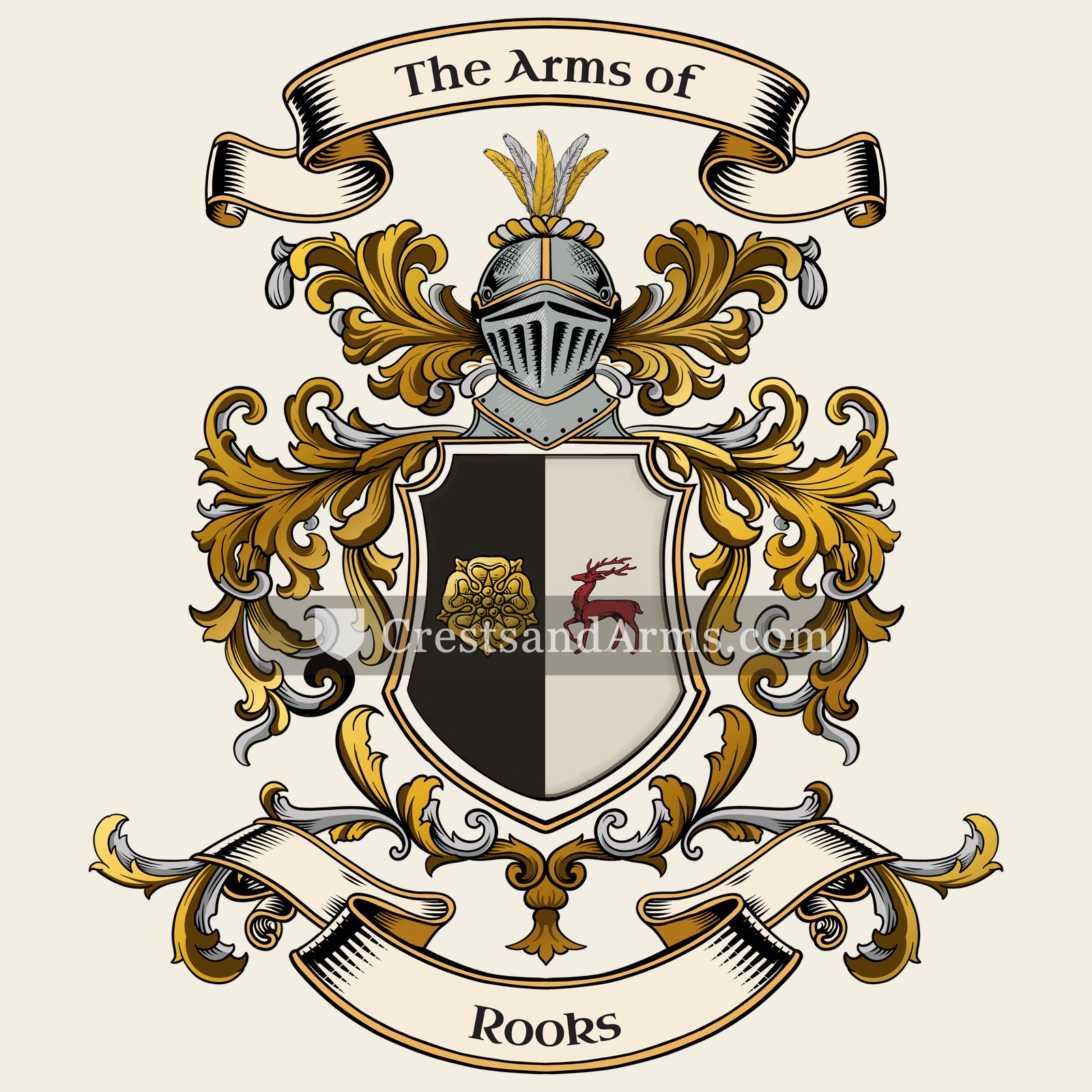


 chiefAuthority, wisdom and dominion
 roundelA coin, and one who has been to the crusades
 lionCourage, strength and royalty
 eagleNobility, strength and a keen mind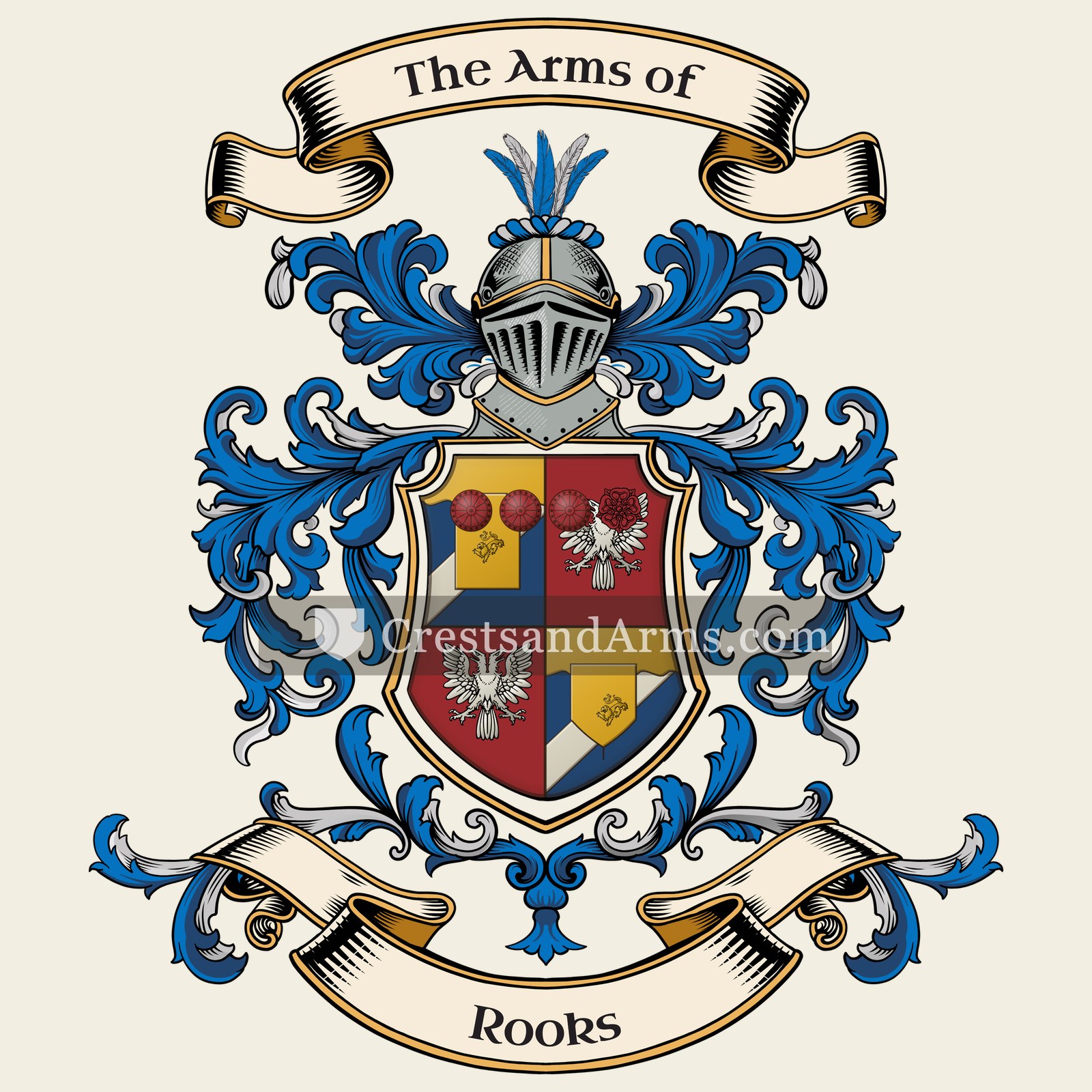


 fessThe military belt, and readiness to serve
 water bougetThe crusader's water carrier, and a journey made