Map of Netherlands showing where the Roos arms are recorded
The Roos arms were recorded in Amsterdam, c. 1815.
This is where the arms were entered in the register. Families often moved to other parts of the country, so the same name can turn up in more than one region.
Region
Amsterdam
Town
Amsterdam
First recorded
1815
Granting Authority for the Roos Arms
Hoge Raad van Adel
Photograph made by me · CC BY-SA 3.0
The body that granted and recorded arms in Netherlands in this period.
William I of the Netherlands
Sovereign of the period
William I of the Netherlands
1815–1840
Reigning in Netherlands when the Roos arms are first recorded.
How Arms Worked in Netherlands
In the Netherlands, coats of arms were often used by noble families and those who held specific public offices. These arms were passed down through the generations to legitimate descendants. Younger branches of a family usually kept the original design without needing to add special marks. This system ensured that the family identity remained clear and consistent over many years.
Granting authority
The Hoge Raad van Adel is the official body that regulates and manages noble titles and coats of arms in the Netherlands.
How they got arms
Families typically obtained their coats of arms through official royal grants or by proving their long-standing historical use of the symbols.
Where arms were recorded
Coats of arms are officially recorded in the registers held by the Hoge Raad van Adel, which began its work in 1814.
The family's standing
Recorded among the armigerous families of Netherlands.
Origin & History of the Roos Family in Netherlands
The surname Roos has deep roots in the Netherlands, where it functioned as a descriptive name for people who lived near a rose bush or perhaps possessed a cheerful personality. By the time the family was firmly established in Amsterdam in 1815, the name was already well-integrated into the social and economic fabric of the city. During this period, Amsterdam was transitioning from the hardships of the Napoleonic occupation toward a new era of trade and growth. Families named Roos were often part of the urban middle class, working as skilled craftsmen, merchants, or laborers who helped rebuild the city’s economy. Because the name is simple and nature-inspired, it was common for unrelated families to adopt it independently across different Dutch provinces, making the history of the name a reflection of the diverse lives of ordinary citizens during the nineteenth century.
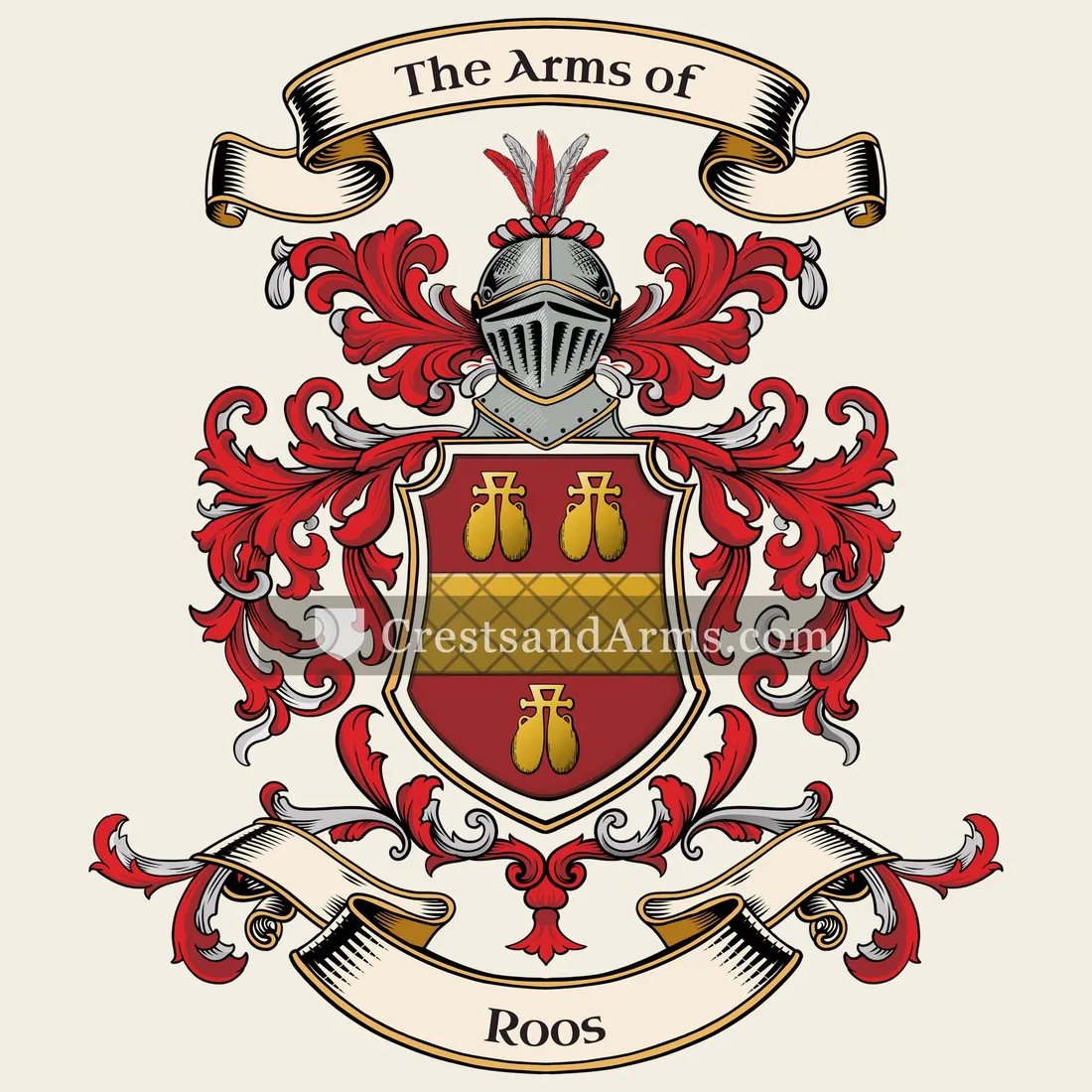
Meaning of the Roos family crest colors & symbols
Symbols on this shield
chiefAuthority, wisdom and dominion
roundelA coin, and one who has been to the crusades
roseThe seventh son, and beauty with grace
lionCourage, strength and royalty
eagleNobility, strength and a keen mind
Colours
Blue (Azure)Means: Loyalty and truth
Red (Gules)Means: Military strength
Silver (Argent)Means: Peace and sincerity
Gold (Or)Means: Generosity
Historical info
Source
J. B. Rietstap, Armorial Général, Gouda: G. B. van Goor Zonen, 1884–87
Blazon (the actual original written record)
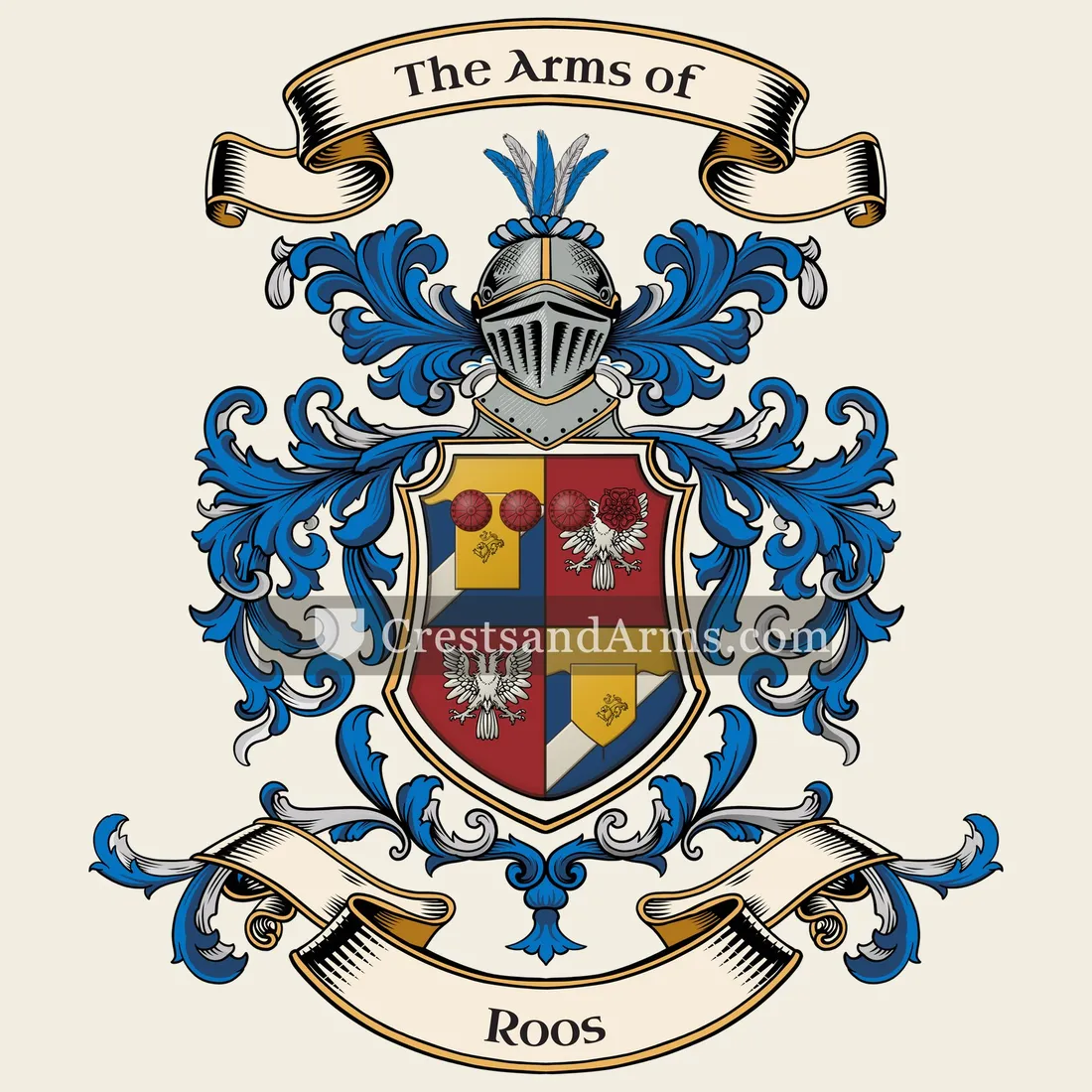
“Ec.: aux 1 et 4 d'azur à la barre ondée d'arg.; au lion d'or, lamp. de gu., br. sur la barre; aux 2 et 3 de gu. à une tête et col d'aigle d'arg., cour. d'or; au chef du même, ch. de trois tourt. d'azur. Sur le tout d'or à une rose de gu. Deux cq. cour. C.: 1° deux bras, arm. au nat., les mains de carn. supp. ensemble un coeur de gu.; entre six banderoles, à dextre une d'azur entre deux d'or, à sen. une d'arg. entre deux d'azur; 2° une tête et col d'aigle d'arg., cour. d'or, entre un vol d'arg.”
Swedenc. 1705
Digital archive packCoat of arms PNG, gold border print PDF, vector SVG and the certificate of authenticity. Sent to your email in minutes.
Map of Sweden showing where the Roos arms are recorded
The Roos arms were recorded in Sweden, c. 1705.
Arms such as these were typically recorded in Stockholm.
Stockholm held the Swedish court and the House of Nobility, where every noble family's arms were entered and kept. Families ennobled for service registered there, which is why so many are recorded around the city.
This is where the arms were entered in the register. Families often moved to other parts of the country, so the same name can turn up in more than one region.
The body that granted and recorded arms in Sweden in this period.
Carl XII of Sweden
Sovereign of the period
Carl XII of Sweden
1697–1718
Reigning in Netherlands when the Roos arms are first recorded.
How Arms Worked in Sweden
In Sweden, a coat of arms belonged to a noble family as a whole rather than just one individual. These arms were passed down through the generations to all legitimate descendants. Younger branches of the family used the same shield without needing to change it. This system ensured that the entire lineage shared the same identity and status under the law.
Granting authority
The Riddarhuset, or House of Nobility, regulated all noble coats of arms in Sweden under royal authority.
How they got arms
Families received their coats of arms through royal grants of nobility which were then officially registered with the House.
Where arms were recorded
Coats of arms were officially recorded in the Swedish House of Nobility register starting in the year 1626.
The family's standing
Recorded among the armigerous families of Sweden.
Origin & History of the Roos Family in Sweden
The surname Roos has deep roots in Swedish history, often appearing among families connected to the military, trade, and the growing urban life of the eighteenth century. By 1705, members of the Roos family were already established residents of Stockholm, a city that was then a bustling center of commerce and political power in Northern Europe. During this era, surnames were becoming more standardized as families sought to distinguish themselves in an increasingly organized society. The name itself is linked to the Old Norse and Germanic word for a rose, a common theme in naming conventions that often drew inspiration from nature. As these early family members navigated life in the capital, they contributed to the social fabric of a nation undergoing significant transition. Their presence in Stockholm records from the early 1700s highlights how the family was integrated into the administrative and professional life of the Swedish state during a time of great historical change.
Meaning of the Roos family crest colors & symbols
Symbols on this shield
fessThe military belt, and readiness to serve
vairProtection, and the winter fur
water bougetThe crusader's water carrier, and a journey made
Colours
Red (Gules)Means: Military strength
Gold (Or)Means: Generosity
Historical info
Source
Sir Bernard Burke, The General Armory of England, Scotland, Ireland and Wales, London: Harrison & Sons, 1884
Blazon (the actual original written record)
“Gu. a fess vair betw. three water bougets or”
YorkBouseley · York, c. 1620
Digital archive packCoat of arms PNG, gold border print PDF, vector SVG and the certificate of authenticity. Sent to your email in minutes.
Map of England showing where the Roos arms are recorded
The Roos arms were recorded in York, c. 1620.
Yorkshire is the largest of the English counties, and it held more gentry families than any other. Land there was split among a great many households rather than a few, so a great many of them carried arms.
This is where the arms were entered in the register. Families often moved to other parts of the country, so the same name can turn up in more than one region.
The body that granted and recorded arms in England in this period.
James VI and I
Sovereign of the period
James VI and I
1603–1625
Reigning in Netherlands when the Roos arms are first recorded.
How Arms Worked in England
English heraldry allowed arms to be shared by all legitimate descendants of the original owner. These symbols were treated as personal property that moved through the generations to all children. While the eldest son kept the original design, other family members could use the same shield without needing to change it or register their own unique versions.
Granting authority
The College of Arms in London has regulated the use of coats of arms throughout England and Wales since 1484.
How they got arms
Families typically obtained their coats of arms through a formal grant from the Crown or by proving their ancient right to them.
Where arms were recorded
All official coats of arms are recorded in the registers kept at the College of Arms, which date back to the fifteenth century.
The family's standing
Recorded among the armigerous families of York.
Origin & History of the Roos Family in England
The family name Roos has deep roots in the northern regions of England, particularly within the historic city of York. By the year 1620, records confirm that members of the family were well-established residents in this area. The name itself is often linked to the Middle English word for a rose, or it may have served as a topographic name for someone who lived near a patch of wild roses. During the early seventeenth century, families in York were often involved in the city’s thriving trade guilds and local governance. As the family became more settled in the region, they participated in the social and economic life of the city, which was a major hub for commerce and religion in Northern England. This period marked a time of stability for the family as they built their lives within the stone walls and narrow streets of historic York.
Roos Meaning & Related Branches
Root word
Rosa
Latin term for the flower known as the rose.
This name
RoosA topographic name for someone living near a rose bush or garden.
also spelled
Ros
Rose
Ross
Rooe
Related arms
Beaumont-Péréfixesame arms
Gaudardsame arms
Jacquelot de Chantemerlesame arms
Rosvariant spelling
Documented Sources
J. B. Rietstap, Armorial Général, Gouda: G. B. van Goor Zonen, 1884–87


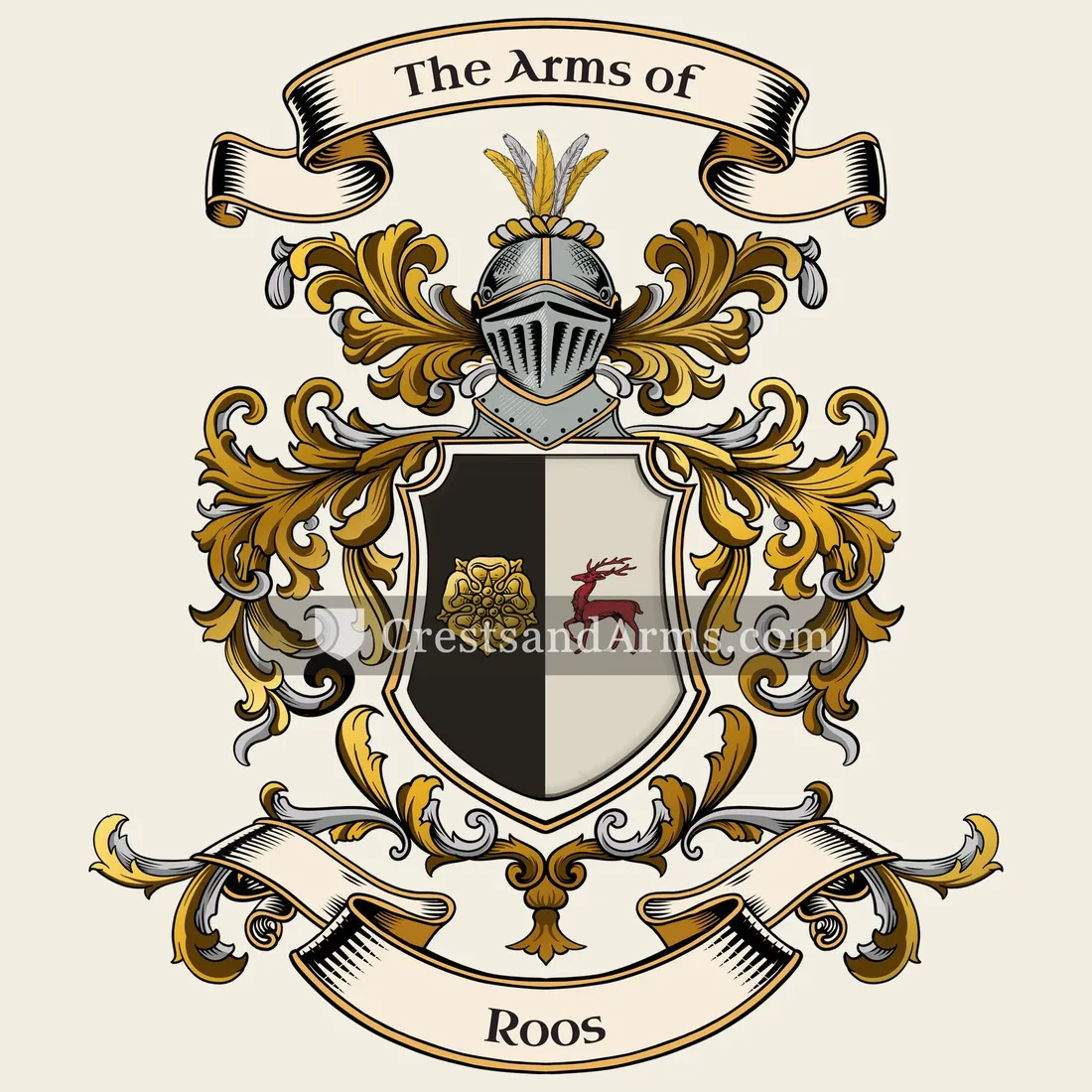
 roseThe seventh son, and beauty with grace
 stagPeace and harmony, and one who will not fight unprovoked
 roseThe seventh son, and beauty with grace
 stagPeace and harmony, and one who will not fight unprovoked


 chiefAuthority, wisdom and dominion
 roundelA coin, and one who has been to the crusades
 lionCourage, strength and royalty
 eagleNobility, strength and a keen mind


 fessThe military belt, and readiness to serve
 water bougetThe crusader's water carrier, and a journey made