Map of Netherlands showing where the Ros arms are recorded
The Ros arms were recorded in Zeeland, c. 1815.
Zeeland was a scatter of islands in the south-west of the Netherlands, living on the sea and on land reclaimed from it. Families who drained and held that land were counted among the gentry, and gentry carried arms.
This is where the arms were entered in the register. Families often moved to other parts of the country, so the same name can turn up in more than one region.
Region
Zeeland
First recorded
1815
Granting Authority for the Ros Arms
Hoge Raad van Adel
Photograph made by me · CC BY-SA 3.0
The body that granted and recorded arms in Netherlands in this period.
William I of the Netherlands
Sovereign of the period
William I of the Netherlands
1815–1840
Reigning in Netherlands when the Ros arms are first recorded.
How Arms Worked in Netherlands
In the Netherlands, coats of arms were often used by noble families and those who held specific public offices. These arms were passed down through the generations to legitimate descendants. Younger branches of a family usually kept the original design without needing to add special marks. This system ensured that the family identity remained clear and consistent over many years.
Granting authority
The Hoge Raad van Adel is the official body that regulates and manages noble titles and coats of arms in the Netherlands.
How they got arms
Families typically obtained their coats of arms through official royal grants or by proving their long-standing historical use of the symbols.
Where arms were recorded
Coats of arms are officially recorded in the registers held by the Hoge Raad van Adel, which began its work in 1814.
The family's standing
Recorded among the armigerous families of Zeeland.
Origin & History of the Ros Family in Netherlands
The family name Ros has deep roots in the coastal province of Zeeland, where records confirm members of the family were established by the early nineteenth century. In the Dutch language, the word "ros" historically refers to a steed or a powerful horse, suggesting that the name likely began as a descriptive nickname for an ancestor who worked with horses, served as a cavalryman, or perhaps possessed a spirited personality. During the early 1800s, the Netherlands underwent significant administrative changes, including the formal registration of surnames under Napoleonic influence, which helped solidify the spelling of family names across the region. Families living in Zeeland at this time were often shaped by the unique geography of the islands, where trade, agriculture, and maritime labor defined daily life. The Ros family would have been part of this resilient community, navigating the social and economic shifts of the Dutch Kingdom as it emerged from the Napoleonic era to become a unified nation.
Meaning of the Ros family crest colors & symbols
Colours
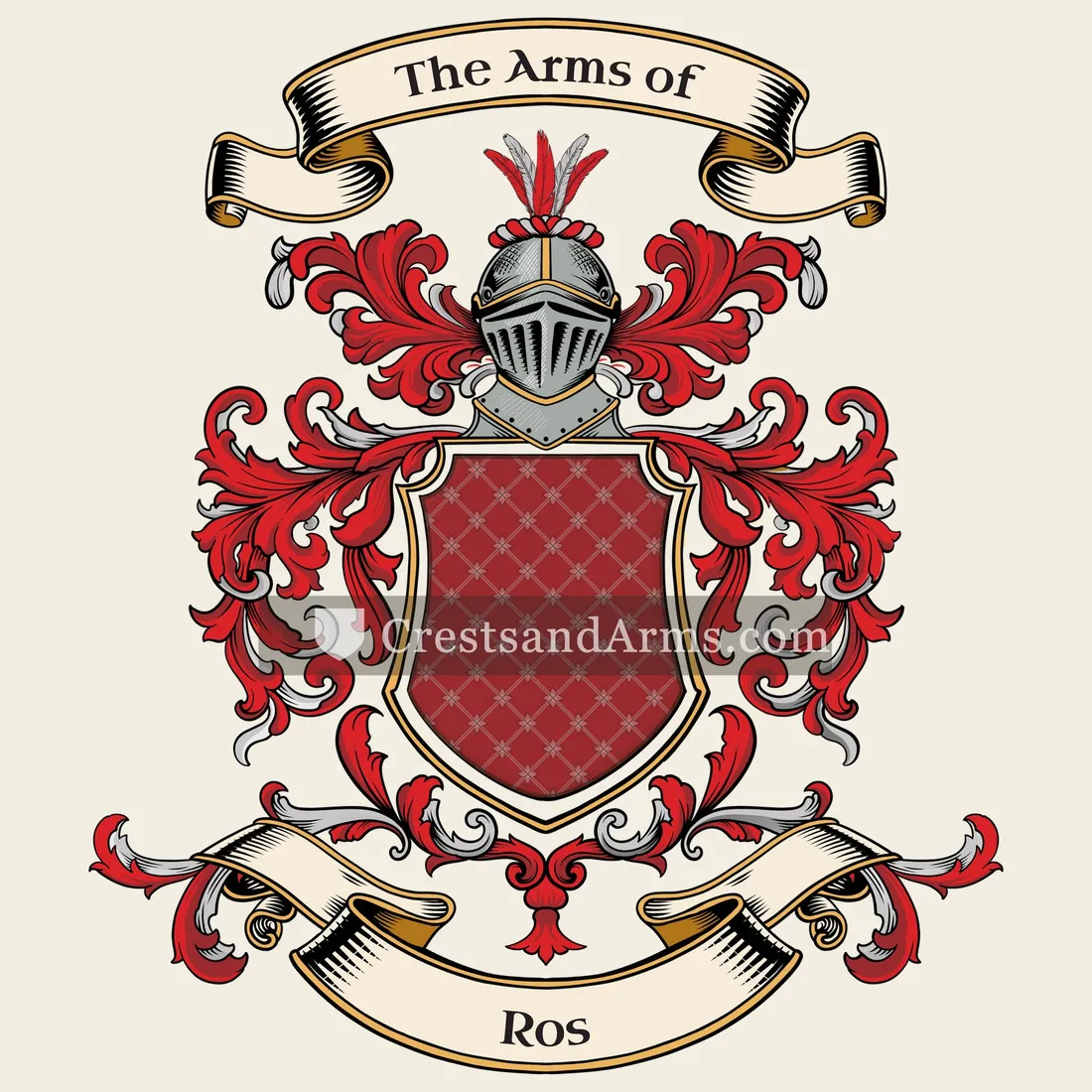
Red (Gules)Means: Military strength
Historical info
Source
J. B. Rietstap, Armorial Général, Gouda: G. B. van Goor Zonen, 1884–87
Blazon (the actual original written record)
“De gu. à trois bouses d'arg.”
Spainc. 1508
Digital archive packCoat of arms PNG, gold border print PDF, vector SVG and the certificate of authenticity. Sent to your email in minutes.
Map of Spain showing where the Ros arms are recorded
The Ros arms were recorded in Spain, c. 1508.
Arms such as these were typically recorded in Castile.
Castile was the heart of Spain and the source of most of its noble families. Land won in the long wars against the Moors was granted out to fighting men, and a man granted land was granted arms along with it.
This is where the arms were entered in the register. Families often moved to other parts of the country, so the same name can turn up in more than one region.
The body that granted and recorded arms in Spain in this period.
Ferdinand II of Aragon
Sovereign of the period
Ferdinand II of Aragon
1479–1516
Reigning in Netherlands when the Ros arms are first recorded.
How Arms Worked in Spain
In Spain, a coat of arms was considered a form of property that belonged to the entire family line. These arms were passed down from a father to all his children equally. Younger branches of the family usually kept the original design without needing to add any special marks to distinguish their specific line.
Granting authority
The Cronista Rey de Armas was the official body that regulated and granted coats of arms throughout Spain.
How they got arms
Families often obtained their arms through royal grants or by proving their noble status to the official heraldic authority.
Where arms were recorded
Coats of arms were officially recorded in the registers of the Cronista Rey de Armas starting in 1496.
The family's standing
Recorded among the armigerous families of Spain.
Origin & History of the Ros Family in Spain
The family name Ros has deep roots in the Iberian Peninsula, with historical evidence confirming that members of the family were established in the region of Castile by 1508. During this period, the name was often associated with families of modest social standing who were active in the local administration and agricultural development of the Castilian heartland. As the Spanish kingdoms expanded their influence, individuals bearing the name Ros moved across different provinces to take advantage of new opportunities in trade and civil service. The name itself is thought to have evolved from regional linguistic roots, reflecting the diverse cultural landscape of medieval Spain. By the early sixteenth century, the family had become a recognized part of the local social fabric, contributing to the growth of their communities through their work as landowners and local officials.
Ros Meaning & Related Branches
Root word
Rode
Derived from the Middle Dutch word for red or cleared land.
This name
RosRefers to a person with red hair or someone living on cleared land.
also spelled
Roos
Ross
Rose
Related arms
Roosvariant spelling
Documented Sources
J. B. Rietstap, Armorial Général, Gouda: G. B. van Goor Zonen, 1884–87
Centraal Bureau voor Genealogie, Nederlandse Familienamen Databank
Zeeuws Archief, Bevolkingsregisters van Zeeland
Meertens Instituut, Nederlandse Familienamenbank
Digital archive packCoat of arms PNG, gold border print PDF, vector SVG and the certificate of authenticity. Sent to your email in minutes.


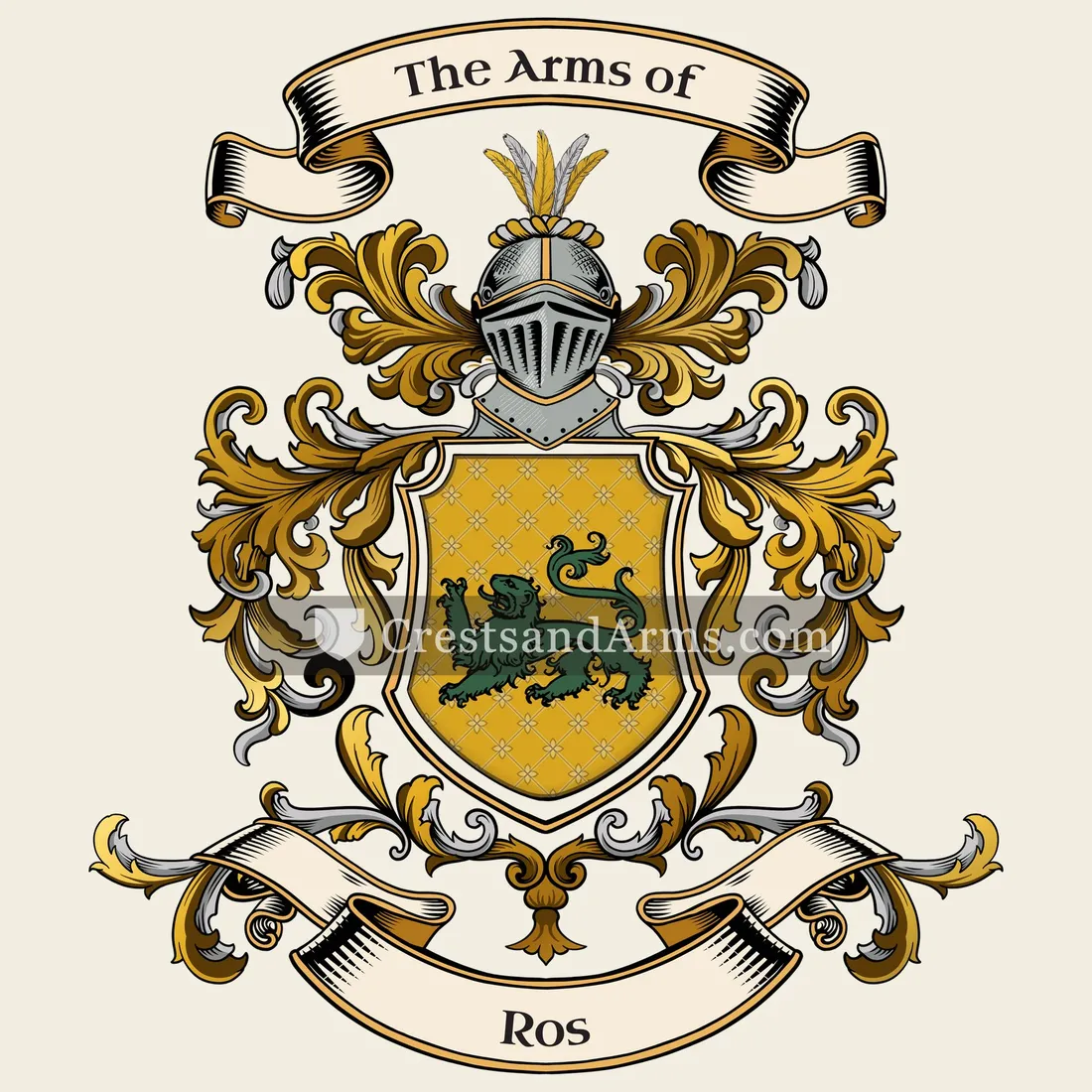
 lionCourage, strength and royalty
 lionCourage, strength and royalty