Map of Germany showing where the Rosa arms are recorded
The Rosa arms were recorded in Schweinfurt Bav, c. 1765.
This is where the arms were entered in the register. Families often moved to other parts of the country, so the same name can turn up in more than one region.
The body that granted and recorded arms in Germany in this period.
Francis I, Holy Roman Emperor
Sovereign of the period
Francis I, Holy Roman Emperor
1745–1765
Reigning in Germany when the Rosa arms are first recorded.
How Arms Worked in Germany
In the Holy Roman Empire, coats of arms were often granted to individuals by the Emperor or his representatives. These arms were then passed down through the generations to all legitimate descendants of the original holder. Younger branches of a family usually kept the same shield design without needing to change it, as the arms belonged to the entire lineage.
Granting authority
The Holy Roman Emperor held the sole power to grant new coats of arms throughout his vast imperial territories.
How they got arms
Families typically obtained their coats of arms through a formal imperial grant or by proving their noble status to the authorities.
Where arms were recorded
These grants were officially recorded in the Imperial Chancery registers, which began keeping formal records of such honors during the Middle Ages.
The family's standing
Recorded among the armigerous families of Germany.
Origin & History of the Rosa Family in Germany
The family name Rosa has deep roots in the German region of Franconia, where it functioned as a topographic surname. In the German language, names like this were often given to people who lived near a specific landmark, such as a wild rose bush or a garden where roses were cultivated. By the time members of the family were documented in the city of Schweinfurt in 1765, the name had already been established for generations as a way to identify individuals by their proximity to nature or their work as gardeners. During the eighteenth century, Schweinfurt was a bustling center of trade and craftsmanship, and families like the Rosas contributed to the local economy through their participation in the town’s guild system. This period of history reflects a time when surnames were becoming permanent fixtures of identity, transitioning from simple descriptions of a person's home to formal family titles that were passed down through the generations.
Meaning of the Rosa family crest colors & symbols
Symbols on this shield
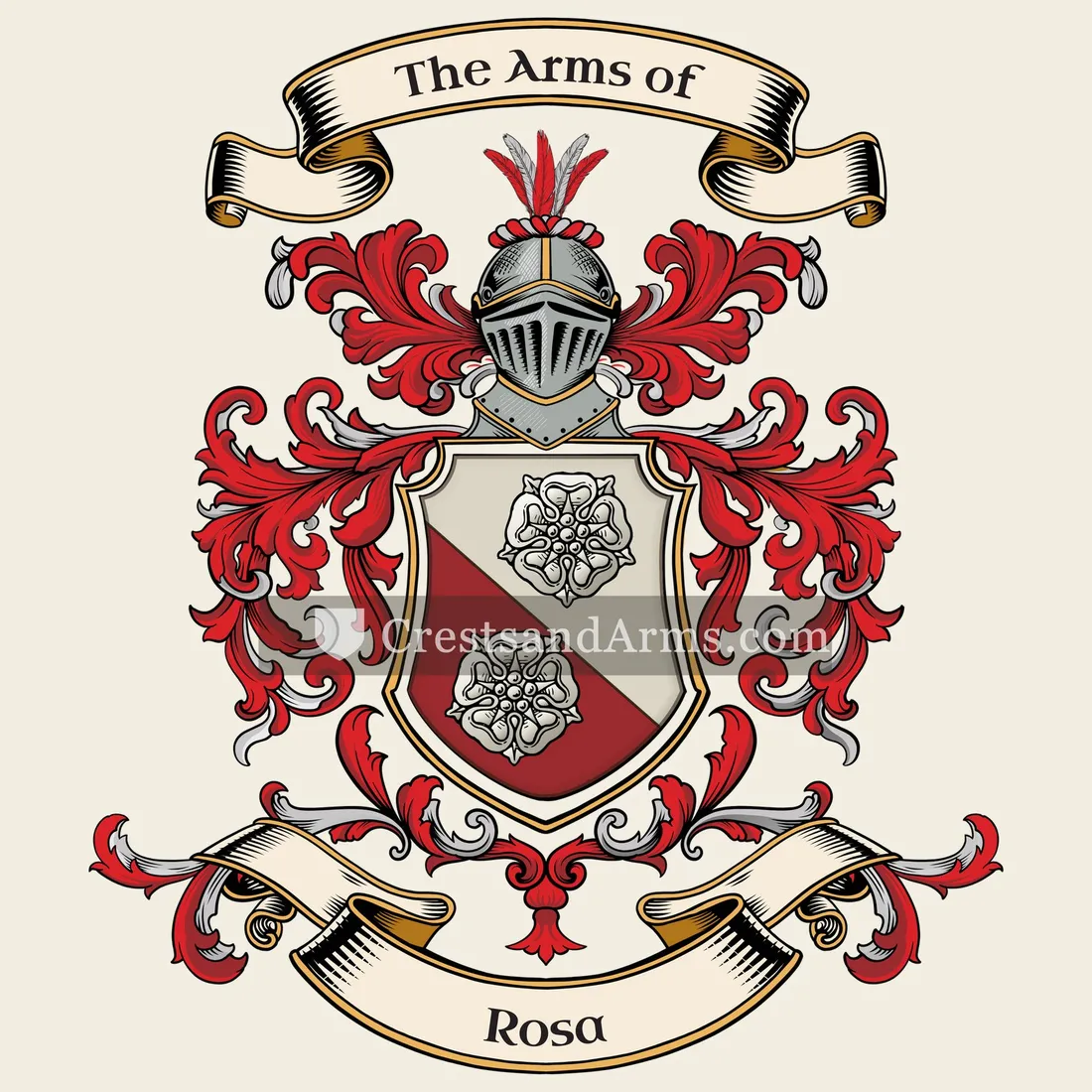
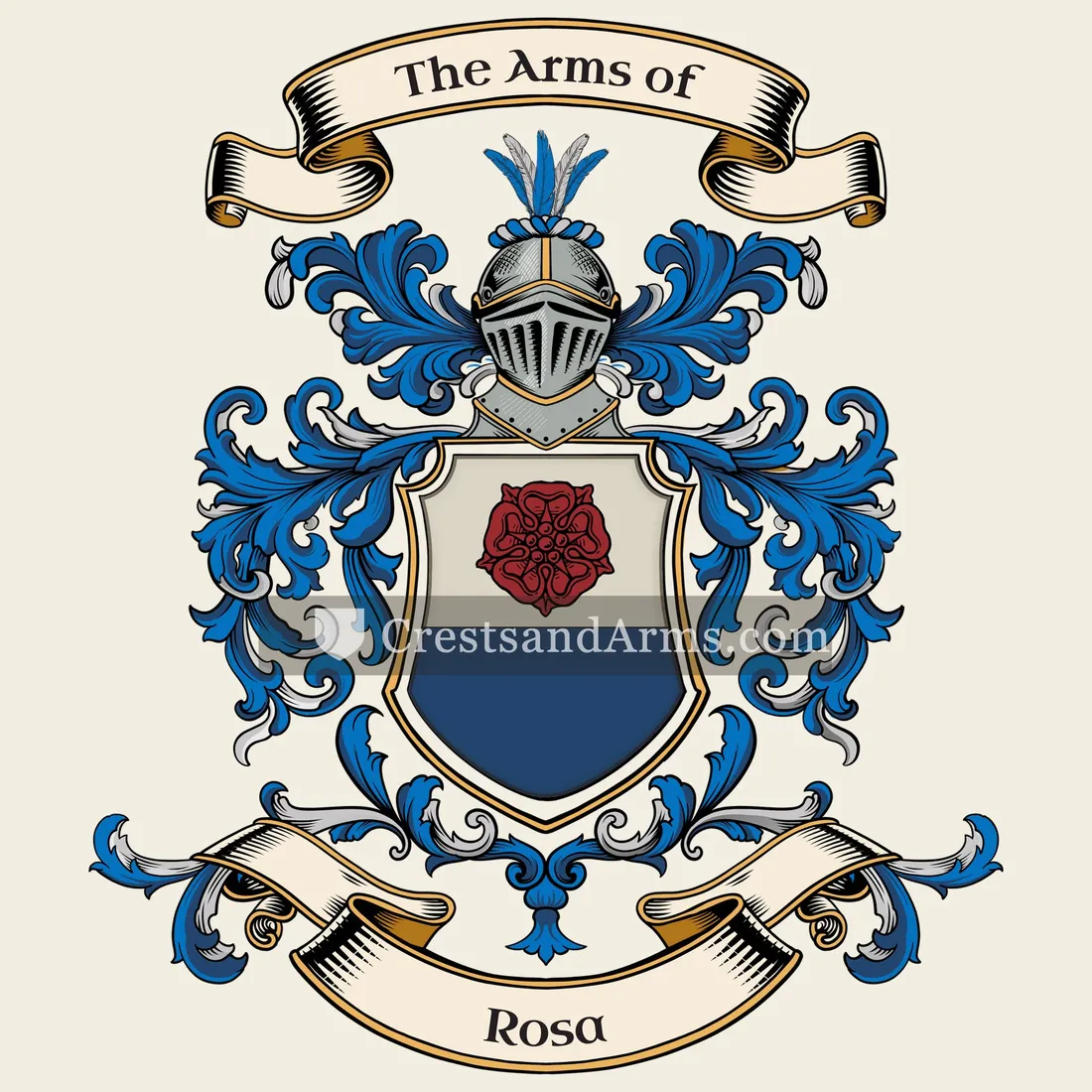
roseThe seventh son, and beauty with grace
Colours
Silver (Argent)Means: Peace and sincerity
Blue (Azure)Means: Loyalty and truth
Red (Gules)Means: Military strength
Historical info
Source
J. B. Rietstap, Armorial Général, Gouda: G. B. van Goor Zonen, 1884–87
Blazon (the actual original written record)
“Coupé d'arg. sur azur, l'arg. ch. d'une rose de gu., tigée et feuillée de sin.”
ItalyTrévise, c. 1775
Digital archive packCoat of arms PNG, gold border print PDF, vector SVG and the certificate of authenticity. Sent to your email in minutes.
Map of Italy showing where the Rosa arms are recorded
The Rosa arms were recorded in Trévise, c. 1775.
This is where the arms were entered in the register. Families often moved to other parts of the country, so the same name can turn up in more than one region.
The body that granted and recorded arms in Italy in this period.
Alvise Giovanni Mocenigo
Sovereign of the period
Alvise Giovanni Mocenigo
1763–1778
Reigning in Germany when the Rosa arms are first recorded.
How Arms Worked in Italy
In the Italian states, coats of arms were often used by noble families to show their status and history. These symbols were passed down through the generations to all legitimate male descendants. Younger branches of a family usually kept the original design but sometimes added small changes to distinguish their specific line from the main branch.
Granting authority
Various local rulers and city governments controlled the use of coats of arms across the different Italian states.
How they got arms
Families often assumed their own arms or received them as official grants from local lords, popes, or city councils.
Where arms were recorded
Arms were recorded in local city archives or private family books rather than in one single national register.
The family's standing
Recorded among the armigerous families of Italy.
Origin & History of the Rosa Family in Italy
The surname Rosa carries a deep connection to the cultural and linguistic landscape of Northern Italy. Emerging as a topographical name, it likely identified families who lived near prominent rose bushes or gardens, which were common symbols of beauty and devotion in the region. By the late 18th century, the family established a documented presence in the city of Treviso. During this era, Treviso served as a vital hub for trade and administration within the Republic of Venice. Families living in this area were often involved in the local agricultural economy or the skilled artisan guilds that defined the city’s social structure. As the family settled into the community, they became part of the long-standing traditions of the Veneto region, participating in the daily life and civic growth of a city known for its historic canals and medieval architecture.
Meaning of the Rosa family crest colors & symbols
Symbols on this shield
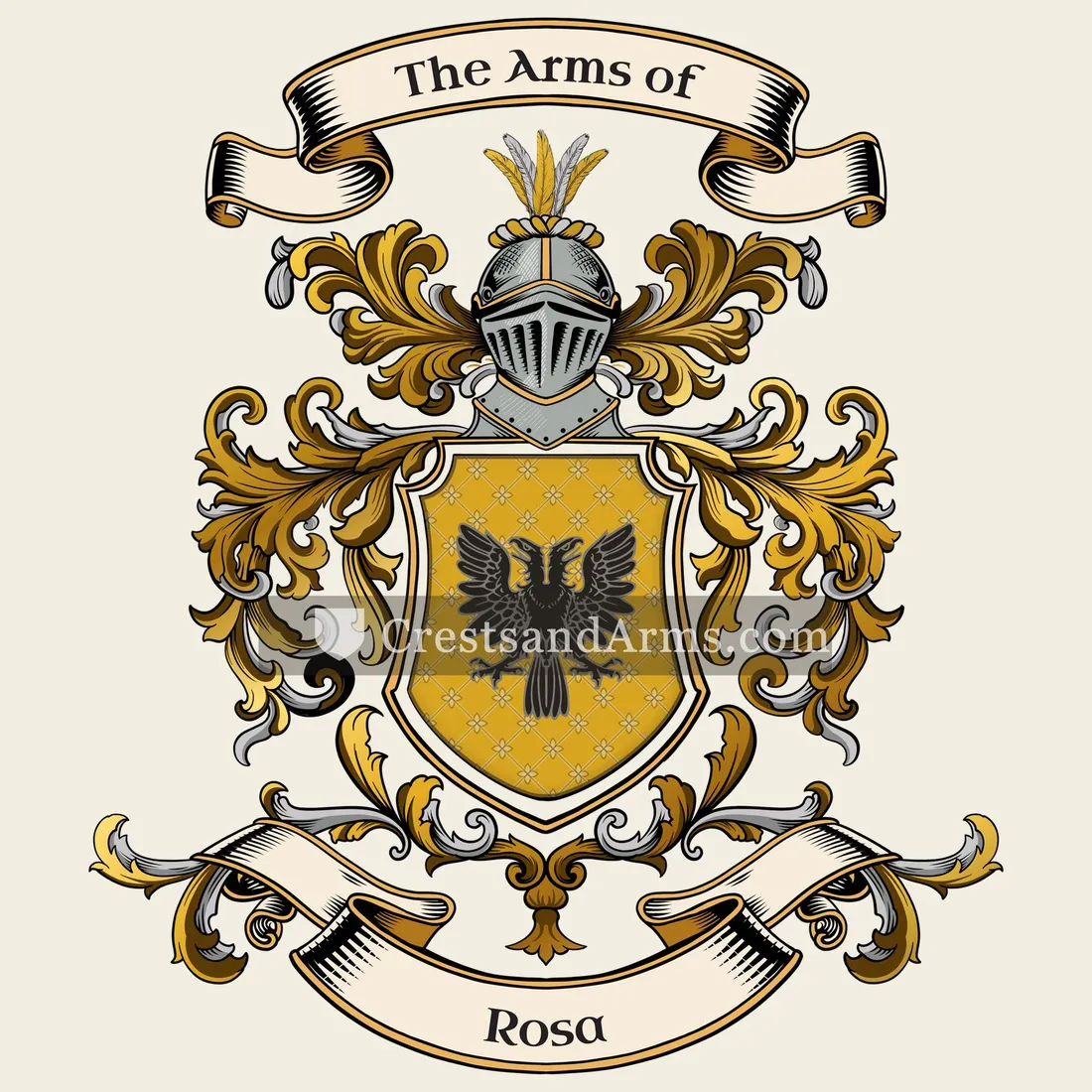
eagleNobility, strength and a keen mind
Colours
Gold (Or)Means: Generosity
Black (Sable)Means: Constancy
Historical info
Source
J. B. Rietstap, Armorial Général, Gouda: G. B. van Goor Zonen, 1884–87
Blazon (the actual original written record)
“D'or à l'aigle ép. de sa.”
CastileCastile, c. 1722
Digital archive packCoat of arms PNG, gold border print PDF, vector SVG and the certificate of authenticity. Sent to your email in minutes.
Map of Spain showing where the Rosa arms are recorded
The Rosa arms were recorded in Castile, c. 1722.
Castile was the heart of Spain and the source of most of its noble families. Land won in the long wars against the Moors was granted out to fighting men, and a man granted land was granted arms along with it.
This is where the arms were entered in the register. Families often moved to other parts of the country, so the same name can turn up in more than one region.
The body that granted and recorded arms in Spain in this period.
Philip V of Spain
Sovereign of the period
Philip V of Spain
1714–1724
Reigning in Germany when the Rosa arms are first recorded.
How Arms Worked in Spain
In Spain, a coat of arms was considered a form of property that belonged to the entire family line. These arms were passed down from a father to all his children equally. Younger branches of the family usually kept the original design without needing to add any special marks to distinguish their specific line.
Granting authority
The Cronista Rey de Armas was the official body that regulated and granted coats of arms throughout Spain.
How they got arms
Families often obtained their arms through royal grants or by proving their noble status to the official heraldic authority.
Where arms were recorded
Coats of arms were officially recorded in the registers of the Cronista Rey de Armas starting in 1496.
The family's standing
Recorded among the armigerous families of Castile.
Origin & History of the Rosa Family in Spain
The surname Rosa has deep roots in the Iberian Peninsula, where it emerged as a topographic name used to identify families living near wild rose bushes or gardens. By the early 18th century, the name was firmly established within the social fabric of the Kingdom of Castile. During this era, families bearing the name Rosa were often integrated into the local agricultural and administrative systems that defined life in the Spanish heartland. Because the name is linked to the natural landscape, it suggests that these early ancestors were likely landowners or farmers who held a strong connection to the specific geography of their home region. As these families moved through the various provinces of Castile in 1722 and beyond, they contributed to the local census records and parish registers that tracked the growth and movement of the population during the Bourbon reforms. This period marked a time of transition in Spain, and the presence of the Rosa family in these official documents highlights their role as active participants in the developing society of the Spanish interior.
Rosa Meaning & Related Branches
Root word
Rosa
Latin term for the flower known as the rose.
This name
RosaA topographic name for someone who lived near a rose bush or a garden.
also spelled
Ross
Roza
Rose
Related arms
Meyersimilar arms
Rossvariant spelling
Documented Sources
J. B. Rietstap, Armorial Général, Gouda: G. B. van Goor Zonen, 1884–87
Bahlow, Hans, Deutsches Namenlexikon: Familien- und Vornamen nach Ursprung und Sinn erklärt, 1967
Stadtarchiv Schweinfurt, Bürgeraufnahme- und Zunftprotokolle der Reichsstadt Schweinfurt, 1765
Gottschald, Max, Deutsche Namenkunde: Unsere Familiennamen nach ihrer Entstehung und Bedeutung, 1971
Digital archive packCoat of arms PNG, gold border print PDF, vector SVG and the certificate of authenticity. Sent to your email in minutes.


 roseThe seventh son, and beauty with grace
 roseThe seventh son, and beauty with grace




 eagleNobility, strength and a keen mind