Map of Germany showing where the Rosca arms are recorded
The Rosca arms were recorded in Schweinfurt Bav, c. 1765.
This is where the arms were entered in the register. Families often moved to other parts of the country, so the same name can turn up in more than one region.
The body that granted and recorded arms in Germany in this period.
Francis I, Holy Roman Emperor
Sovereign of the period
Francis I, Holy Roman Emperor
1745–1765
Reigning in Germany when the Rosca arms are first recorded.
How Arms Worked in Germany
In the Holy Roman Empire, coats of arms were often granted to individuals by the Emperor or his representatives. These arms were then passed down through the generations to all legitimate descendants of the original holder. Younger branches of a family usually kept the same shield design without needing to change it, as the arms belonged to the entire lineage.
Granting authority
The Holy Roman Emperor held the sole power to grant new coats of arms throughout his vast imperial territories.
How they got arms
Families typically obtained their coats of arms through a formal imperial grant or by proving their noble status to the authorities.
Where arms were recorded
These grants were officially recorded in the Imperial Chancery registers, which began keeping formal records of such honors during the Middle Ages.
The family's standing
Recorded among the armigerous families of Germany.
Origin & History of the Rosca Family in Germany
The history of the Rosca name in Germany is deeply rooted in the social and economic landscape of the eighteenth century, particularly within the region of Schweinfurt. By 1765, records confirm that members of the family were established residents of this city, which served as an important center for trade and craftsmanship in Franconia. During this era, families often settled in specific urban hubs to take advantage of the local guilds and the stability provided by the Holy Roman Empire. The name likely evolved as a reflection of the family's integration into the local community, where they participated in the daily life of the city as artisans or merchants. Because Schweinfurt was a free imperial city, the family lived under a unique system of local governance that encouraged the growth of middle-class families. This period of residency suggests that the Rosca family was part of the steady demographic growth that defined German towns before the industrial shifts of the following century.
Coat of Arms & Family Crest Details
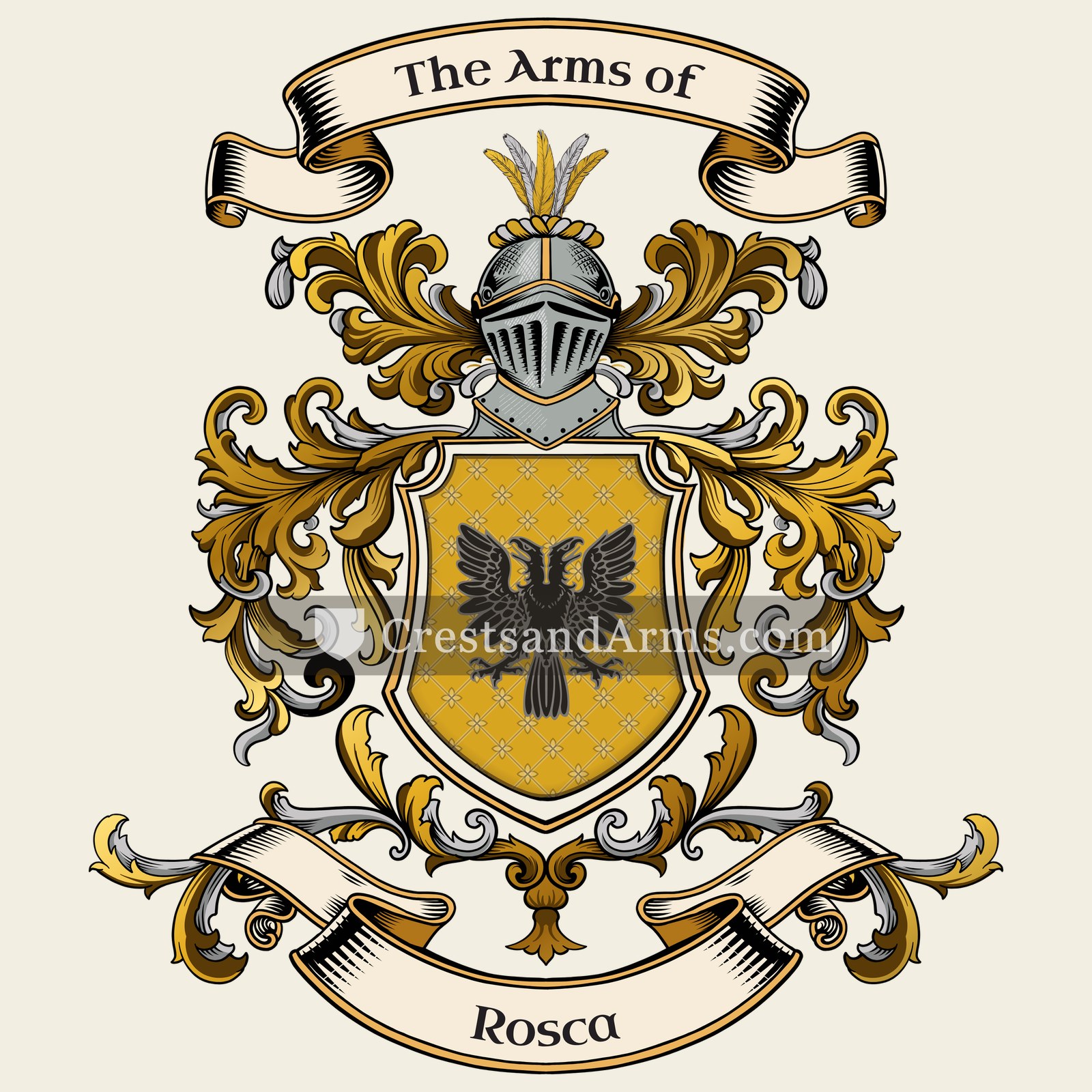
Symbols on this shield
roseThe seventh son, and beauty with grace
Colours
Silver (Argent)Means: Peace and sincerity
Blue (Azure)Means: Loyalty and truth
Red (Gules)Means: Military strength
Historical info
Source
J. B. Rietstap, Armorial Général, Gouda: G. B. van Goor Zonen, 1884–87
Blazon (the actual original written record)
“Coupé d'arg. sur azur, l'arg. ch. d'une rose de gu., tigée et feuillée de sin.”
ItalyTrévise, c. 1775
Digital archive packCoat of arms PNG, gold border print PDF, vector SVG and the certificate of authenticity. Sent to your email in minutes.
Map of Italy showing where the Rosca arms are recorded
The Rosca arms were recorded in Trévise, c. 1775.
This is where the arms were entered in the register. Families often moved to other parts of the country, so the same name can turn up in more than one region.
The body that granted and recorded arms in Italy in this period.
Alvise Giovanni Mocenigo
Sovereign of the period
Alvise Giovanni Mocenigo
1763–1778
Reigning in Germany when the Rosca arms are first recorded.
How Arms Worked in Italy
In the Italian states, coats of arms were often used by noble families to show their status and history. These symbols were passed down through the generations to all legitimate male descendants. Younger branches of a family usually kept the original design but sometimes added small changes to distinguish their specific line from the main branch.
Granting authority
Various local rulers and city governments controlled the use of coats of arms across the different Italian states.
How they got arms
Families often assumed their own arms or received them as official grants from local lords, popes, or city councils.
Where arms were recorded
Arms were recorded in local city archives or private family books rather than in one single national register.
The family's standing
Recorded among the armigerous families of Italy.
Origin & History of the Rosca Family in Italy
The history of the Rosca family in Italy is deeply tied to the social and economic landscape of the Veneto region during the late eighteenth century. By 1775, records confirm that members of the family were established in the city of Treviso, which served as a vital hub for trade and administration under the Republic of Venice. During this period, families like the Roscas often integrated into the local urban fabric by engaging in professional guilds or land management. The name itself likely evolved from regional linguistic roots, reflecting the diverse cultural influences present in northern Italy at the time. As the family settled into life in Treviso, they became part of the steady growth of the middle class that helped define the city's identity before the major political shifts of the Napoleonic era. This early presence suggests a family that was well-connected to the civic life of the region and played a quiet but steady role in the local community.
Coat of Arms & Family Crest Details
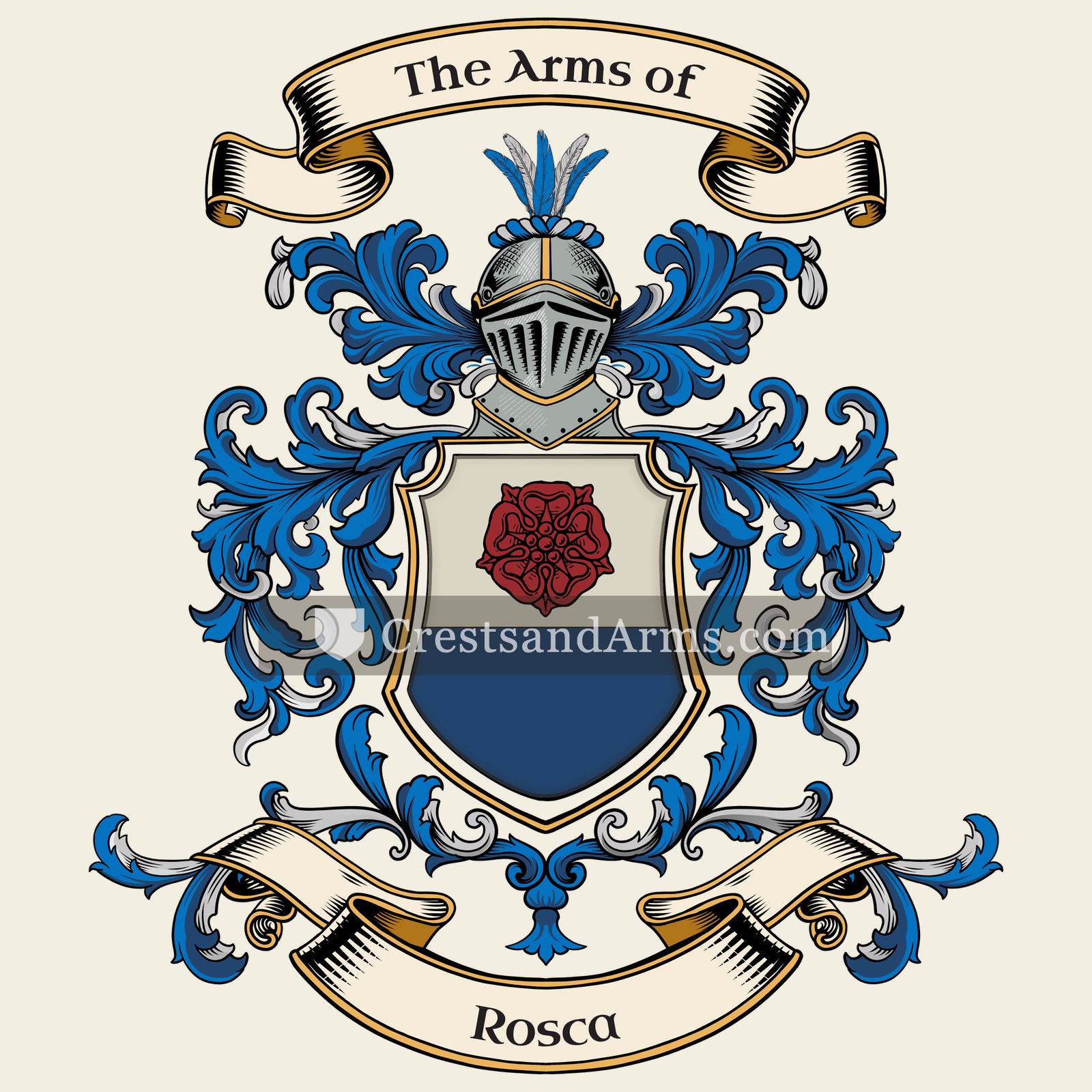
Symbols on this shield
eagleNobility, strength and a keen mind
Colours
Gold (Or)Means: Generosity
Black (Sable)Means: Constancy
Historical info
Source
J. B. Rietstap, Armorial Général, Gouda: G. B. van Goor Zonen, 1884–87
Blazon (the actual original written record)
“D'or à l'aigle ép. de sa.”
CastileCastile, c. 1722
Digital archive packCoat of arms PNG, gold border print PDF, vector SVG and the certificate of authenticity. Sent to your email in minutes.
Map of Spain showing where the Rosca arms are recorded
The Rosca arms were recorded in Castile, c. 1722.
Castile was the heart of Spain and the source of most of its noble families. Land won in the long wars against the Moors was granted out to fighting men, and a man granted land was granted arms along with it.
This is where the arms were entered in the register. Families often moved to other parts of the country, so the same name can turn up in more than one region.
The body that granted and recorded arms in Spain in this period.
Philip V of Spain
Sovereign of the period
Philip V of Spain
1714–1724
Reigning in Germany when the Rosca arms are first recorded.
How Arms Worked in Spain
In Spain, a coat of arms was considered a form of property that belonged to the entire family line. These arms were passed down from a father to all his children equally. Younger branches of the family usually kept the original design without needing to add any special marks to distinguish their specific line.
Granting authority
The Cronista Rey de Armas was the official body that regulated and granted coats of arms throughout Spain.
How they got arms
Families often obtained their arms through royal grants or by proving their noble status to the official heraldic authority.
Where arms were recorded
Coats of arms were officially recorded in the registers of the Cronista Rey de Armas starting in 1496.
The family's standing
Recorded among the armigerous families of Castile.
Origin & History of the Rosca Family in Spain
The family name Rosca has deep roots in the historical landscape of Spain, particularly within the region of Castile. By the early eighteenth century, records confirm that members of the family were well-established in this area by 1722. During this period, Castile was the political and cultural heart of the Spanish kingdom, and families living there were often involved in the agricultural development of the harsh, high-altitude plains. The name itself is linked to the Spanish word for a ring or a twisted roll, which suggests that the original ancestors may have been known for their work as bakers or craftsmen in local village markets. As the family grew, they became part of the social fabric of rural Castilian life, contributing to the local economy and community traditions that defined the region during the Bourbon transition. Their presence in official documents from 1722 indicates that they were recognized citizens who participated in the legal and parish systems of their time.
Related Branches & Arms
Root word
Roscidus
Latin term meaning dewy, moist, or covered in dew.
This name
RoscaA topographic surname referring to someone who lived in a damp or dew-covered area.
also spelled
Ross
Roza
Rose
Documented Sources
J. B. Rietstap, Armorial Général, Gouda: G. B. van Goor Zonen, 1884–87
Stadtarchiv Schweinfurt, Bürgerbuch der Stadt Schweinfurt, 1765
Stadtarchiv Schweinfurt, Kirchenbücher der evangelischen Stadtpfarrei St. Johannis, 1765
Digital archive packCoat of arms PNG, gold border print PDF, vector SVG and the certificate of authenticity. Sent to your email in minutes.


 roseThe seventh son, and beauty with grace
 roseThe seventh son, and beauty with grace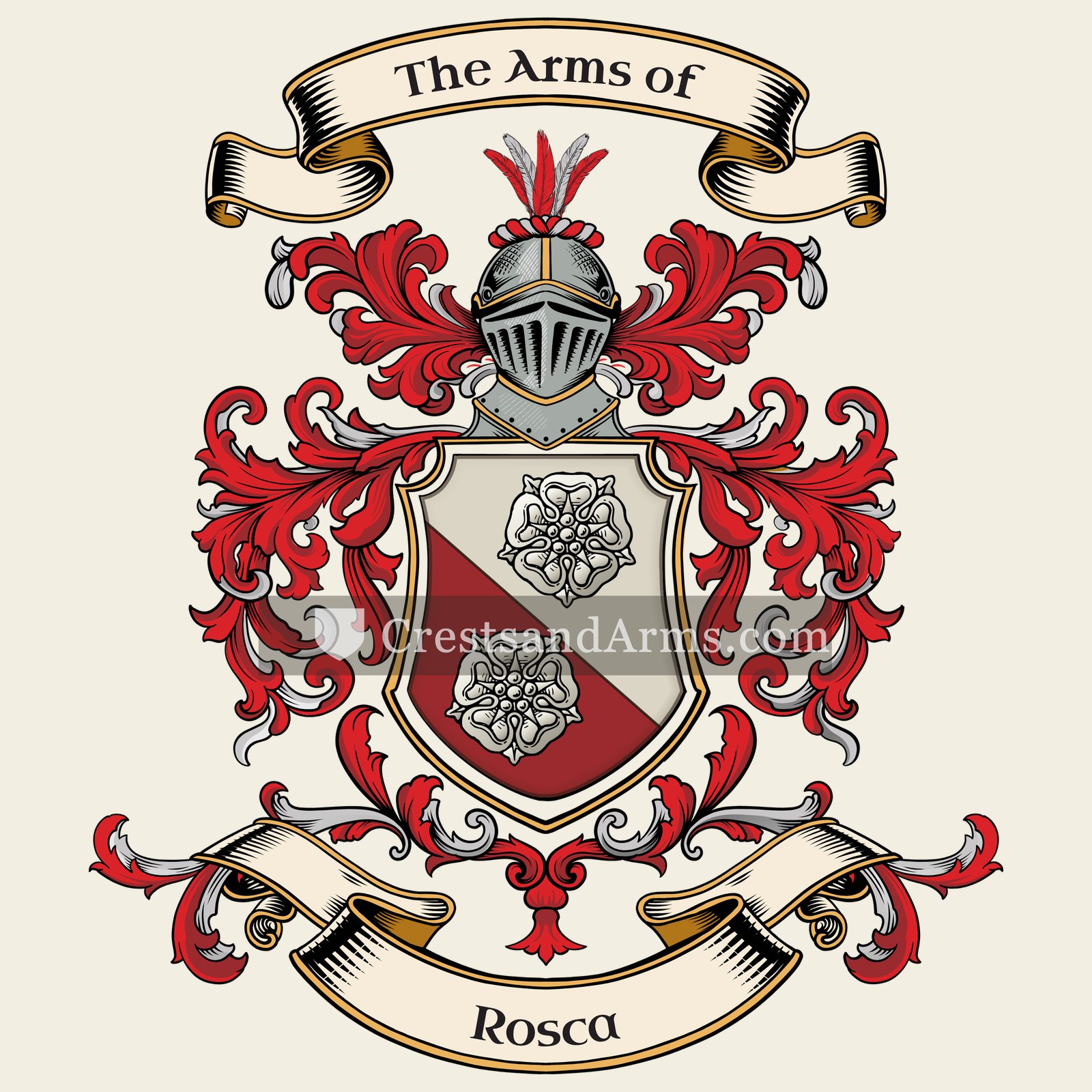




 eagleNobility, strength and a keen mind