Map of Belgium showing where the Rose arms are recorded
The Rose arms were recorded in Tournai, c. 1737.
This is where the arms were entered in the register. Families often moved to other parts of the country, so the same name can turn up in more than one region.
The body that granted and recorded arms in Belgium in this period.
Charles VI, Holy Roman Emperor
Sovereign of the period
Charles VI, Holy Roman Emperor
1711–1740
Reigning in Belgium when the Rose arms are first recorded.
How Arms Worked in Belgium
In Belgium, a coat of arms is considered personal property that is passed down through the male line to legitimate descendants. Families often use the same shield design across generations to show their shared heritage. If a branch of the family wants to change the design, they must apply for an official update to their specific version of the arms.
Granting authority
The Conseil héraldique is the official body that regulates and approves all coats of arms in Belgium.
How they got arms
Families obtain their coats of arms through formal royal grants or by confirming their historical right to use existing designs.
Where arms were recorded
All approved coats of arms are officially recorded in the public registers of the Conseil héraldique since 1844.
The family's standing
Recorded among the armigerous families of Belgium.
Origin & History of the Rose Family in Belgium
The history of the Rose family in Belgium is deeply rooted in the historic city of Tournai, where records confirm their presence as early as 1737. During the eighteenth century, Tournai served as a vital center for trade and craftsmanship within the Austrian Netherlands, providing a stable environment for families to establish their roots. The name Rose likely originated as a descriptive surname, often used to identify individuals who lived near a prominent rose garden or those who possessed a gentle and pleasant temperament. As residents of a city known for its ancient cathedral and long history of textile production, the early members of this family were part of a vibrant urban community that navigated the shifting political landscapes of Western Europe. By settling in this region, the family became part of the local social fabric, contributing to the daily life and economic activities that defined Tournai during the Enlightenment era.
Meaning of the Rose family crest colors & symbols
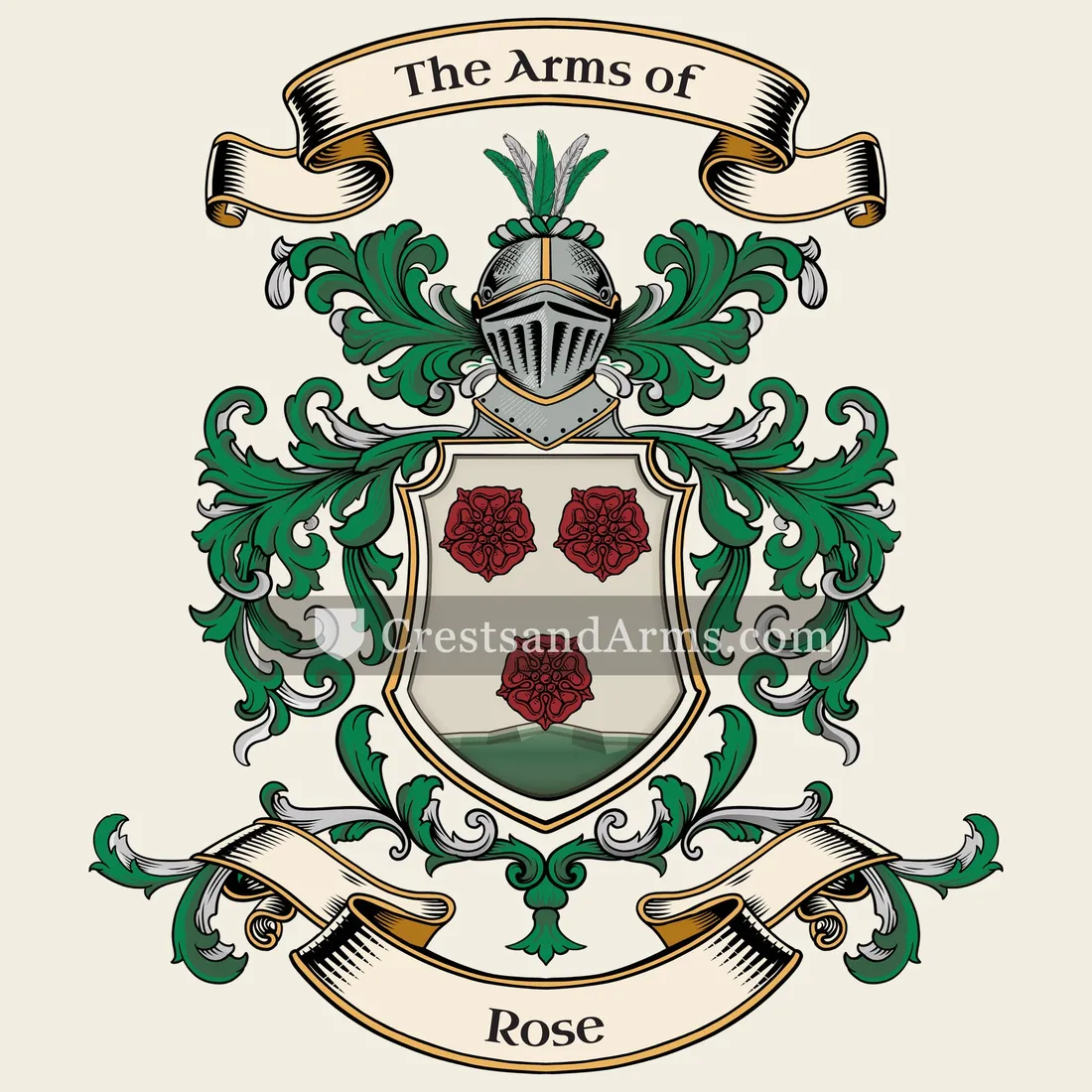
Symbols on this shield
mountThe ground held, and steadfastness upon it
roseThe seventh son, and beauty with grace
Colours
Silver (Argent)Means: Peace and sincerity
Green (Vert)Means: Hope
Red (Gules)Means: Military strength
Historical info
Source
J. B. Rietstap, Armorial Général, Gouda: G. B. van Goor Zonen, 1884–87
Blazon (the actual original written record)
“D'arg. à trois roses de gu., tigées de sin., les tiges réunies posées sur un tertre du même. C.: un homme iss., hab. d'arg., coiffé d'un bonnet du même, tenant les roses de l'écu. L. d'arg. et de gu.”
FranconiaFranconia, c. 1765
Digital archive packCoat of arms PNG, gold border print PDF, vector SVG and the certificate of authenticity. Sent to your email in minutes.
Map of Germany showing where the Rose arms are recorded
The Rose arms were recorded in Franconia, c. 1765.
Franconia was a patchwork of small territories in central Germany, full of minor landowners and prosperous market towns. So many separate households held land there that the region produced a great many coats of arms.
This is where the arms were entered in the register. Families often moved to other parts of the country, so the same name can turn up in more than one region.
The body that granted and recorded arms in Germany in this period.
Francis I, Holy Roman Emperor
Sovereign of the period
Francis I, Holy Roman Emperor
1745–1765
Reigning in Belgium when the Rose arms are first recorded.
How Arms Worked in Germany
In the Holy Roman Empire, coats of arms were often granted to individuals by the Emperor or his representatives. These arms were then passed down through the generations to all legitimate descendants of the original holder. Younger branches of a family usually kept the same shield design without needing to change it, as the arms belonged to the entire lineage.
Granting authority
The Holy Roman Emperor held the sole power to grant new coats of arms throughout his vast imperial territories.
How they got arms
Families typically obtained their coats of arms through a formal imperial grant or by proving their noble status to the authorities.
Where arms were recorded
These grants were officially recorded in the Imperial Chancery registers, which began keeping formal records of such honors during the Middle Ages.
The family's standing
Recorded among the armigerous families of Franconia.
Origin & History of the Rose Family in Germany
The surname Rose has deep roots in the German region of Franconia, where families bearing this name were well-established by the mid-eighteenth century. During this era, the name often functioned as a topographic identifier, likely describing ancestors who lived near a prominent rose bush or a garden known for these flowers. In the rural landscapes of Franconia in 1765, families were frequently tied to the land through agriculture and local trade. Because the region was composed of many small territories and independent cities, the Rose family likely integrated into the social fabric of their specific village or town as craftsmen or farmers. Over time, the name became a permanent fixture in local parish registers, which recorded the births, marriages, and deaths of these early members as they navigated the changing political and economic landscape of the Holy Roman Empire.
Meaning of the Rose family crest colors & symbols
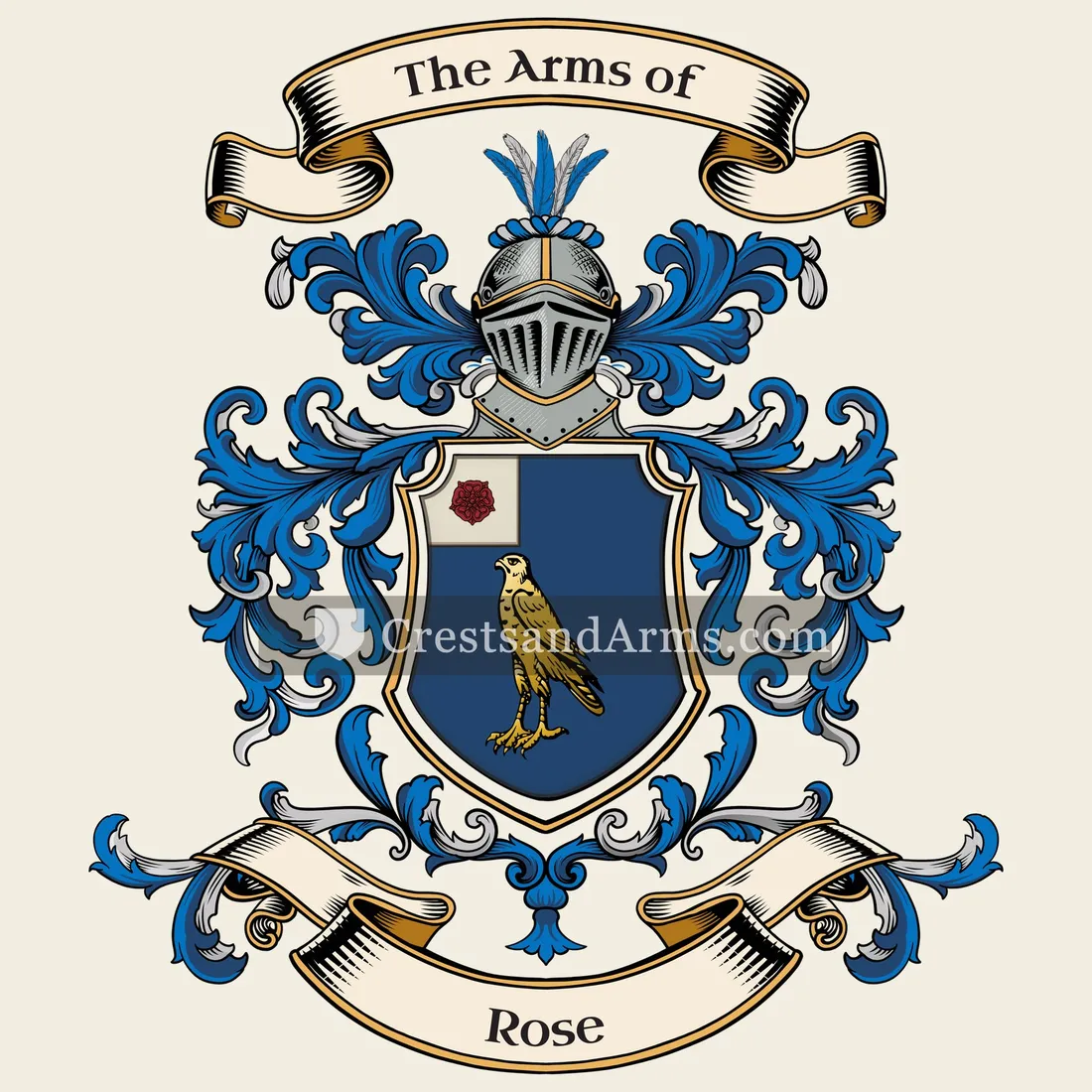
Symbols on this shield
cantonA mark of honour granted by the sovereign
falconOne eager and quick in pursuit
roseThe seventh son, and beauty with grace
Colours
Blue (Azure)Means: Loyalty and truth
Silver (Argent)Means: Peace and sincerity
Gold (Or)Means: Generosity
Red (Gules)Means: Military strength
Historical info
Source
Sir Bernard Burke, The General Armory of England, Scotland, Ireland and Wales, London: Harrison & Sons, 1884
Blazon (the actual original written record)
“Az. a falcon volant or, a double tressure flory counterflory of the last, on a canton ar. a rose gu”
EnglandLondon, c. 1568
Digital archive packCoat of arms PNG, gold border print PDF, vector SVG and the certificate of authenticity. Sent to your email in minutes.
Map of England showing where the Rose arms are recorded
The Rose arms were recorded in London, c. 1568.
This is where the arms were entered in the register. Families often moved to other parts of the country, so the same name can turn up in more than one region.
The body that granted and recorded arms in England in this period.
Elizabeth I of England
Sovereign of the period
Elizabeth I of England
1558–1603
Reigning in Belgium when the Rose arms are first recorded.
How Arms Worked in England
English heraldry allowed arms to be shared by all legitimate descendants of the original owner. These symbols were treated as personal property that moved through the generations to all children. While the eldest son kept the original design, other family members could use the same shield without needing to change it or register their own unique versions.
Granting authority
The College of Arms in London has regulated the use of coats of arms throughout England and Wales since 1484.
How they got arms
Families typically obtained their coats of arms through a formal grant from the Crown or by proving their ancient right to them.
Where arms were recorded
All official coats of arms are recorded in the registers kept at the College of Arms, which date back to the fifteenth century.
The family's standing
Recorded among the armigerous families of England.
Origin & History of the Rose Family in England
The surname Rose emerged in England as a locative or topographic name, often identifying individuals who lived near a prominent rose bush or a house marked by a rose sign. By the time the name appears in London records during 1568, it had already become well-established across various English counties. During the sixteenth century, families bearing this name were often involved in the bustling trade and craft industries that defined London life. As the city grew into a major center for commerce, people named Rose moved into roles as merchants, artisans, and laborers, contributing to the social fabric of the capital. The name reflects a time when surnames were transitioning from simple descriptors of a person's surroundings into permanent family identifiers passed down through generations.
Rose Meaning & Related Branches
Root word
Rosa
Latin term for the flower of the rose plant.
This name
RoseA habitational or ornamental name derived from the flower, often denoting someone living near rose bushes.
also spelled
Roose
Roze
Ross
Related arms
Rosssimilar arms
Roosevariant spelling
Rozevariant spelling
Chadwickrecorded with Rose, same area
Documented Sources
J. B. Rietstap, Armorial Général, Gouda: G. B. van Goor Zonen, 1884–87
Archives de l'État à Tournai, État civil et registres paroissiaux
Roland, C., Histoire de Tournai, 1925
Dumont, G. H., Histoire de la Belgique: des origines à nos jours, 1977
Digital archive packCoat of arms PNG, gold border print PDF, vector SVG and the certificate of authenticity. Sent to your email in minutes.


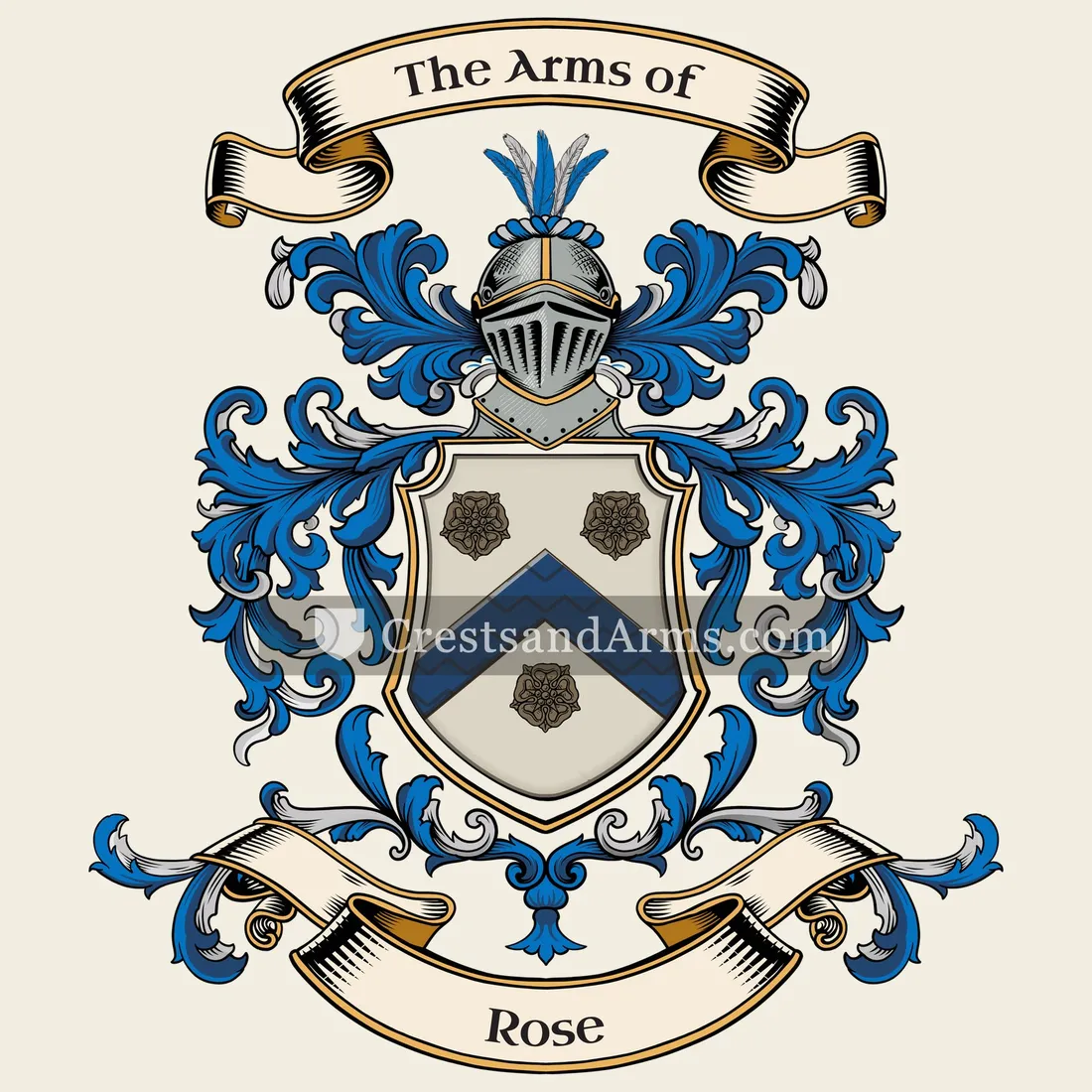
 chevronProtection, and faithful service completed
 roseThe seventh son, and beauty with grace
 chevronProtection, and faithful service completed
 roseThe seventh son, and beauty with grace


 mountThe ground held, and steadfastness upon it


 cantonA mark of honour granted by the sovereign
 falconOne eager and quick in pursuit