Map of Germany showing where the Rosu arms are recorded
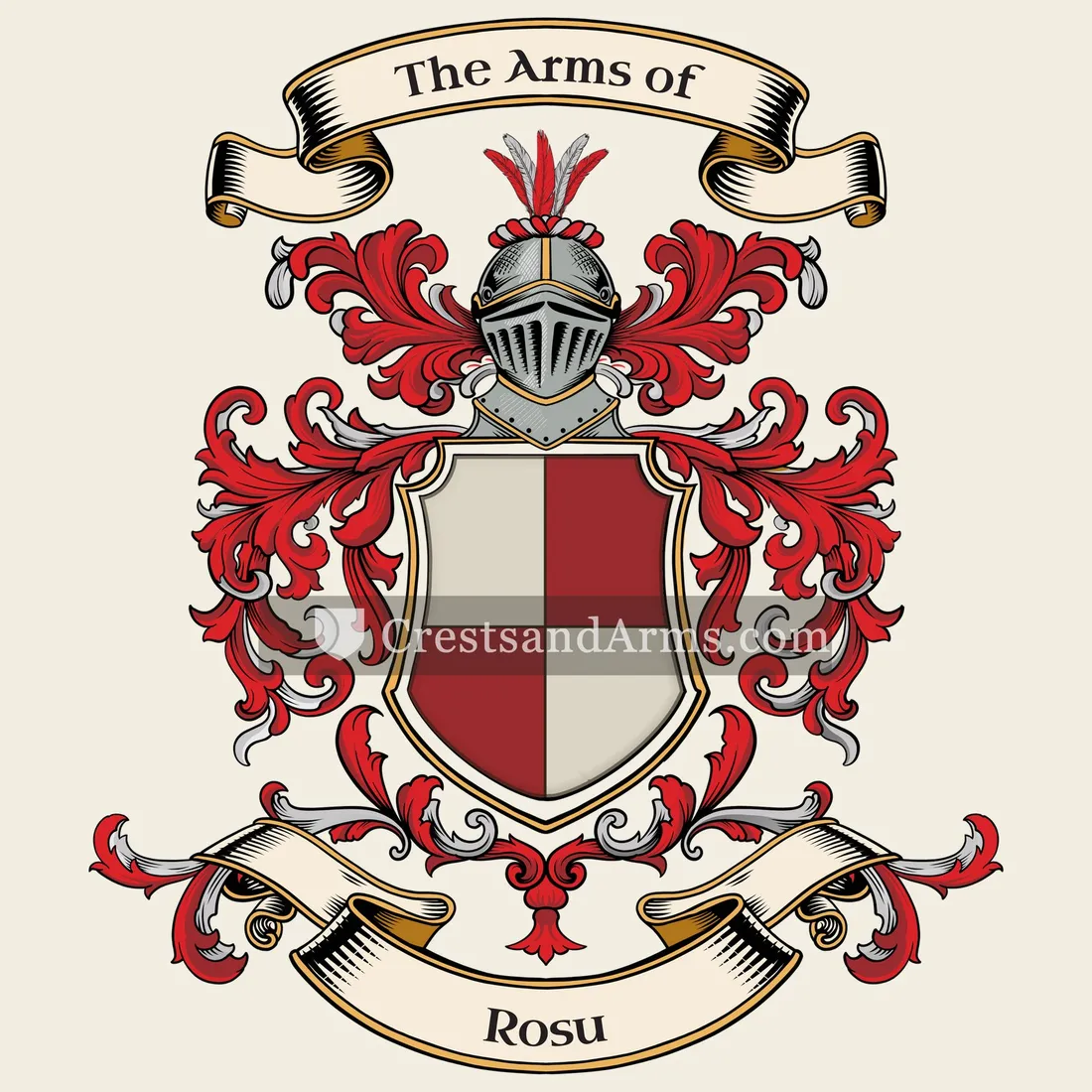
The Rosu arms were recorded in Brandenburg, c. 1765.
Brandenburg was sandy farming country around Berlin, held in large estates by families who served as officers. Land and military service each brought arms, and most families there had both.
This is where the arms were entered in the register. Families often moved to other parts of the country, so the same name can turn up in more than one region.
The body that granted and recorded arms in Germany in this period.
Francis I, Holy Roman Emperor
Sovereign of the period
Francis I, Holy Roman Emperor
1745–1765
Reigning in Germany when the Rosu arms are first recorded.
How Arms Worked in Germany
In the Holy Roman Empire, coats of arms were often granted to individuals by the Emperor or his representatives. These arms were then passed down through the generations to all legitimate descendants of the original holder. Younger branches of a family usually kept the same shield design without needing to change it, as the arms belonged to the entire lineage.
Granting authority
The Holy Roman Emperor held the sole power to grant new coats of arms throughout his vast imperial territories.
How they got arms
Families typically obtained their coats of arms through a formal imperial grant or by proving their noble status to the authorities.
Where arms were recorded
These grants were officially recorded in the Imperial Chancery registers, which began keeping formal records of such honors during the Middle Ages.
The family's standing
Recorded among the armigerous families of Brandenburg.
Origin & History of the Rosu Family in Germany
The surname Rosu carries a rich history that is deeply connected to the movement of people across Europe during the eighteenth century. While the name is often associated with Romanian roots, where it translates to the word red, its presence in the Prussian region of Brandenburg by 1765 suggests a story of migration and adaptation. During this era, families often moved across borders to seek new opportunities in agriculture or trade within the expanding Prussian territories. Those who settled in Brandenburg likely integrated into the local German-speaking communities while maintaining their distinct family identity. By documenting their presence in regional records during the mid-1700s, these early ancestors established a lasting footprint in the area. This transition reflects the broader patterns of mobility that defined the lives of many families living in Central and Eastern Europe during the Enlightenment period.
Rosu Meaning & Related Branches
Root word
russus
Latin term meaning red or reddish in color.
This name
RosuA descriptive nickname for an individual with red hair or a ruddy complexion.
also spelled
Rosaue
Rosaux
Rosauw
Rozo
Documented Sources
J. B. Rietstap, Armorial Général, Gouda: G. B. van Goor Zonen, 1884–87
Brandenburgisches Landeshauptarchiv, General-Direktorium, Kurmärkische Kammer, Tit. 20: Ansiedlung und Kolonisation
Müller, Friedrich, Die Einwanderung nach Brandenburg im 18. Jahrhundert, 1954
Schulz, Hans, Namensforschung und Siedlungsgeschichte in Preußen, 1968
Digital archive packCoat of arms PNG, gold border print PDF, vector SVG and the certificate of authenticity. Sent to your email in minutes.