Map of Belgium showing where the Rouco arms are recorded
The Rouco arms were recorded in Luxemb, c. 1737.
This is where the arms were entered in the register. Families often moved to other parts of the country, so the same name can turn up in more than one region.
The body that granted and recorded arms in Belgium in this period.
Charles VI, Holy Roman Emperor
Sovereign of the period
Charles VI, Holy Roman Emperor
1711–1740
Reigning in Belgium when the Rouco arms are first recorded.
How Arms Worked in Belgium
In Belgium, a coat of arms is considered personal property that is passed down through the male line to legitimate descendants. Families often use the same shield design across generations to show their shared heritage. If a branch of the family wants to change the design, they must apply for an official update to their specific version of the arms.
Granting authority
The Conseil héraldique is the official body that regulates and approves all coats of arms in Belgium.
How they got arms
Families obtain their coats of arms through formal royal grants or by confirming their historical right to use existing designs.
Where arms were recorded
All approved coats of arms are officially recorded in the public registers of the Conseil héraldique since 1844.
The family's standing
Recorded among the armigerous families of Belgium.
Origin & History of the Rouco Family in Belgium
The history of the Rouco family in the region of modern-day Belgium and Luxembourg is rooted in the social shifts of the eighteenth century. While the name is often associated with later migrations, records confirm that family members were established in the Luxembourg area by 1737. During this period, the region was part of the Austrian Netherlands, a territory that encompassed much of modern Belgium and Luxembourg under the rule of the Habsburg monarchy. Families like the Roucos often lived in rural or semi-urban communities where they were deeply connected to the local parish systems. These early ancestors likely worked in agriculture or local trades, navigating a landscape defined by shifting borders and the influence of both French and Germanic cultures. By settling in this crossroads of Europe, the family became part of a long tradition of people moving through the Low Countries to build lives in the heart of the continent.
Meaning of the Rouco family crest colors & symbols
Symbols on this shield
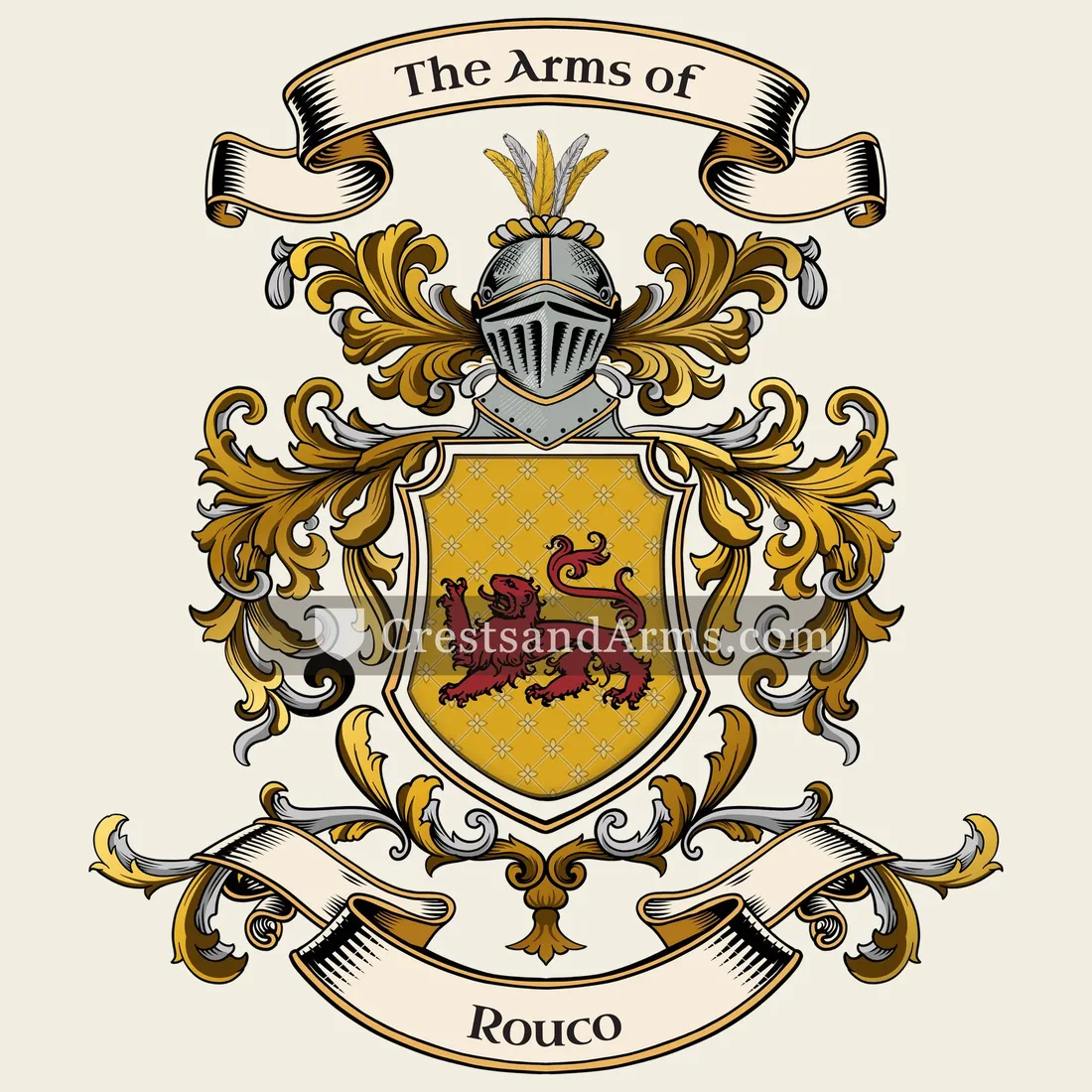
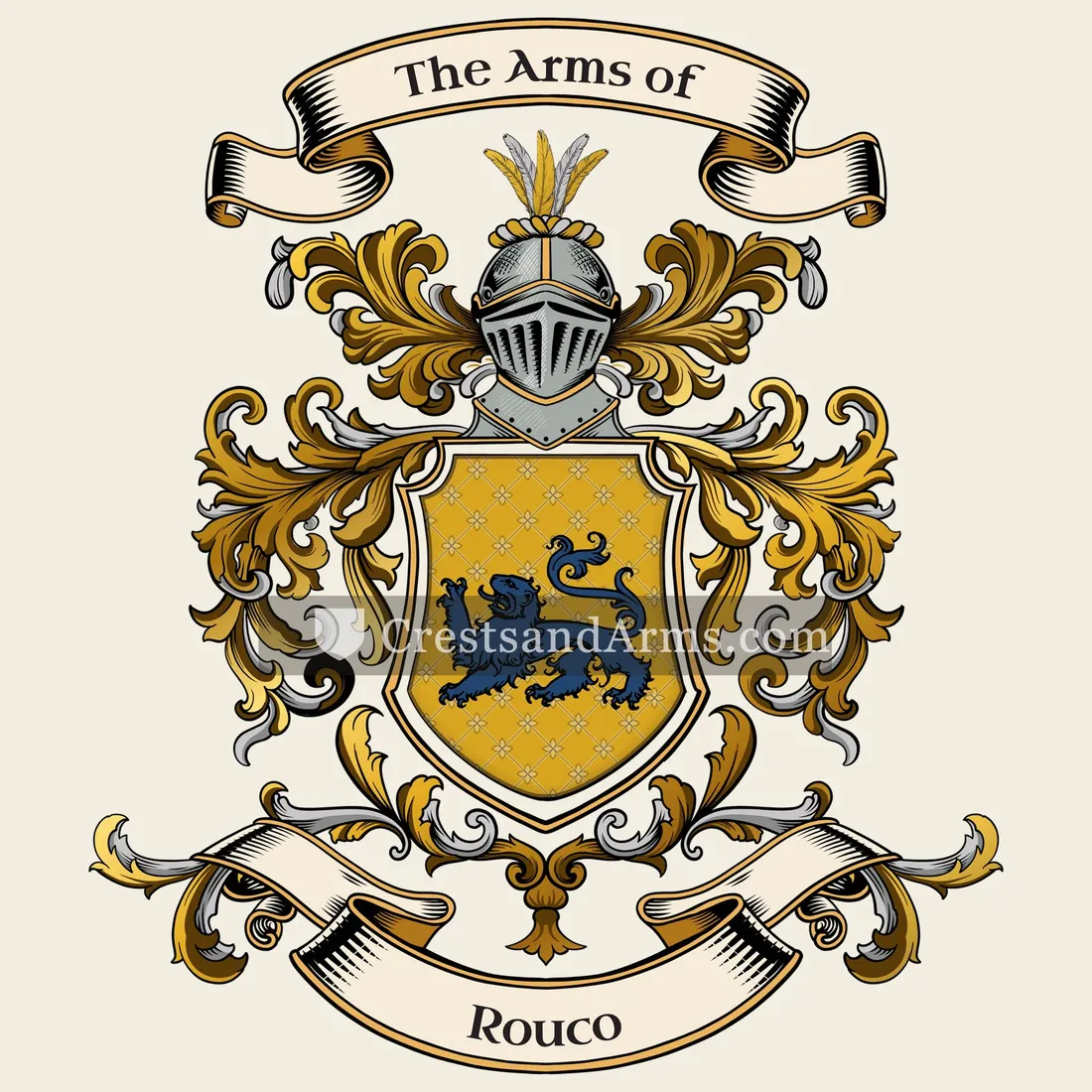
lionCourage, strength and royalty
Colours
Gold (Or)Means: Generosity
Blue (Azure)Means: Loyalty and truth
Historical info
Source
J. B. Rietstap, Armorial Général, Gouda: G. B. van Goor Zonen, 1884–87
Blazon (the actual original written record)
“D'or au lion d'azur, arm. et lamp. de gu.”
ChampagneChampagne, c. 1663
Digital archive packCoat of arms PNG, gold border print PDF, vector SVG and the certificate of authenticity. Sent to your email in minutes.
Map of France showing where the Rouco arms are recorded
The Rouco arms were recorded in Champagne, c. 1663.
Champagne made its money at its great trade fairs, where merchants from across Europe met. Wealth of that kind bought land, and land brought arms, so the region carries a lot of names.
This is where the arms were entered in the register. Families often moved to other parts of the country, so the same name can turn up in more than one region.
The body that granted and recorded arms in France in this period.
Louis XIV of France
Sovereign of the period
Louis XIV of France
1643–1715
Reigning in Belgium when the Rouco arms are first recorded.
How Arms Worked in France
In France, a coat of arms was a mark of honor that passed down through the male line to all legitimate descendants. Families often used the same shield without changes to show their shared heritage. If a branch wanted to stand out, they could add a small mark to their shield to show their specific place in the family tree.
Granting authority
The Juge d'armes de France acted as the official authority that regulated and verified coats of arms across the country.
How they got arms
Families typically inherited their arms from ancestors, though they could also receive them through royal grants or by proving their noble status.
Where arms were recorded
Coats of arms were officially recorded in the Armorial Général de France, which began its main collection in the year 1696.
The family's standing
Recorded among the armigerous families of Champagne.
Origin & History of the Rouco Family in France
The family name Rouco has deep roots in the historical region of Champagne, where records confirm members of the family were living as early as 1663. During the seventeenth century, this area of France was a bustling center for agriculture and trade, which likely shaped the daily lives of the early Rouco ancestors. Families in this region often lived in small, tightly knit communities centered around the local parish church and the seasonal demands of the vineyard. The name itself suggests a connection to the local linguistic traditions of the time, as many surnames in northern France evolved from nicknames or descriptions of a person's character or their specific trade. By settling in Champagne, the early members of this family became part of a long-standing tradition of regional craftsmanship and rural life that defined the social structure of the French countryside during the reign of King Louis XIV.
Meaning of the Rouco family crest colors & symbols
Symbols on this shield
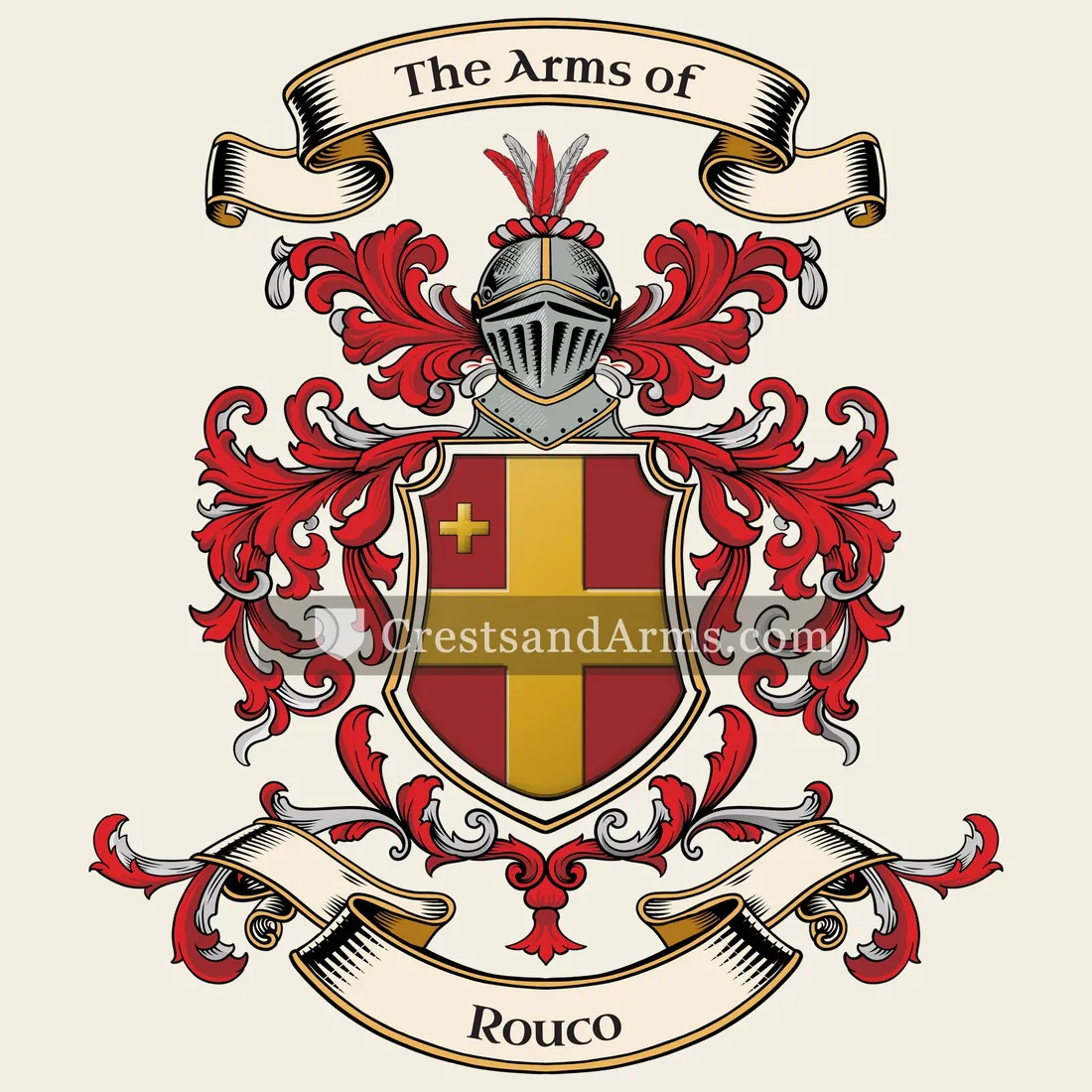
cross symbolChristian faith and service
Colours
Red (Gules)Means: Military strength
Gold (Or)Means: Generosity
Historical info
Source
J. B. Rietstap, Armorial Général, Gouda: G. B. van Goor Zonen, 1884–87
Blazon (the actual original written record)
“De gu. à la croix de Lorraine d'or, chaque bras terminé par trois degrés. Cq. cour. C.: un homme iss., hab. d'arg., coiffé d'un bonnet du même sommé de deux plumes, tenant un sabre.”
Germanyc. 1765
Digital archive packCoat of arms PNG, gold border print PDF, vector SVG and the certificate of authenticity. Sent to your email in minutes.
Map of Germany showing where the Rouco arms are recorded
The Rouco arms were recorded in Germany, c. 1765.
Arms such as these were typically recorded in Bavaria.
Bavaria was a country of old landed families and walled market towns. Estates passed down the same line for centuries, and both the landowners and the leading townsmen kept arms, which is why so many Bavarian names sit in the registers.
This is where the arms were entered in the register. Families often moved to other parts of the country, so the same name can turn up in more than one region.
The body that granted and recorded arms in Germany in this period.
Francis I, Holy Roman Emperor
Sovereign of the period
Francis I, Holy Roman Emperor
1745–1765
Reigning in Belgium when the Rouco arms are first recorded.
How Arms Worked in Germany
In the Holy Roman Empire, coats of arms were often granted to individuals by the Emperor or his representatives. These arms were then passed down through the generations to all legitimate descendants of the original holder. Younger branches of a family usually kept the same shield design without needing to change it, as the arms belonged to the entire lineage.
Granting authority
The Holy Roman Emperor held the sole power to grant new coats of arms throughout his vast imperial territories.
How they got arms
Families typically obtained their coats of arms through a formal imperial grant or by proving their noble status to the authorities.
Where arms were recorded
These grants were officially recorded in the Imperial Chancery registers, which began keeping formal records of such honors during the Middle Ages.
The family's standing
Recorded among the armigerous families of Germany.
Origin & History of the Rouco Family in Germany
The family name Rouco traces its roots in Germany to the mid-eighteenth century, with documented evidence placing family members in the region of Bavaria by 1765. During this era, Bavaria was a collection of territories undergoing significant social and economic shifts under the rule of the Wittelsbach dynasty. Families like the Roucos often lived in small, agrarian communities where surnames were frequently tied to local geography or specific ancestral trades. Because the name appears in Bavarian records during this period, it suggests that the family was part of the stable, tax-paying population that sustained the rural economy of southern Germany. These early ancestors likely navigated the challenges of the Holy Roman Empire, working within the strict social hierarchies that defined village life before the onset of the industrial age. By maintaining a presence in the region, the family became part of the long-standing cultural fabric of Bavaria, contributing to the local history that shaped the state throughout the late 1700s.
Rouco Meaning & Related Branches
Root word
Rolf
Derived from the Germanic elements meaning wolf and famous or renown.
This name
RoucoA patronymic form originating from a diminutive of the name Rudolph.
also spelled
Roussy
Roucie
Rusee
Documented Sources
J. B. Rietstap, Armorial Général, Gouda: G. B. van Goor Zonen, 1884–87
Archives Nationales de Luxembourg, État civil et registres paroissiaux (1600–1795)
Muller, Jean-Claude, Les familles luxembourgeoises au XVIIIe siècle, 1985
Archives de l'État à Arlon, Registres paroissiaux du duché de Luxembourg, 1737
Digital archive packCoat of arms PNG, gold border print PDF, vector SVG and the certificate of authenticity. Sent to your email in minutes.


 lionCourage, strength and royalty
 lionCourage, strength and royalty




 cross symbolChristian faith and service