Map of Belgium showing where the Roux arms are recorded
The Roux arms were recorded in Belgium, c. 1737.
Arms such as these were typically recorded in Brabant.
Brabant lay at the heart of the Low Countries, where the trade routes met. Its towns were wealthy and its landowners many, and both kinds of family kept arms, which is why the region is so heavily represented.
This is where the arms were entered in the register. Families often moved to other parts of the country, so the same name can turn up in more than one region.
The body that granted and recorded arms in Belgium in this period.
Charles VI, Holy Roman Emperor
Sovereign of the period
Charles VI, Holy Roman Emperor
1711–1740
Reigning in Belgium when the Roux arms are first recorded.
How Arms Worked in Belgium
In Belgium, a coat of arms is considered personal property that is passed down through the male line to legitimate descendants. Families often use the same shield design across generations to show their shared heritage. If a branch of the family wants to change the design, they must apply for an official update to their specific version of the arms.
Granting authority
The Conseil héraldique is the official body that regulates and approves all coats of arms in Belgium.
How they got arms
Families obtain their coats of arms through formal royal grants or by confirming their historical right to use existing designs.
Where arms were recorded
All approved coats of arms are officially recorded in the public registers of the Conseil héraldique since 1844.
The family's standing
Recorded among the armigerous families of Belgium.
Origin & History of the Roux Family in Belgium
The surname Roux carries a long history in the region of Brabant, where records confirm the family was well-established by 1737. The name itself is derived from the Old French word for red, which was often used as a nickname for someone with red hair or a ruddy complexion. In the context of the Low Countries, families like the Roux were often part of the local artisan or merchant classes who moved through the bustling towns of the Duchy of Brabant. During the eighteenth century, this area was a center for trade and agriculture, and the presence of the Roux family in official documents suggests they were integrated into the social and economic life of the region. As they settled into their communities, they contributed to the local culture of what would eventually become modern-day Belgium, leaving behind a trail of parish records and legal documents that track their growth and movement across the landscape.
Meaning of the Roux family crest colors & symbols
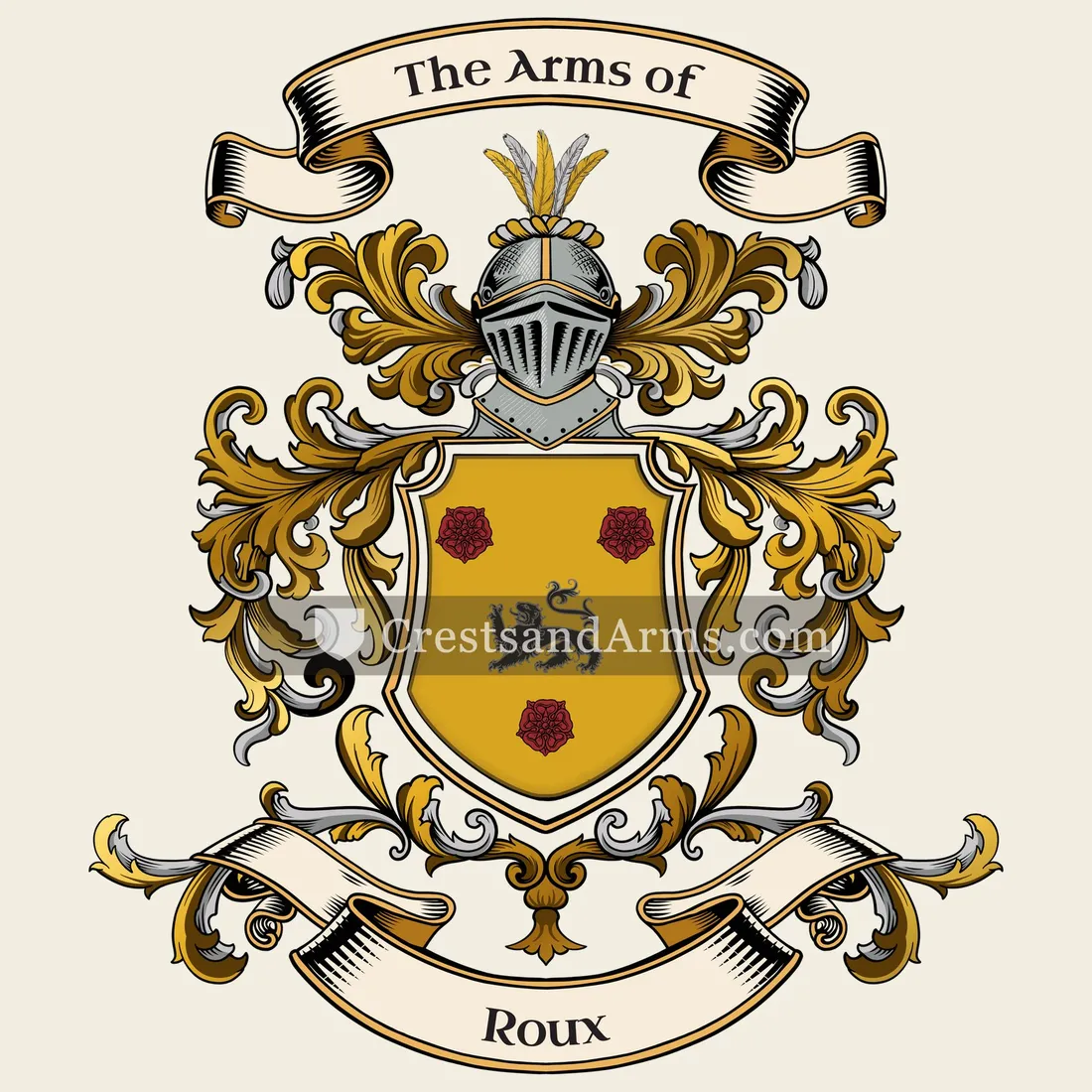
Symbols on this shield
lionCourage, strength and royalty
roseThe seventh son, and beauty with grace
Colours
Gold (Or)Means: Generosity
Black (Sable)Means: Constancy
Red (Gules)Means: Military strength
Historical info
Source
J. B. Rietstap, Armorial Général, Gouda: G. B. van Goor Zonen, 1884–87
Blazon (the actual original written record)
“D'or au lion de sa., arm. et lamp. de gu., adextré de trois roses aussi de gu., posées entre ses jambes.”
PicardiePicardie, c. 1663
Digital archive packCoat of arms PNG, gold border print PDF, vector SVG and the certificate of authenticity. Sent to your email in minutes.
Map of France showing where the Roux arms are recorded
The Roux arms were recorded in Picardie, c. 1663.
Picardie lay on the northern road into France and saw armies pass through it repeatedly. Its landowners were soldiers as often as farmers, and a soldier needed a shield he could be recognised by.
This is where the arms were entered in the register. Families often moved to other parts of the country, so the same name can turn up in more than one region.
The body that granted and recorded arms in France in this period.
Louis XIV of France
Sovereign of the period
Louis XIV of France
1643–1715
Reigning in Belgium when the Roux arms are first recorded.
How Arms Worked in France
In France, a coat of arms was a mark of honor that passed down through the male line to all legitimate descendants. Families often used the same shield without changes to show their shared heritage. If a branch wanted to stand out, they could add a small mark to their shield to show their specific place in the family tree.
Granting authority
The Juge d'armes de France acted as the official authority that regulated and verified coats of arms across the country.
How they got arms
Families typically inherited their arms from ancestors, though they could also receive them through royal grants or by proving their noble status.
Where arms were recorded
Coats of arms were officially recorded in the Armorial Général de France, which began its main collection in the year 1696.
The family's standing
Recorded among the armigerous families of Picardie.
Origin & History of the Roux Family in France
The surname Roux is a classic example of a descriptive nickname that evolved into a permanent family name during the Middle Ages. In the French language, the word roux refers to someone with red or reddish-brown hair. Because medieval communities often relied on physical traits to distinguish between neighbors with the same first name, this label became a common way to identify individuals. By the time records confirm the presence of the family in the Picardie region in 1663, the name had already been established for centuries across various French provinces. Families bearing this name were typically part of the rural or merchant classes, living through the agricultural cycles and social shifts of northern France. As the family settled in Picardie, they became part of the local fabric of the region, contributing to the history of a landscape defined by its proximity to trade routes and its long tradition of farming.
Meaning of the Roux family crest colors & symbols
Symbols on this shield
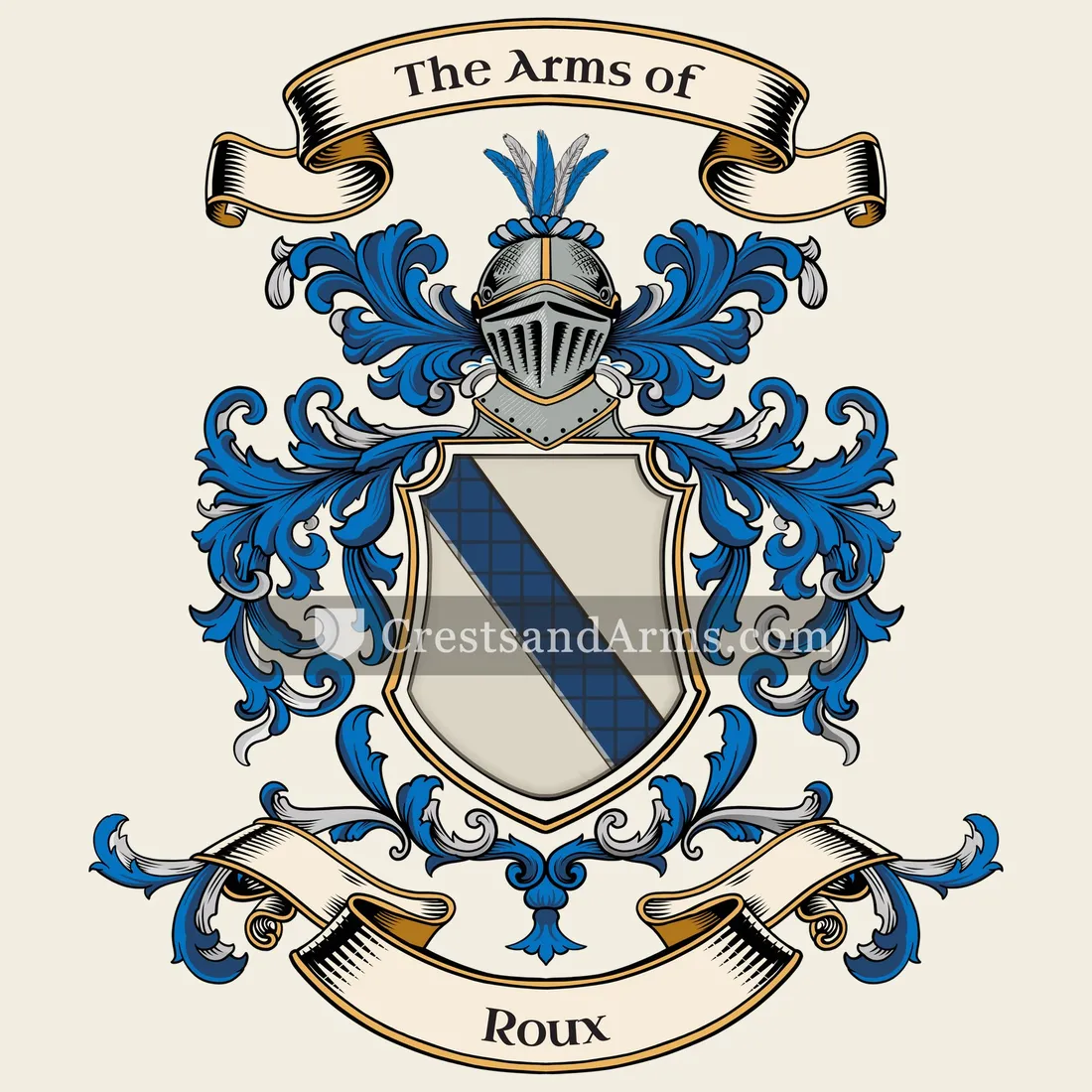
bendDefence, and the scarf of a commander
Colours
Silver (Argent)Means: Peace and sincerity
Blue (Azure)Means: Loyalty and truth
Historical info
Source
J. B. Rietstap, Armorial Général, Gouda: G. B. van Goor Zonen, 1884–87
Blazon (the actual original written record)
“D'arg. à la bande d'azur,”
NaplesNaples, c. 1775
Digital archive packCoat of arms PNG, gold border print PDF, vector SVG and the certificate of authenticity. Sent to your email in minutes.
Map of Italy showing where the Roux arms are recorded
The Roux arms were recorded in Naples, c. 1775.
Naples was the largest city in Italy and the seat of a kingdom. Its noble houses were numerous, and the kingdom kept formal lists of the families entitled to arms, which is why so many appear in the records.
This is where the arms were entered in the register. Families often moved to other parts of the country, so the same name can turn up in more than one region.
The body that granted and recorded arms in Italy in this period.
Alvise Giovanni Mocenigo
Sovereign of the period
Alvise Giovanni Mocenigo
1763–1778
Reigning in Belgium when the Roux arms are first recorded.
How Arms Worked in Italy
In the Italian states, coats of arms were often used by noble families to show their status and history. These symbols were passed down through the generations to all legitimate male descendants. Younger branches of a family usually kept the original design but sometimes added small changes to distinguish their specific line from the main branch.
Granting authority
Various local rulers and city governments controlled the use of coats of arms across the different Italian states.
How they got arms
Families often assumed their own arms or received them as official grants from local lords, popes, or city councils.
Where arms were recorded
Arms were recorded in local city archives or private family books rather than in one single national register.
The family's standing
Recorded among the armigerous families of Naples.
Origin & History of the Roux Family in Italy
The Roux family name carries a deep history that connects the Mediterranean regions of France and Italy. While the name is often associated with French origins, historical records confirm that members of the family were well-established in Naples by 1775. During this period, Naples was a bustling center of trade and culture under the Bourbon monarchy, attracting merchants and professionals from across Europe. Families like the Roux often moved between these coastal cities to manage business interests or serve in administrative roles. By settling in the vibrant urban landscape of Naples, the family became part of the city’s complex social fabric. Their presence in the late 18th century highlights the fluid movement of people across borders during an era of significant political and economic change in Italy.
Roux Meaning & Related Branches
Root word
russus
Latin term meaning red or reddish in color.
This name
RouxA descriptive nickname for a person with red hair or a ruddy complexion.
also spelled
Roo
Related arms
Majance de Camiransame arms
Belvedersimilar arms
Ancelrecorded with Roux, same area
Baylerecorded with Roux, same area
Documented Sources
J. B. Rietstap, Armorial Général, Gouda: G. B. van Goor Zonen, 1884–87
State Archives in Belgium (Rijksarchief), Parochieregisters van de provincie Brabant
State Archives in Belgium (Rijksarchief), Notariële archieven van het hertogdom Brabant
Debrabandere, Frans, Woordenboek van de familienamen in België en Noord-Frankrijk, 2003
Marynissen, Ann, Familienamen in België, 2005
Digital archive packCoat of arms PNG, gold border print PDF, vector SVG and the certificate of authenticity. Sent to your email in minutes.


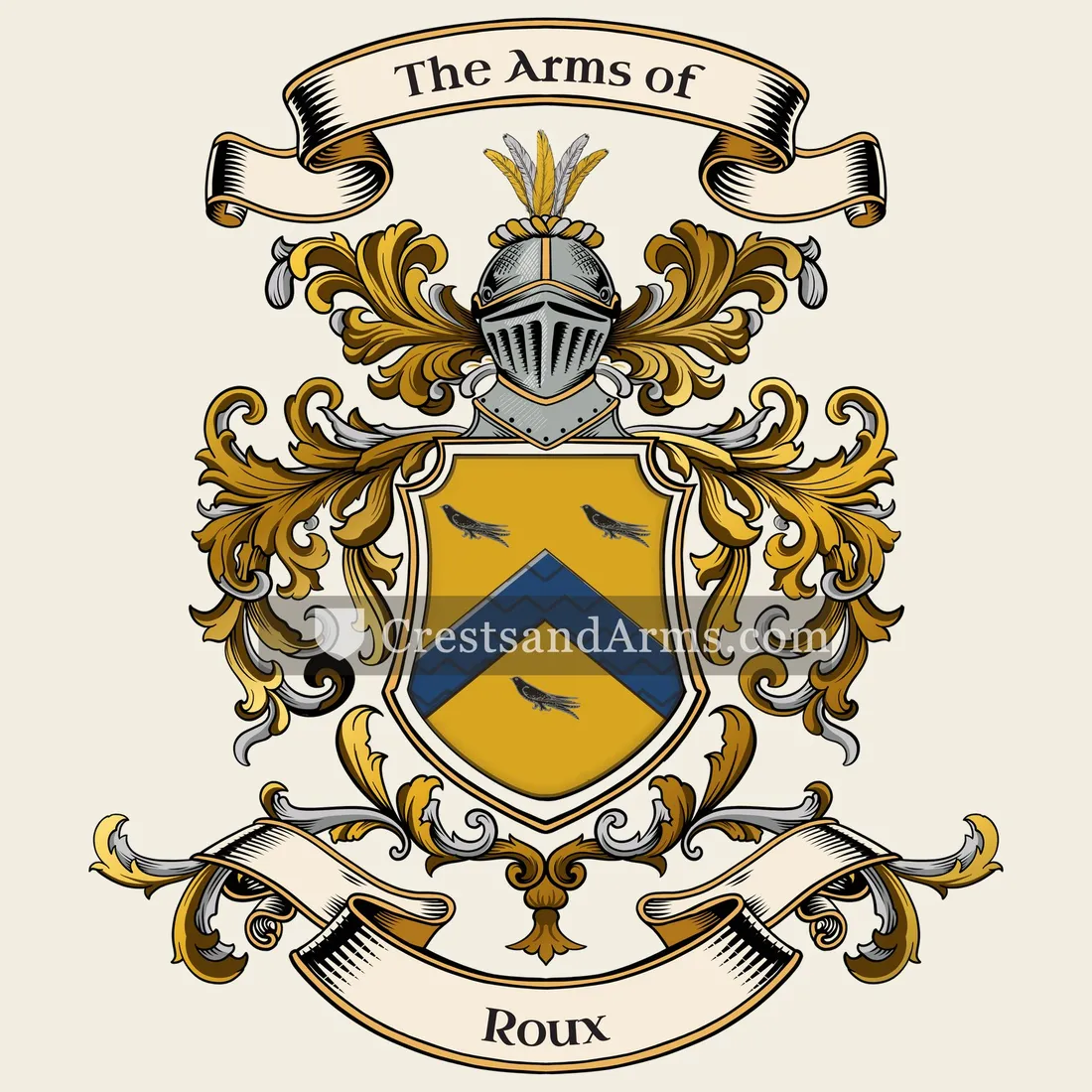
 chevronProtection, and faithful service completed
 martletA younger son, who must win his own land
 chevronProtection, and faithful service completed
 martletA younger son, who must win his own land


 lionCourage, strength and royalty
 roseThe seventh son, and beauty with grace


 bendDefence, and the scarf of a commander