Map of Switzerland showing where the Rubio arms are recorded
The Rubio arms were recorded in Genevois, c. 1745.
Genevois was Alpine country south of Geneva, held in small estates by families who stayed put. Land there passed down the same line for centuries, and long tenure counted for more than wealth.
This is where the arms were entered in the register. Families often moved to other parts of the country, so the same name can turn up in more than one region.
The body that granted and recorded arms in Switzerland in this period.
How Arms Worked in Switzerland
In Switzerland, coats of arms were not restricted to the nobility and were often adopted by common citizens and families. These symbols were passed down through generations to show family identity. When branches of a family grew, they often changed small details of the design to distinguish their own line from the original group.
Granting authority
Cantonal and civic authorities managed the use of coats of arms within their specific regions and local jurisdictions.
How they got arms
Families typically assumed their own coats of arms based on local custom rather than receiving them from a central monarch.
Where arms were recorded
Arms were recorded in various cantonal and civic registers starting from the fourteenth century throughout the Swiss region.
The family's standing
Recorded among the armigerous families of Genevois.
Origin & History of the Rubio Family in Switzerland
The history of the Rubio family in Switzerland begins with their documented presence in the Genevois region by 1745. While the name itself is of Spanish origin and typically refers to someone with reddish or fair hair, its appearance in the Geneva area suggests a migration pattern common for families moving across borders during the eighteenth century. At that time, the Genevois was a hub for trade and intellectual exchange, attracting individuals from across Europe who sought new opportunities in the shadow of the Alps. These early family members likely integrated into the local community by working in established trades or professional circles that defined the economy of the city. Their transition into Swiss life reflects the broader story of how diverse surnames became woven into the cultural fabric of the region over several generations. By settling in this specific area, the Rubio family became part of the long tradition of families who helped shape the social landscape of the Genevois during the Enlightenment period.
Meaning of the Rubio family crest colors & symbols
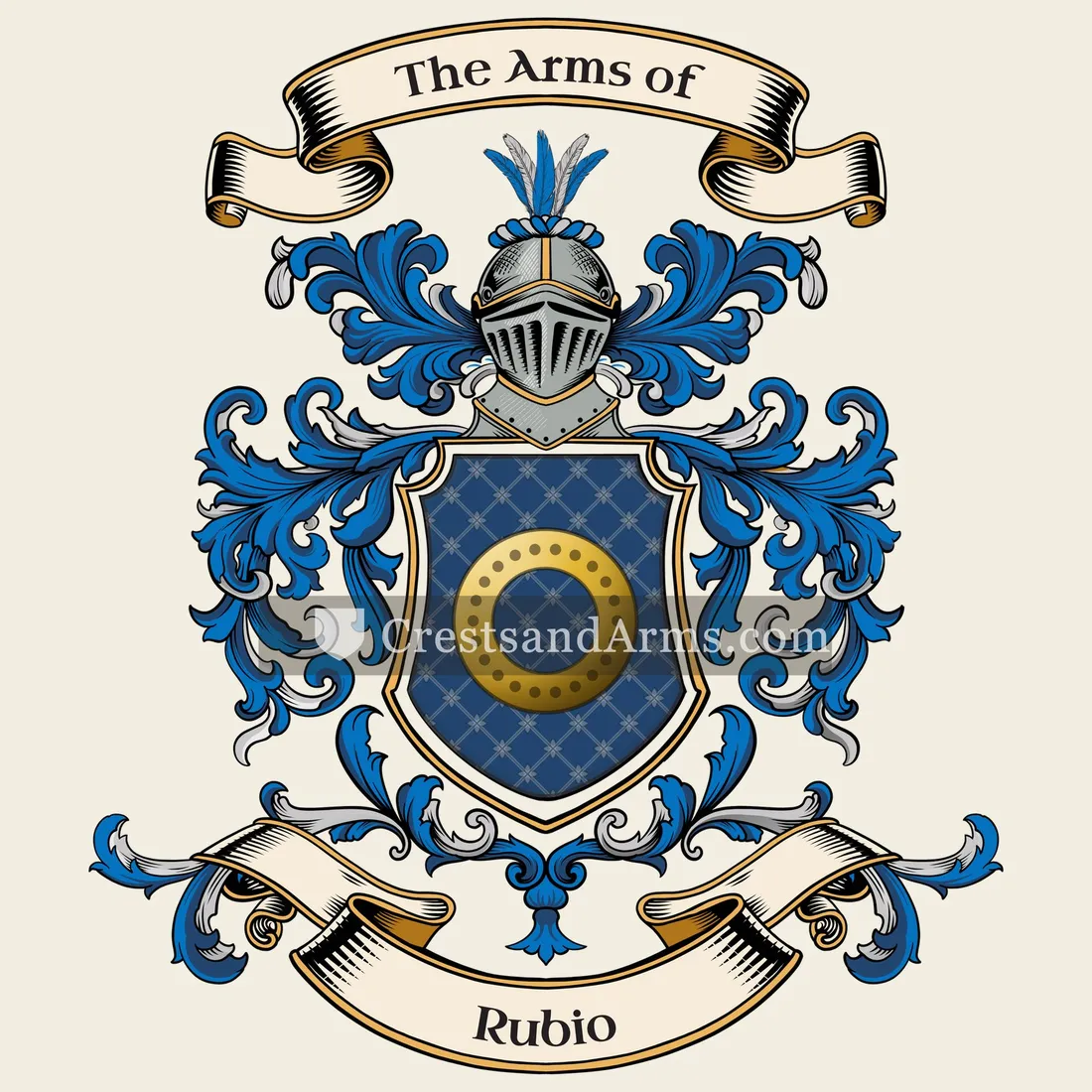
Symbols on this shield
ringFidelity, and a promise kept
Colours
Blue (Azure)Means: Loyalty and truth
Gold (Or)Means: Generosity
Historical info
Source
J. B. Rietstap, Armorial Général, Gouda: G. B. van Goor Zonen, 1884–87
Blazon (the actual original written record)
“D'azur à une bague couchée d'or, ornée sur le devant d'un rubis.”
CataloniaCatalonia, c. 1722
Digital archive packCoat of arms PNG, gold border print PDF, vector SVG and the certificate of authenticity. Sent to your email in minutes.
Map of Spain showing where the Rubio arms are recorded
The Rubio arms were recorded in Catalonia, c. 1722.
Catalonia lived by sea trade, and its merchant houses were as powerful as its landowners. Both sorts of family took arms, and Barcelona kept records of the houses entitled to bear them.
This is where the arms were entered in the register. Families often moved to other parts of the country, so the same name can turn up in more than one region.
The body that granted and recorded arms in Spain in this period.
Philip V of Spain
Sovereign of the period
Philip V of Spain
1714–1724
Reigning in Switzerland when the Rubio arms are first recorded.
How Arms Worked in Spain
In Spain, a coat of arms was considered a form of property that belonged to the entire family line. These arms were passed down from a father to all his children equally. Younger branches of the family usually kept the original design without needing to add any special marks to distinguish their specific line.
Granting authority
The Cronista Rey de Armas was the official body that regulated and granted coats of arms throughout Spain.
How they got arms
Families often obtained their arms through royal grants or by proving their noble status to the official heraldic authority.
Where arms were recorded
Coats of arms were officially recorded in the registers of the Cronista Rey de Armas starting in 1496.
The family's standing
Recorded among the armigerous families of Catalonia.
Origin & History of the Rubio Family in Spain
The surname Rubio originates from the medieval Spanish word *rubio*, which translates to "blond" or "red-haired." During the Middle Ages, it was common for people to be given descriptive nicknames based on their physical appearance, and these nicknames eventually became permanent family names passed down through generations. By the early 18th century, the Rubio family had established a notable presence in the Catalonia region of northeastern Spain. Life in Catalonia during this era was defined by a strong focus on agriculture and local trade, and families like the Rubios were often deeply integrated into the social and economic structures of their specific villages. As the family grew, they became part of the diverse demographic landscape of the Spanish Mediterranean, contributing to the local culture and history of the region long before the name spread to other parts of the world.
Rubio Meaning & Related Branches
Root word
Rubeus
Latin term meaning red or reddish in color.
This name
RubioA descriptive nickname for someone with red hair or a ruddy complexion.
also spelled
Ruby
Rubee
Documented Sources
J. B. Rietstap, Armorial Général, Gouda: G. B. van Goor Zonen, 1884–87
Archives d'État de Genève, Registres du Conseil d'État
Archives d'État de Genève, État civil et registres paroissiaux
Galiffe, Jacques-Auguste, Notices généalogiques sur les familles genevoises, 1829
Perrenoud, Alfred, La population de Genève du seizième au début du dix-neuvième siècle, 1979
Digital archive packCoat of arms PNG, gold border print PDF, vector SVG and the certificate of authenticity. Sent to your email in minutes.


 mountThe ground held, and steadfastness upon it
 lozengeHonour and nobility, and the arms of a woman
 mountThe ground held, and steadfastness upon it
 lozengeHonour and nobility, and the arms of a woman
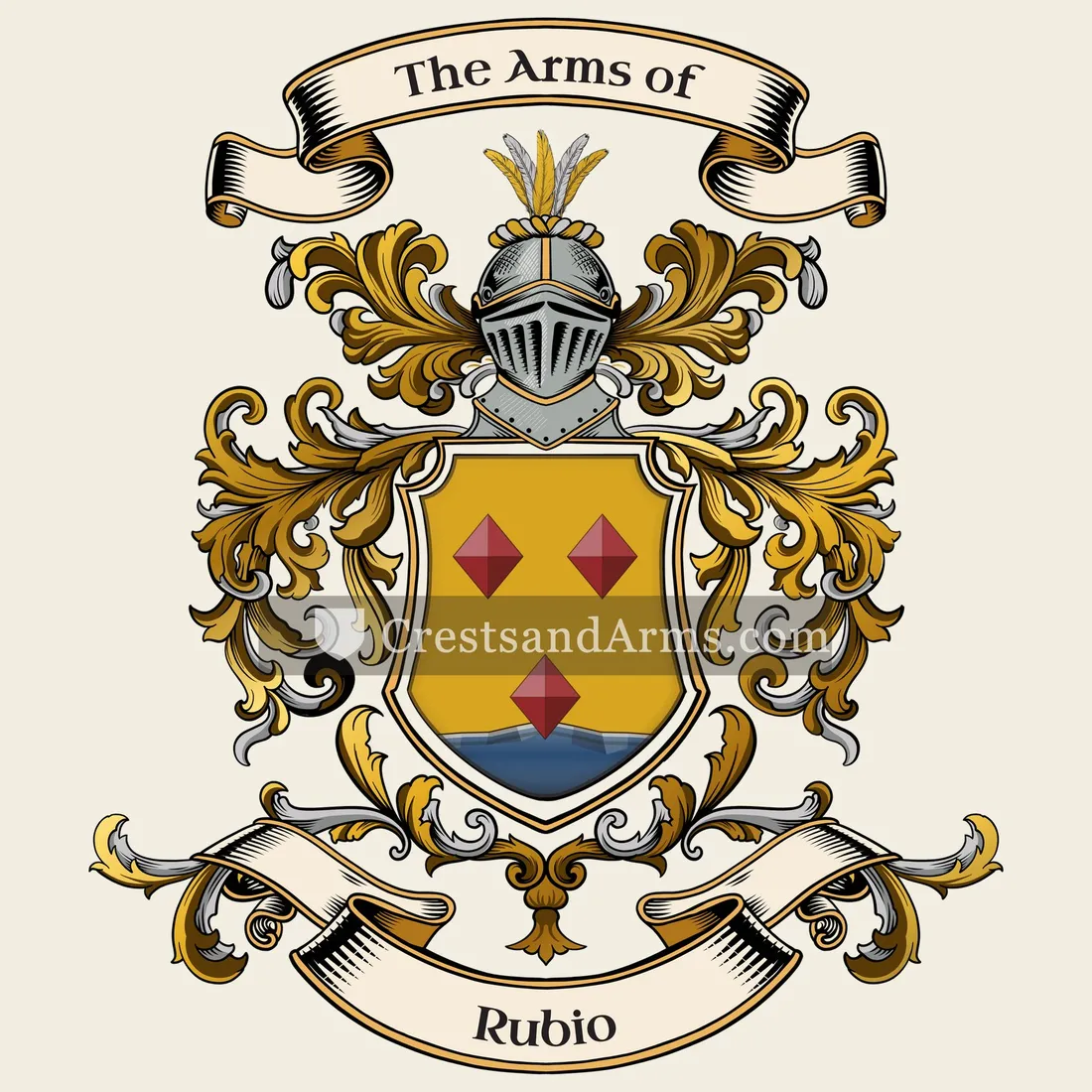

 ringFidelity, and a promise kept