Map of Switzerland showing where the Ruby arms are recorded
The Ruby arms were recorded in Genevois, c. 1745.
Genevois was Alpine country south of Geneva, held in small estates by families who stayed put. Land there passed down the same line for centuries, and long tenure counted for more than wealth.
This is where the arms were entered in the register. Families often moved to other parts of the country, so the same name can turn up in more than one region.
The body that granted and recorded arms in Switzerland in this period.
How Arms Worked in Switzerland
In Switzerland, coats of arms were not restricted to the nobility and were often adopted by common citizens and families. These symbols were passed down through generations to show family identity. When branches of a family grew, they often changed small details of the design to distinguish their own line from the original group.
Granting authority
Cantonal and civic authorities managed the use of coats of arms within their specific regions and local jurisdictions.
How they got arms
Families typically assumed their own coats of arms based on local custom rather than receiving them from a central monarch.
Where arms were recorded
Arms were recorded in various cantonal and civic registers starting from the fourteenth century throughout the Swiss region.
The family's standing
Recorded among the armigerous families of Genevois.
Origin & History of the Ruby Family in Switzerland
The history of the Ruby family in Switzerland is deeply rooted in the region of Genevois, where records confirm their presence as early as 1745. During this period, the name was closely tied to the social and economic life of the rural communities surrounding Geneva. Families with this surname were often involved in local agriculture and trade, which allowed them to establish firm ties to the land and their neighbors over several generations. Because the Genevois region served as a crossroads for travelers and merchants moving between France and the Swiss cantons, the Ruby family likely benefited from the steady exchange of goods and ideas that defined the eighteenth century. By maintaining consistent records in parish registers and local administrative documents, these early ancestors ensured their place in the historical narrative of the region. Their ability to remain settled in this area suggests a stable life built on community involvement and the steady development of their family identity within the Swiss landscape.
Coat of Arms & Family Crest Details
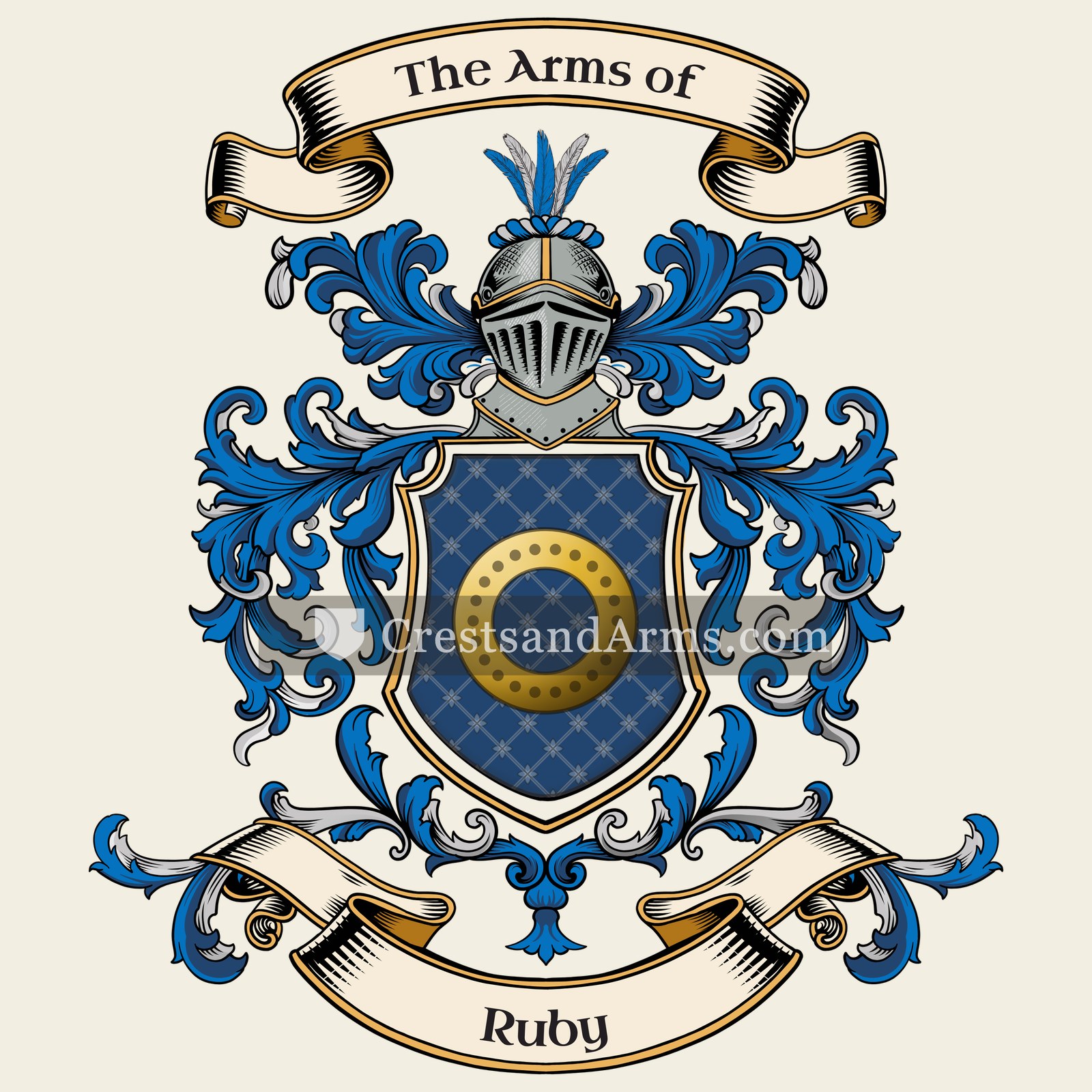
Symbols on this shield
ringFidelity, and a promise kept
Colours
Blue (Azure)Means: Loyalty and truth
Gold (Or)Means: Generosity
Historical info
Source
J. B. Rietstap, Armorial Général, Gouda: G. B. van Goor Zonen, 1884–87
Blazon (the actual original written record)
“D'azur à une bague couchée d'or, ornée sur le devant d'un rubis.”
CataloniaCatalonia, c. 1722
Digital archive packCoat of arms PNG, gold border print PDF, vector SVG and the certificate of authenticity. Sent to your email in minutes.
Map of Spain showing where the Ruby arms are recorded
The Ruby arms were recorded in Catalonia, c. 1722.
Catalonia lived by sea trade, and its merchant houses were as powerful as its landowners. Both sorts of family took arms, and Barcelona kept records of the houses entitled to bear them.
This is where the arms were entered in the register. Families often moved to other parts of the country, so the same name can turn up in more than one region.
The body that granted and recorded arms in Spain in this period.
Philip V of Spain
Sovereign of the period
Philip V of Spain
1714–1724
Reigning in Switzerland when the Ruby arms are first recorded.
How Arms Worked in Spain
In Spain, a coat of arms was considered a form of property that belonged to the entire family line. These arms were passed down from a father to all his children equally. Younger branches of the family usually kept the original design without needing to add any special marks to distinguish their specific line.
Granting authority
The Cronista Rey de Armas was the official body that regulated and granted coats of arms throughout Spain.
How they got arms
Families often obtained their arms through royal grants or by proving their noble status to the official heraldic authority.
Where arms were recorded
Coats of arms were officially recorded in the registers of the Cronista Rey de Armas starting in 1496.
The family's standing
Recorded among the armigerous families of Catalonia.
Origin & History of the Ruby Family in Spain
The family name Ruby has deep roots in the northeastern region of Spain known as Catalonia. By the early 18th century, records confirm that members of the family were well-established in this area. The name is often linked to the linguistic traditions of the region, where it may have evolved from local topographic descriptions or specific occupational titles common to the Catalan people. During the 1700s, Catalonia was a center of agricultural and mercantile growth, and families like the Rubys were often involved in the local economy of small towns or rural estates. As the family lived through the social shifts of the 1700s, they became part of the enduring cultural fabric of the Mediterranean coast. Their presence in 1722 serves as a historical marker for a lineage that helped shape the local community through generations of trade, farming, and civic life.
Related Branches & Arms
Root word
rubeus
Latin term meaning red or reddish in color.
This name
RubyDerived from the precious red gemstone or used as a descriptive nickname for a person with red hair.
also spelled
Ruby
Rubee
Documented Sources
J. B. Rietstap, Armorial Général, Gouda: G. B. van Goor Zonen, 1884–87
Archives d'État de Genève, Registres paroissiaux et d'état civil, 1745
Gautier, Adolphe, Les origines et les développements de la vie communale à Genève, 1878
Santschi, Catherine, Mémoire de Genève: histoire de la ville et du canton, 1995
Digital archive packCoat of arms PNG, gold border print PDF, vector SVG and the certificate of authenticity. Sent to your email in minutes.


 mountThe ground held, and steadfastness upon it
 lozengeHonour and nobility, and the arms of a woman
 mountThe ground held, and steadfastness upon it
 lozengeHonour and nobility, and the arms of a woman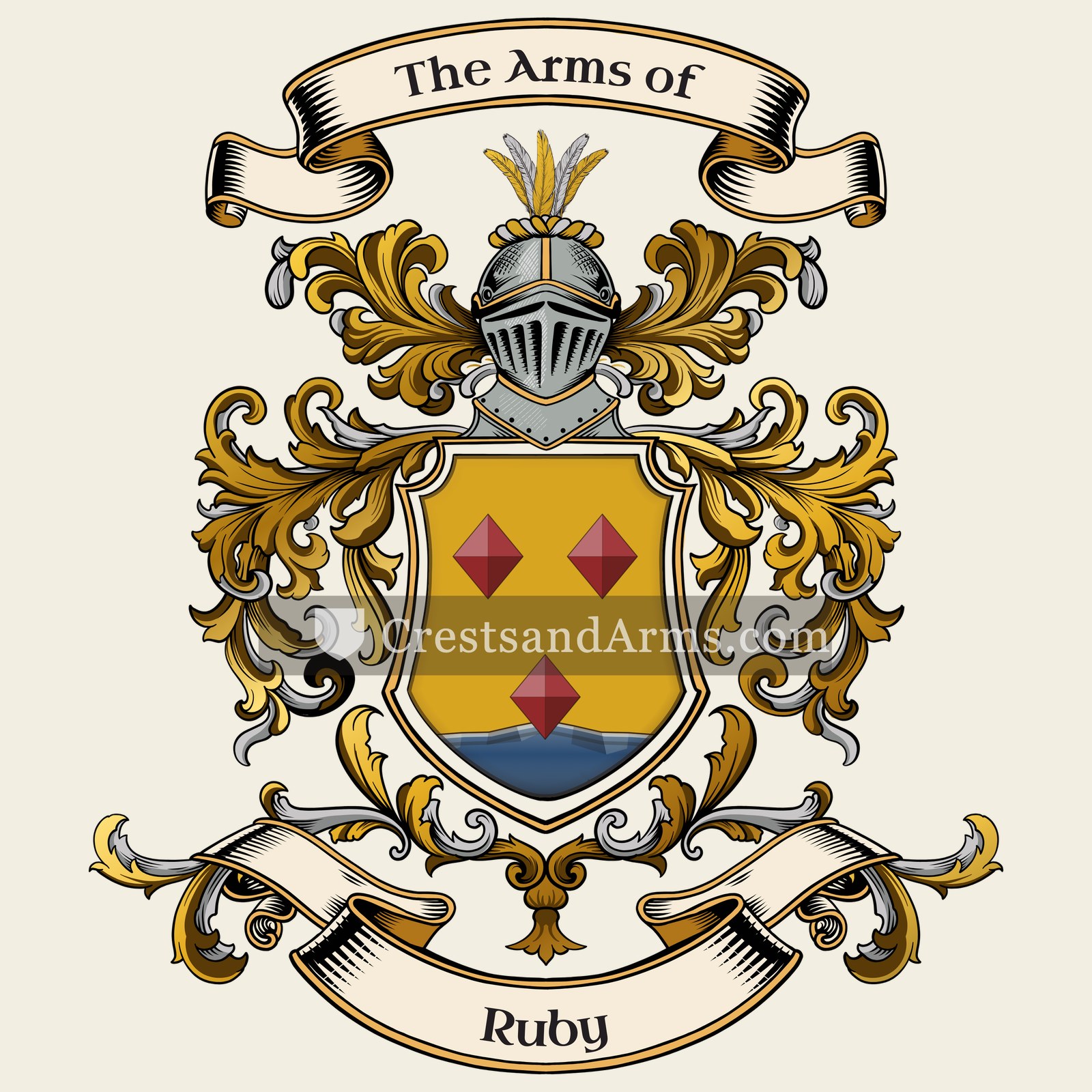

 ringFidelity, and a promise kept