Map of Switzerland showing where the Rudan arms are recorded
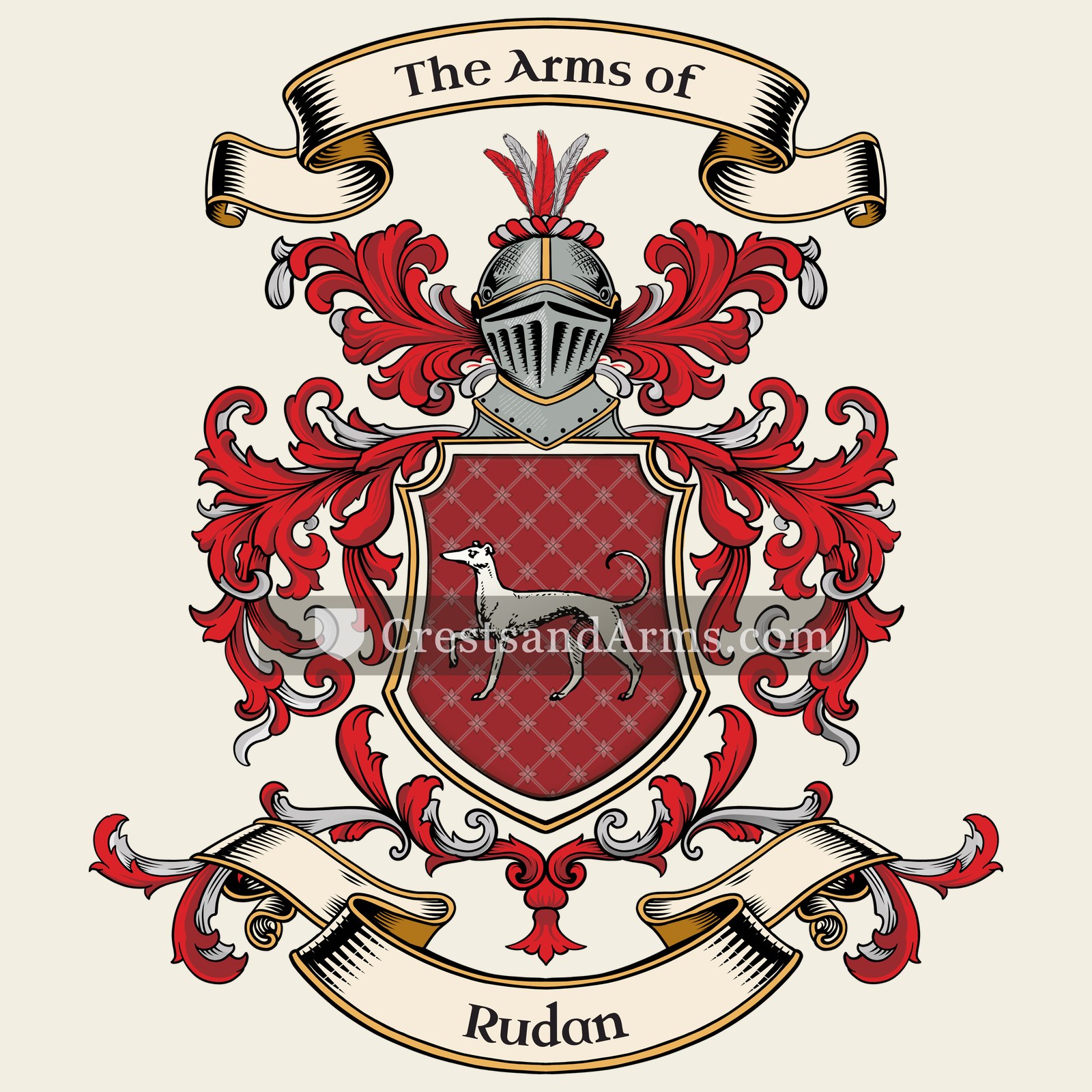
The Rudan arms were recorded in Bâle, c. 1745.
This is where the arms were entered in the register. Families often moved to other parts of the country, so the same name can turn up in more than one region.
The body that granted and recorded arms in Switzerland in this period.
How Arms Worked in Switzerland
In Switzerland, coats of arms were not restricted to the nobility and were often adopted by common citizens and families. These symbols were passed down through generations to show family identity. When branches of a family grew, they often changed small details of the design to distinguish their own line from the original group.
Granting authority
Cantonal and civic authorities managed the use of coats of arms within their specific regions and local jurisdictions.
How they got arms
Families typically assumed their own coats of arms based on local custom rather than receiving them from a central monarch.
Where arms were recorded
Arms were recorded in various cantonal and civic registers starting from the fourteenth century throughout the Swiss region.
The family's standing
Recorded among the armigerous families of Switzerland.
Origin & History of the Rudan Family in Switzerland
The surname Rudan carries a history rooted in the crossroads of Central and Western Europe, with documented evidence placing the family in the city of Bâle by 1745. During the eighteenth century, Bâle served as a vital hub for trade and intellectual exchange, attracting families who were often involved in skilled crafts or merchant activities. The name itself likely evolved from regional linguistic roots, potentially linked to occupational descriptors or geographic markers common in the borderlands between Germanic and Slavic speaking territories. As the family established themselves in the urban environment of Bâle, they became part of the city’s growing middle class, contributing to the local economy and social fabric of the Enlightenment era. This early presence suggests that the Rudan family were mobile individuals who navigated the complex political and cultural landscape of the Holy Roman Empire and its surrounding regions.
Related Branches & Arms
Root word
Rudolf
Derived from the Germanic elements for fame and wolf.
This name
RudanA patronymic surname indicating descent from a person named Rudolf.
also spelled
Rudyn
Roodin
Documented Sources
J. B. Rietstap, Armorial Général, Gouda: G. B. van Goor Zonen, 1884–87
Staatsarchiv Basel-Stadt, Kirchenbücher der Stadt Basel (Baptismal and marriage registers for the mid-18th century)
Burckhardt, A., Die Bürger von Basel, 1925
Suter, A., Der schweizerische Bauernkrieg von 1653: Politische Sozialgeschichte – Sozialgeschichte eines politischen Ereignisses, 1997
Digital archive packCoat of arms PNG, gold border print PDF, vector SVG and the certificate of authenticity. Sent to your email in minutes.


 greyhoundCourage, vigilance and loyalty
 greyhoundCourage, vigilance and loyalty