Map of Wales showing where the Ruddy arms are recorded
The Ruddy arms were recorded in Carmarthen, c. 1593.
Carmarthenshire was south-west Welsh country of river valleys and hill farms. Land was held in a great many small estates, and each one brought its own claim to a coat of arms.
This is where the arms were entered in the register. Families often moved to other parts of the country, so the same name can turn up in more than one region.
The body that granted and recorded arms in Wales in this period.
Elizabeth I of England
Sovereign of the period
Elizabeth I of England
1558–1603
Reigning in Wales when the Ruddy arms are first recorded.
How Arms Worked in Wales
English heraldry allowed arms to be shared by all legitimate descendants of the original owner. These symbols were treated as personal property that moved through the generations to all children. While the eldest son kept the original design, other family members could use the same shield without needing to change it or register their own unique versions.
Granting authority
The College of Arms in London has regulated the use of coats of arms throughout England and Wales since 1484.
How they got arms
Families typically obtained their coats of arms through a formal grant from the Crown or by proving their ancient right to them.
Where arms were recorded
All official coats of arms are recorded in the registers kept at the College of Arms, which date back to the fifteenth century.
The family's standing
Recorded among the armigerous families of Carmarthen.
Origin & History of the Ruddy Family in Wales
The surname Ruddy has deep roots in the historical landscape of Wales, particularly within the county of Carmarthenshire. By the late sixteenth century, the family was firmly established in the town of Carmarthen, as evidenced by records dating back to 1593. During this period, Carmarthen served as a vital hub for trade and administration in West Wales, suggesting that early members of the Ruddy family were likely integrated into the local merchant or civic classes. The name itself is thought to be derived from the Old English word "rudig," which described a person with a reddish complexion or hair. As the family settled into the Welsh social structure, they became part of the unique cultural blend that defined the region during the Tudor era. Over the following centuries, the family continued to grow alongside the development of the town, leaving a quiet but persistent mark on the local history of the area.
Coat of Arms & Family Crest Details
Symbols on this shield
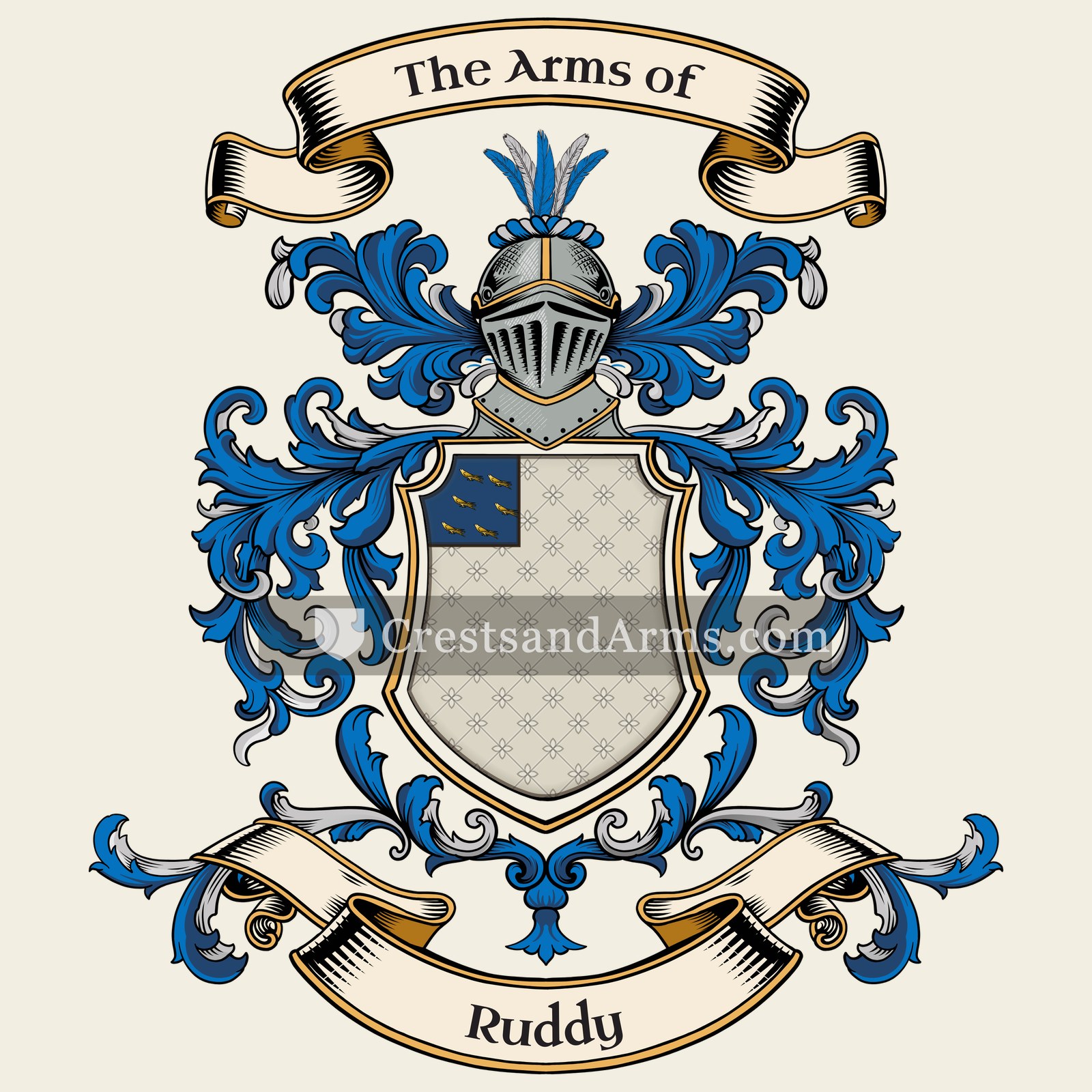
cantonA mark of honour granted by the sovereign
martletA younger son, who must win his own land
Colours
Silver (Argent)Means: Peace and sincerity
Blue (Azure)Means: Loyalty and truth
Gold (Or)Means: Generosity
Historical info
Source
Sir Bernard Burke, The General Armory of England, Scotland, Ireland and Wales, London: Harrison & Sons, 1884
Blazon (the actual original written record)
“Ar. on a canton az. six martlets or”
LincolnLincoln, c. 1620
Digital archive packCoat of arms PNG, gold border print PDF, vector SVG and the certificate of authenticity. Sent to your email in minutes.
Map of England showing where the Ruddy arms are recorded
The Ruddy arms were recorded in Lincoln, c. 1620.
Lincolnshire was rich farming country, and its wealth was spread across many middling families. Households of that size bought land and took arms, and the county holds a large share of English names.
This is where the arms were entered in the register. Families often moved to other parts of the country, so the same name can turn up in more than one region.
The body that granted and recorded arms in England in this period.
James VI and I
Sovereign of the period
James VI and I
1603–1625
Reigning in Wales when the Ruddy arms are first recorded.
How Arms Worked in England
English heraldry allowed arms to be shared by all legitimate descendants of the original owner. These symbols were treated as personal property that moved through the generations to all children. While the eldest son kept the original design, other family members could use the same shield without needing to change it or register their own unique versions.
Granting authority
The College of Arms in London has regulated the use of coats of arms throughout England and Wales since 1484.
How they got arms
Families typically obtained their coats of arms through a formal grant from the Crown or by proving their ancient right to them.
Where arms were recorded
All official coats of arms are recorded in the registers kept at the College of Arms, which date back to the fifteenth century.
The family's standing
Recorded among the armigerous families of Lincoln.
Origin & History of the Ruddy Family in England
The surname Ruddy has deep roots in the English landscape, with historical records confirming the presence of the family in the city of Lincoln by 1620. The name is generally believed to be a descriptive nickname derived from the Old English word "rudig," which described someone with a reddish complexion or hair. During the early seventeenth century, families like the Ruddys were often part of the growing merchant or artisan classes in cathedral cities like Lincoln. As the family established itself in this region, they became part of the local social fabric during a time of significant religious and political change in England. By living in a major administrative hub, these early ancestors likely participated in the local trade and civic life that defined the era. Over time, the name persisted as a mark of their identity, linking generations of the family to the historical development of the East Midlands.
Related Branches & Arms
Root word
Rudd
Derived from the Old English word rudu meaning red color.
This name
RuddyA descriptive nickname for someone with a ruddy complexion or red hair.
also spelled
Rude
Documented Sources
Sir Bernard Burke, The General Armory of England, Scotland, Ireland and Wales, London: Harrison & Sons, 1884
National Library of Wales, Carmarthenshire Quarter Sessions Records
The National Archives, Exchequer: King's Remembrancer: Lay Subsidy Rolls
Digital archive packCoat of arms PNG, gold border print PDF, vector SVG and the certificate of authenticity. Sent to your email in minutes.


 chevronProtection, and faithful service completed
 bellA call to prayer, and a warning given
 chevronProtection, and faithful service completed
 bellA call to prayer, and a warning given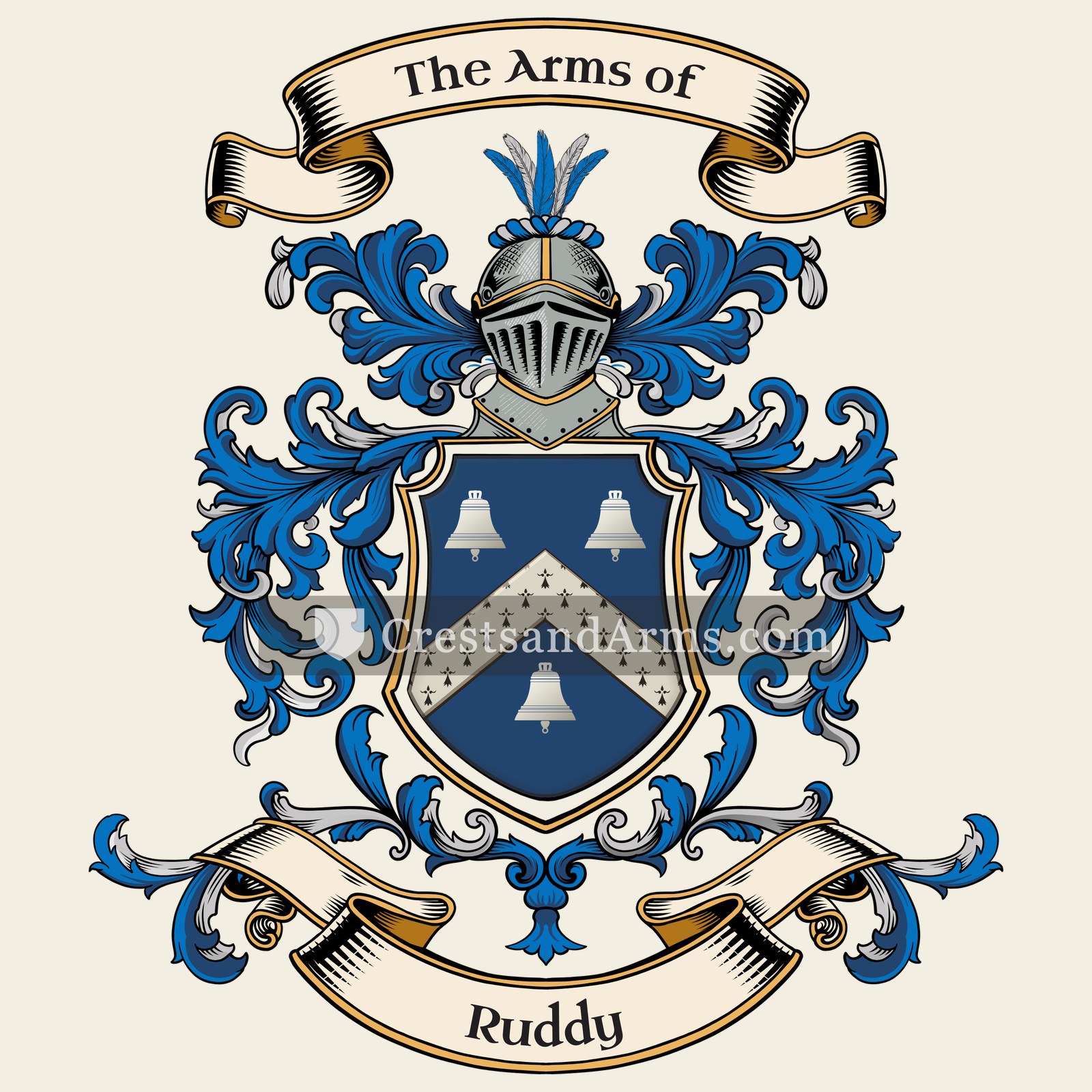


 cantonA mark of honour granted by the sovereign
 martletA younger son, who must win his own land