A record of documented arms, meaning and origin, researched for the Rump family lines. Documented in 2 countries.
Reg. 0770 · German, P–S
Coat of Arms & Family Crest Details
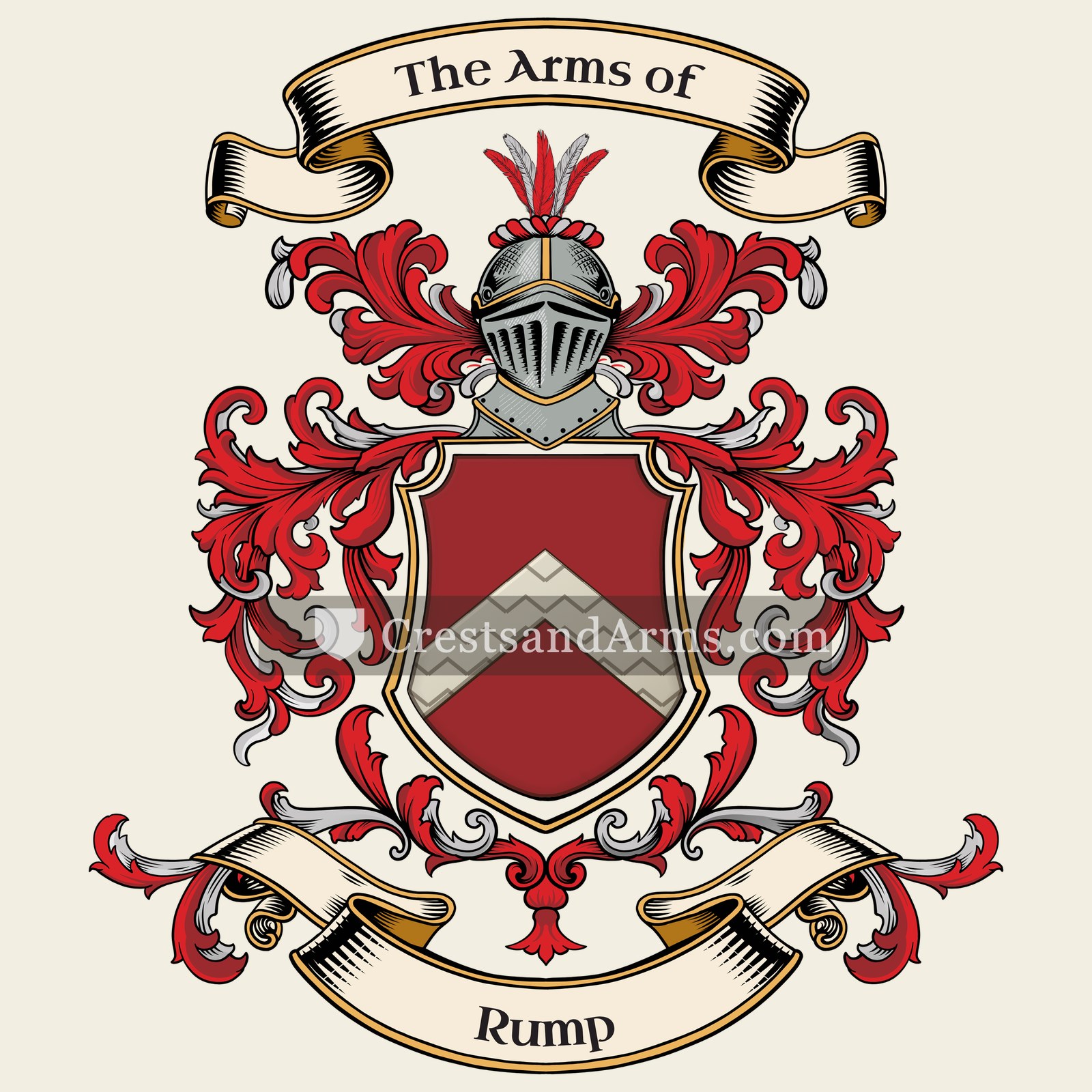
Symbols on this shield
chevronProtection, and faithful service completed
Colours
Red (Gules)Means: Military strength
Silver (Argent)Means: Peace and sincerity
Historical info
Source
J. B. Rietstap, Armorial Général, Gouda: G. B. van Goor Zonen, 1884–87
Blazon (the actual original written record)
“De gu. au chev. d'arg. C.: un buste de More, hab. de gu., bout. d'or, au rabat d'arg., tort. du même; entre deux prob. de gu.; ou, un chapeau de tournoi de gu., retr. d'arg., sommé de trois pl. d'aut., une de gu. entre deux d'arg. [La branche de Courlande porte en cimier une plume de faisan de gu., entre deux pl. d'aut. d'arg. V. Schade-Ahausen dit von Rump.]”
WestphaliaWestphalia, c. 1765
Digital archive packCoat of arms PNG, gold border print PDF, vector SVG and the certificate of authenticity. Sent to your email in minutes.
Map of Germany showing where the Rump arms are recorded
The Rump arms were recorded in Westphalia, c. 1765.
Westphalia was a land of small estates and fortified farmhouses in western Germany. Its families were numerous and not especially rich, but each held its own ground, and holding ground was what brought arms.
This is where the arms were entered in the register. Families often moved to other parts of the country, so the same name can turn up in more than one region.
The body that granted and recorded arms in Germany in this period.
Francis I, Holy Roman Emperor
Sovereign of the period
Francis I, Holy Roman Emperor
1745–1765
Reigning in Germany when the Rump arms are first recorded.
How Arms Worked in Germany
In the Holy Roman Empire, coats of arms were often granted to individuals by the Emperor or his representatives. These arms were then passed down through the generations to all legitimate descendants of the original holder. Younger branches of a family usually kept the same shield design without needing to change it, as the arms belonged to the entire lineage.
Granting authority
The Holy Roman Emperor held the sole power to grant new coats of arms throughout his vast imperial territories.
How they got arms
Families typically obtained their coats of arms through a formal imperial grant or by proving their noble status to the authorities.
Where arms were recorded
These grants were officially recorded in the Imperial Chancery registers, which began keeping formal records of such honors during the Middle Ages.
The family's standing
Recorded among the armigerous families of Westphalia.
Origin & History of the Rump Family in Germany
The family name Rump has deep roots in the Westphalia region of Germany, where it emerged as a descriptive surname during the Middle Ages. In the German language, the word "Rump" historically referred to the trunk or the main body of a person or an animal. It is likely that the name began as a nickname for a person with a sturdy or thick-set physical build. By the time records place the family firmly in Westphalia in 1765, the name had been passed down through generations as a fixed hereditary surname. During this period, the family was part of the local social fabric in a region defined by its agricultural traditions and small village communities. As the family grew, they became integrated into the local parish systems, which kept careful track of births, marriages, and deaths. This transition from a simple nickname to a recognized family name reflects the broader way that surnames became permanent markers of identity across German lands.
Coat of Arms & Family Crest Details
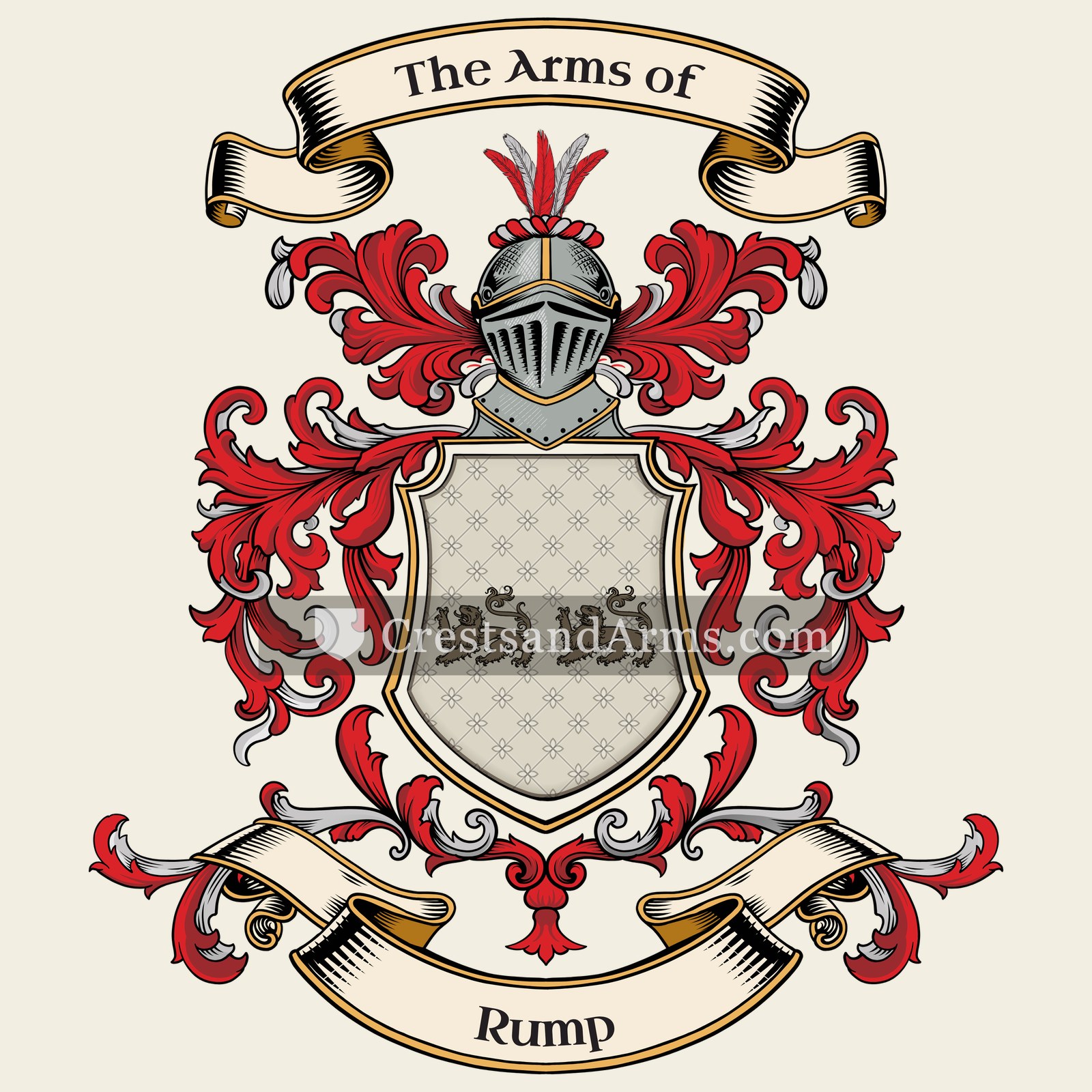
Symbols on this shield
lionCourage, strength and royalty
Colours
Silver (Argent)Means: Peace and sincerity
Historical info
Source
Sir Bernard Burke, The General Armory of England, Scotland, Ireland and Wales, London: Harrison & Sons, 1884
Blazon (the actual original written record)
“Ar. two lions combatant ppr”
NorfolkSwanton · Norfolk, c. 1620
Digital archive packCoat of arms PNG, gold border print PDF, vector SVG and the certificate of authenticity. Sent to your email in minutes.
Map of England showing where the Rump arms are recorded
The Rump arms were recorded in Norfolk, c. 1620.
Norfolk grew rich on wool and grain, and its wealth was spread among many middling families rather than a few great ones. Households of that kind bought land and took arms, and the county holds a large share of English names.
This is where the arms were entered in the register. Families often moved to other parts of the country, so the same name can turn up in more than one region.
The body that granted and recorded arms in England in this period.
James VI and I
Sovereign of the period
James VI and I
1603–1625
Reigning in Germany when the Rump arms are first recorded.
How Arms Worked in England
English heraldry allowed arms to be shared by all legitimate descendants of the original owner. These symbols were treated as personal property that moved through the generations to all children. While the eldest son kept the original design, other family members could use the same shield without needing to change it or register their own unique versions.
Granting authority
The College of Arms in London has regulated the use of coats of arms throughout England and Wales since 1484.
How they got arms
Families typically obtained their coats of arms through a formal grant from the Crown or by proving their ancient right to them.
Where arms were recorded
All official coats of arms are recorded in the registers kept at the College of Arms, which date back to the fifteenth century.
The family's standing
Recorded among the armigerous families of Norfolk.
Origin & History of the Rump Family in England
The family name Rump emerged in England as a descriptive surname, likely originating from a nickname related to physical stature or a specific trade. By the early seventeenth century, the family established a notable presence in the county of Norfolk, which served as a hub for their early activities. During this period, Norfolk was a center for trade and agriculture, and families like the Rumps often integrated into the local parish systems. Records from 1620 confirm that members of the family were settled in this region, participating in the daily life of their communities during a time of significant social change. These early ancestors were likely yeoman farmers or tradespeople who helped shape the rural economy of East Anglia. Their presence in Norfolk suggests a long-standing connection to the landscape and the local history of the English countryside.
Rump Meaning & Related Branches
Root word
Rumpf
A Middle High German term referring to a torso or trunk.
This name
RumpA descriptive nickname for a person with a thick or stout body build.
also spelled
Rumpe
Rumpf
Related arms
Warrenrecorded with Rump, same area
Documented Sources
J. B. Rietstap, Armorial Général, Gouda: G. B. van Goor Zonen, 1884–87
Bahlow, Hans. Deutsches Namenlexikon: Familien- und Vornamen nach Ursprung und Sinn erklärt. 1967
Heintze, Albert. Die deutschen Familiennamen: geschichtlich, geographisch, sprachlich. 1903
Landesarchiv Nordrhein-Westfalen, Abteilung Westfalen. Kirchenbücher der evangelischen und katholischen Kirchengemeinden in Westfalen
Digital archive packCoat of arms PNG, gold border print PDF, vector SVG and the certificate of authenticity. Sent to your email in minutes.


 chevronProtection, and faithful service completed
 chevronProtection, and faithful service completed


 lionCourage, strength and royalty