Map of Italy showing where the Runner arms are recorded
The Runner arms were recorded in Italy, c. 1775.
Arms such as these were typically recorded in Venice.
Venice ran on trade, and its great families were merchants before they were anything else. The city kept a formal list of its noble houses, and a name on that list carried arms as a matter of record.
This is where the arms were entered in the register. Families often moved to other parts of the country, so the same name can turn up in more than one region.
The body that granted and recorded arms in Italy in this period.
Alvise Giovanni Mocenigo
Sovereign of the period
Alvise Giovanni Mocenigo
1763–1778
Reigning in Italy when the Runner arms are first recorded.
How Arms Worked in Italy
In the Italian states, coats of arms were often used by noble families to show their status and history. These symbols were passed down through the generations to all legitimate male descendants. Younger branches of a family usually kept the original design but sometimes added small changes to distinguish their specific line from the main branch.
Granting authority
Various local rulers and city governments controlled the use of coats of arms across the different Italian states.
How they got arms
Families often assumed their own arms or received them as official grants from local lords, popes, or city councils.
Where arms were recorded
Arms were recorded in local city archives or private family books rather than in one single national register.
The family's standing
Recorded among the armigerous families of Italy.
Origin & History of the Runner Family in Italy
The history of the Runner family in Italy is deeply tied to the vibrant commercial landscape of Venice during the late eighteenth century. By 1775, records indicate that members of the family were established within the city, likely participating in the complex trade networks that defined the Venetian Republic before its fall. Given the name’s linguistic roots, it is probable that the family functioned as intermediaries or skilled couriers who moved goods and information across the busy canals and mainland routes. During this period, Venice served as a major hub for international merchants, and families like the Runners often occupied roles that required mobility and reliability. Their presence in the city suggests they were integrated into the urban middle class, contributing to the daily economic life of a society that was transitioning through a time of significant political change.
Meaning of the Runner family crest colors & symbols
Symbols on this shield
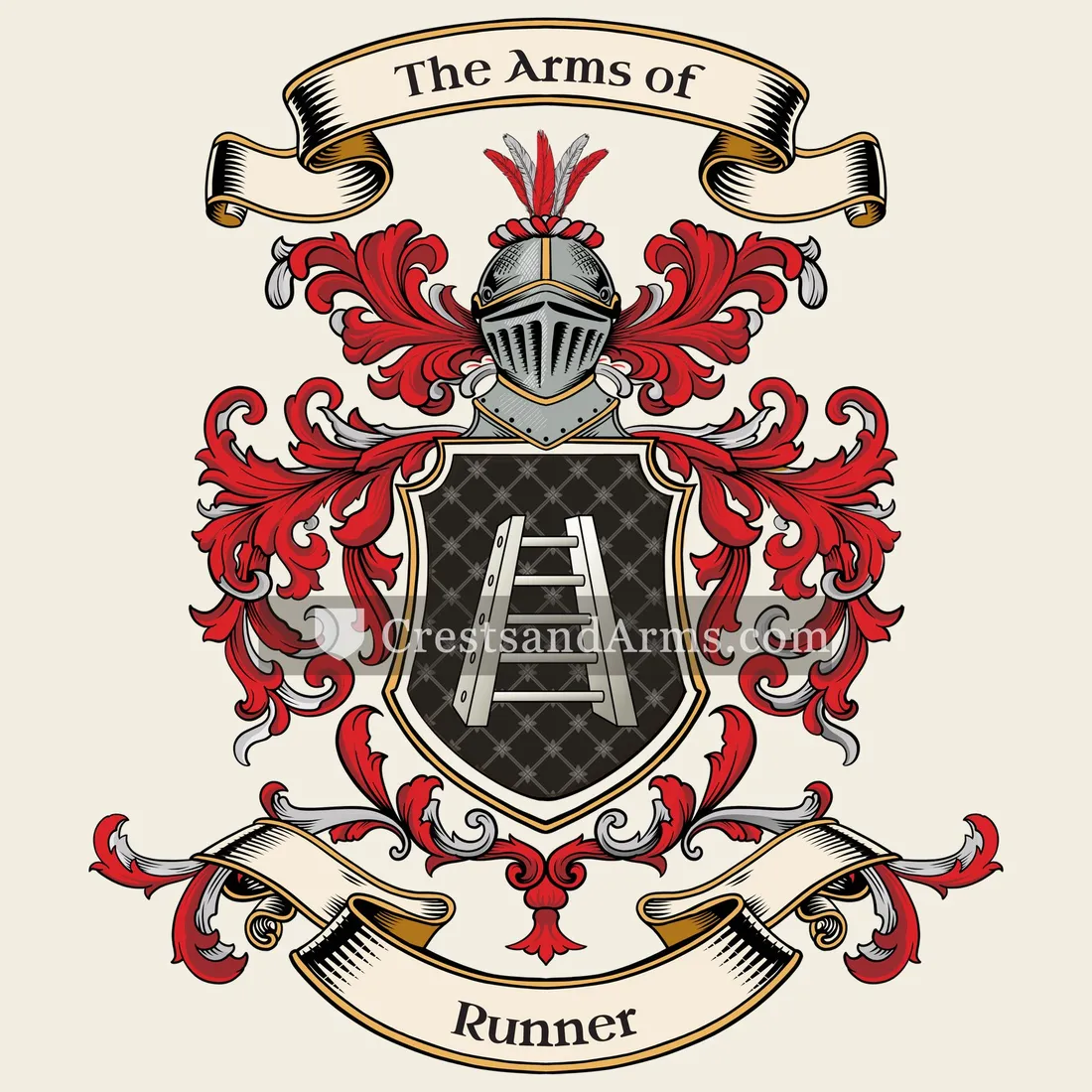
ladderAmbition, and a fearless assault
Colours
Black (Sable)Means: Constancy
Silver (Argent)Means: Peace and sincerity
Historical info
Source
J. B. Rietstap, Armorial Général, Gouda: G. B. van Goor Zonen, 1884–87
Blazon (the actual original written record)
“De sa. à une échelle de trois échelons d'arg. C.: l'échelle.”
SwabiaSwabia, c. 1765
Digital archive packCoat of arms PNG, gold border print PDF, vector SVG and the certificate of authenticity. Sent to your email in minutes.
Map of Germany showing where the Runner arms are recorded
The Runner arms were recorded in Swabia, c. 1765.
Swabia was broken into a great many small territories in southern Germany, and each had its own landowners and its own leading townsmen. That fragmentation produced an unusual number of families with arms.
This is where the arms were entered in the register. Families often moved to other parts of the country, so the same name can turn up in more than one region.
The body that granted and recorded arms in Germany in this period.
Francis I, Holy Roman Emperor
Sovereign of the period
Francis I, Holy Roman Emperor
1745–1765
Reigning in Italy when the Runner arms are first recorded.
How Arms Worked in Germany
In the Holy Roman Empire, coats of arms were often granted to individuals by the Emperor or his representatives. These arms were then passed down through the generations to all legitimate descendants of the original holder. Younger branches of a family usually kept the same shield design without needing to change it, as the arms belonged to the entire lineage.
Granting authority
The Holy Roman Emperor held the sole power to grant new coats of arms throughout his vast imperial territories.
How they got arms
Families typically obtained their coats of arms through a formal imperial grant or by proving their noble status to the authorities.
Where arms were recorded
These grants were officially recorded in the Imperial Chancery registers, which began keeping formal records of such honors during the Middle Ages.
The family's standing
Recorded among the armigerous families of Swabia.
Origin & History of the Runner Family in Germany
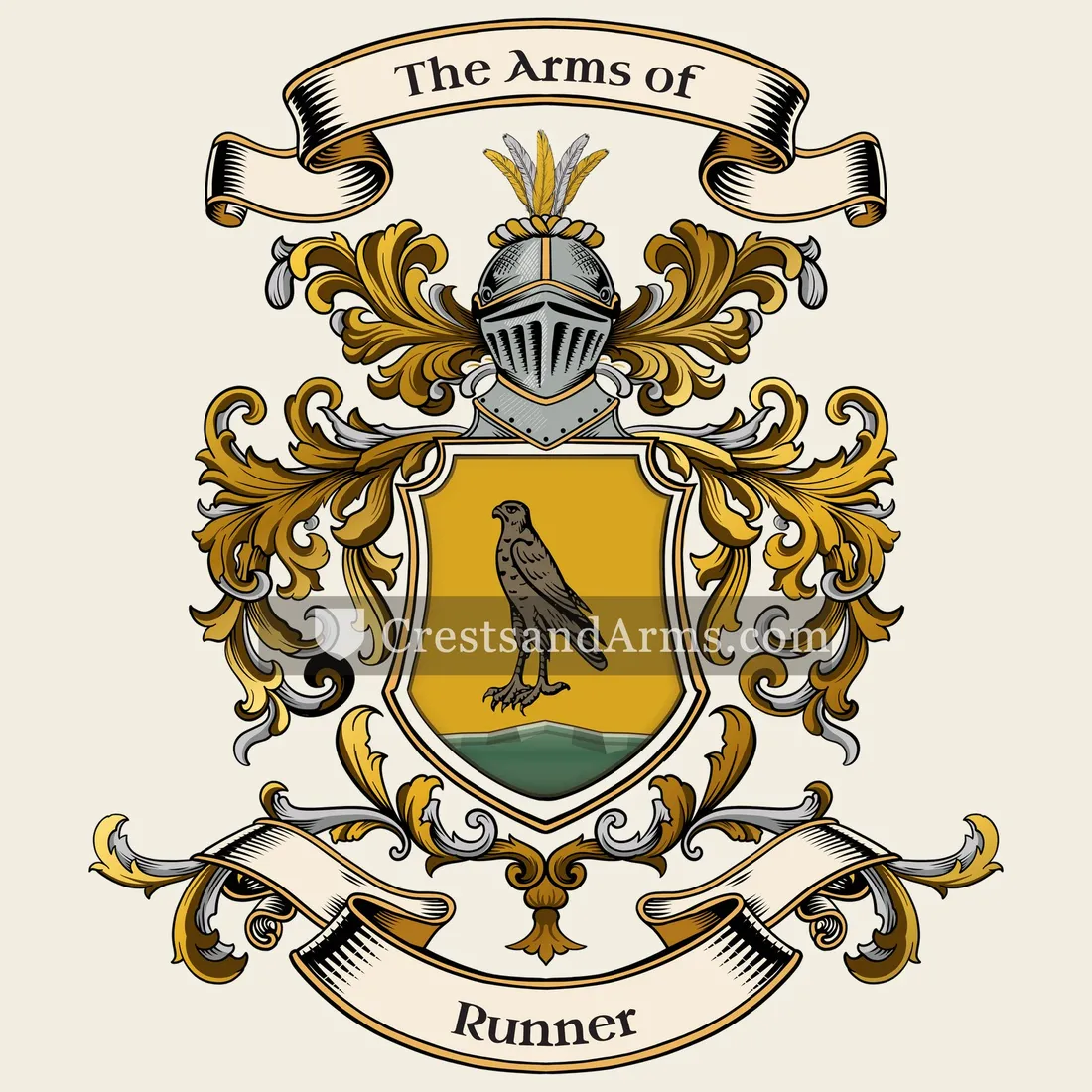
The family name Runner finds its roots in the historical region of Swabia, a territory in southwestern Germany known for its distinct cultural identity and complex feudal history. By the year 1765, records confirm that members of the family were established within this region, likely living as part of the agrarian communities that defined the Swabian landscape. The name itself is thought to be an occupational surname, derived from the Middle High German word *runnen*, which often referred to a messenger or a person who traveled frequently on foot to deliver news or goods between villages. During the eighteenth century, life in Swabia was heavily influenced by the local nobility and the church, and families like the Runners were typically tied to the land through farming or skilled trade. As they navigated the social structures of the Holy Roman Empire, these early ancestors helped shape the local economy and community life through their daily work and participation in parish activities.
Meaning of the Runner family crest colors & symbols
Symbols on this shield
mountThe ground held, and steadfastness upon it
falconOne eager and quick in pursuit
Colours
Gold (Or)Means: Generosity
Green (Vert)Means: Hope
Historical info
Source
J. B. Rietstap, Armorial Général, Gouda: G. B. van Goor Zonen, 1884–87
Blazon (the actual original written record)
“D'or à un épervier au nat., sur une colline de sin. C.: l'épervier. L. d'or et d'azur.”
Austriac. 1612
Digital archive packCoat of arms PNG, gold border print PDF, vector SVG and the certificate of authenticity. Sent to your email in minutes.
Map of Austria showing where the Runner arms are recorded
The Runner arms were recorded in Austria, c. 1612.
Arms such as these were typically recorded in Tyrol.
Tyrol was mountain country in western Austria, where the valleys were held by families who had been there a very long time. Old tenure counted for more than money, and old families carried arms.
This is where the arms were entered in the register. Families often moved to other parts of the country, so the same name can turn up in more than one region.
Region
Tyrol
First recorded
1612
Granting Authority for the Runner Arms
Imperial and Royal chancery
Sodacan · CC BY-SA 3.0
The body that granted and recorded arms in Austria in this period.
Emperor Rudolf II
Sovereign of the period
Emperor Rudolf II
1576–1612
Reigning in Italy when the Runner arms are first recorded.
How Arms Worked in Austria
Austrian coats of arms were often linked directly to noble titles granted by the Emperor. These symbols belonged to the entire family line rather than just one individual. When a family grew, new branches kept the original design without needing to change it. This system allowed all members of a noble house to share the same identity across many generations.
Granting authority
The Imperial and Royal chancery managed all heraldic matters and controlled the official granting of arms throughout the Austrian lands.
How they got arms
Families typically received their arms through a formal imperial decree that often accompanied the elevation of a person to noble status.
Where arms were recorded
Official records of these grants were kept in the Imperial Register of Nobility which began its formal documentation process in 1453.
The family's standing
Recorded among the armigerous families of Austria.
Origin & History of the Runner Family in Austria
The family name Runner has deep roots in the rugged landscape of the Austrian Tyrol, where records confirm members of the family were established as early as 1612. During this period, the name likely functioned as a descriptive occupational surname, identifying individuals who served as messengers or couriers across the difficult mountain terrain. Life in the alpine valleys of the seventeenth century required great physical endurance, and those tasked with traversing high passes to deliver official documents or trade goods held a vital role in local society. As the family settled into these mountain communities, they became part of the distinct cultural fabric of the region, balancing the demands of agricultural life with the specialized work that gave their name its meaning. Over the following generations, the family integrated into the social and economic structures of Tyrol, leaving a quiet but persistent mark on the history of the Austrian Alps.
Runner Meaning & Related Branches
Root word
currere
Latin verb meaning to run or move quickly.
This name
RunnerAn occupational surname for a messenger or a person who traveled frequently on foot.
also spelled
Rener
Documented Sources
J. B. Rietstap, Armorial Général, Gouda: G. B. van Goor Zonen, 1884–87
Archivio di Stato di Venezia, Anagrafe di Venezia, Sezione XVII
Lane, Frederic C., Venice, A Maritime Republic, 1973
Norwich, John Julius, A History of Venice, 1982
Digital archive packCoat of arms PNG, gold border print PDF, vector SVG and the certificate of authenticity. Sent to your email in minutes.




 ladderAmbition, and a fearless assault


 mountThe ground held, and steadfastness upon it
 falconOne eager and quick in pursuit