Map of Germany showing where the Ruwe arms are recorded
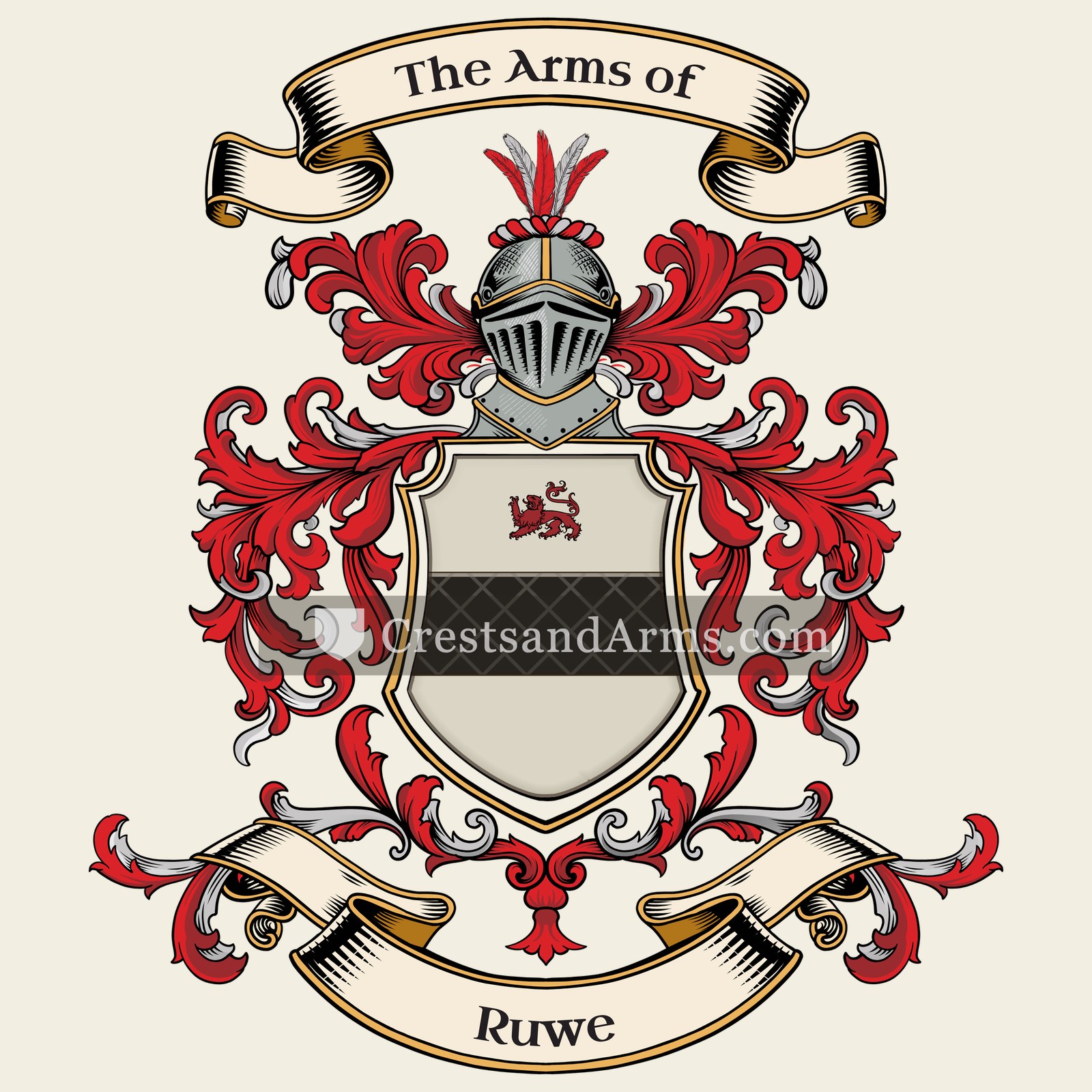
The Ruwe arms were recorded in Germany, c. 1765.
Arms such as these were typically recorded in Bavaria.
Bavaria was a country of old landed families and walled market towns. Estates passed down the same line for centuries, and both the landowners and the leading townsmen kept arms, which is why so many Bavarian names sit in the registers.
This is where the arms were entered in the register. Families often moved to other parts of the country, so the same name can turn up in more than one region.
The body that granted and recorded arms in Germany in this period.
Francis I, Holy Roman Emperor
Sovereign of the period
Francis I, Holy Roman Emperor
1745–1765
Reigning in Germany when the Ruwe arms are first recorded.
How Arms Worked in Germany
In the Holy Roman Empire, coats of arms were often granted to individuals by the Emperor or his representatives. These arms were then passed down through the generations to all legitimate descendants of the original holder. Younger branches of a family usually kept the same shield design without needing to change it, as the arms belonged to the entire lineage.
Granting authority
The Holy Roman Emperor held the sole power to grant new coats of arms throughout his vast imperial territories.
How they got arms
Families typically obtained their coats of arms through a formal imperial grant or by proving their noble status to the authorities.
Where arms were recorded
These grants were officially recorded in the Imperial Chancery registers, which began keeping formal records of such honors during the Middle Ages.
The family's standing
Recorded among the armigerous families of Germany.
Origin & History of the Ruwe Family in Germany
The surname Ruwe is deeply rooted in the historical landscape of southern Germany, specifically within the region of Bavaria. By the mid-eighteenth century, records confirm that families bearing this name were well-established members of the local community. The name likely originated as a descriptive term or a nickname used to identify individuals in small, tight-knit rural villages. During this period, life in Bavaria was defined by agricultural traditions and the influence of the local parish, which served as the primary center for recording births, marriages, and deaths. Families with the name Ruwe were typically part of the working class, contributing to the development of the Bavarian countryside through farming and skilled trades. As the population moved and evolved over the following decades, the name remained a steady marker of this specific ancestral heritage, linking modern descendants back to the hardworking people who lived in the Bavarian provinces during the 1760s.
Related Branches & Arms
Root word
Hruod
Old High German term meaning fame or renown.
This name
RuweA shortened form of names like Rudolf or Hrodger, signifying one who is famous.
also spelled
Ruwee
Ruwa
Ruva
Related arms
Barmensame arms
Ebelin de Manoltzheimsame arms
Parent de la Toursame arms
Engelsdorfsimilar arms
Documented Sources
J. B. Rietstap, Armorial Général, Gouda: G. B. van Goor Zonen, 1884–87


 fessThe military belt, and readiness to serve
 lionCourage, strength and royalty
 fessThe military belt, and readiness to serve
 lionCourage, strength and royalty