Map of France showing where the Ryno arms are recorded
The Ryno arms were recorded in Lyonnais, c. 1663.
Lyonnais centred on Lyon, one of the great banking and silk towns of France. Money made in the city bought estates in the countryside around it, and those estates brought arms with them.
This is where the arms were entered in the register. Families often moved to other parts of the country, so the same name can turn up in more than one region.
The body that granted and recorded arms in France in this period.
Louis XIV of France
Sovereign of the period
Louis XIV of France
1643–1715
Reigning in France when the Ryno arms are first recorded.
How Arms Worked in France
In France, a coat of arms was a mark of honor that passed down through the male line to all legitimate descendants. Families often used the same shield without changes to show their shared heritage. If a branch wanted to stand out, they could add a small mark to their shield to show their specific place in the family tree.
Granting authority
The Juge d'armes de France acted as the official authority that regulated and verified coats of arms across the country.
How they got arms
Families typically inherited their arms from ancestors, though they could also receive them through royal grants or by proving their noble status.
Where arms were recorded
Coats of arms were officially recorded in the Armorial Général de France, which began its main collection in the year 1696.
The family's standing
Recorded among the armigerous families of Lyonnais.
Origin & History of the Ryno Family in France
The family name Ryno traces its roots to the historic Lyonnais region of France, where records confirm the presence of family members as early as 1663. During this period, the Lyonnais area was a bustling center for trade and silk production, which likely influenced the daily lives and occupations of those living there. Families in this region often lived in close-knit communities centered around local parishes and agricultural estates. As the name evolved, it reflected the linguistic shifts common to the French countryside, where regional dialects played a major role in how surnames were recorded by local officials. By the mid-17th century, the family was well-established within the social fabric of the province, participating in the religious and civic life that defined the era. This early history provides a window into the lives of ancestors who navigated the changing landscapes of pre-revolutionary France.
Meaning of the Ryno family crest colors & symbols
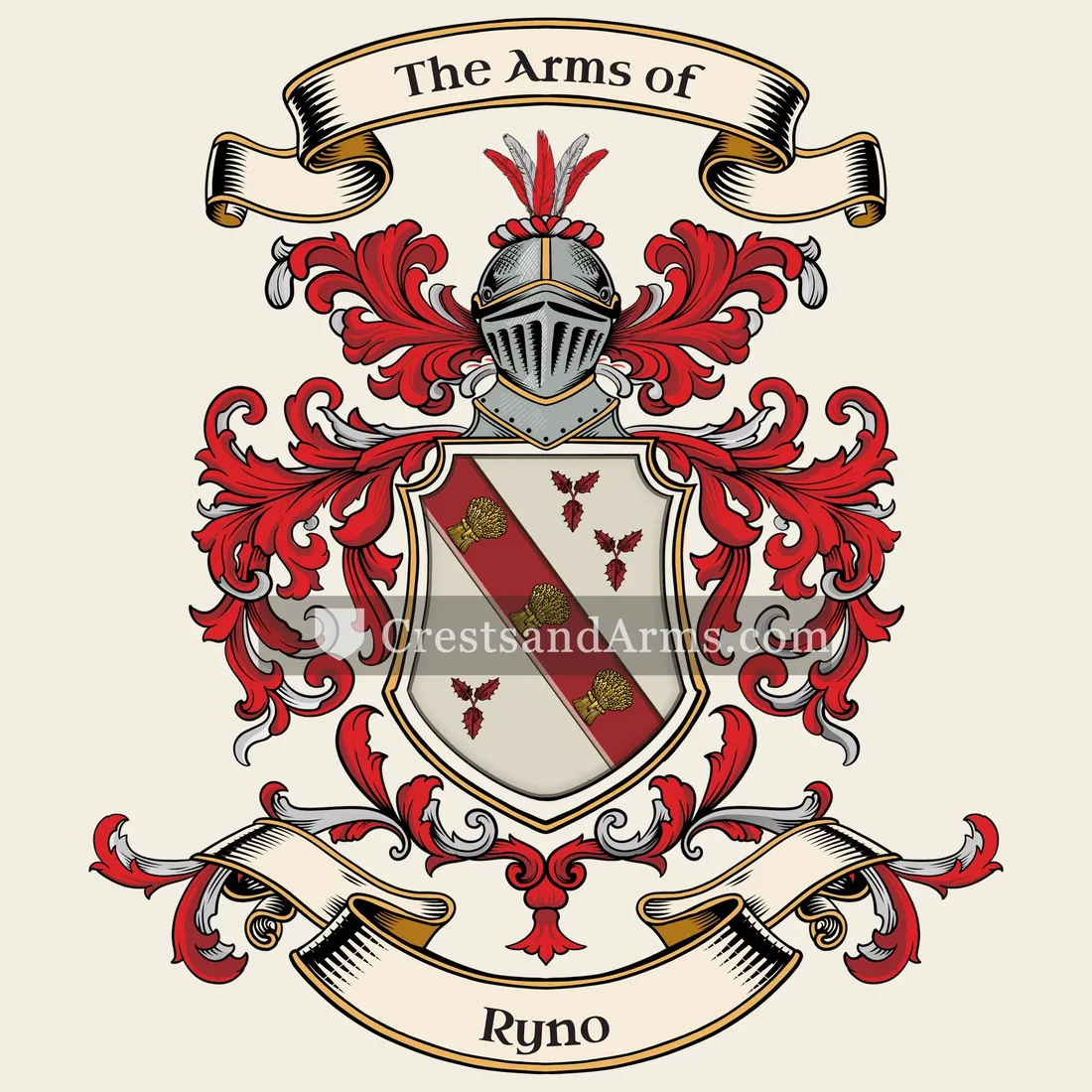
Symbols on this shield
bendDefence, and the scarf of a commander
hollyTruth, and protection through winter
wheatsheafPlenty, and the harvest of one's own labour
Colours
Silver (Argent)Means: Peace and sincerity
Red (Gules)Means: Military strength
Gold (Or)Means: Generosity
Historical info
Source
Sir Bernard Burke, The General Armory of England, Scotland, Ireland and Wales, London: Harrison & Sons, 1884
Blazon (the actual original written record)
“Ar. on a bend betw. three holly leaves gu. as many garbs or”
DublinDublin, c. 1645
Digital archive packCoat of arms PNG, gold border print PDF, vector SVG and the certificate of authenticity. Sent to your email in minutes.
Map of Ireland showing where the Ryno arms are recorded
The Ryno arms were recorded in Dublin, c. 1645.
Dublin was the seat of government in Ireland and the place where grants were sought and recorded. Families with business at the castle or the courts settled nearby, and settling there put their arms on record.
This is where the arms were entered in the register. Families often moved to other parts of the country, so the same name can turn up in more than one region.
The body that granted and recorded arms in Ireland in this period.
Charles I of England
Sovereign of the period
Charles I of England
1625–1649
Reigning in France when the Ryno arms are first recorded.
How Arms Worked in Ireland
The Ulster King of Arms granted coats of arms to individuals who proved their social standing and good character. These symbols were typically inherited by all legitimate descendants of the original holder. If a family branch wanted a unique look, they could apply for a specific change to their design through the office to ensure their identity remained distinct.
Granting authority
The Ulster King of Arms acted as the official body that regulated and issued all coats of arms throughout Ireland.
How they got arms
Families obtained their arms through formal grants issued by the office after proving their eligibility and paying the required fees.
Where arms were recorded
All official grants were recorded in the registers held by the Ulster King of Arms starting from the year 1552.
The family's standing
Recorded among the armigerous families of Dublin.
Origin & History of the Ryno Family in Ireland
The history of the Ryno family in Ireland is closely tied to the shifting social landscape of the seventeenth century. By 1645, records confirm that members of the family were established in Dublin, a city that served as a major center for trade and political activity during a period of intense upheaval. The name likely evolved from older Gaelic roots, reflecting the linguistic changes that occurred as families moved into urban environments and interacted with English-speaking administration. During this era, families like the Rynos often occupied roles as skilled tradespeople or merchants, which allowed them to maintain a stable presence in the capital despite the frequent conflicts that defined the mid-1600s. Their early residency in Dublin suggests they were part of the growing middle class that helped shape the city’s development during the transition from the medieval period to the modern age.
Ryno Meaning & Related Branches
Root word
Regino
Derived from the Germanic elements for counsel and advice.
This name
RynoA French patronymic surname signifying a descendant of someone named Regino or Reynold.
also spelled
Rion
Documented Sources
J. B. Rietstap, Armorial Général, Gouda: G. B. van Goor Zonen, 1884–87
Archives départementales du Rhône, Registres paroissiaux de la province du Lyonnais (1663)
Béghain, Patrice, Dictionnaire historique de Lyon, 2009
Garden, Maurice, Lyon et les Lyonnais au XVIIIe siècle, 1975
Digital archive packCoat of arms PNG, gold border print PDF, vector SVG and the certificate of authenticity. Sent to your email in minutes.


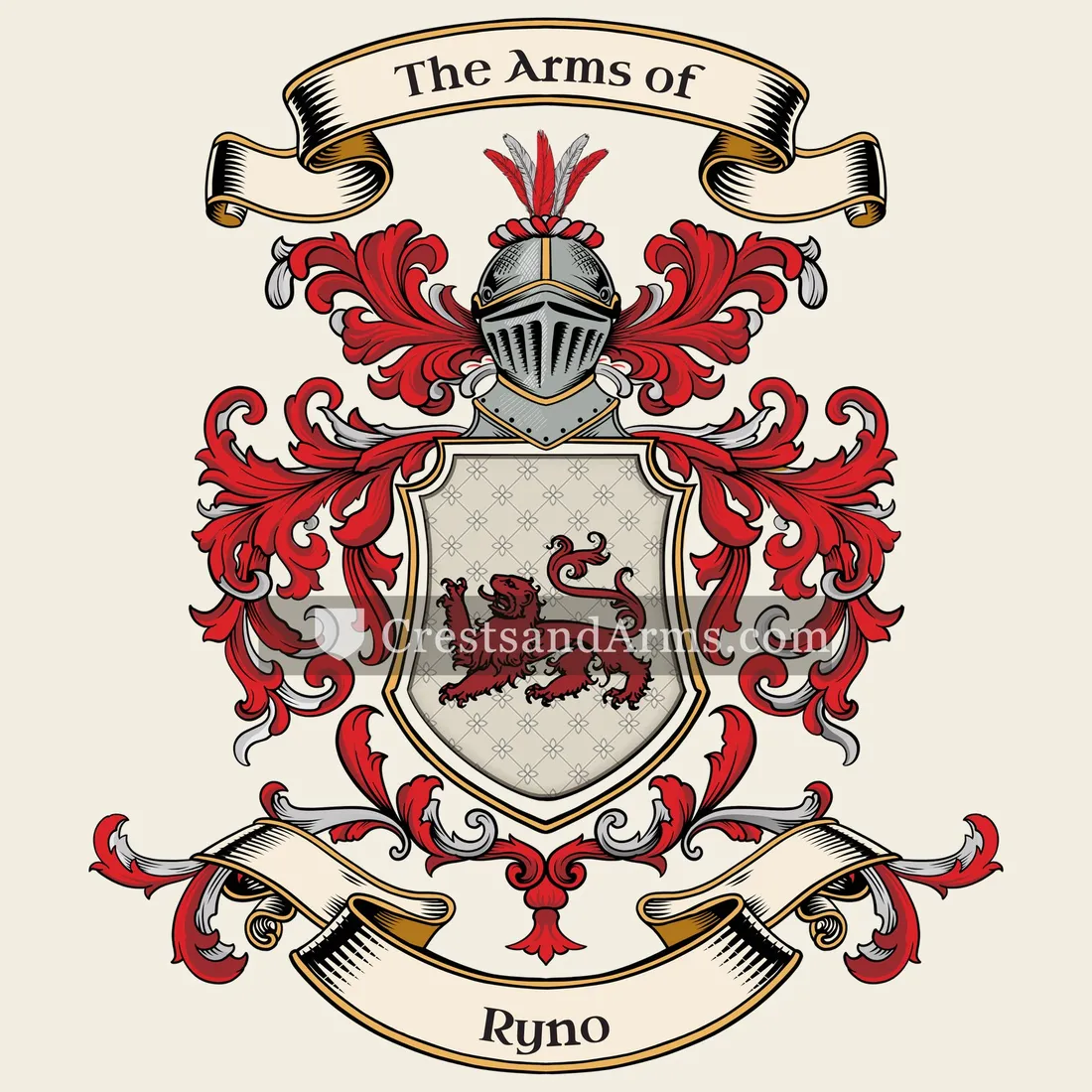
 lionCourage, strength and royalty
 lionCourage, strength and royalty


 bendDefence, and the scarf of a commander
 hollyTruth, and protection through winter
 wheatsheafPlenty, and the harvest of one's own labour