Map of Netherlands showing where the Ryser arms are recorded
The Ryser arms were recorded in Amsterdam, c. 1815.
This is where the arms were entered in the register. Families often moved to other parts of the country, so the same name can turn up in more than one region.
Region
Amsterdam
Town
Amsterdam
First recorded
1815
Granting Authority for the Ryser Arms
Hoge Raad van Adel
Photograph made by me · CC BY-SA 3.0
The body that granted and recorded arms in Netherlands in this period.
William I of the Netherlands
Sovereign of the period
William I of the Netherlands
1815–1840
Reigning in Netherlands when the Ryser arms are first recorded.
How Arms Worked in Netherlands
In the Netherlands, coats of arms were often used by noble families and those who held specific public offices. These arms were passed down through the generations to legitimate descendants. Younger branches of a family usually kept the original design without needing to add special marks. This system ensured that the family identity remained clear and consistent over many years.
Granting authority
The Hoge Raad van Adel is the official body that regulates and manages noble titles and coats of arms in the Netherlands.
How they got arms
Families typically obtained their coats of arms through official royal grants or by proving their long-standing historical use of the symbols.
Where arms were recorded
Coats of arms are officially recorded in the registers held by the Hoge Raad van Adel, which began its work in 1814.
The family's standing
Recorded among the armigerous families of Netherlands.
Origin & History of the Ryser Family in Netherlands
The Ryser family name holds a distinct place in the urban history of the Netherlands, particularly within the bustling environment of Amsterdam during the early nineteenth century. By 1815, the city was undergoing a major transition as it emerged from the Napoleonic era and began to rebuild its status as a global trade hub. During this period, the Ryser family established themselves as part of the growing middle class in Amsterdam, likely contributing to the city’s recovery through commerce or specialized labor. The name itself is rooted in Germanic linguistic traditions, often associated with individuals who worked as riders or messengers, which suggests that the family may have originally served in roles requiring travel or transport. As the Netherlands modernized, the Ryser family integrated into the social fabric of the capital, leaving behind records of their daily lives, marriages, and professional activities in the city’s municipal archives. Their presence in Amsterdam during this pivotal year reflects the broader movement of families who helped shape the city into the modern metropolis it is today.
Coat of Arms & Family Crest Details
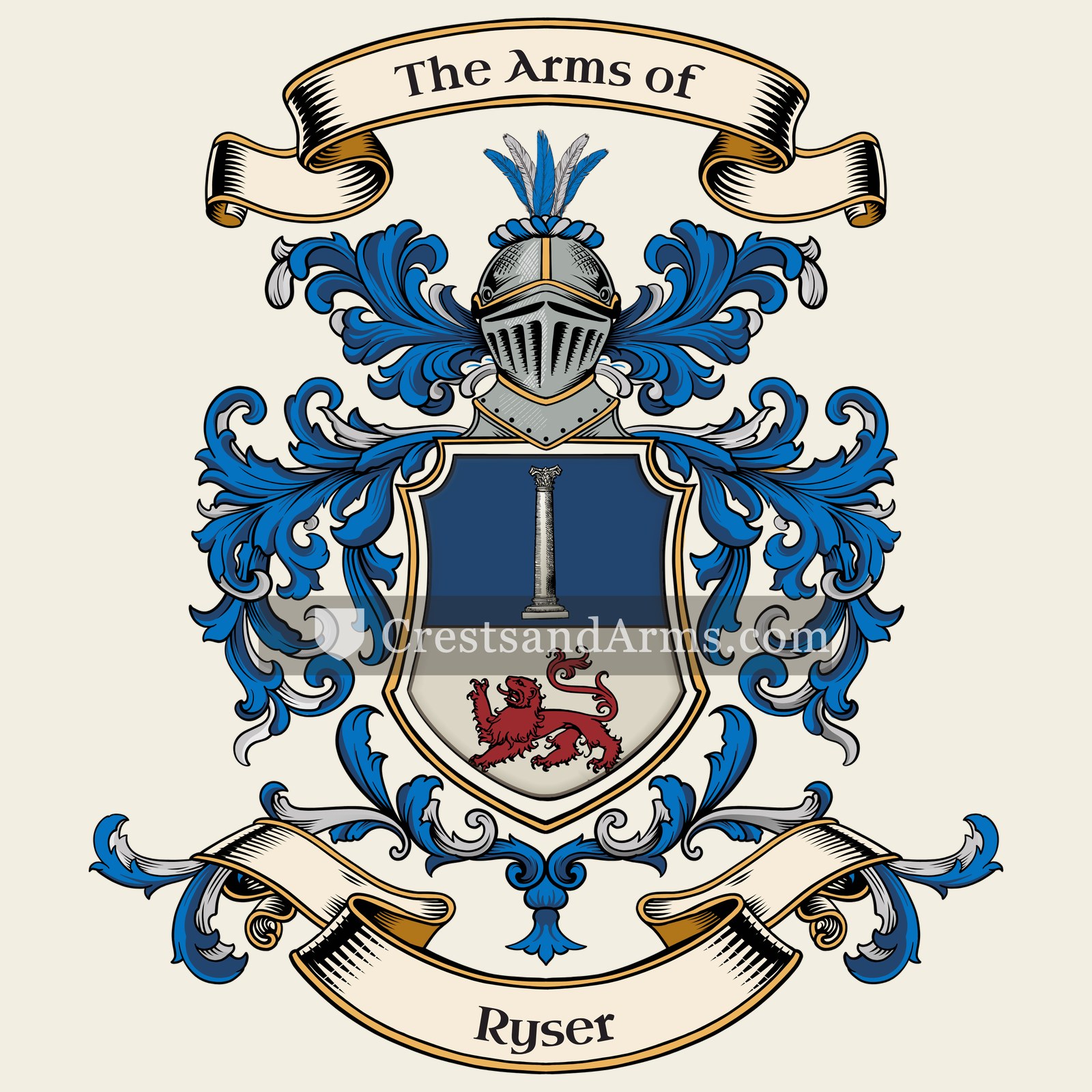
Symbols on this shield
columnFortitude and constancy
lionCourage, strength and royalty
Colours
Blue (Azure)Means: Loyalty and truth
Silver (Argent)Means: Peace and sincerity
Red (Gules)Means: Military strength
Historical info
Source
J. B. Rietstap, Armorial Général, Gouda: G. B. van Goor Zonen, 1884–87
Blazon (the actual original written record)
“Coupé d'azur sur arg.: à une colonne de marbre blanc, soutenue d'un socle pareil, br. sur le coupé et supp. une colombe ess. d'arg.; derrière la colonne un lion sautant de gu., attaché au chapiteau de la colonne, au moyen d'une chaîne et d'un collier de gu. C.: quatre pl. d'aut., recourbées.”
SwitzerlandBerne, c. 1745
Digital archive packCoat of arms PNG, gold border print PDF, vector SVG and the certificate of authenticity. Sent to your email in minutes.
Map of Switzerland showing where the Ryser arms are recorded
The Ryser arms were recorded in Berne, c. 1745.
This is where the arms were entered in the register. Families often moved to other parts of the country, so the same name can turn up in more than one region.
The body that granted and recorded arms in Switzerland in this period.
How Arms Worked in Switzerland
In Switzerland, coats of arms were not restricted to the nobility and were often adopted by common citizens and families. These symbols were passed down through generations to show family identity. When branches of a family grew, they often changed small details of the design to distinguish their own line from the original group.
Granting authority
Cantonal and civic authorities managed the use of coats of arms within their specific regions and local jurisdictions.
How they got arms
Families typically assumed their own coats of arms based on local custom rather than receiving them from a central monarch.
Where arms were recorded
Arms were recorded in various cantonal and civic registers starting from the fourteenth century throughout the Swiss region.
The family's standing
Recorded among the armigerous families of Switzerland.
Origin & History of the Ryser Family in Switzerland
The Ryser family name is deeply rooted in the history of the Swiss canton of Bern, where records confirm their presence as early as 1745. The name itself is derived from the Middle High German word "ris," which refers to a branch or a thicket. This suggests that the earliest ancestors likely earned the name by living near a wooded area or working as laborers who cleared brush and managed timber. During the 18th century, families in this region were often tied closely to the land and local agricultural guilds. As the Ryser family established themselves in the Bernese countryside, they became part of the complex social fabric of the Old Swiss Confederacy. Their survival and growth during this era reflect the broader patterns of Swiss rural life, where families maintained strong connections to their home parishes and contributed to the local economy through farming and trade.
Related Branches & Arms
Root word
Reis
Germanic word referring to a journey or a traveler.
This name
RyserAn occupational surname for someone who traveled frequently or a dweller near a path.
also spelled
Rysser
Riser
Related arms
Rieservariant spelling
Documented Sources
J. B. Rietstap, Armorial Général, Gouda: G. B. van Goor Zonen, 1884–87


 paleMilitary strength, and a fortified defence
 branchPeace, and new growth
 martletA younger son, who must win his own land
 paleMilitary strength, and a fortified defence
 branchPeace, and new growth
 martletA younger son, who must win his own land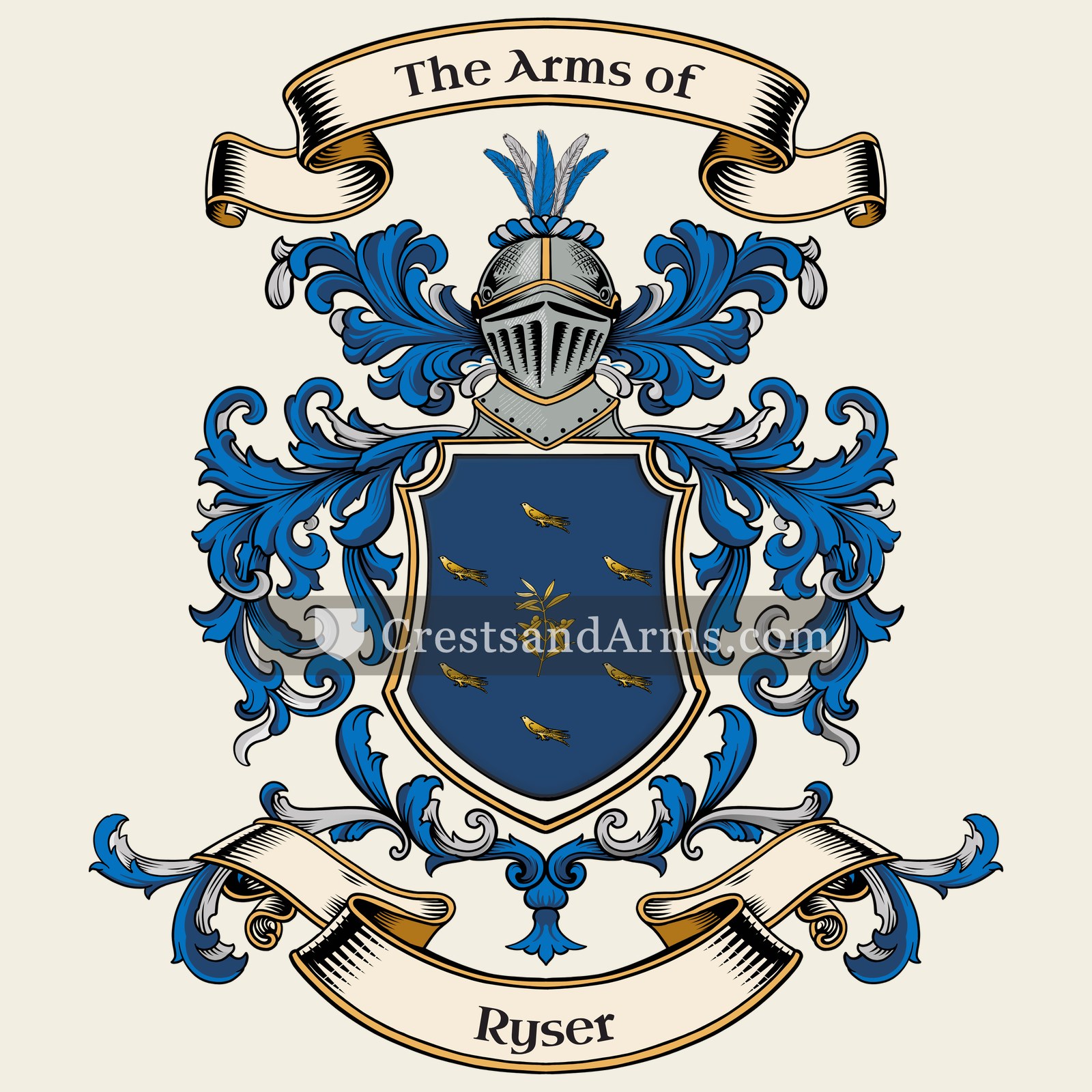


 columnFortitude and constancy
 lionCourage, strength and royalty