Map of Belgium showing where the Saale arms are recorded
The Saale arms were recorded in Tournaisis, c. 1737.
This is where the arms were entered in the register. Families often moved to other parts of the country, so the same name can turn up in more than one region.
The body that granted and recorded arms in Belgium in this period.
Charles VI, Holy Roman Emperor
Sovereign of the period
Charles VI, Holy Roman Emperor
1711–1740
Reigning in Belgium when the Saale arms are first recorded.
How Arms Worked in Belgium
In Belgium, a coat of arms is considered personal property that is passed down through the male line to legitimate descendants. Families often use the same shield design across generations to show their shared heritage. If a branch of the family wants to change the design, they must apply for an official update to their specific version of the arms.
Granting authority
The Conseil héraldique is the official body that regulates and approves all coats of arms in Belgium.
How they got arms
Families obtain their coats of arms through formal royal grants or by confirming their historical right to use existing designs.
Where arms were recorded
All approved coats of arms are officially recorded in the public registers of the Conseil héraldique since 1844.
The family's standing
Recorded among the armigerous families of Belgium.
Origin & History of the Saale Family in Belgium
The history of the Saale family in Belgium is deeply rooted in the region of Tournaisis, where records confirm their presence as early as 1737. During the eighteenth century, this area was a vibrant center of agricultural and craft production under the rule of the Austrian Netherlands. Families like the Saales often lived in small rural communities where they were closely tied to the rhythm of the local parish and the seasonal demands of the land. Because the name is linked to the geography of the Scheldt river basin, it is likely that the family name evolved from a descriptive term for people living near the water or within the specific low-lying meadows common to the Tournai landscape. By maintaining a steady presence in this border region, the early members of the family navigated the complex social changes of the Enlightenment era while establishing deep roots that would persist for generations.
Meaning of the Saale family crest colors & symbols
Symbols on this shield
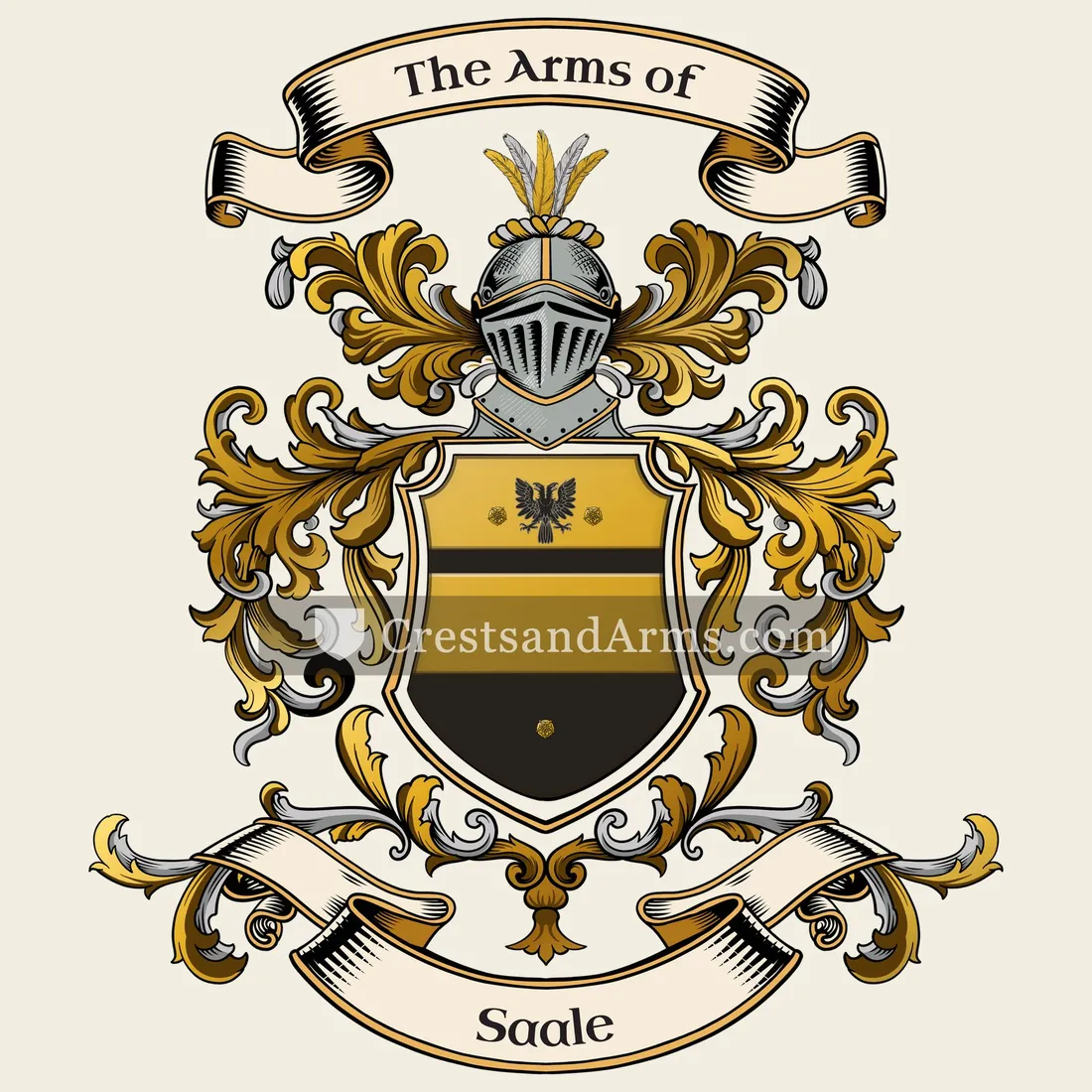
fessThe military belt, and readiness to serve
chiefAuthority, wisdom and dominion
roseThe seventh son, and beauty with grace
eagleNobility, strength and a keen mind
Colours
Black (Sable)Means: Constancy
Gold (Or)Means: Generosity
Historical info
Source
J. B. Rietstap, Armorial Général, Gouda: G. B. van Goor Zonen, 1884–87
Blazon (the actual original written record)
“De sa. à la fasce d'or, acc. de trois roses du même; au chef d'or, ch. d'une aigle ép. de sa.”
Franche-ComteFranche-Comte, c. 1548
Digital archive packCoat of arms PNG, gold border print PDF, vector SVG and the certificate of authenticity. Sent to your email in minutes.
Map of France showing where the Saale arms are recorded
The Saale arms were recorded in Franche-Comte, c. 1548.
Franche-Comte sat between France and the Empire and changed hands more than once. Border families held their land under arms and expected to defend it, so a shield was a practical thing rather than an ornament.
This is where the arms were entered in the register. Families often moved to other parts of the country, so the same name can turn up in more than one region.
The body that granted and recorded arms in France in this period.
Henry II of France
Sovereign of the period
Henry II of France
1547–1559
Reigning in Belgium when the Saale arms are first recorded.
How Arms Worked in France
In France, a coat of arms was a mark of honor that passed down through the male line to all legitimate descendants. Families often used the same shield without changes to show their shared heritage. If a branch wanted to stand out, they could add a small mark to their shield to show their specific place in the family tree.
Granting authority
The Juge d'armes de France acted as the official authority that regulated and verified coats of arms across the country.
How they got arms
Families typically inherited their arms from ancestors, though they could also receive them through royal grants or by proving their noble status.
Where arms were recorded
Coats of arms were officially recorded in the Armorial Général de France, which began its main collection in the year 1696.
The family's standing
Recorded among the armigerous families of Franche-Comte.
Origin & History of the Saale Family in France
The family name Saale traces its early roots to the Franche-Comté region of eastern France, where records confirm the presence of family members as early as 1548. During the sixteenth century, this area was a crossroads of culture and trade nestled between the Kingdom of France and the Holy Roman Empire. Families living in this mountainous territory often worked in agriculture or specialized crafts, adapting to the shifting political control of the region. Because the name appears in local administrative documents from this period, it suggests that the Saale family was well-established within the local community. They likely participated in the daily life of the Franche-Comté villages, contributing to the unique social fabric of a region known for its strong sense of independence and distinct regional identity.
Meaning of the Saale family crest colors & symbols
Symbols on this shield
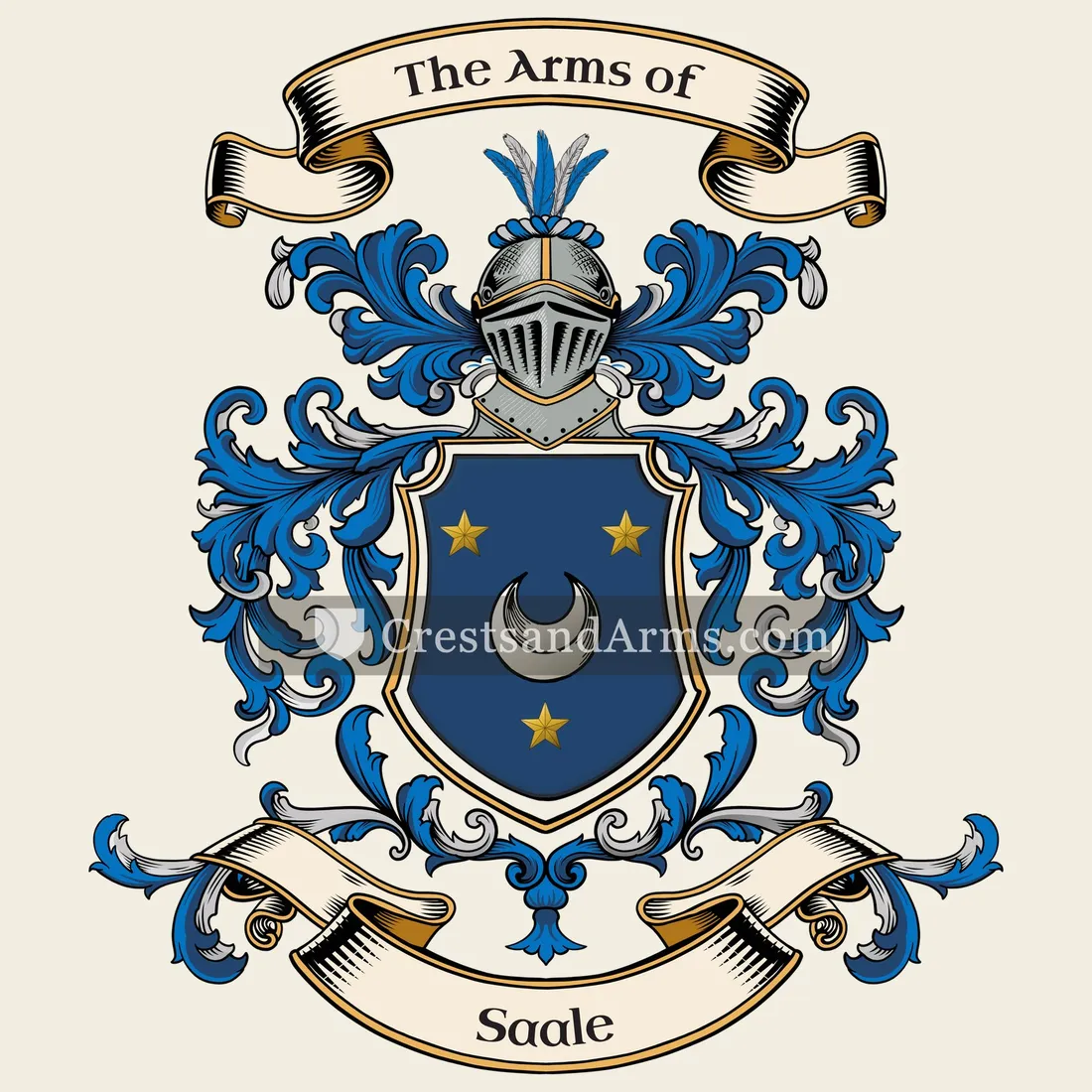
crescentHonour by the sovereign, and the second son
mulletThe third son, and a divine quality from above
Colours
Blue (Azure)Means: Loyalty and truth
Silver (Argent)Means: Peace and sincerity
Gold (Or)Means: Generosity
Historical info
Source
J. B. Rietstap, Armorial Général, Gouda: G. B. van Goor Zonen, 1884–87
Blazon (the actual original written record)
“D'azur à un croiss. d'arg., acc. de trois étoiles d'or.”
ItalyVicence, c. 1775
Digital archive packCoat of arms PNG, gold border print PDF, vector SVG and the certificate of authenticity. Sent to your email in minutes.
Map of Italy showing where the Saale arms are recorded
The Saale arms were recorded in Vicence, c. 1775.
This is where the arms were entered in the register. Families often moved to other parts of the country, so the same name can turn up in more than one region.
The body that granted and recorded arms in Italy in this period.
Alvise Giovanni Mocenigo
Sovereign of the period
Alvise Giovanni Mocenigo
1763–1778
Reigning in Belgium when the Saale arms are first recorded.
How Arms Worked in Italy
In the Italian states, coats of arms were often used by noble families to show their status and history. These symbols were passed down through the generations to all legitimate male descendants. Younger branches of a family usually kept the original design but sometimes added small changes to distinguish their specific line from the main branch.
Granting authority
Various local rulers and city governments controlled the use of coats of arms across the different Italian states.
How they got arms
Families often assumed their own arms or received them as official grants from local lords, popes, or city councils.
Where arms were recorded
Arms were recorded in local city archives or private family books rather than in one single national register.
The family's standing
Recorded among the armigerous families of Italy.
Origin & History of the Saale Family in Italy
The history of the Saale family in Italy is deeply rooted in the cultural landscape of the Veneto region, specifically within the city of Vicenza. By the year 1775, records confirm that members of the family were already established residents contributing to the local social and economic fabric of the area. During this period, Vicenza was a center of trade and artistic development under the influence of the Republic of Venice. Families like the Saales often lived in close-knit urban communities where they participated in the daily life of the city. While the name carries connections to broader European linguistic roots, its presence in Vicenza highlights a long-standing integration into the Italian administrative and civic systems of the eighteenth century. This early documentation serves as a vital anchor for understanding how the family navigated the transition from local residents to established members of the regional community.
Saale Meaning & Related Branches
Root word
Sala
A Germanic term referring to a large hall or manor house.
This name
SaaleA topographic name for someone who lived near or worked at a manor house.
also spelled
Sall
Saale
Sal
Saal
Saile
Documented Sources
J. B. Rietstap, Armorial Général, Gouda: G. B. van Goor Zonen, 1884–87
Archives de l'État à Tournai, Registres paroissiaux de l'ancien régime, 1737
Dion, R., Histoire des levées de la Loire, 1961
Roland, C. G., Histoire de Tournai, 1932
Digital archive packCoat of arms PNG, gold border print PDF, vector SVG and the certificate of authenticity. Sent to your email in minutes.


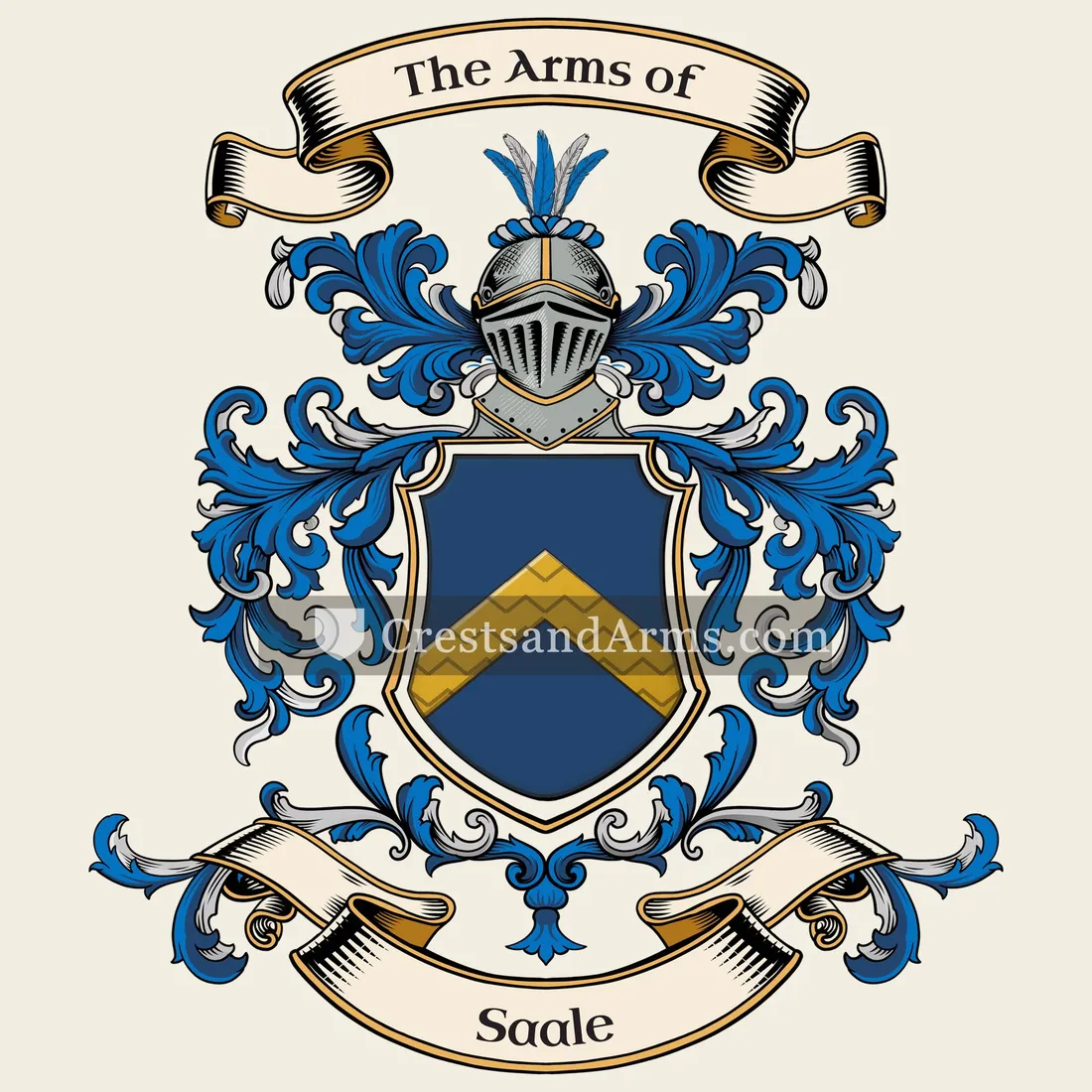
 chevronProtection, and faithful service completed
 chevronProtection, and faithful service completed


 fessThe military belt, and readiness to serve
 chiefAuthority, wisdom and dominion
 roseThe seventh son, and beauty with grace
 eagleNobility, strength and a keen mind


 crescentHonour by the sovereign, and the second son
 mulletThe third son, and a divine quality from above