Map of Austria showing where the Saari arms are recorded
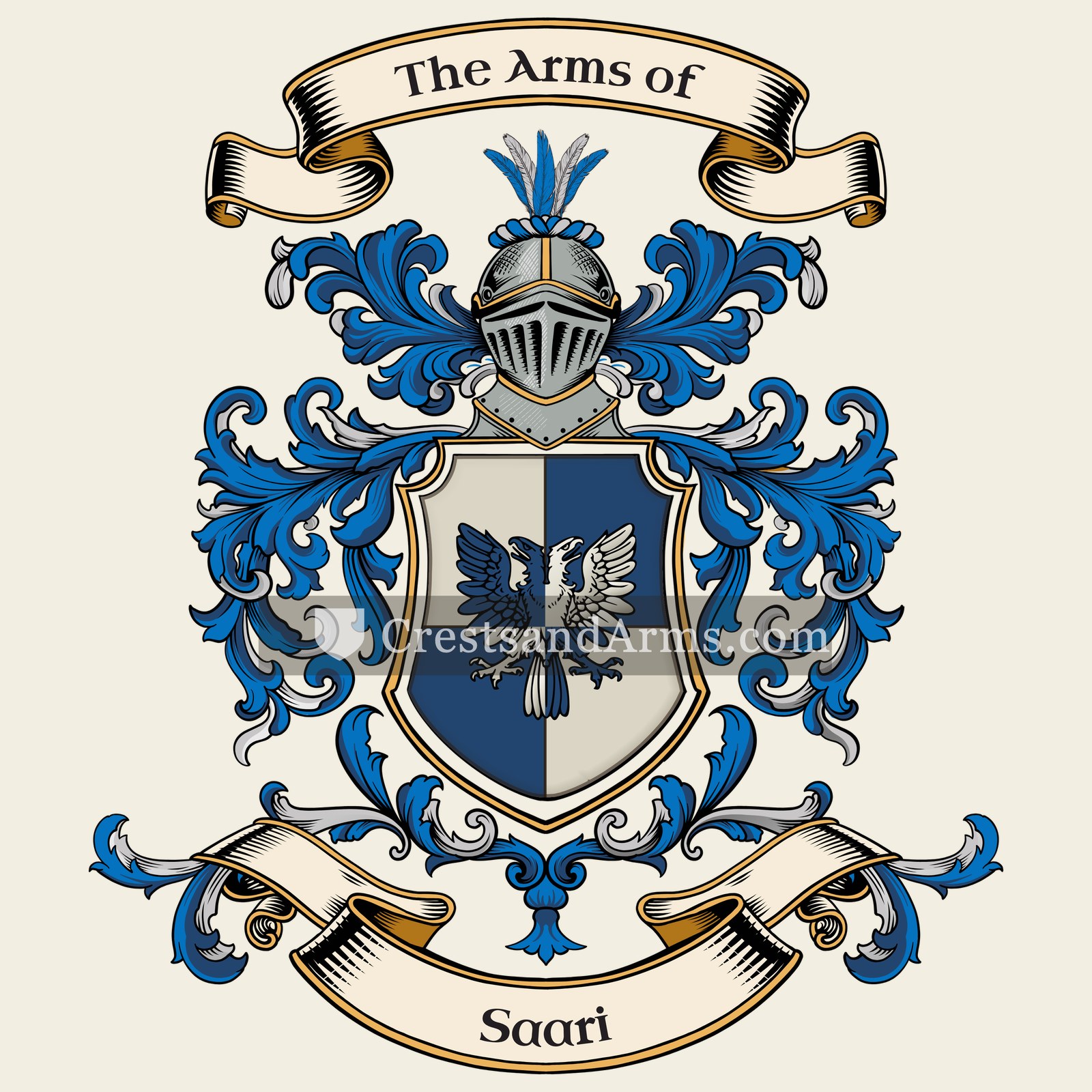
The Saari arms were recorded in Austria, c. 1793.
Arms such as these were typically recorded in Tyrol.
Tyrol was mountain country in western Austria, where the valleys were held by families who had been there a very long time. Old tenure counted for more than money, and old families carried arms.
This is where the arms were entered in the register. Families often moved to other parts of the country, so the same name can turn up in more than one region.
Region
Tyrol
First recorded
1793
Granting Authority for the Saari Arms
Imperial and Royal chancery
Sodacan · CC BY-SA 3.0
The body that granted and recorded arms in Austria in this period.
Francis II, Holy Roman Emperor
Sovereign of the period
Francis II, Holy Roman Emperor
1792–1806
Reigning in Austria when the Saari arms are first recorded.
How Arms Worked in Austria
Austrian coats of arms were often linked directly to noble titles granted by the Emperor. These symbols belonged to the entire family line rather than just one individual. When a family grew, new branches kept the original design without needing to change it. This system allowed all members of a noble house to share the same identity across many generations.
Granting authority
The Imperial and Royal chancery managed all heraldic matters and controlled the official granting of arms throughout the Austrian lands.
How they got arms
Families typically received their arms through a formal imperial decree that often accompanied the elevation of a person to noble status.
Where arms were recorded
Official records of these grants were kept in the Imperial Register of Nobility which began its formal documentation process in 1453.
The family's standing
Recorded among the armigerous families of Austria.
Origin & History of the Saari Family in Austria
The surname Saari is deeply rooted in the linguistic traditions of Northern Europe, where it translates directly to the word for an island. While the name is most commonly associated with Finnish heritage, its presence in the Tyrol region by 1793 suggests a fascinating history of migration and cultural adaptation. During the late 18th century, the Alpine corridors of Tyrol served as a vital crossroads for merchants, soldiers, and laborers moving between Central and Northern Europe. Families bearing the name likely moved along these established trade routes, settling in mountain communities where they integrated into the local agrarian society. By maintaining their original family name while adapting to the German-speaking environment of the Alps, these early ancestors preserved a unique link to their northern origins while building a new life in the heart of the mountains.
Related Branches & Arms
Root word
Saari
Finnish word meaning island or a small piece of land.
This name
SaariA topographic name for someone who lived on or near an island.
also spelled
Sar
Documented Sources
J. B. Rietstap, Armorial Général, Gouda: G. B. van Goor Zonen, 1884–87
Pirjo Mikkonen and Sirkka Paikkala, Sukunimet, 2000
Eero Kiviniemi, Suomalaisten etunimet, 2006
Tiroler Landesarchiv, Tiroler Tauf- und Heiratsbücher (Tyrolean Baptism and Marriage Registers)
Digital archive packCoat of arms PNG, gold border print PDF, vector SVG and the certificate of authenticity. Sent to your email in minutes.


 eagleNobility, strength and a keen mind
 eagleNobility, strength and a keen mind