Map of Italy showing where the Sabourin arms are recorded
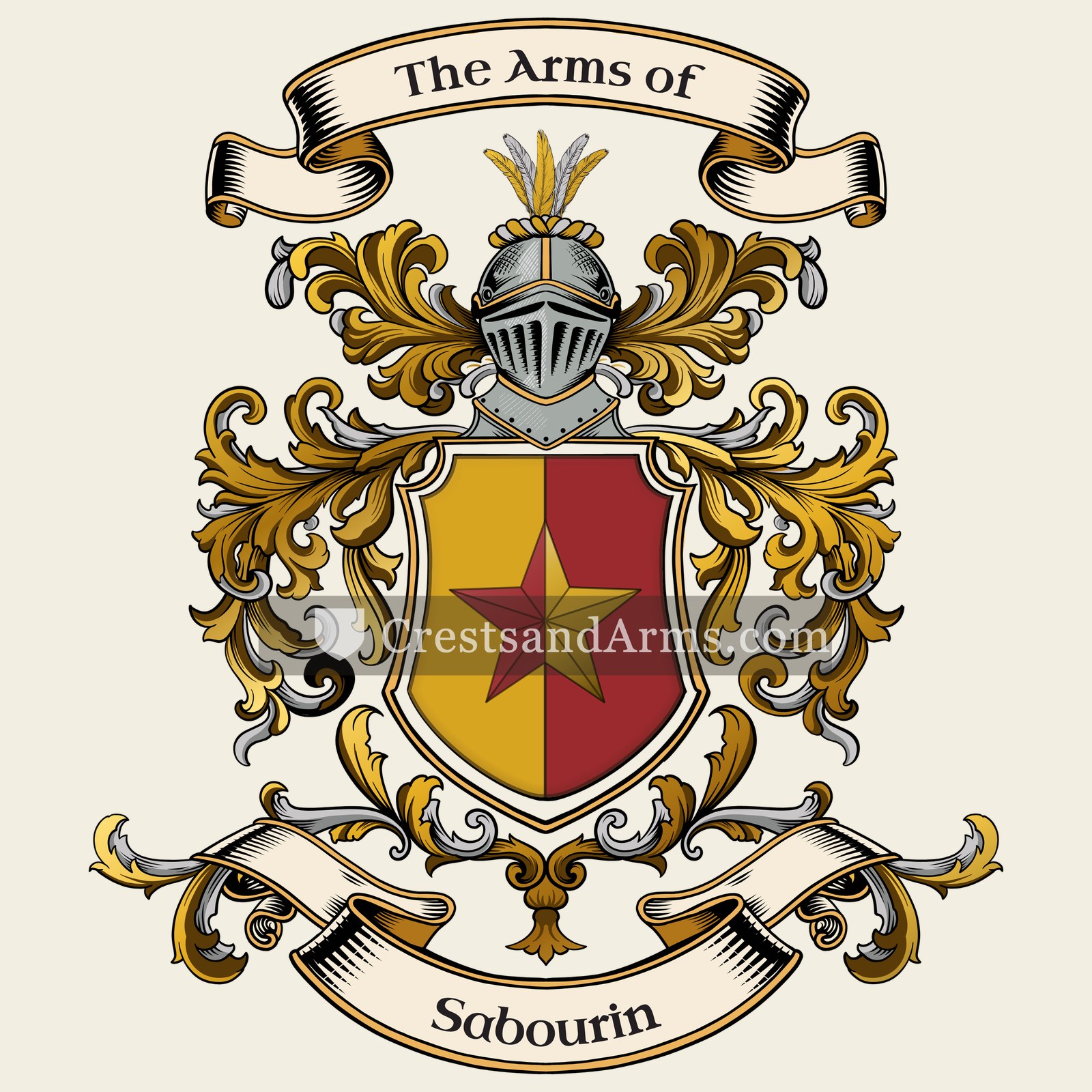
The Sabourin arms were recorded in Bologne, c. 1775.
This is where the arms were entered in the register. Families often moved to other parts of the country, so the same name can turn up in more than one region.
The body that granted and recorded arms in Italy in this period.
Alvise Giovanni Mocenigo
Sovereign of the period
Alvise Giovanni Mocenigo
1763–1778
Reigning in Italy when the Sabourin arms are first recorded.
How Arms Worked in Italy
In the Italian states, coats of arms were often used by noble families to show their status and history. These symbols were passed down through the generations to all legitimate male descendants. Younger branches of a family usually kept the original design but sometimes added small changes to distinguish their specific line from the main branch.
Granting authority
Various local rulers and city governments controlled the use of coats of arms across the different Italian states.
How they got arms
Families often assumed their own arms or received them as official grants from local lords, popes, or city councils.
Where arms were recorded
Arms were recorded in local city archives or private family books rather than in one single national register.
The family's standing
Recorded among the armigerous families of Italy.
Origin & History of the Sabourin Family in Italy
The surname Sabourin originates from the French language and is traditionally linked to the word "sabot," which refers to a wooden shoe. Historically, this suggests that early ancestors were likely skilled artisans or cobblers who crafted these durable shoes for rural workers. By the year 1775, records confirm that members of the family were established in the region of Boulogne, France. During this period, families in the area were often deeply connected to the local agricultural economy and the trade guilds that defined village life. As the family grew, they became part of the social fabric of northern France, eventually spreading their influence through both local commerce and the migration patterns common to the late eighteenth century. This history reflects a lineage rooted in craftsmanship and steady community participation within the French countryside.
Sabourin Meaning & Related Branches
Root word
Sapor
Latin term meaning taste, flavor, or discernment.
This name
SabourinDerived from a nickname for a person with a pleasant or flavorful personality.
also spelled
Savoriny
Savorine
Documented Sources
J. B. Rietstap, Armorial Général, Gouda: G. B. van Goor Zonen, 1884–87
Dauzat, Albert. Dictionnaire étymologique des noms et prénoms de France. 1951
Morlet, Marie-Thérèse. Dictionnaire étymologique des noms de famille. 1991
Archives départementales du Pas-de-Calais, Registres paroissiaux et d'état civil de Boulogne-sur-Mer
Digital archive packCoat of arms PNG, gold border print PDF, vector SVG and the certificate of authenticity. Sent to your email in minutes.


 mulletThe third son, and a divine quality from above
 mulletThe third son, and a divine quality from above