Map of Netherlands showing where the Saeger arms are recorded
The Saeger arms were recorded in Amsterdam, c. 1815.
This is where the arms were entered in the register. Families often moved to other parts of the country, so the same name can turn up in more than one region.
Region
Amsterdam
Town
Amsterdam
First recorded
1815
Granting Authority for the Saeger Arms
Hoge Raad van Adel
Photograph made by me · CC BY-SA 3.0
The body that granted and recorded arms in Netherlands in this period.
William I of the Netherlands
Sovereign of the period
William I of the Netherlands
1815–1840
Reigning in Netherlands when the Saeger arms are first recorded.
How Arms Worked in Netherlands
In the Netherlands, coats of arms were often used by noble families and those who held specific public offices. These arms were passed down through the generations to legitimate descendants. Younger branches of a family usually kept the original design without needing to add special marks. This system ensured that the family identity remained clear and consistent over many years.
Granting authority
The Hoge Raad van Adel is the official body that regulates and manages noble titles and coats of arms in the Netherlands.
How they got arms
Families typically obtained their coats of arms through official royal grants or by proving their long-standing historical use of the symbols.
Where arms were recorded
Coats of arms are officially recorded in the registers held by the Hoge Raad van Adel, which began its work in 1814.
The family's standing
Recorded among the armigerous families of Netherlands.
Origin & History of the Saeger Family in Netherlands
The surname Saeger has roots that connect to the occupational history of the Low Countries, as the name is derived from the Middle Dutch word for a sawyer or a person who cuts timber. By the time the family appears in the official records of Amsterdam in 1815, the city was undergoing a major transition following the end of the Napoleonic era. During this period, families with trade-based surnames often played a vital role in the city’s bustling maritime and construction industries. The presence of the Saeger family in Amsterdam at this time suggests they were part of the urban working class that helped rebuild the city’s economy after years of political instability. As the Netherlands moved toward becoming a unified kingdom, the family likely navigated the changing social landscape by relying on the professional skills that their name had represented for generations.
Meaning of the Saeger family crest colors & symbols
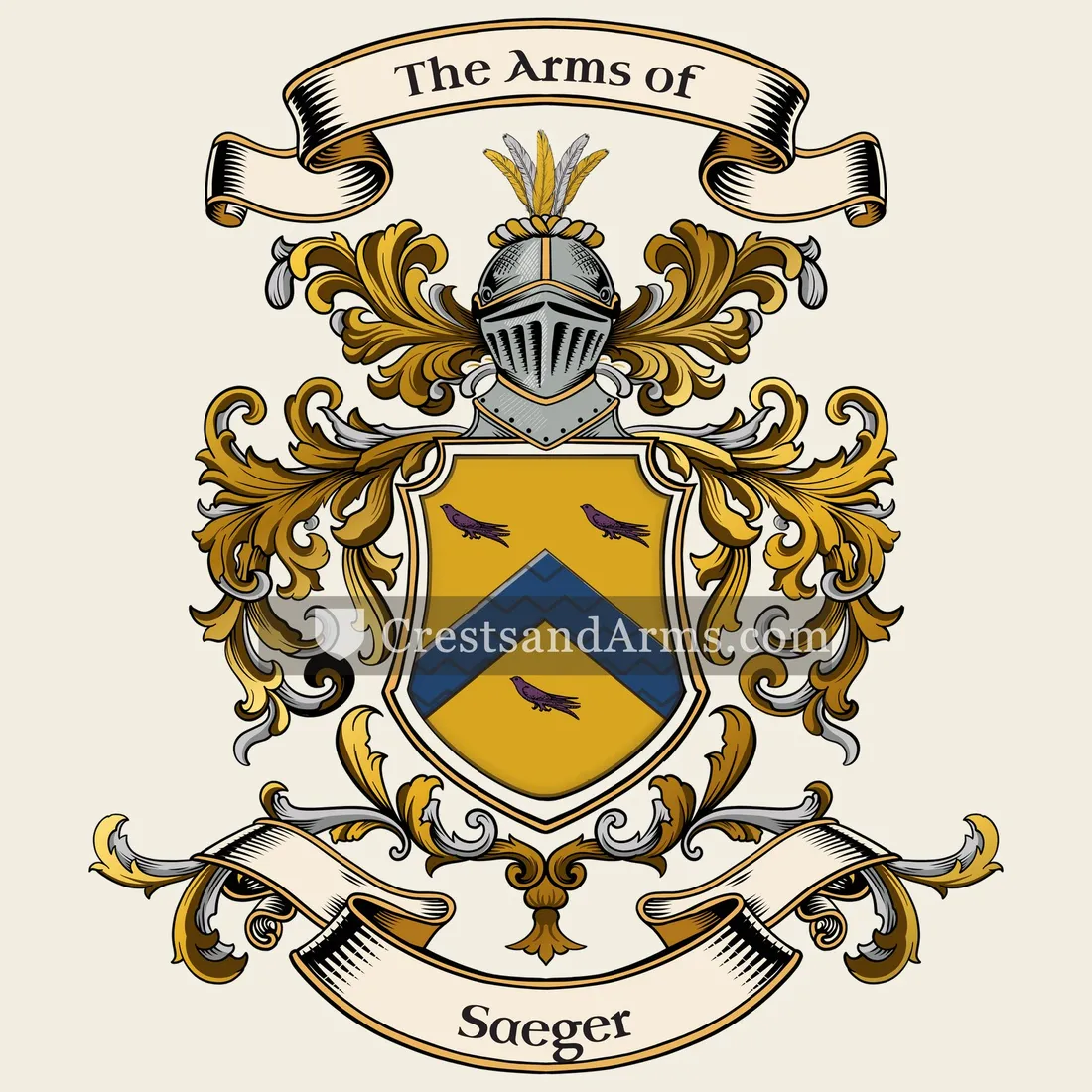
Symbols on this shield
chevronProtection, and faithful service completed
martletA younger son, who must win his own land
Colours
Gold (Or)Means: Generosity
Blue (Azure)Means: Loyalty and truth
Purple (Purpure)Means: Royal majesty
Historical info
Source
Sir Bernard Burke, The General Armory of England, Scotland, Ireland and Wales, London: Harrison & Sons, 1884
Blazon (the actual original written record)
“Or, a chev. az. betw. three birds purp”
Englandc. 1620
Digital archive packCoat of arms PNG, gold border print PDF, vector SVG and the certificate of authenticity. Sent to your email in minutes.
Map of England showing where the Saeger arms are recorded
The Saeger arms were recorded in England, c. 1620.
Arms such as these were typically recorded in York.
Yorkshire is the largest of the English counties, and it held more gentry families than any other. Land there was split among a great many households rather than a few, so a great many of them carried arms.
This is where the arms were entered in the register. Families often moved to other parts of the country, so the same name can turn up in more than one region.
The body that granted and recorded arms in England in this period.
James VI and I
Sovereign of the period
James VI and I
1603–1625
Reigning in Netherlands when the Saeger arms are first recorded.
How Arms Worked in England
English heraldry allowed arms to be shared by all legitimate descendants of the original owner. These symbols were treated as personal property that moved through the generations to all children. While the eldest son kept the original design, other family members could use the same shield without needing to change it or register their own unique versions.
Granting authority
The College of Arms in London has regulated the use of coats of arms throughout England and Wales since 1484.
How they got arms
Families typically obtained their coats of arms through a formal grant from the Crown or by proving their ancient right to them.
Where arms were recorded
All official coats of arms are recorded in the registers kept at the College of Arms, which date back to the fifteenth century.
The family's standing
Recorded among the armigerous families of England.
Origin & History of the Saeger Family in England
The family name Saeger has deep roots in the northern English city of York, where records confirm members of the family were living as early as 1620. During the early seventeenth century, York was a bustling center for trade and craftsmanship, and families like the Saegers often settled in urban areas to participate in the growing merchant economy. The name itself is thought to be occupational, likely derived from the Middle English word for a sawyer or someone who worked with timber. Because York served as a major regional hub, the Saegers were likely involved in the construction or woodworking trades that supported the city's expansion during this period. By establishing themselves in such a prominent historical city, the early Saegers became part of the local fabric of northern England, contributing to the daily life and labor that defined the region long before the industrial era.
Saeger Meaning & Related Branches
Root word
Sager
Derived from the Middle Dutch word for a sawyer or woodcutter.
This name
SaegerAn occupational surname for someone who worked as a sawyer or operated a saw.
also spelled
Seager
Segar
Documented Sources
J. B. Rietstap, Armorial Général, Gouda: G. B. van Goor Zonen, 1884–87
Stadsarchief Amsterdam, Bevolkingsregister van Amsterdam (1815)
Nationaal Archief, Burgerlijke Stand van de provincie Noord-Holland (1815)
Debrabandere, Frans, Woordenboek van de familienamen in België en Noord-Frankrijk (2003)
Van der Schaar, J., Woordenboek van voornamen (1964)
Digital archive packCoat of arms PNG, gold border print PDF, vector SVG and the certificate of authenticity. Sent to your email in minutes.


 chevronProtection, and faithful service completed
 chevronProtection, and faithful service completed
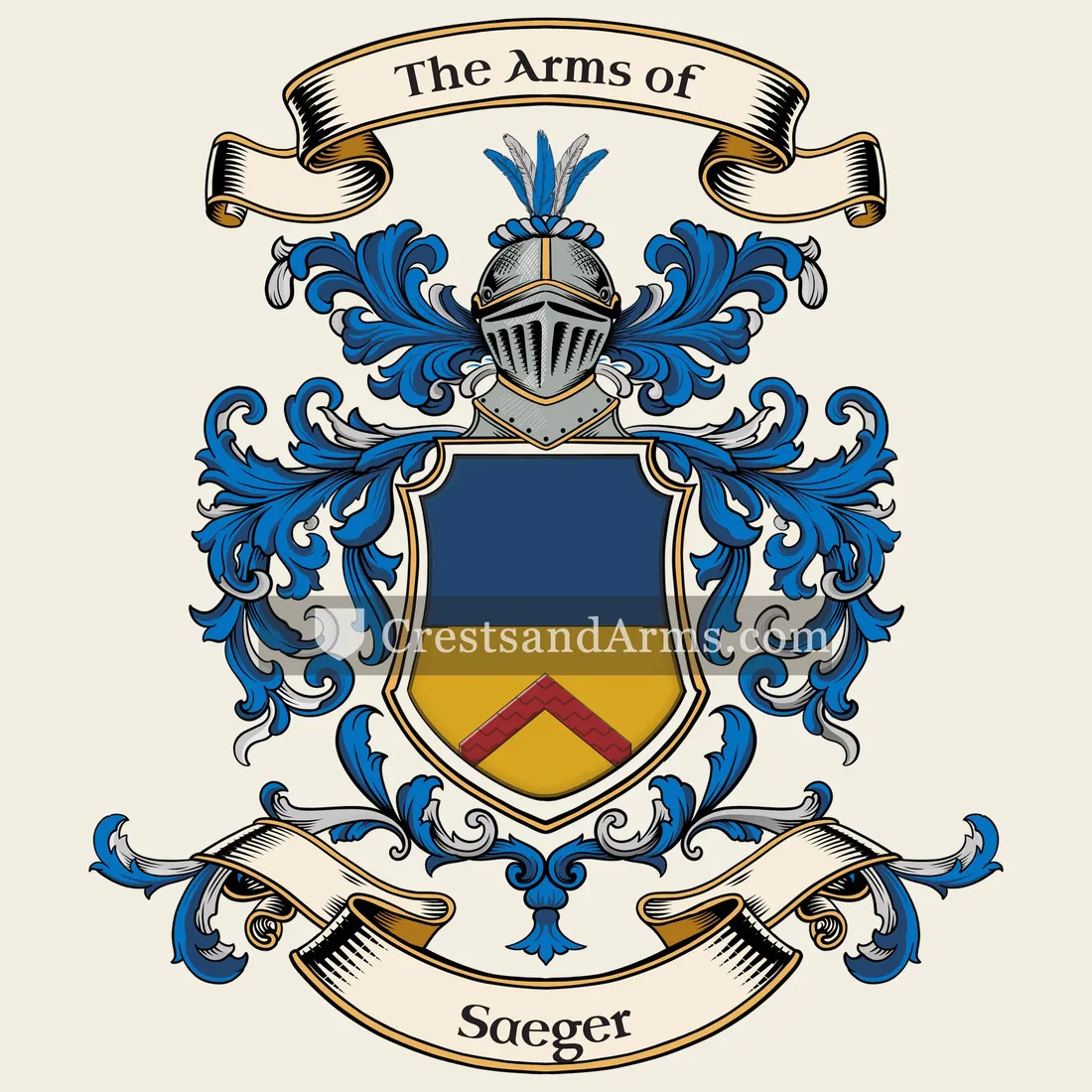


 martletA younger son, who must win his own land