Map of Germany showing where the Salahi arms are recorded
The Salahi arms were recorded in Mecklenburg, c. 1751.
Mecklenburg was farming country in the north of Germany, held by a small number of families who kept their estates for generations. Owning land was what entitled a family to arms, so a great many Mecklenburg names ended up in the registers.
This is where the arms were entered in the register. Families often moved to other parts of the country, so the same name can turn up in more than one region.
The body that granted and recorded arms in Germany in this period.
Francis I, Holy Roman Emperor
Sovereign of the period
Francis I, Holy Roman Emperor
1745–1765
Reigning in Germany when the Salahi arms are first recorded.
How Arms Worked in Germany
In the Holy Roman Empire, coats of arms were often granted to individuals by the Emperor or his representatives. These arms were then passed down through the generations to all legitimate descendants of the original holder. Younger branches of a family usually kept the same shield design without needing to change it, as the arms belonged to the entire lineage.
Granting authority
The Holy Roman Emperor held the sole power to grant new coats of arms throughout his vast imperial territories.
How they got arms
Families typically obtained their coats of arms through a formal imperial grant or by proving their noble status to the authorities.
Where arms were recorded
These grants were officially recorded in the Imperial Chancery registers, which began keeping formal records of such honors during the Middle Ages.
The family's standing
Recorded among the armigerous families of Mecklenburg.
Origin & History of the Salahi Family in Germany
The history of the Salahi family in Germany is rooted in the northern region of Mecklenburg, where records confirm their presence as early as 1751. During the mid-eighteenth century, Mecklenburg was a landscape defined by agricultural estates and small rural communities, where families often settled into specific trades or land management roles. The name itself suggests a connection to historical migration patterns, as the linguistic structure of the surname stands out against the typical Germanic naming conventions of the Baltic coast. While the family lived in a period of significant social transition, they maintained a consistent presence in local parish registers, which served as the primary method for documenting births, marriages, and deaths in the region. By establishing themselves in Mecklenburg during this era, the early members of the family became part of the local fabric, contributing to the demographic history of a region that was then transitioning through the complexities of the Enlightenment and the influence of the Holy Roman Empire.
Coat of Arms & Family Crest Details
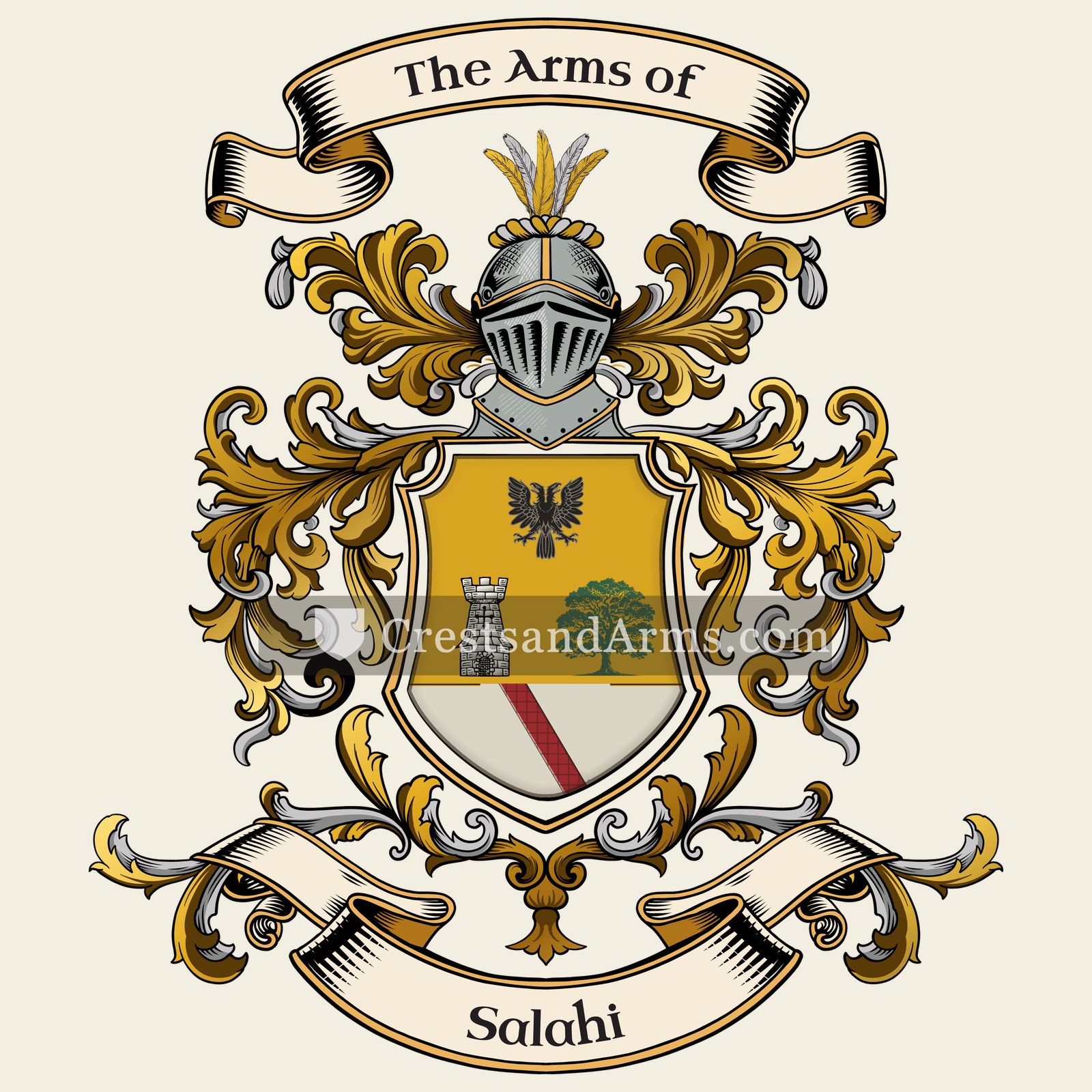
Symbols on this shield
bendDefence, and the scarf of a commander
eagleNobility, strength and a keen mind
towerGrandeur and solidity, and a stronghold defended
treeLife, endurance and deep roots
Colours
Gold (Or)Means: Generosity
Silver (Argent)Means: Peace and sincerity
Red (Gules)Means: Military strength
Black (Sable)Means: Constancy
Green (Vert)Means: Hope
Historical info
Source
J. B. Rietstap, Armorial Général, Gouda: G. B. van Goor Zonen, 1884–87
Blazon (the actual original written record)
“Tiercé en fasce: au 1 d'or à l'aigle de sa., cour. du champ; au 2 d'or à un château de deux tours d'arg., ouv. et aj. du champ, senestré d'un peuplier de sin.; au 3 d'arg. à trois bandes de gu.”
ItalyMilan, c. 1775
Digital archive packCoat of arms PNG, gold border print PDF, vector SVG and the certificate of authenticity. Sent to your email in minutes.
Map of Italy showing where the Salahi arms are recorded
The Salahi arms were recorded in Milan, c. 1775.
This is where the arms were entered in the register. Families often moved to other parts of the country, so the same name can turn up in more than one region.
The body that granted and recorded arms in Italy in this period.
Alvise Giovanni Mocenigo
Sovereign of the period
Alvise Giovanni Mocenigo
1763–1778
Reigning in Germany when the Salahi arms are first recorded.
How Arms Worked in Italy
In the Italian states, coats of arms were often used by noble families to show their status and history. These symbols were passed down through the generations to all legitimate male descendants. Younger branches of a family usually kept the original design but sometimes added small changes to distinguish their specific line from the main branch.
Granting authority
Various local rulers and city governments controlled the use of coats of arms across the different Italian states.
How they got arms
Families often assumed their own arms or received them as official grants from local lords, popes, or city councils.
Where arms were recorded
Arms were recorded in local city archives or private family books rather than in one single national register.
The family's standing
Recorded among the armigerous families of Italy.
Origin & History of the Salahi Family in Italy
The history of the Salahi family in Italy is deeply rooted in the vibrant urban culture of Milan during the late eighteenth century. By 1775, members of the family were already established as active participants in the city’s social and economic life. During this period, Milan was a center of enlightenment and trade under the influence of the Habsburg monarchy, which encouraged a steady movement of people and ideas across the region. The presence of the Salahi name in local records suggests that the family was likely integrated into the professional or merchant classes that defined the city’s growth at the time. These early residents navigated a society undergoing rapid modernization, contributing to the local community while maintaining their distinct family identity. Their documented presence in 1775 serves as a clear starting point for understanding how the family became a part of the long and complex history of northern Italy.
Related Branches & Arms
Root word
Salah
Arabic term meaning righteousness, goodness, or peace.
This name
SalahiA surname indicating a descendant of someone known for their piety or righteous character.
also spelled
Salla
Sallah
Documented Sources
J. B. Rietstap, Armorial Général, Gouda: G. B. van Goor Zonen, 1884–87
Landeshauptarchiv Schwerin, Kirchenbücher der Evangelisch-Lutherischen Landeskirche Mecklenburgs
Digital archive packCoat of arms PNG, gold border print PDF, vector SVG and the certificate of authenticity. Sent to your email in minutes.


 towerGrandeur and solidity, and a stronghold defended
 eagleNobility, strength and a keen mind
 towerGrandeur and solidity, and a stronghold defended
 eagleNobility, strength and a keen mind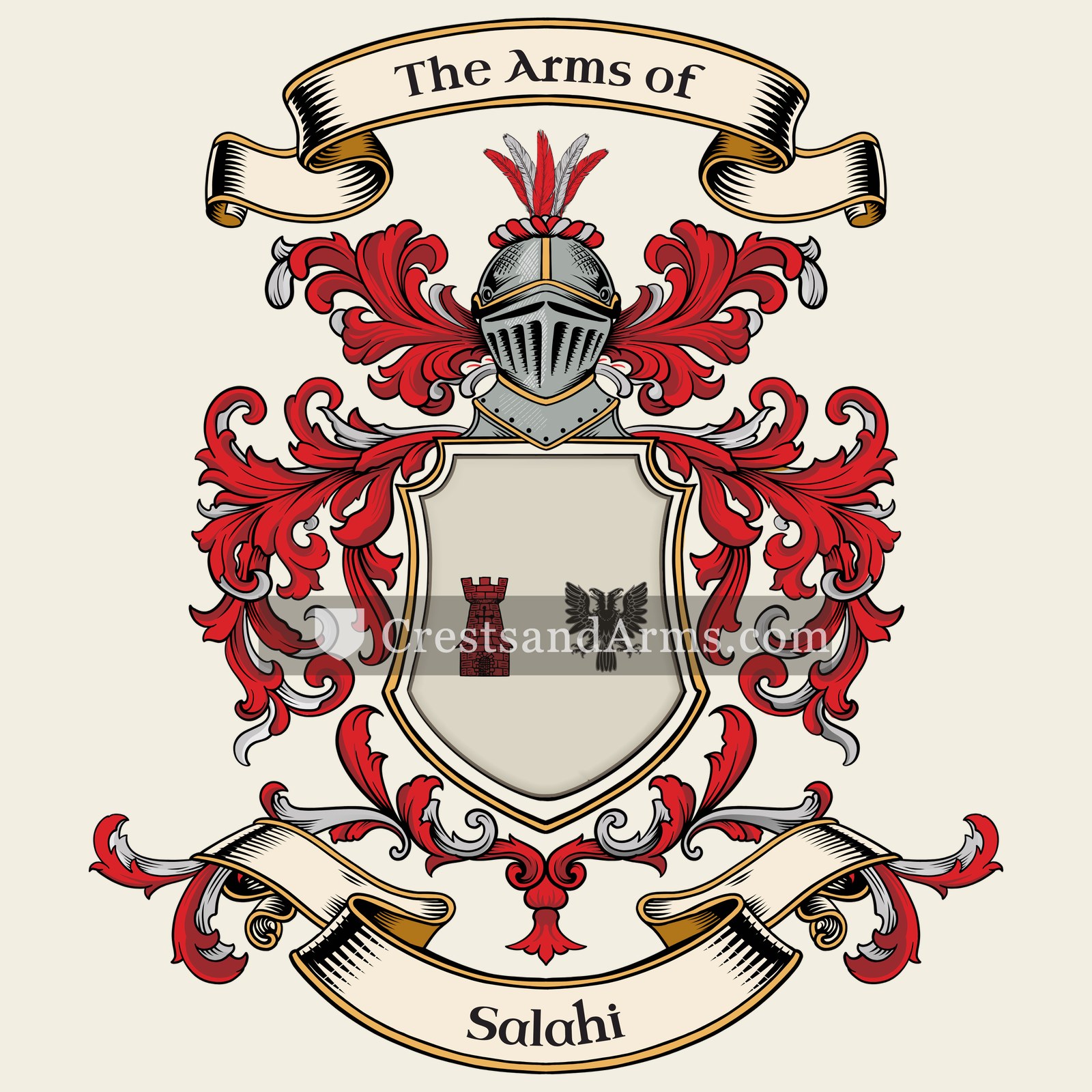


 bendDefence, and the scarf of a commander
 treeLife, endurance and deep roots