Map of Spain showing where the Salazar arms are recorded
The Salazar arms were recorded in Castile, c. 1722.
Castile was the heart of Spain and the source of most of its noble families. Land won in the long wars against the Moors was granted out to fighting men, and a man granted land was granted arms along with it.
This is where the arms were entered in the register. Families often moved to other parts of the country, so the same name can turn up in more than one region.
The body that granted and recorded arms in Spain in this period.
Philip V of Spain
Sovereign of the period
Philip V of Spain
1714–1724
Reigning in Spain when the Salazar arms are first recorded.
How Arms Worked in Spain
In Spain, a coat of arms was considered a form of property that belonged to the entire family line. These arms were passed down from a father to all his children equally. Younger branches of the family usually kept the original design without needing to add any special marks to distinguish their specific line.
Granting authority
The Cronista Rey de Armas was the official body that regulated and granted coats of arms throughout Spain.
How they got arms
Families often obtained their arms through royal grants or by proving their noble status to the official heraldic authority.
Where arms were recorded
Coats of arms were officially recorded in the registers of the Cronista Rey de Armas starting in 1496.
The family's standing
Recorded among the armigerous families of Castile.
Origin & History of the Salazar Family in Spain
The surname Salazar originates from the rugged landscape of northern Spain, specifically within the province of Burgos in the region of Castile. The name is topographic in nature, derived from the Basque words "sala," meaning a hall or manor house, and "zahar," meaning old. This suggests that the earliest members of the family were likely associated with an ancient or prominent estate in the valley of Salazar. By the early 18th century, the family had firmly established itself within the social and administrative fabric of Castile. During this period, members of the Salazar line were often involved in local governance and land management, reflecting the family's role as part of the regional landed gentry. Their presence in 1722 records highlights a lineage that had already spent centuries rooting itself in the Castilian countryside, transitioning from local territorial guardians to documented citizens of the Spanish crown.
Coat of Arms & Family Crest Details
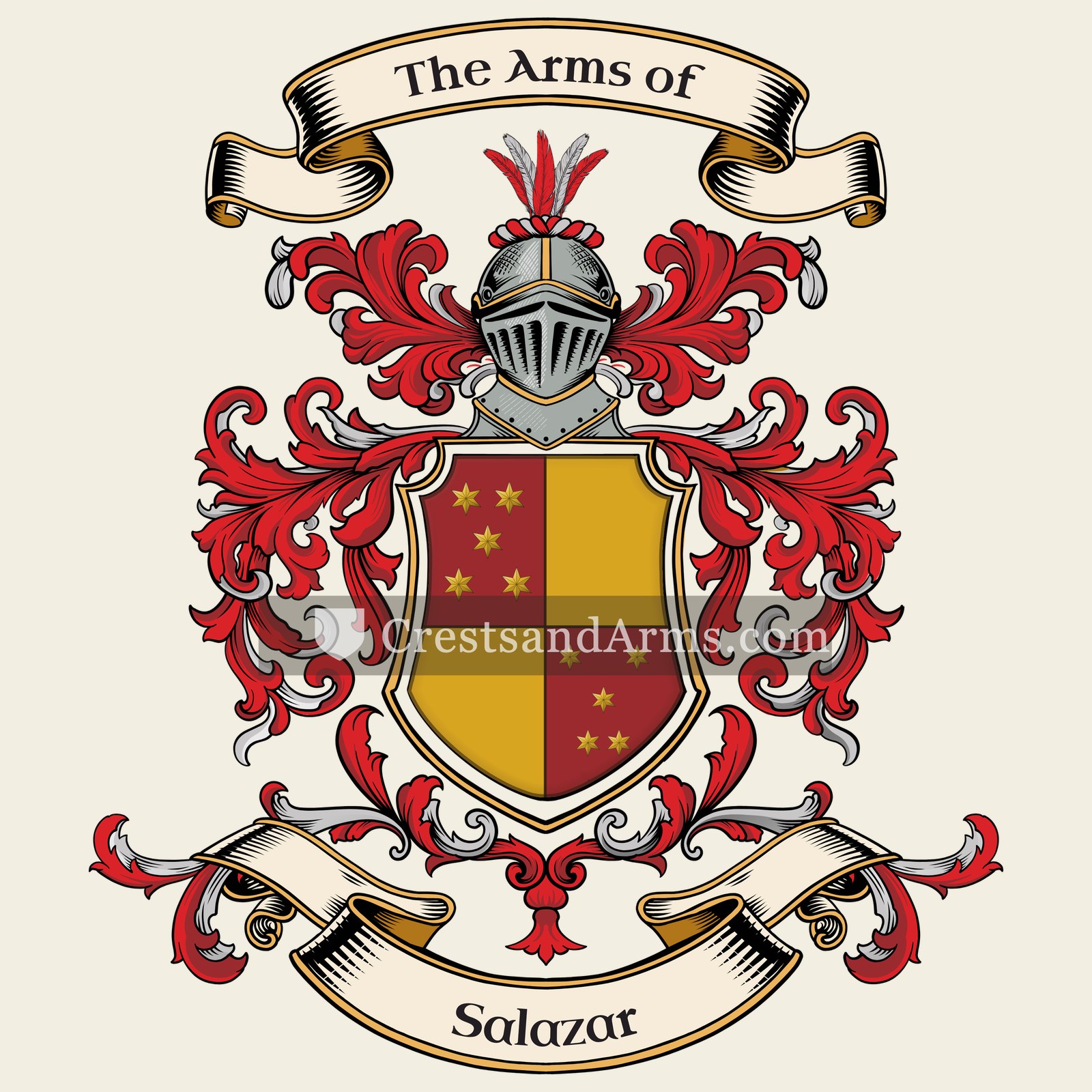
Symbols on this shield
starThe celestial goddess, and nobility
Colours
Red (Gules)Means: Military strength
Gold (Or)Means: Generosity
Historical info
Source
J. B. Rietstap, Armorial Général, Gouda: G. B. van Goor Zonen, 1884–87
Blazon (the actual original written record)
“Ec.: aux 1 et 4 de gu. à cinq etoiles (6) d'or, 2, 1 et 2; aux 2 et 3 d'or à cinq panelles de sa., 2, 1 et 2.”
ChampagneChampagne, c. 1663
Digital archive packCoat of arms PNG, gold border print PDF, vector SVG and the certificate of authenticity. Sent to your email in minutes.
Map of France showing where the Salazar arms are recorded
The Salazar arms were recorded in Champagne, c. 1663.
Champagne made its money at its great trade fairs, where merchants from across Europe met. Wealth of that kind bought land, and land brought arms, so the region carries a lot of names.
This is where the arms were entered in the register. Families often moved to other parts of the country, so the same name can turn up in more than one region.
The body that granted and recorded arms in France in this period.
Louis XIV of France
Sovereign of the period
Louis XIV of France
1643–1715
Reigning in Spain when the Salazar arms are first recorded.
How Arms Worked in France
In France, a coat of arms was a mark of honor that passed down through the male line to all legitimate descendants. Families often used the same shield without changes to show their shared heritage. If a branch wanted to stand out, they could add a small mark to their shield to show their specific place in the family tree.
Granting authority
The Juge d'armes de France acted as the official authority that regulated and verified coats of arms across the country.
How they got arms
Families typically inherited their arms from ancestors, though they could also receive them through royal grants or by proving their noble status.
Where arms were recorded
Coats of arms were officially recorded in the Armorial Général de France, which began its main collection in the year 1696.
The family's standing
Recorded among the armigerous families of Champagne.
Origin & History of the Salazar Family in France
The Salazar family name has deep roots in the historical landscape of France, particularly within the Champagne region. By the year 1663, records confirm that members of this family were well-established residents in this area. While the name is often associated with Spanish origins, its presence in France suggests a history of migration and integration into local society during the seventeenth century. Families like the Salazars in Champagne often played roles in the regional economy or local administration, which helped them secure a stable place in their new communities. Over time, these early settlers became part of the local French fabric, adapting to the customs and social structures of the Champagne province. Their early documented presence indicates that they were not merely passing through but were active participants in the life of the region during a period of significant growth and change for France.
Salazar Meaning & Related Branches
Root word
Sala-Zahar
Old hall or ancient manor house in the Basque language.
This name
SalazarRefers to a person who lived in or originated from an ancient hall or manor.
also spelled
Salasar
Documented Sources
J. B. Rietstap, Armorial Général, Gouda: G. B. van Goor Zonen, 1884–87
Mendizábal, J. A., Apellidos vascos: origen y significado, 1958
García Carraffa, A. and García Carraffa, A., El solar vasco navarro, 1947
Archivo de la Real Chancillería de Valladolid, Registro de Ejecutorias
Digital archive packCoat of arms PNG, gold border print PDF, vector SVG and the certificate of authenticity. Sent to your email in minutes.


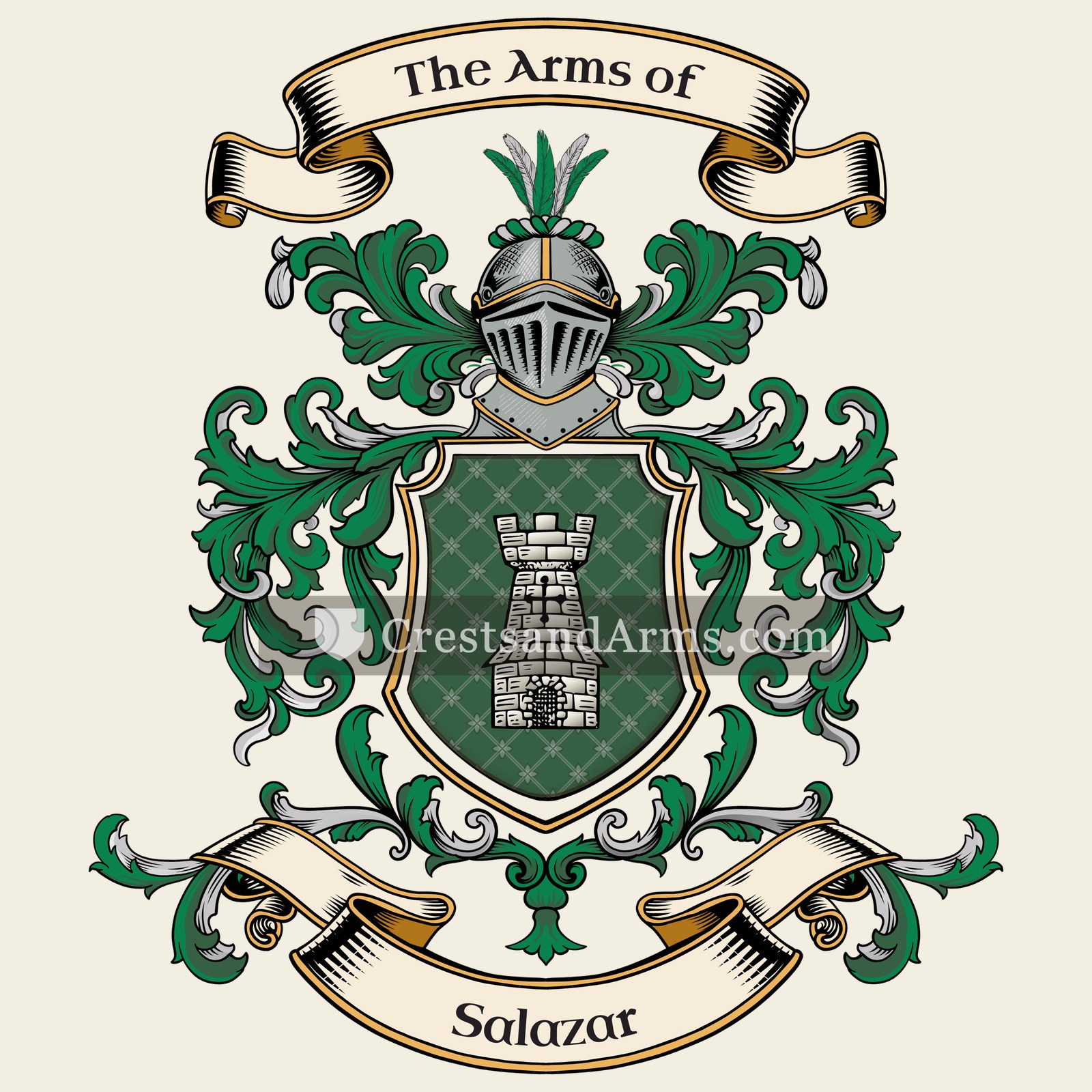
 towerGrandeur and solidity, and a stronghold defended
 towerGrandeur and solidity, and a stronghold defended


 starThe celestial goddess, and nobility