Map of France showing where the Sallet arms are recorded
The Sallet arms were recorded in Lorraine, c. 1650.
Lorraine sat on the border between France and the German lands, and border country bred soldiers. Families here held small estates and served in arms, and a fighting man was exactly the sort who carried a shield of his own.
This is where the arms were entered in the register. Families often moved to other parts of the country, so the same name can turn up in more than one region.
The body that granted and recorded arms in France in this period.
Louis XIV of France
Sovereign of the period
Louis XIV of France
1643–1715
Reigning in France when the Sallet arms are first recorded.
How Arms Worked in France
In France, a coat of arms was a mark of honor that passed down through the male line to all legitimate descendants. Families often used the same shield without changes to show their shared heritage. If a branch wanted to stand out, they could add a small mark to their shield to show their specific place in the family tree.
Granting authority
The Juge d'armes de France acted as the official authority that regulated and verified coats of arms across the country.
How they got arms
Families typically inherited their arms from ancestors, though they could also receive them through royal grants or by proving their noble status.
Where arms were recorded
Coats of arms were officially recorded in the Armorial Général de France, which began its main collection in the year 1696.
The family's standing
Recorded among the armigerous families of Lorraine.
Origin & History of the Sallet Family in France
The family name Sallet has deep roots in the northeastern region of France known as Lorraine. By the middle of the seventeenth century, records confirm that members of the family were well-established in this area. The name itself is thought to be linked to the medieval word for a specific type of lightweight helmet, which suggests that early ancestors may have been associated with military service or the production of protective gear. During the 1650s, Lorraine was a territory defined by its strategic importance and frequent political shifts, which often forced families to be highly resilient and adaptable. As the region transitioned through various conflicts and administrative changes, the Sallet family remained a part of the local social fabric. Their presence in the historical records of Lorraine provides a clear window into the lives of provincial families who helped shape the culture and identity of the French borderlands during the seventeenth century.
Coat of Arms & Family Crest Details
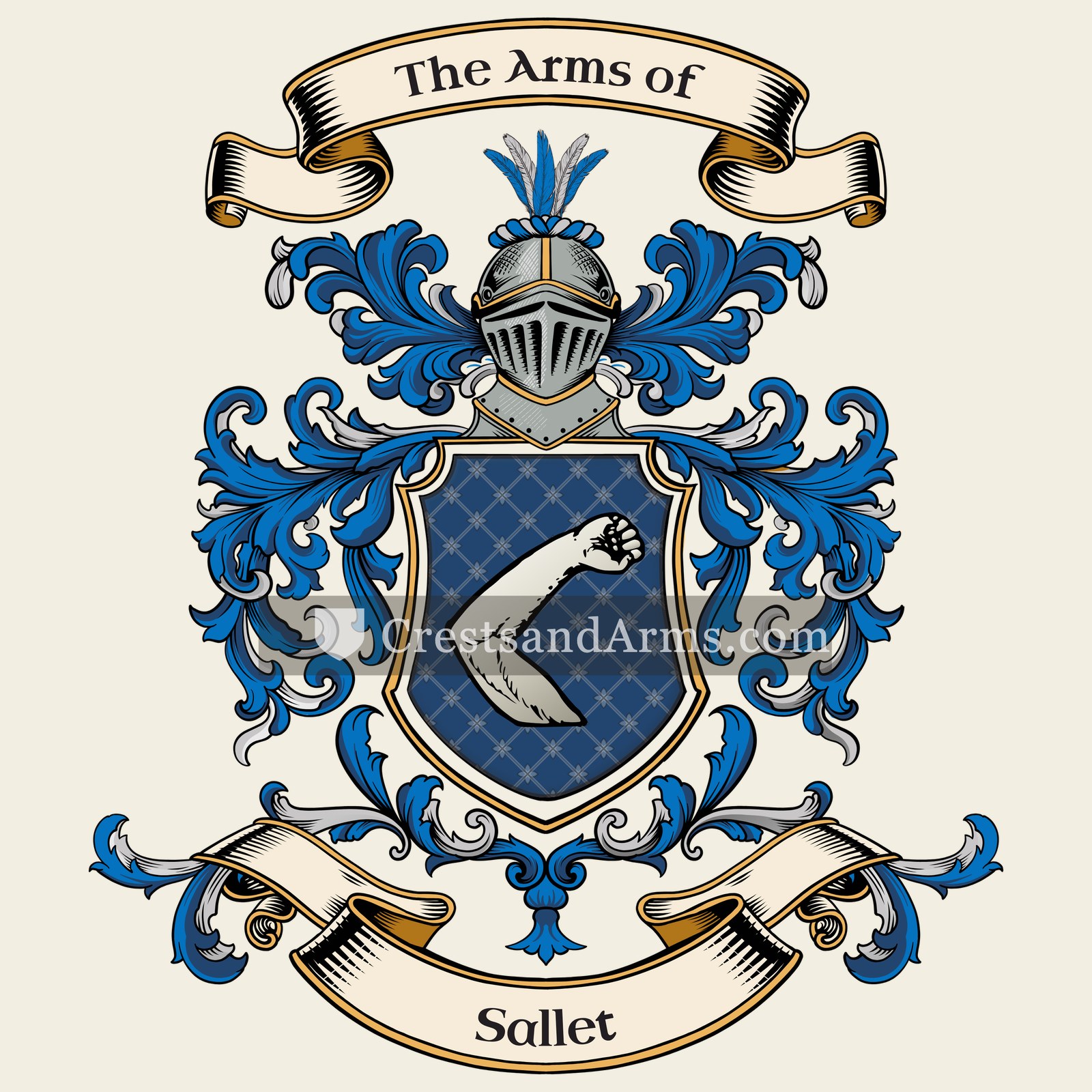
Symbols on this shield
armA person of action, industrious and laborious
Colours
Blue (Azure)Means: Loyalty and truth
Silver (Argent)Means: Peace and sincerity
Historical info
Source
J. B. Rietstap, Armorial Général, Gouda: G. B. van Goor Zonen, 1884–87
Blazon (the actual original written record)
“D'azur à un senestrochère, arm. d'arg., mouv. du flanc, la main de carn. tenant un marteau d'arg. Cq. cour. C.: le senestrochère, posé sur le coude.”
SilesiaSilesia, c. 1765
Digital archive packCoat of arms PNG, gold border print PDF, vector SVG and the certificate of authenticity. Sent to your email in minutes.
Map of Germany showing where the Sallet arms are recorded
The Sallet arms were recorded in Silesia, c. 1765.
Silesia was farming country in the east of the German lands, held in large estates by families who stayed put for generations. Owning land was what entitled a family to arms, so the region fills a good deal of the register.
This is where the arms were entered in the register. Families often moved to other parts of the country, so the same name can turn up in more than one region.
The body that granted and recorded arms in Germany in this period.
Francis I, Holy Roman Emperor
Sovereign of the period
Francis I, Holy Roman Emperor
1745–1765
Reigning in France when the Sallet arms are first recorded.
How Arms Worked in Germany
In the Holy Roman Empire, coats of arms were often granted to individuals by the Emperor or his representatives. These arms were then passed down through the generations to all legitimate descendants of the original holder. Younger branches of a family usually kept the same shield design without needing to change it, as the arms belonged to the entire lineage.
Granting authority
The Holy Roman Emperor held the sole power to grant new coats of arms throughout his vast imperial territories.
How they got arms
Families typically obtained their coats of arms through a formal imperial grant or by proving their noble status to the authorities.
Where arms were recorded
These grants were officially recorded in the Imperial Chancery registers, which began keeping formal records of such honors during the Middle Ages.
The family's standing
Recorded among the armigerous families of Silesia.
Origin & History of the Sallet Family in Germany
The family name Sallet has deep roots in the historical region of Silesia, where records confirm members of the family were living as early as 1765. The name likely evolved from the Middle High German word *salat*, which referred to a specific type of lightweight steel helmet used by foot soldiers during the late medieval period. Because surnames often originated from a person's trade, physical traits, or equipment, it is probable that an early ancestor was either a maker of these helmets or a soldier who became well known for wearing one. As the family established themselves in the Prussian-influenced lands of Silesia, they integrated into the local social structure. Over time, the name transitioned from a descriptive term for military gear into a permanent family identifier that was passed down through generations.
Related Branches & Arms
Root word
salle
A large room, hall, or dwelling place.
This name
SalletRefers to someone who lived near or worked in a large hall or manor house.
also spelled
Salett
Salet
Salay
Related arms
Bernersimilar arms
Corvolinisimilar arms
Honsimilar arms
Lanzonisimilar arms
Documented Sources
J. B. Rietstap, Armorial Général, Gouda: G. B. van Goor Zonen, 1884–87
Archives départementales de la Meurthe-et-Moselle, Collection des registres paroissiaux et d'état civil
Bastien, Henri, Histoire de la Lorraine, 1972
Cabourdin, Guy, La vie quotidienne en Lorraine au XVIIe siècle, 1984
Digital archive packCoat of arms PNG, gold border print PDF, vector SVG and the certificate of authenticity. Sent to your email in minutes.


 fessThe military belt, and readiness to serve
 saltireResolution, and St Andrew's cross
 mulletThe third son, and a divine quality from above
 greyhoundCourage, vigilance and loyalty
 pillowRest earned, and authority at ease
 fessThe military belt, and readiness to serve
 saltireResolution, and St Andrew's cross
 mulletThe third son, and a divine quality from above
 greyhoundCourage, vigilance and loyalty
 pillowRest earned, and authority at ease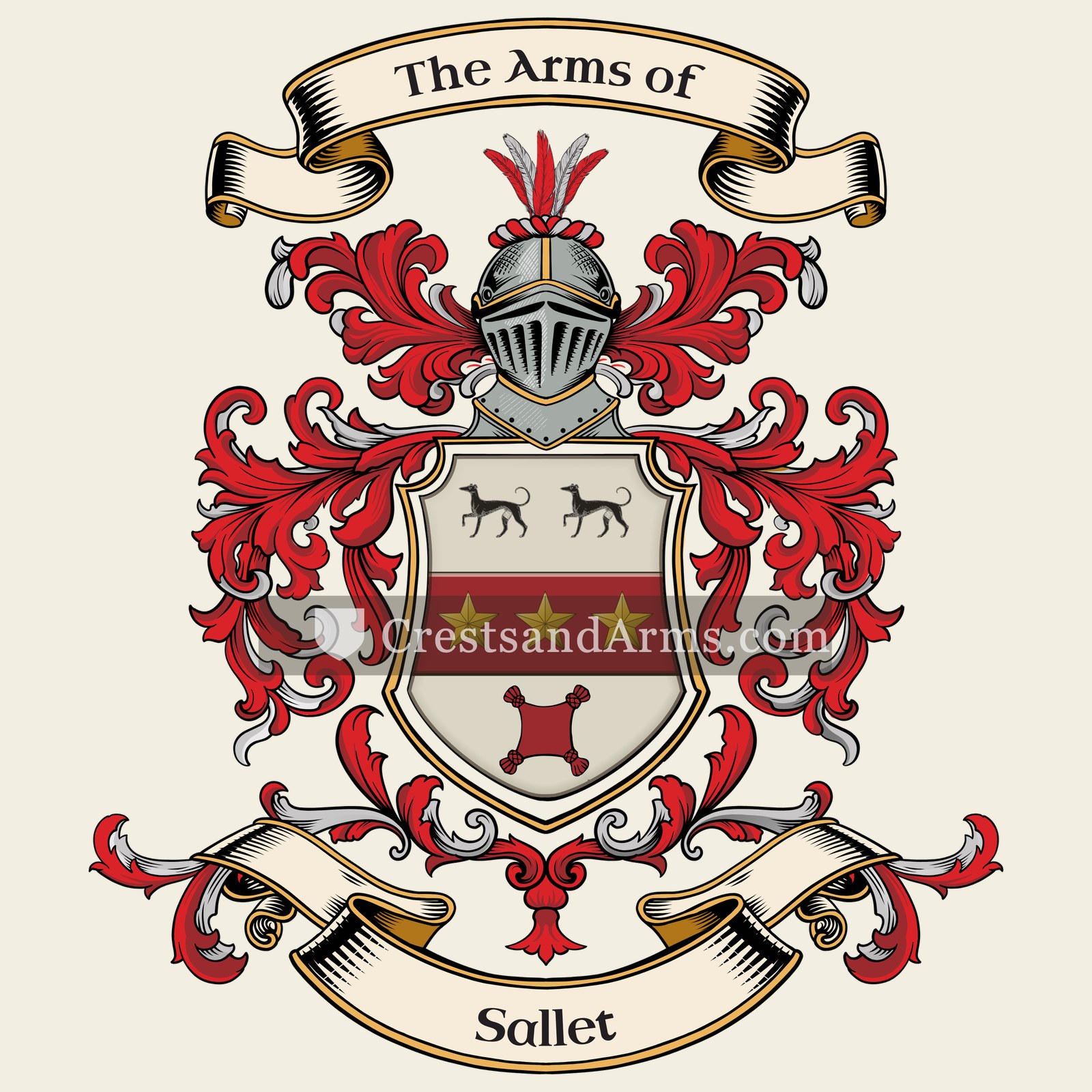


 armA person of action, industrious and laborious