Map of France showing where the Sallows arms are recorded
The Sallows arms were recorded in Forez, c. 1663.
Forez was a small upland county in central France, thick with minor gentry holding modest estates. Its families were more numerous than wealthy, and even a small holding was enough for a shield of one's own.
This is where the arms were entered in the register. Families often moved to other parts of the country, so the same name can turn up in more than one region.
The body that granted and recorded arms in France in this period.
Louis XIV of France
Sovereign of the period
Louis XIV of France
1643–1715
Reigning in France when the Sallows arms are first recorded.
How Arms Worked in France
In France, a coat of arms was a mark of honor that passed down through the male line to all legitimate descendants. Families often used the same shield without changes to show their shared heritage. If a branch wanted to stand out, they could add a small mark to their shield to show their specific place in the family tree.
Granting authority
The Juge d'armes de France acted as the official authority that regulated and verified coats of arms across the country.
How they got arms
Families typically inherited their arms from ancestors, though they could also receive them through royal grants or by proving their noble status.
Where arms were recorded
Coats of arms were officially recorded in the Armorial Général de France, which began its main collection in the year 1696.
The family's standing
Recorded among the armigerous families of Forez.
Origin & History of the Sallows Family in France
The family name Sallows finds its early roots in the historical province of Forez, located in the central region of France. By the year 1663, records confirm that members of the family were well-established within this area. During the seventeenth century, Forez was a landscape defined by its rolling hills and a growing agricultural economy. Families living in this region often identified themselves through their connection to the land or their specific trade within the local villages. The name likely evolved as a way to distinguish these individuals from others in the community as they navigated the social and economic changes of the French countryside. This period was a time of transition for many families in Forez, as they balanced traditional rural life with the increasing influence of the French crown. By maintaining a presence in this province, the early members of the family became part of the long-standing history of the region.
Meaning of the Sallows family crest colors & symbols
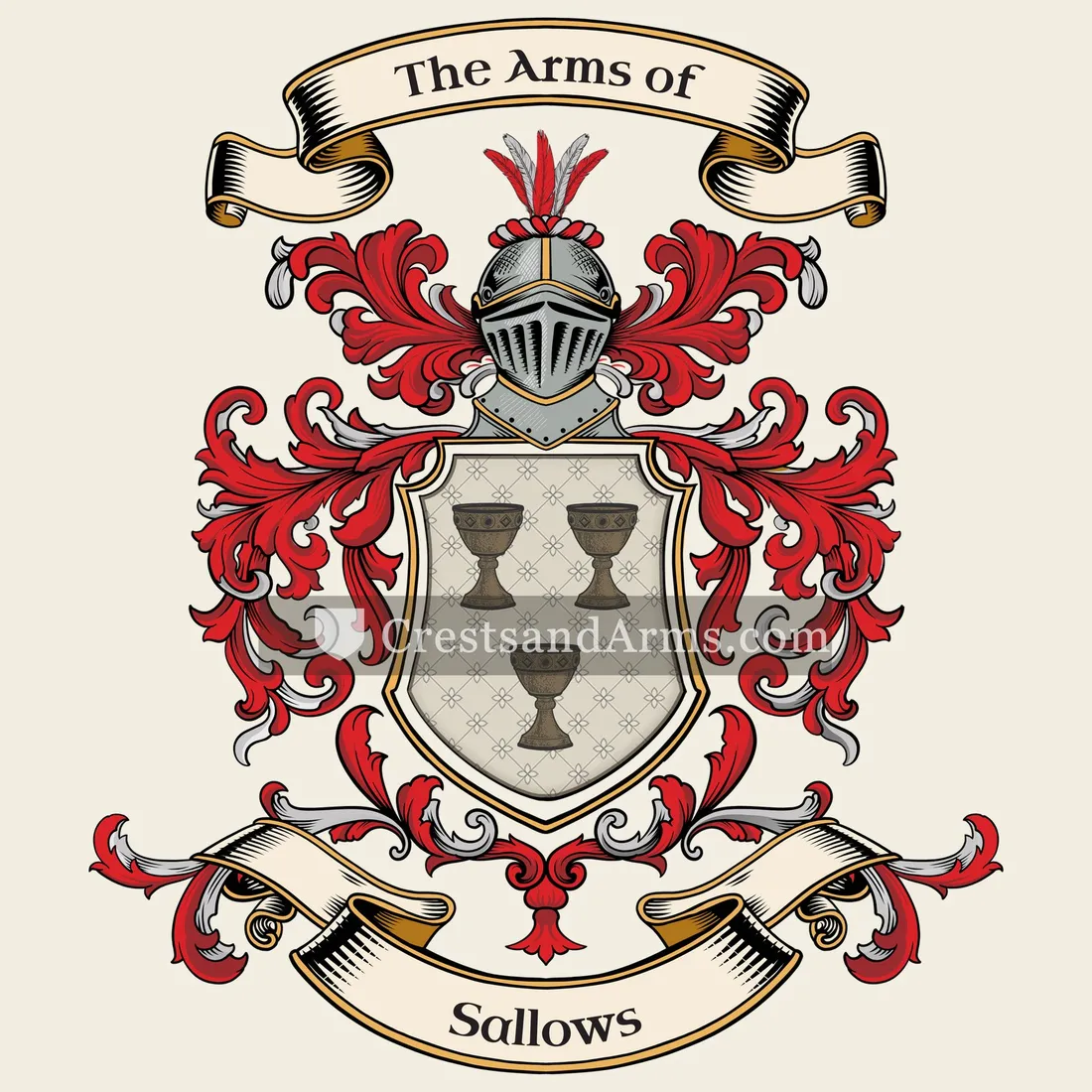
Symbols on this shield
cupFaith, office, and a trust discharged
Colours
Silver (Argent)Means: Peace and sincerity
Historical info
Source
J. B. Rietstap, Armorial Général, Gouda: G. B. van Goor Zonen, 1884–87
Blazon (the actual original written record)
“D'arg. à trois barillets au nat.”
CataloniaCatalonia, c. 1722
Digital archive packCoat of arms PNG, gold border print PDF, vector SVG and the certificate of authenticity. Sent to your email in minutes.
Map of Spain showing where the Sallows arms are recorded
The Sallows arms were recorded in Catalonia, c. 1722.
Catalonia lived by sea trade, and its merchant houses were as powerful as its landowners. Both sorts of family took arms, and Barcelona kept records of the houses entitled to bear them.
This is where the arms were entered in the register. Families often moved to other parts of the country, so the same name can turn up in more than one region.
The body that granted and recorded arms in Spain in this period.
Philip V of Spain
Sovereign of the period
Philip V of Spain
1714–1724
Reigning in France when the Sallows arms are first recorded.
How Arms Worked in Spain
In Spain, a coat of arms was considered a form of property that belonged to the entire family line. These arms were passed down from a father to all his children equally. Younger branches of the family usually kept the original design without needing to add any special marks to distinguish their specific line.
Granting authority
The Cronista Rey de Armas was the official body that regulated and granted coats of arms throughout Spain.
How they got arms
Families often obtained their arms through royal grants or by proving their noble status to the official heraldic authority.
Where arms were recorded
Coats of arms were officially recorded in the registers of the Cronista Rey de Armas starting in 1496.
The family's standing
Recorded among the armigerous families of Catalonia.
Origin & History of the Sallows Family in Spain
The family name Sallows, while often associated with northern European roots, has a documented presence in the Catalonia region of Spain dating back to at least 1722. During this period, Catalonia was a center of significant social and economic change following the War of the Spanish Succession. Families living in this area were often deeply integrated into the local agricultural or mercantile systems that defined the Mediterranean landscape. The presence of the Sallows name in these official records suggests that the family likely moved through trade routes or administrative shifts that connected the Iberian Peninsula to broader European networks. By settling in Catalonia, these early family members became part of a distinct cultural environment where they navigated the local laws and societal structures of the eighteenth century. Their integration into the region highlights the mobility of families during a time when borders were often defined more by professional opportunity than by static geography.
Sallows Meaning & Related Branches
Root word
Salix
Latin term for the willow tree.
This name
SallowsA topographic name for someone who lived near a willow tree or willow grove.
also spelled
Salls
Sal
Documented Sources
J. B. Rietstap, Armorial Général, Gouda: G. B. van Goor Zonen, 1884–87
Archives départementales de la Loire, Registres paroissiaux de la province de Forez, 1663
Gras, Pierre, Répertoire numérique de la série E, Archives départementales de la Loire, 1965
Digital archive packCoat of arms PNG, gold border print PDF, vector SVG and the certificate of authenticity. Sent to your email in minutes.


 fessThe military belt, and readiness to serve
 sunGlory, splendour and the source of life
 fessThe military belt, and readiness to serve
 sunGlory, splendour and the source of life
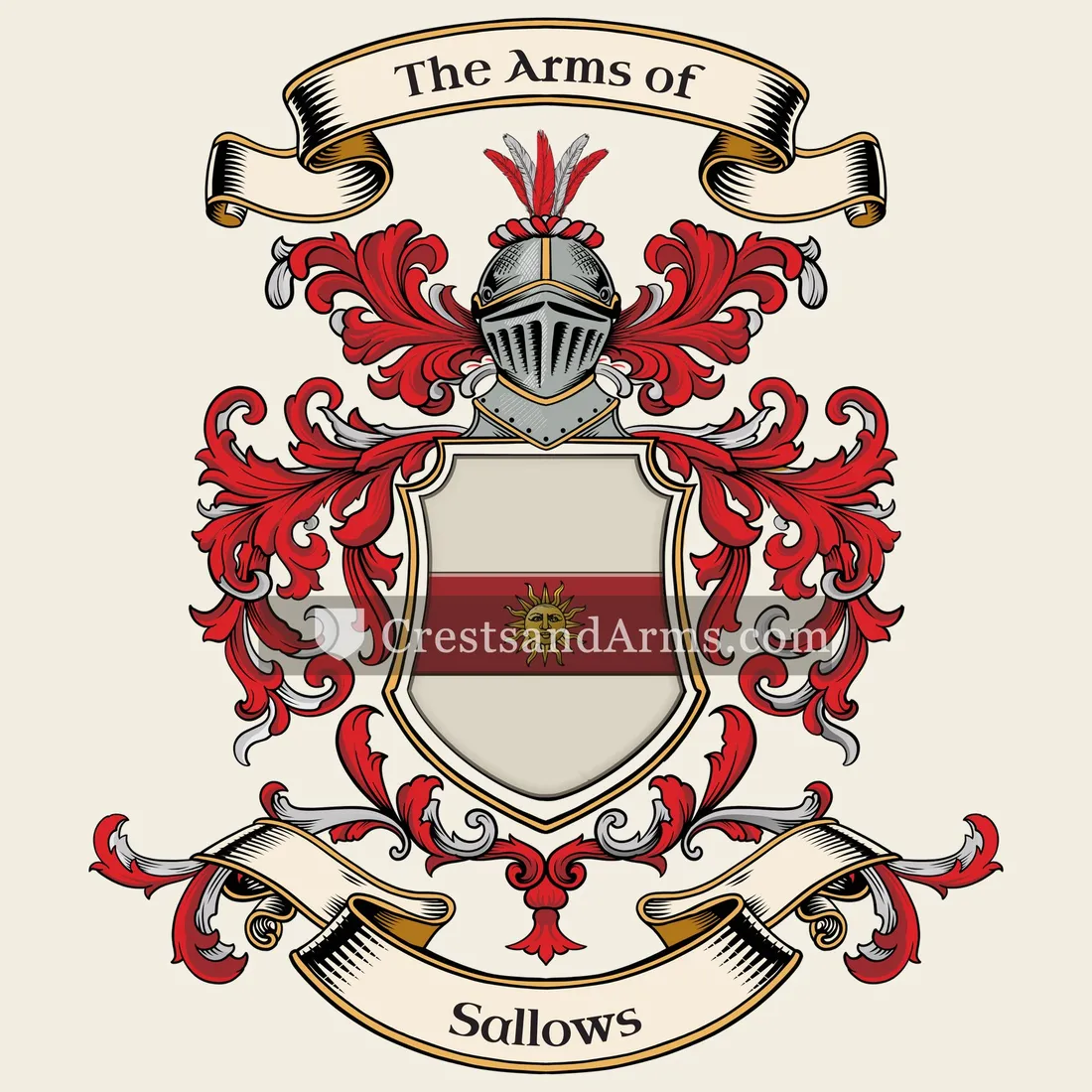


 cupFaith, office, and a trust discharged