Map of Spain showing where the Salvá arms are recorded
The Salvá arms were recorded in Iles Baléares, c. 1722.
This is where the arms were entered in the register. Families often moved to other parts of the country, so the same name can turn up in more than one region.
The body that granted and recorded arms in Spain in this period.
Philip V of Spain
Sovereign of the period
Philip V of Spain
1714–1724
Reigning in Spain when the Salvá arms are first recorded.
How Arms Worked in Spain
In Spain, a coat of arms was considered a form of property that belonged to the entire family line. These arms were passed down from a father to all his children equally. Younger branches of the family usually kept the original design without needing to add any special marks to distinguish their specific line.
Granting authority
The Cronista Rey de Armas was the official body that regulated and granted coats of arms throughout Spain.
How they got arms
Families often obtained their arms through royal grants or by proving their noble status to the official heraldic authority.
Where arms were recorded
Coats of arms were officially recorded in the registers of the Cronista Rey de Armas starting in 1496.
The family's standing
Recorded among the armigerous families of Spain.
Origin & History of the Salvá Family in Spain
The surname Salvá has deep roots in the Balearic Islands, where the family established a notable presence by the early eighteenth century. Historical records confirm that members of the Salvá family were active in local society in Mallorca by 1722, often participating in the agricultural and maritime life that defined the island’s economy. The name itself is thought to derive from the Latin word salvus, which means safe or saved, suggesting that early ancestors may have been recognized for their roles as protectors or survivors during turbulent periods in Mediterranean history. As the family grew, they became integrated into the fabric of island life, contributing to the unique cultural identity of the Balearic region. Their documented history reflects a long-standing connection to the land and the sea, marking them as a stable and enduring part of the local community for generations.
Related Branches & Arms
Root word
salvare
Latin verb meaning to save, rescue, or make safe.
This name
SalváDerived from a religious reference to the Savior or a wish for salvation.
also spelled
Salvaa
Salvar
Salvas
Related arms
Zalvavariant spelling
Documented Sources
J. B. Rietstap, Armorial Général, Gouda: G. B. van Goor Zonen, 1884–87
Bover de Rosselló, Joaquín María, Nobiliario Mallorquín, 1850
Alcover, Antoni M., Diccionari català-valencià-balear, 1930
Arxiu del Regne de Mallorca, Protocolos Notariales
Arxiu Diocesà de Mallorca, Llibres de Baptismes
Digital archive packCoat of arms PNG, gold border print PDF, vector SVG and the certificate of authenticity. Sent to your email in minutes.


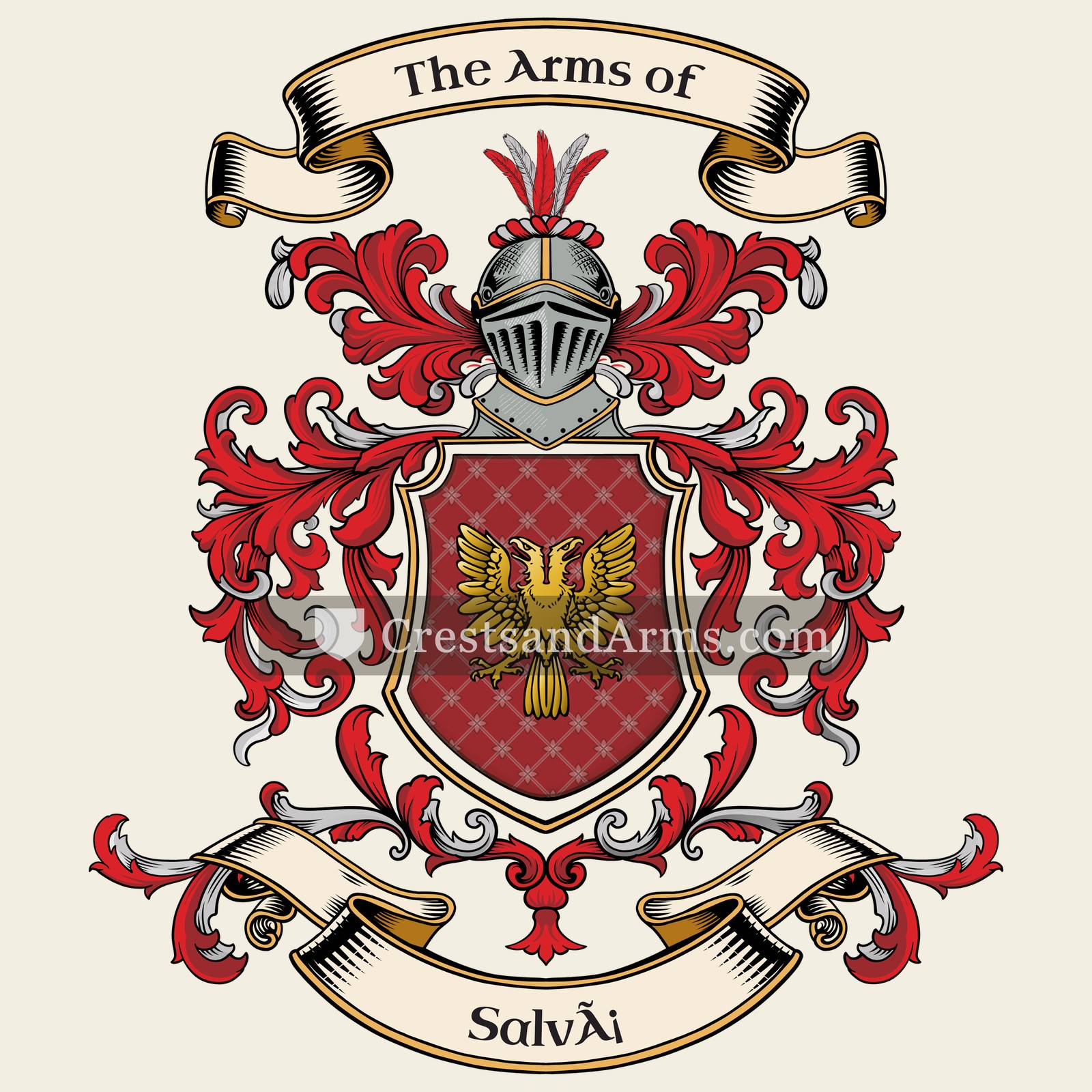
 eagleNobility, strength and a keen mind
 eagleNobility, strength and a keen mind