Map of France showing where the Salvador arms are recorded
The Salvador arms were recorded in Comtat-Venaissin, c. 1663.
This is where the arms were entered in the register. Families often moved to other parts of the country, so the same name can turn up in more than one region.
The body that granted and recorded arms in France in this period.
Louis XIV of France
Sovereign of the period
Louis XIV of France
1643–1715
Reigning in France when the Salvador arms are first recorded.
How Arms Worked in France
In France, a coat of arms was a mark of honor that passed down through the male line to all legitimate descendants. Families often used the same shield without changes to show their shared heritage. If a branch wanted to stand out, they could add a small mark to their shield to show their specific place in the family tree.
Granting authority
The Juge d'armes de France acted as the official authority that regulated and verified coats of arms across the country.
How they got arms
Families typically inherited their arms from ancestors, though they could also receive them through royal grants or by proving their noble status.
Where arms were recorded
Coats of arms were officially recorded in the Armorial Général de France, which began its main collection in the year 1696.
The family's standing
Recorded among the armigerous families of France.
Origin & History of the Salvador Family in France
The history of the Salvador family in France is deeply connected to the Comtat-Venaissin region, a territory that was under the direct control of the Pope for several centuries. By the year 1663, records confirm that members of the family were already established in this area, which served as a unique refuge for Jewish communities during a time of widespread religious tension. The name itself is derived from the Latin word for savior, reflecting a tradition of naming that was common among families seeking to express their faith or hope for redemption. As residents of the Comtat-Venaissin, the Salvador family lived within a distinct social structure that allowed them to maintain their own customs while engaging in trade and local commerce. Over time, their presence in this region helped them build a foundation that would eventually see family members move into broader French society, where they became known for their contributions to law, medicine, and public life.
Coat of Arms & Family Crest Details
Symbols on this shield
saltireResolution, and St Andrew's cross
eagleNobility, strength and a keen mind
saltire coupedResolution, and the cross of St Andrew
Colours
Silver (Argent)Means: Peace and sincerity
Blue (Azure)Means: Loyalty and truth
Black (Sable)Means: Constancy
Gold (Or)Means: Generosity
Historical info
Source
J. B. Rietstap, Armorial Général, Gouda: G. B. van Goor Zonen, 1884–87
Blazon (the actual original written record)
“D'arg. à l'aigle de sa.; à la bord. d'azur, ch. de huit flanchis d'or.”
AragonAragon, c. 1722
Digital archive packCoat of arms PNG, gold border print PDF, vector SVG and the certificate of authenticity. Sent to your email in minutes.
Map of Spain showing where the Salvador arms are recorded
The Salvador arms were recorded in Aragon, c. 1722.
Aragon was mountain and river country in north-eastern Spain, with a strong tradition of small independent landholders. A great many families counted as gentry there, and each one needed a shield to be told apart.
This is where the arms were entered in the register. Families often moved to other parts of the country, so the same name can turn up in more than one region.
The body that granted and recorded arms in Spain in this period.
Philip V of Spain
Sovereign of the period
Philip V of Spain
1714–1724
Reigning in France when the Salvador arms are first recorded.
How Arms Worked in Spain
In Spain, a coat of arms was considered a form of property that belonged to the entire family line. These arms were passed down from a father to all his children equally. Younger branches of the family usually kept the original design without needing to add any special marks to distinguish their specific line.
Granting authority
The Cronista Rey de Armas was the official body that regulated and granted coats of arms throughout Spain.
How they got arms
Families often obtained their arms through royal grants or by proving their noble status to the official heraldic authority.
Where arms were recorded
Coats of arms were officially recorded in the registers of the Cronista Rey de Armas starting in 1496.
The family's standing
Recorded among the armigerous families of Aragon.
Origin & History of the Salvador Family in Spain
The surname Salvador carries a deep religious significance rooted in the medieval history of the Iberian Peninsula. Derived from the Latin word *Salvator*, meaning savior, the name was often given to individuals to honor the concept of divine redemption. By the early eighteenth century, the family had established a notable presence in the region of Aragon. During this period, Aragon was a land defined by its transition from a powerful medieval kingdom into a structured province under the Spanish Crown. Families living in this area were often tied to the local agricultural economy or the administrative functions of the church and state. The presence of the Salvador name in 1722 records suggests that the family was part of the established social fabric of the region, likely participating in the local community life that defined life in the Ebro River valley during the Enlightenment era.
Coat of Arms & Family Crest Details
Symbols on this shield
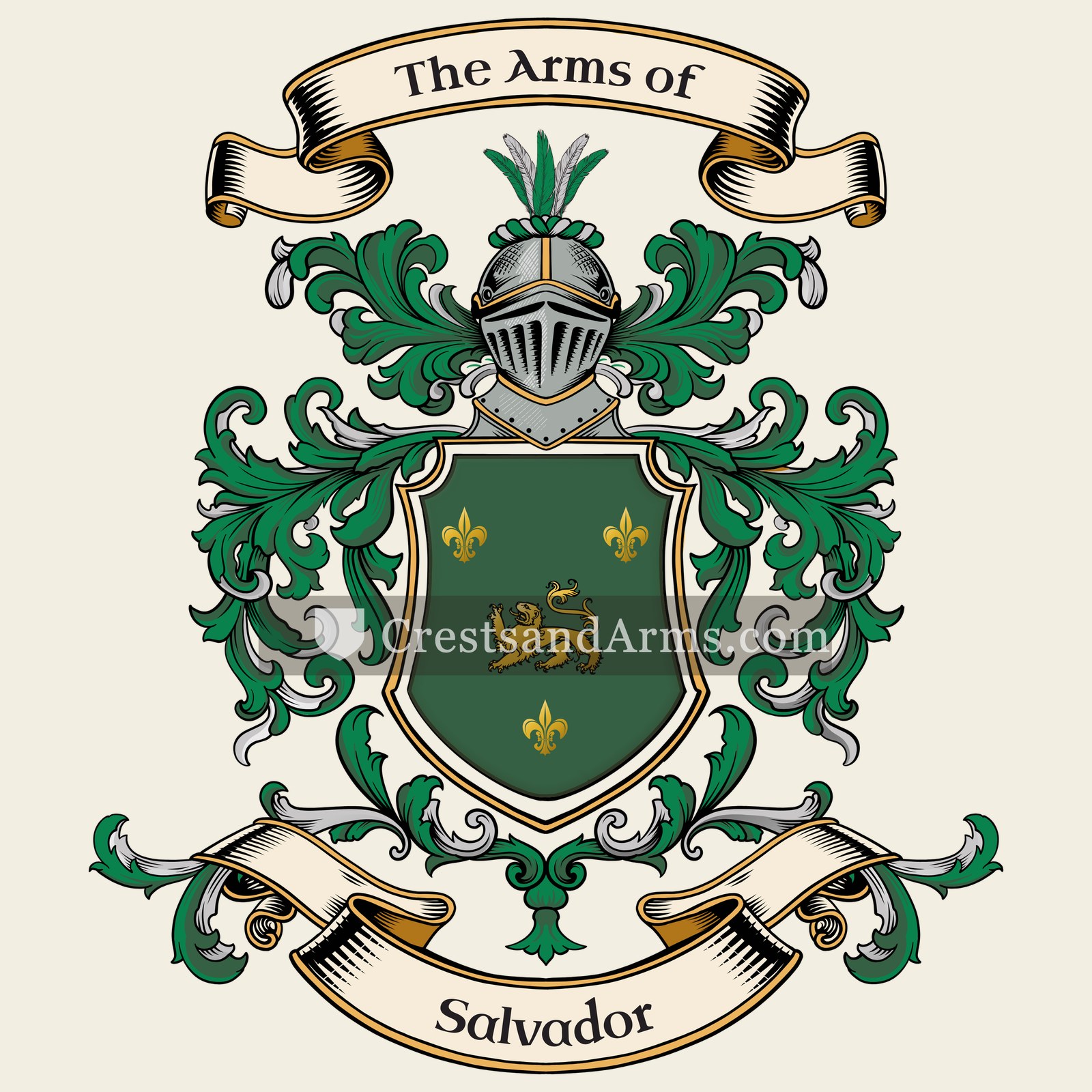
lionCourage, strength and royalty
fleur de lisPurity, light, and the sixth son
Colours
Green (Vert)Means: Hope
Gold (Or)Means: Generosity
Historical info
Source
Sir Bernard Burke, The General Armory of England, Scotland, Ireland and Wales, London: Harrison & Sons, 1884
Blazon (the actual original written record)
“Vert a lion ramp. betw. three fleurs-de-lis or”
EnglandLondon, c. 1620
Digital archive packCoat of arms PNG, gold border print PDF, vector SVG and the certificate of authenticity. Sent to your email in minutes.
Map of England showing where the Salvador arms are recorded
The Salvador arms were recorded in London, c. 1620.
This is where the arms were entered in the register. Families often moved to other parts of the country, so the same name can turn up in more than one region.
The body that granted and recorded arms in England in this period.
James VI and I
Sovereign of the period
James VI and I
1603–1625
Reigning in France when the Salvador arms are first recorded.
How Arms Worked in England
English heraldry allowed arms to be shared by all legitimate descendants of the original owner. These symbols were treated as personal property that moved through the generations to all children. While the eldest son kept the original design, other family members could use the same shield without needing to change it or register their own unique versions.
Granting authority
The College of Arms in London has regulated the use of coats of arms throughout England and Wales since 1484.
How they got arms
Families typically obtained their coats of arms through a formal grant from the Crown or by proving their ancient right to them.
Where arms were recorded
All official coats of arms are recorded in the registers kept at the College of Arms, which date back to the fifteenth century.
The family's standing
Recorded among the armigerous families of England.
Origin & History of the Salvador Family in England
The history of the Salvador family in England begins with their arrival in London around 1620, marking the start of a significant presence within the city’s merchant class. Originating from Sephardic roots, the family navigated the complex social and religious landscape of seventeenth-century England while establishing themselves as prominent figures in international trade. By settling in London, they became part of a growing community of families who contributed to the city's development as a global financial hub. Over the following decades, the Salvadors built a reputation for their involvement in commerce and their ability to bridge connections between England and markets across the Atlantic. Their early life in London reflects the broader story of immigrant families who helped shape the economic identity of the capital through persistence and professional success.
Related Branches & Arms
Root word
Salvator
Latin term meaning one who saves or a deliverer.
This name
SalvadorRefers to the savior, often bestowed in honor of Jesus Christ.
also spelled
Salvadour
Documented Sources
J. B. Rietstap, Armorial Général, Gouda: G. B. van Goor Zonen, 1884–87
Beaulieu, François. Les Juifs du Pape dans le Comtat-Venaissin. 1987
Chobaut, Hyacinthe. Les Juifs d'Avignon et du Comtat-Venaissin. 1939
Archives départementales de Vaucluse, Série E (Notaires et État civil)
Digital archive packCoat of arms PNG, gold border print PDF, vector SVG and the certificate of authenticity. Sent to your email in minutes.


 mountThe ground held, and steadfastness upon it
 pine treeSteadfastness through every season
 stagPeace and harmony, and one who will not fight unprovoked
 mountThe ground held, and steadfastness upon it
 pine treeSteadfastness through every season
 stagPeace and harmony, and one who will not fight unprovoked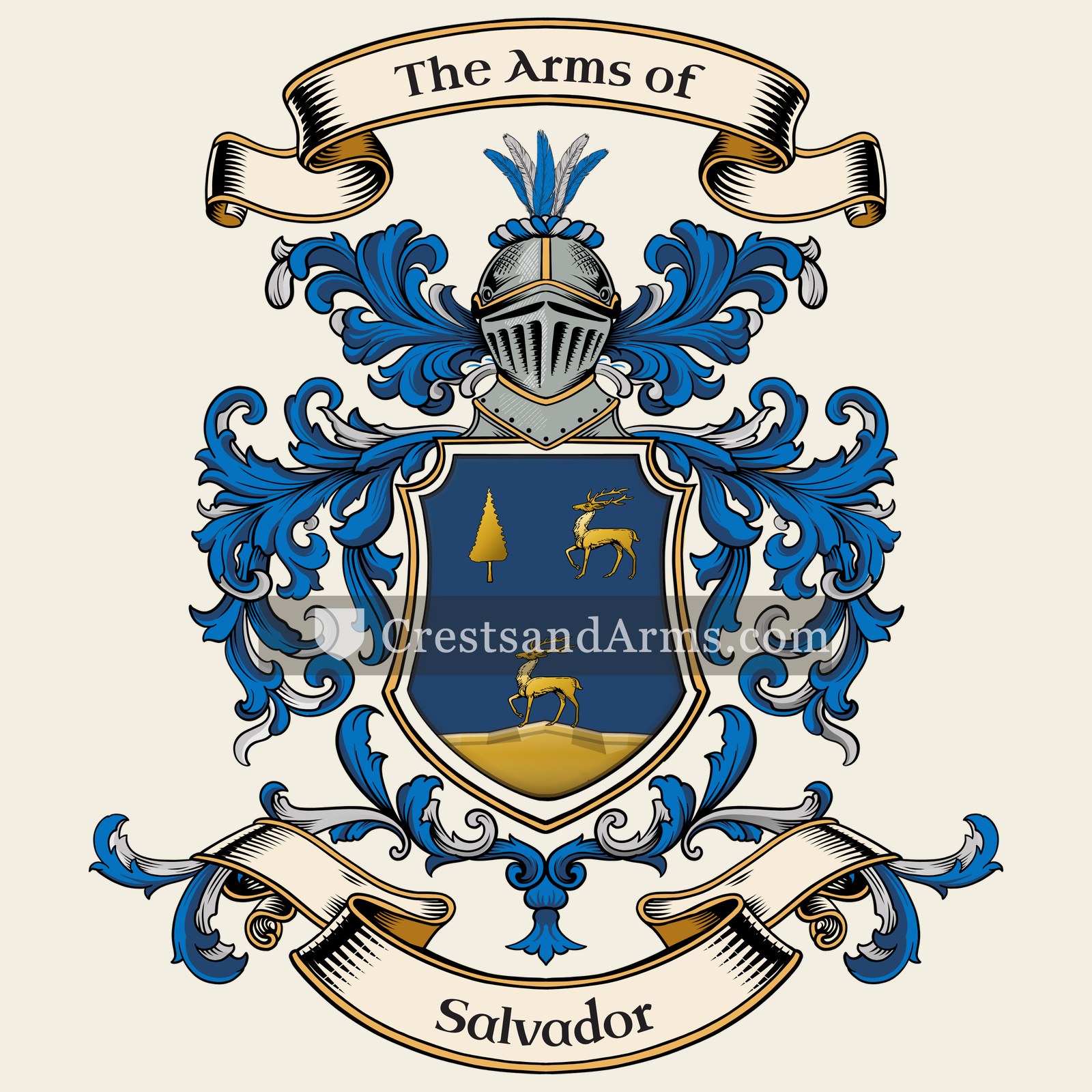


 saltireResolution, and St Andrew's cross
 eagleNobility, strength and a keen mind
 saltire coupedResolution, and the cross of St Andrew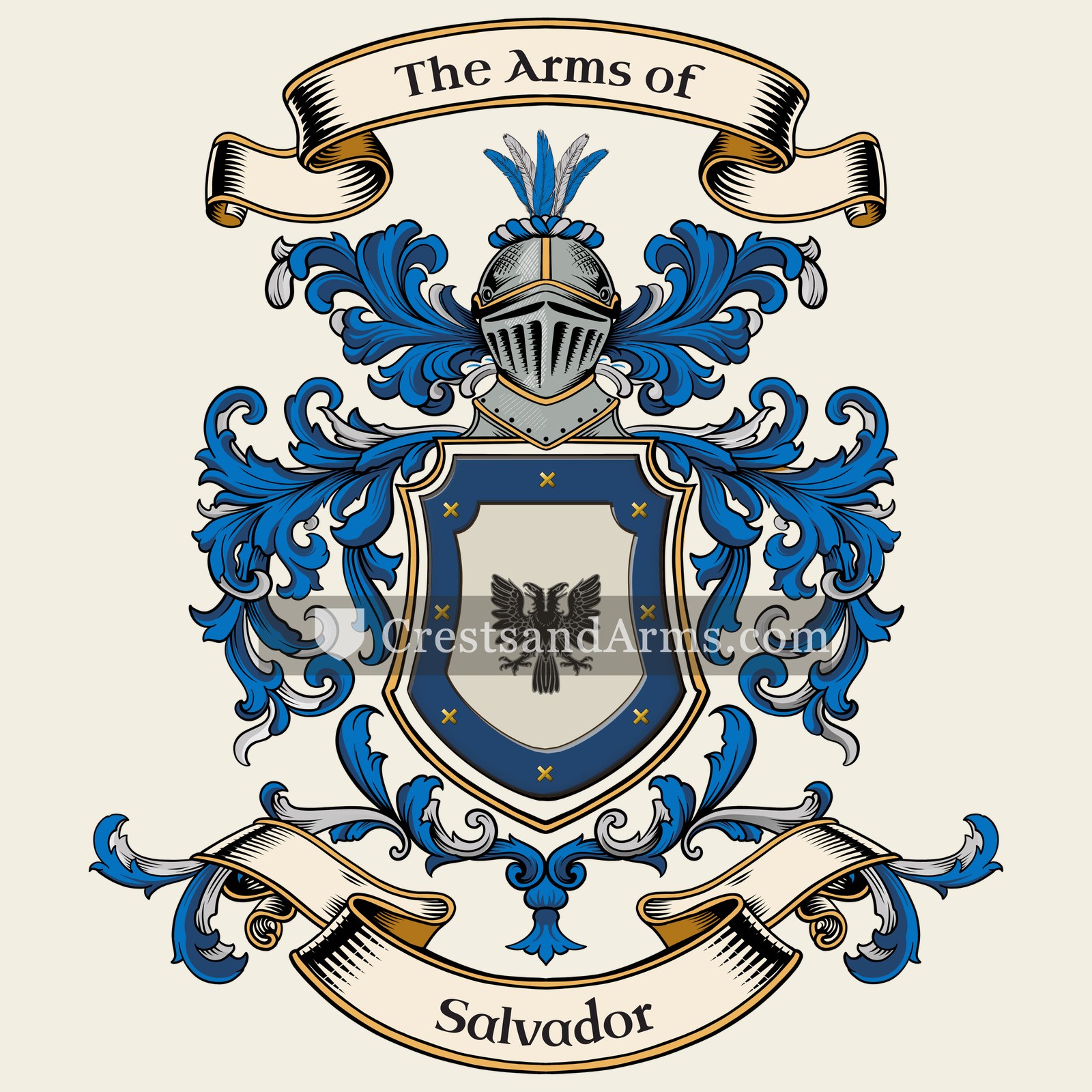


 lionCourage, strength and royalty
 fleur de lisPurity, light, and the sixth son