Map of Spain showing where the Salyer arms are recorded
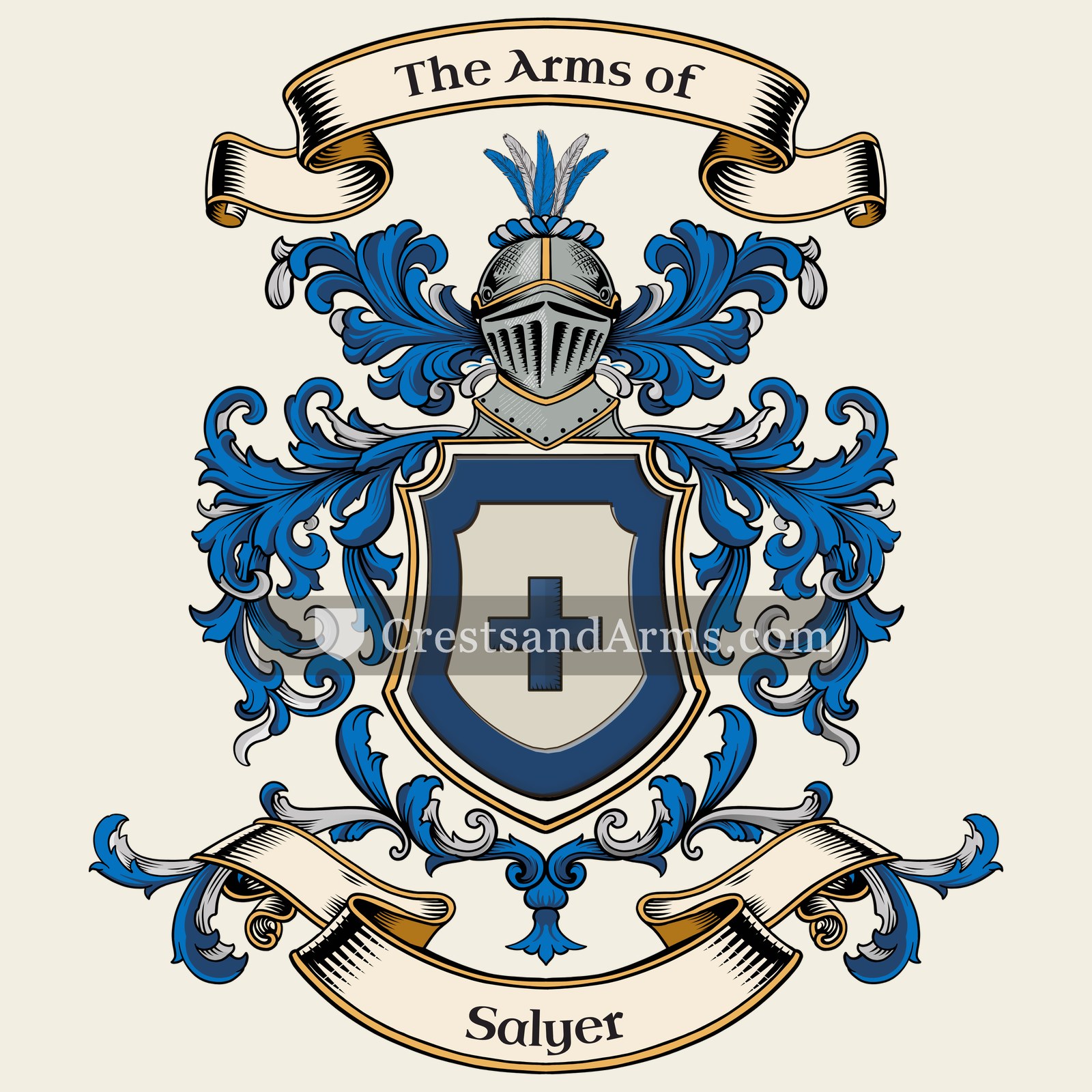
The Salyer arms were recorded in Andalusia, c. 1722.
Andalusia was the last part of Spain taken back from the Moors, and the land was shared out among the men who took it. A grant of land came with a grant of arms, so the region produced a great many.
This is where the arms were entered in the register. Families often moved to other parts of the country, so the same name can turn up in more than one region.
The body that granted and recorded arms in Spain in this period.
Philip V of Spain
Sovereign of the period
Philip V of Spain
1714–1724
Reigning in Spain when the Salyer arms are first recorded.
How Arms Worked in Spain
In Spain, a coat of arms was considered a form of property that belonged to the entire family line. These arms were passed down from a father to all his children equally. Younger branches of the family usually kept the original design without needing to add any special marks to distinguish their specific line.
Granting authority
The Cronista Rey de Armas was the official body that regulated and granted coats of arms throughout Spain.
How they got arms
Families often obtained their arms through royal grants or by proving their noble status to the official heraldic authority.
Where arms were recorded
Coats of arms were officially recorded in the registers of the Cronista Rey de Armas starting in 1496.
The family's standing
Recorded among the armigerous families of Andalusia.
Origin & History of the Salyer Family in Spain
The Salyer family name has deep roots that trace back to the southern region of Spain. Historical records confirm that members of the family were living in Andalusia by 1722. During this period, the name was often associated with families who moved across the Mediterranean and Atlantic regions during times of significant social change. As the family expanded, they moved away from their Spanish origins and eventually established themselves in new territories. This migration was part of a larger movement of people seeking land and new opportunities in the eighteenth century. By settling in different areas, the Salyer family adapted to new cultures while maintaining the history of their ancestors from the Iberian Peninsula.
Related Branches & Arms
Root word
Salarius
Derived from the Latin word for salt or a salt merchant.
This name
SalyerAn occupational surname historically identifying a person who traded or produced salt.
also spelled
Salyer
Sallier
Documented Sources
J. B. Rietstap, Armorial Général, Gouda: G. B. van Goor Zonen, 1884–87
Archivo General de Indias, Contratación, 5434, N. 2, R. 2, 1722
González Jiménez, Manuel, Andalucía a debate, 1994
Digital archive packCoat of arms PNG, gold border print PDF, vector SVG and the certificate of authenticity. Sent to your email in minutes.


 cross symbolChristian faith and service
 cross symbolChristian faith and service