Map of Netherlands showing where the Sande arms are recorded
The Sande arms were recorded in Netherlands, c. 1815.
Arms such as these were typically recorded in Friesland.
Friesland was low, wet country on the northern coast of the Netherlands, farmed by families who had held the same land for centuries. Free landholders were unusually common there, and a free landholder could carry arms.
This is where the arms were entered in the register. Families often moved to other parts of the country, so the same name can turn up in more than one region.
Region
Friesland
First recorded
1815
Granting Authority for the Sande Arms
Hoge Raad van Adel
Photograph made by me · CC BY-SA 3.0
The body that granted and recorded arms in Netherlands in this period.
William I of the Netherlands
Sovereign of the period
William I of the Netherlands
1815–1840
Reigning in Netherlands when the Sande arms are first recorded.
How Arms Worked in Netherlands
In the Netherlands, coats of arms were often used by noble families and those who held specific public offices. These arms were passed down through the generations to legitimate descendants. Younger branches of a family usually kept the original design without needing to add special marks. This system ensured that the family identity remained clear and consistent over many years.
Granting authority
The Hoge Raad van Adel is the official body that regulates and manages noble titles and coats of arms in the Netherlands.
How they got arms
Families typically obtained their coats of arms through official royal grants or by proving their long-standing historical use of the symbols.
Where arms were recorded
Coats of arms are officially recorded in the registers held by the Hoge Raad van Adel, which began its work in 1814.
The family's standing
Recorded among the armigerous families of Netherlands.
Origin & History of the Sande Family in Netherlands
The surname Sande finds its roots in the landscape of the Netherlands, particularly within the northern province of Friesland. The name is topographical in nature, meaning it was originally used to describe people who lived near a sandy ridge or a stretch of dunes. In the Frisian language and local dialects, the word "sand" often referred to these specific geological features that were common in the coastal regions. By the early 19th century, records confirm that families bearing the name were well-established members of Frisian society. These early ancestors were likely farmers or laborers who lived in small rural communities where their proximity to local landmarks defined their identity. As the Dutch population became more mobile and record-keeping became standardized around 1815, the name became permanently linked to the unique cultural and linguistic heritage of the Frisian people.
Meaning of the Sande family crest colors & symbols
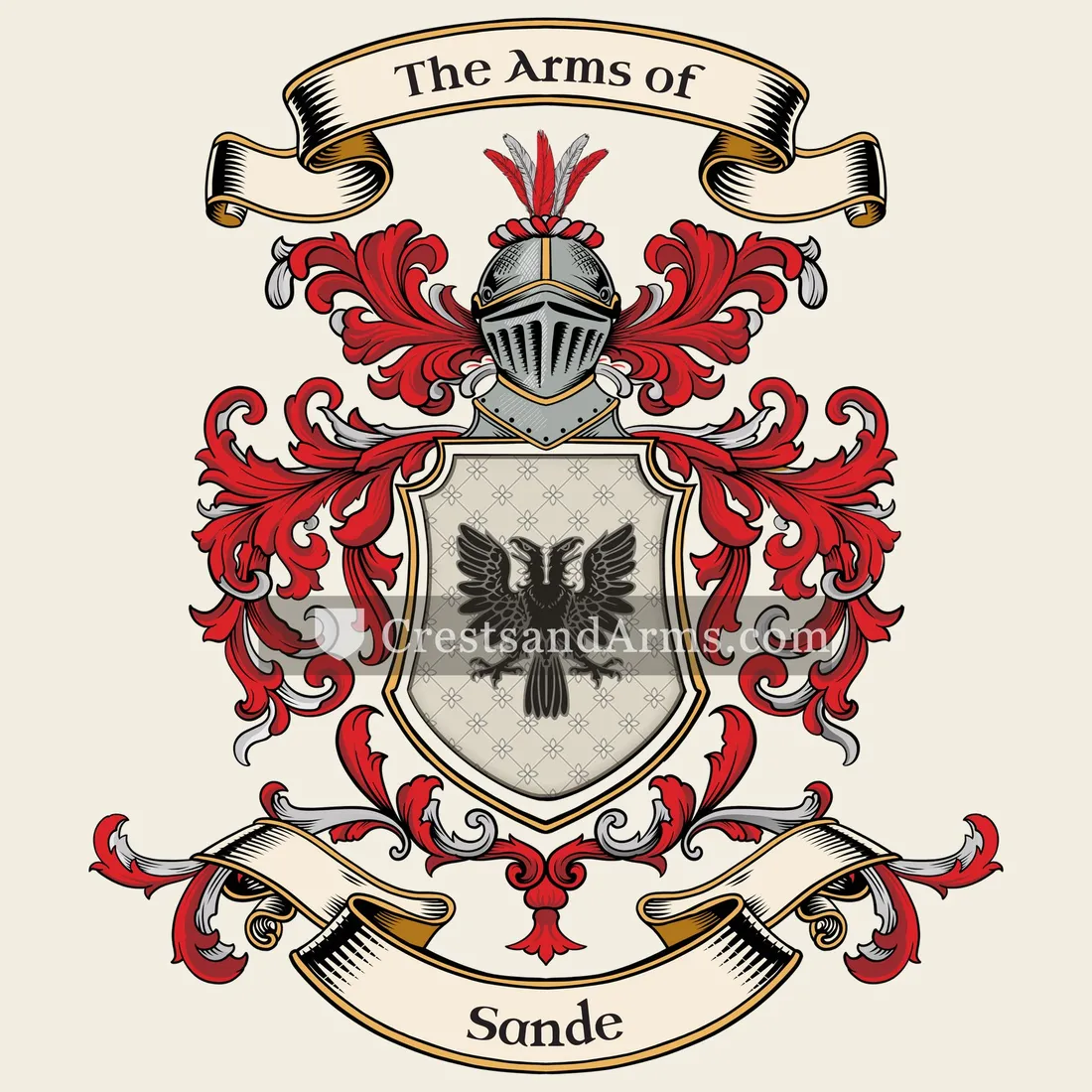
Symbols on this shield
eagleNobility, strength and a keen mind
Colours
Silver (Argent)Means: Peace and sincerity
Black (Sable)Means: Constancy
Historical info
Source
J. B. Rietstap, Armorial Général, Gouda: G. B. van Goor Zonen, 1884–87
Blazon (the actual original written record)
“D'arg. à l'aigle de sa., cour. d'or.”
Spainc. 1722
Digital archive packCoat of arms PNG, gold border print PDF, vector SVG and the certificate of authenticity. Sent to your email in minutes.
Map of Spain showing where the Sande arms are recorded
The Sande arms were recorded in Spain, c. 1722.
Arms such as these were typically recorded in Castile.
Castile was the heart of Spain and the source of most of its noble families. Land won in the long wars against the Moors was granted out to fighting men, and a man granted land was granted arms along with it.
This is where the arms were entered in the register. Families often moved to other parts of the country, so the same name can turn up in more than one region.
The body that granted and recorded arms in Spain in this period.
Philip V of Spain
Sovereign of the period
Philip V of Spain
1714–1724
Reigning in Netherlands when the Sande arms are first recorded.
How Arms Worked in Spain
In Spain, a coat of arms was considered a form of property that belonged to the entire family line. These arms were passed down from a father to all his children equally. Younger branches of the family usually kept the original design without needing to add any special marks to distinguish their specific line.
Granting authority
The Cronista Rey de Armas was the official body that regulated and granted coats of arms throughout Spain.
How they got arms
Families often obtained their arms through royal grants or by proving their noble status to the official heraldic authority.
Where arms were recorded
Coats of arms were officially recorded in the registers of the Cronista Rey de Armas starting in 1496.
The family's standing
Recorded among the armigerous families of Spain.
Origin & History of the Sande Family in Spain
The family name Sande holds deep roots within the historical landscape of the Iberian Peninsula, particularly in the rugged territories of Castile. By the early 18th century, records confirm that members of the Sande family were established residents of this region, which served as a central hub for Spanish political and social life during that era. The name is often associated with the geographic features of the northern Spanish countryside, as many surnames from this period were derived from the specific lands or small villages where a family first settled. As the family grew in Castile by 1722, they became part of the local administrative and social fabric, participating in the daily life of a kingdom defined by its transition into the modern age. Through these early generations, the Sande name became linked to the history of the Castilian heartland, reflecting the broader patterns of migration and family growth that shaped Spanish society centuries ago.
Sande Meaning & Related Branches
Root word
Sand
A sandy deposit or a bank of sand along a river.
This name
SandeRefers to a person who lived near a sandy area or riverbank.
also spelled
Sand
Zande
Sandee
Related arms
Sandvariant spelling
Documented Sources
J. B. Rietstap, Armorial Général, Gouda: G. B. van Goor Zonen, 1884–87
Meertens, P.J., De Nederlandse familienamen: ontstaan en betekenis, 1947
Van der Schaar, J., Woordenboek van voornamen, 1964
Tresoar (Fries Historisch en Letterkundig Centrum), Burgerlijke Stand van Friesland
Digital archive packCoat of arms PNG, gold border print PDF, vector SVG and the certificate of authenticity. Sent to your email in minutes.


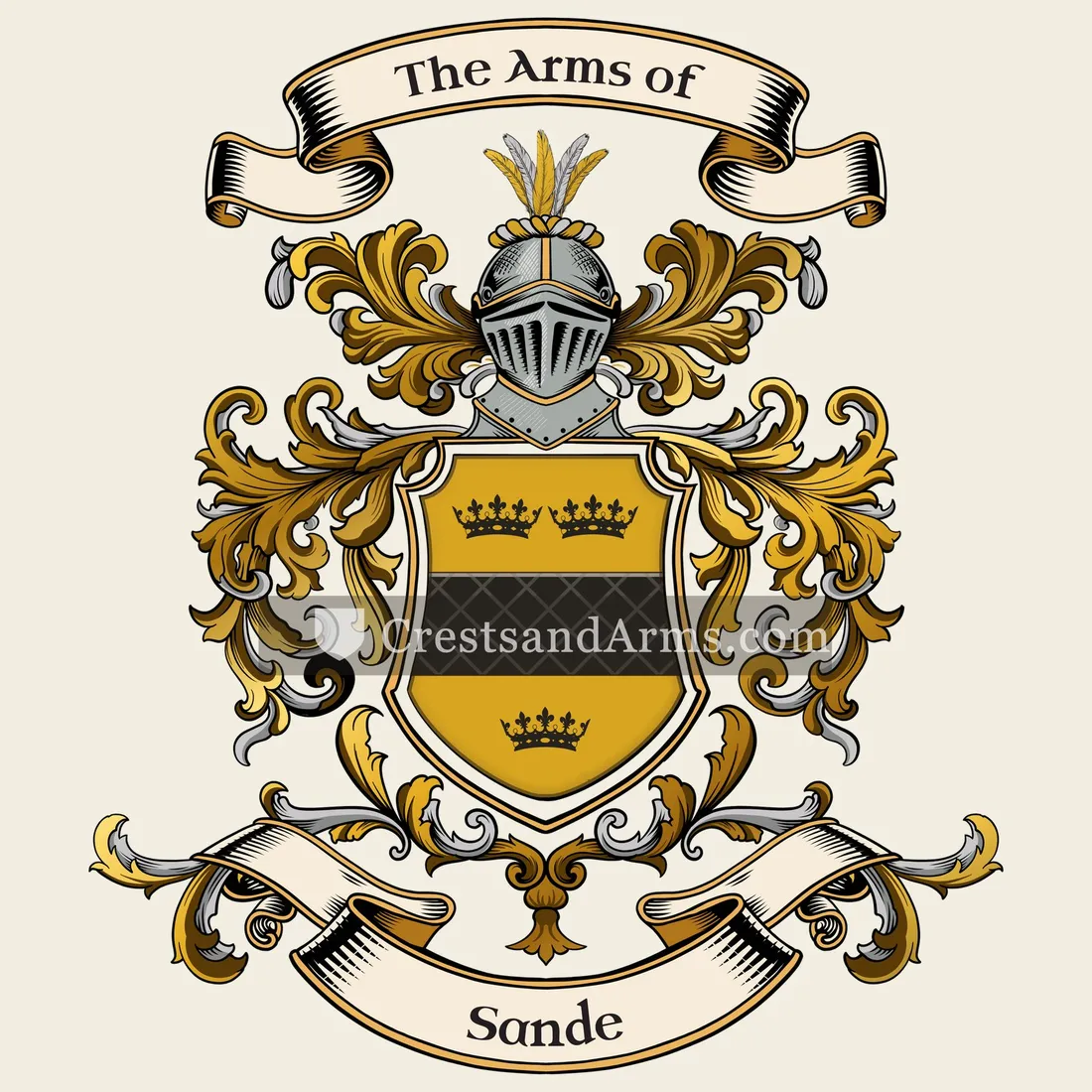
 fessThe military belt, and readiness to serve
 crownSovereignty, authority and just reward
 fessThe military belt, and readiness to serve
 crownSovereignty, authority and just reward


 eagleNobility, strength and a keen mind