Map of Netherlands showing where the Sanders arms are recorded
The Sanders arms were recorded in Leyde, c. 1815.
This is where the arms were entered in the register. Families often moved to other parts of the country, so the same name can turn up in more than one region.
Region
Leyde
Town
Leyde
First recorded
1815
Granting Authority for the Sanders Arms
Hoge Raad van Adel
Photograph made by me · CC BY-SA 3.0
The body that granted and recorded arms in Netherlands in this period.
William I of the Netherlands
Sovereign of the period
William I of the Netherlands
1815–1840
Reigning in Netherlands when the Sanders arms are first recorded.
How Arms Worked in Netherlands
In the Netherlands, coats of arms were often used by noble families and those who held specific public offices. These arms were passed down through the generations to legitimate descendants. Younger branches of a family usually kept the original design without needing to add special marks. This system ensured that the family identity remained clear and consistent over many years.
Granting authority
The Hoge Raad van Adel is the official body that regulates and manages noble titles and coats of arms in the Netherlands.
How they got arms
Families typically obtained their coats of arms through official royal grants or by proving their long-standing historical use of the symbols.
Where arms were recorded
Coats of arms are officially recorded in the registers held by the Hoge Raad van Adel, which began its work in 1814.
The family's standing
Recorded among the armigerous families of Netherlands.
Origin & History of the Sanders Family in Netherlands
The surname Sanders originates from the personal name Alexander, which was shortened and adapted across Europe over many centuries. In the Netherlands, the name evolved as a patronymic, meaning it was originally used to identify a person as the son of someone named Sander. By the early 19th century, the family had established a notable presence in the historic city of Leiden. Records from 1815 show members of the family living in this academic hub, which was then recovering from the economic hardships of the Napoleonic era. During this period, the Dutch government began requiring citizens to adopt fixed, hereditary surnames for official civil registration. This transition helped solidify Sanders as a permanent family name rather than a temporary description of lineage. Families in Leiden at this time often worked in the city's traditional textile industries or participated in the local trade networks that defined the region. The presence of the Sanders family in Leiden during this pivotal moment in Dutch civil history reflects the broader movement toward organized record-keeping and stable family identities in the Netherlands.
Coat of Arms & Family Crest Details
Symbols on this shield
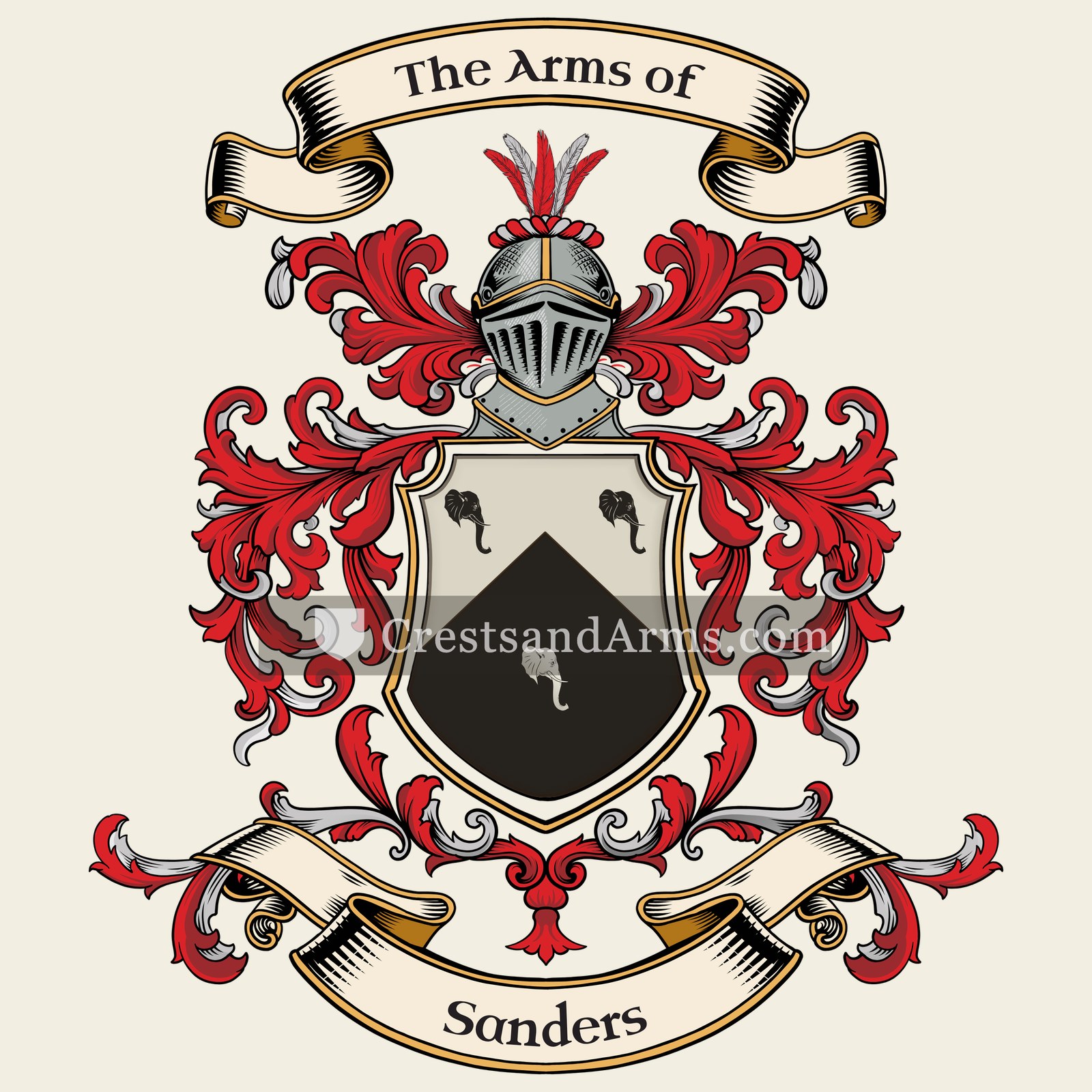
roseThe seventh son, and beauty with grace
eagleNobility, strength and a keen mind
Colours
Silver (Argent)Means: Peace and sincerity
Red (Gules)Means: Military strength
Blue (Azure)Means: Loyalty and truth
Historical info
Source
J. B. Rietstap, Armorial Général, Gouda: G. B. van Goor Zonen, 1884–87
Blazon (the actual original written record)
“D'arg. à une rose de gu., acc. de trois aigles d'azur.”
FlandreFlandre, c. 1663
Digital archive packCoat of arms PNG, gold border print PDF, vector SVG and the certificate of authenticity. Sent to your email in minutes.
Map of Belgium showing where the Sanders arms are recorded
The Sanders arms were recorded in Flandre, c. 1663.
Flandre grew rich on cloth, and its towns were among the busiest in Europe. Merchant families bought land with their profits and took arms to go with it, so trade put as many names in the registers here as land did.
This is where the arms were entered in the register. Families often moved to other parts of the country, so the same name can turn up in more than one region.
The body that granted and recorded arms in Belgium in this period.
Philip IV of Spain
Sovereign of the period
Philip IV of Spain
1621–1665
Reigning in Netherlands when the Sanders arms are first recorded.
How Arms Worked in Belgium
In Belgium, a coat of arms is considered personal property that is passed down through the male line to legitimate descendants. Families often use the same shield design across generations to show their shared heritage. If a branch of the family wants to change the design, they must apply for an official update to their specific version of the arms.
Granting authority
The Conseil héraldique is the official body that regulates and approves all coats of arms in Belgium.
How they got arms
Families obtain their coats of arms through formal royal grants or by confirming their historical right to use existing designs.
Where arms were recorded
All approved coats of arms are officially recorded in the public registers of the Conseil héraldique since 1844.
The family's standing
Recorded among the armigerous families of Flandre.
Origin & History of the Sanders Family in Belgium
The history of the Sanders family in Belgium is deeply rooted in the cultural landscape of the Flanders region during the seventeenth century. By 1663, records confirm that members of the family were already established within this area, which was then a center for trade, agriculture, and religious life. The name itself is a patronymic, meaning it originated as a way to identify a person as the son of Alexander, a name that was popular across Europe at the time. In the Flemish context, the name likely evolved through local dialects as families settled into specific parishes and towns. These early ancestors were often part of the hardworking middle class, working as skilled craftsmen or local farmers who helped shape the identity of the Flemish countryside. Their presence in the region during this period reflects the broader movement of families who were building stable lives in the aftermath of the turbulent religious and political conflicts that had previously defined the Low Countries.
Coat of Arms & Family Crest Details
Symbols on this shield
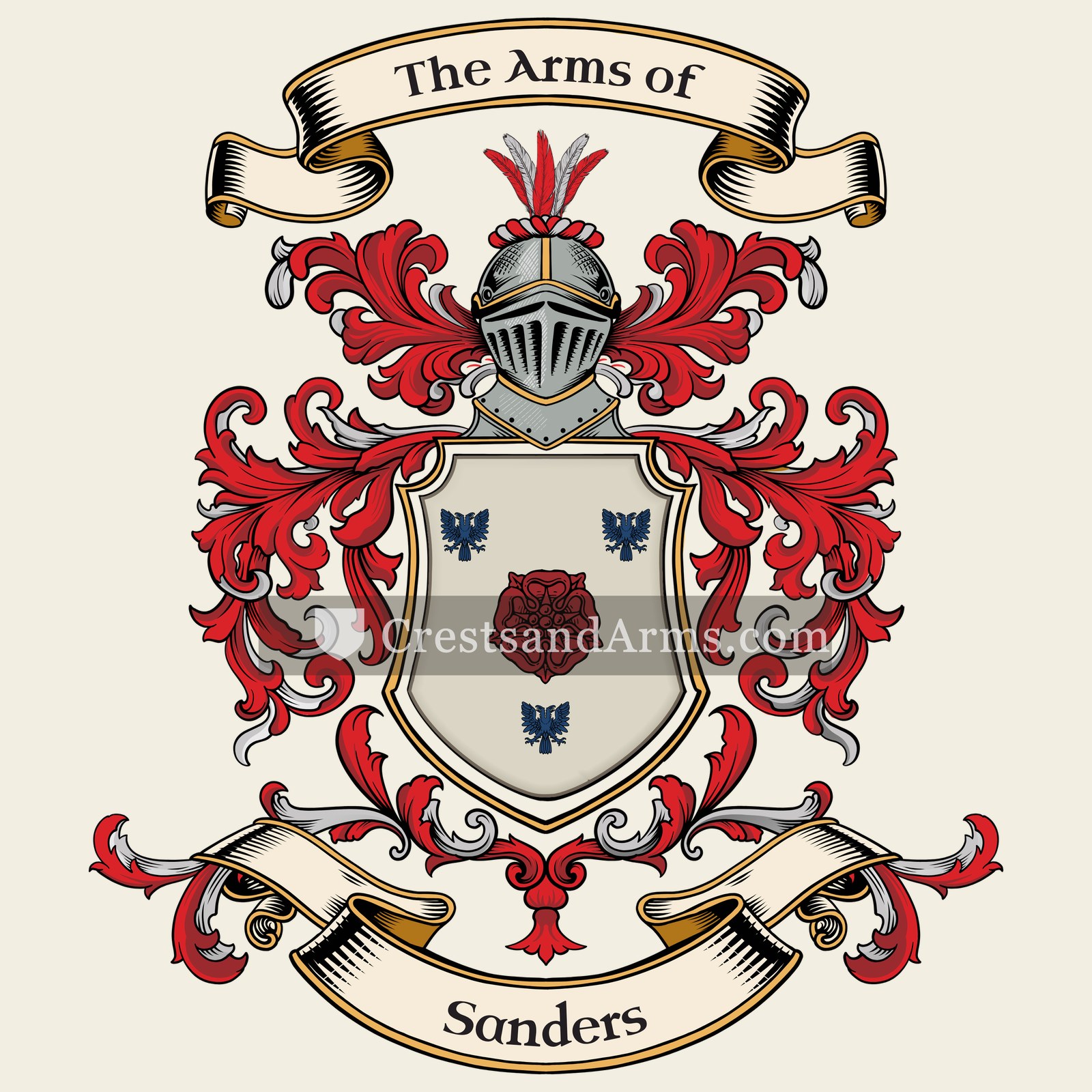
elephantGreat strength, wit and ambition
Colours
Silver (Argent)Means: Peace and sincerity
Black (Sable)Means: Constancy
Historical info
Source
Sir Bernard Burke, The General Armory of England, Scotland, Ireland and Wales, London: Harrison & Sons, 1884
Blazon (the actual original written record)
“Per chev. ar. and sa. three elephants' heads erased counterchanged”
BuckinghamDinton · Buckingham, c. 1620
Digital archive packCoat of arms PNG, gold border print PDF, vector SVG and the certificate of authenticity. Sent to your email in minutes.
Map of England showing where the Sanders arms are recorded
The Sanders arms were recorded in Buckingham, c. 1620.
Buckinghamshire was quiet farming country on the road out of London. Court officials and lawyers bought manors there within easy reach of the capital, and a manor was the usual reason to take arms.
This is where the arms were entered in the register. Families often moved to other parts of the country, so the same name can turn up in more than one region.
The body that granted and recorded arms in England in this period.
James VI and I
Sovereign of the period
James VI and I
1603–1625
Reigning in Netherlands when the Sanders arms are first recorded.
How Arms Worked in England
English heraldry allowed arms to be shared by all legitimate descendants of the original owner. These symbols were treated as personal property that moved through the generations to all children. While the eldest son kept the original design, other family members could use the same shield without needing to change it or register their own unique versions.
Granting authority
The College of Arms in London has regulated the use of coats of arms throughout England and Wales since 1484.
How they got arms
Families typically obtained their coats of arms through a formal grant from the Crown or by proving their ancient right to them.
Where arms were recorded
All official coats of arms are recorded in the registers kept at the College of Arms, which date back to the fifteenth century.
The family's standing
Recorded among the armigerous families of Buckingham.
Origin & History of the Sanders Family in England
The surname Sanders is a patronymic name, which means it originated as a way to identify a person as the son of someone named Alexander. In medieval England, the name Alexander was shortened to Sander, and adding an "s" indicated that the person was the son of that individual. By the early 17th century, the family had established a notable presence in Buckingham, a historic market town in Buckinghamshire. Records from 1620 confirm that members of the Sanders family were living and working in this region during a time of significant social and economic change in England. These early ancestors likely lived as farmers, tradespeople, or local merchants who contributed to the growth of their community. Over the generations, the family name became firmly rooted in the local landscape, reflecting the broader pattern of how English surnames evolved from simple descriptions of family relationships into permanent hereditary names.
Sanders Meaning & Related Branches
Root word
Alexander
Defender of men derived from Greek elements meaning protector and mankind.
This name
SandersA patronymic surname indicating descent from a person named Alexander.
also spelled
Zanders
Sanderss
Saunders
Related arms
Saunderssame arms
Fossesimilar arms
Mathiésimilar arms
Saundersonvariant spelling
Documented Sources
J. B. Rietstap, Armorial Général, Gouda: G. B. van Goor Zonen, 1884–87
Nationaal Archief, Burgerlijke Stand van de gemeenten in Zuid-Holland
Erfgoed Leiden en Omstreken, Bevolkingsregister Leiden
Van Berkel, G. and Samplonius, K., Nederlandse plaatsnamen verklaard (2018)
Meertens, P.J., De betekenis van de Nederlandse familienamen (1947)
Digital archive packCoat of arms PNG, gold border print PDF, vector SVG and the certificate of authenticity. Sent to your email in minutes.


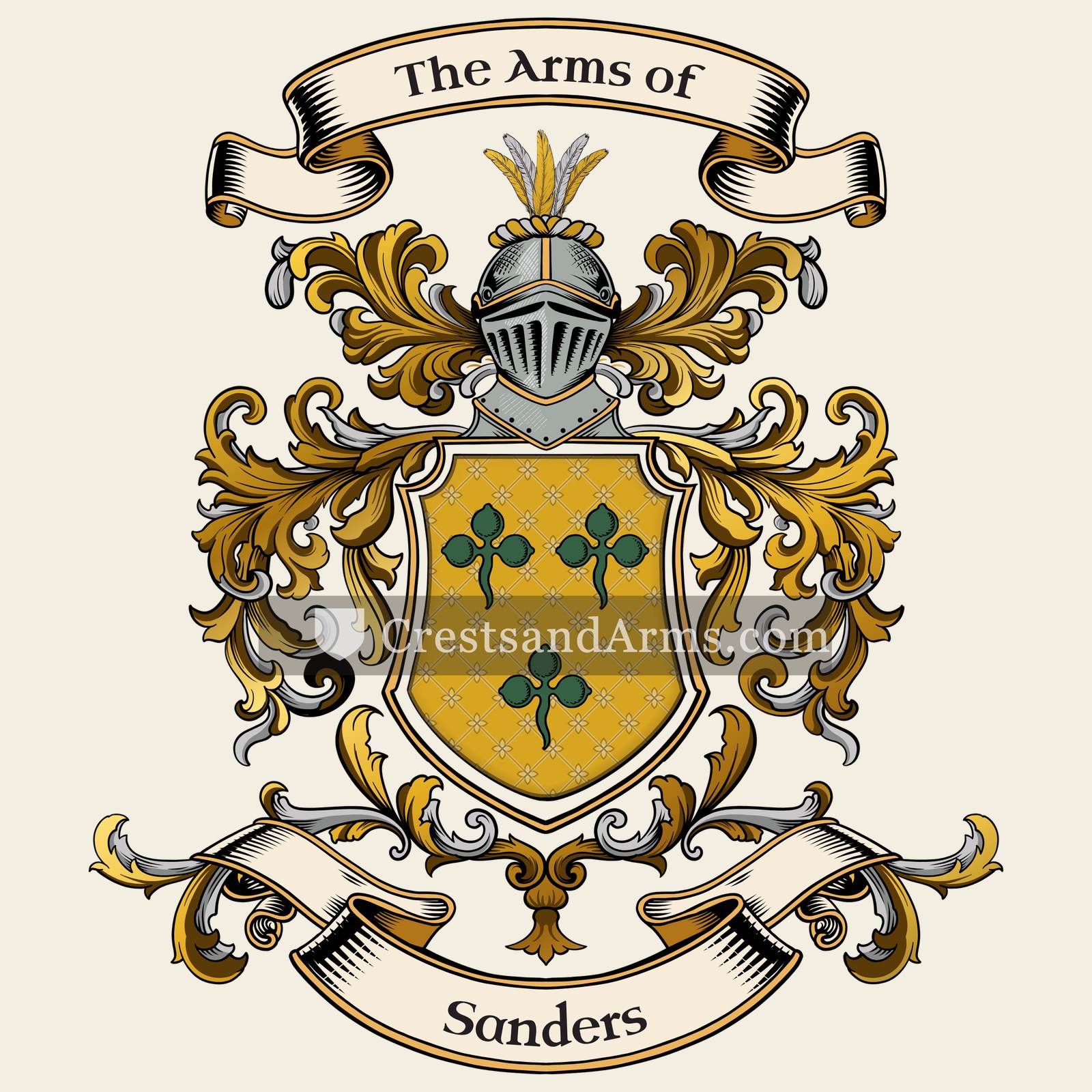
 trefoilPerpetuity, and the Trinity
 trefoilPerpetuity, and the Trinity


 roseThe seventh son, and beauty with grace
 eagleNobility, strength and a keen mind


 elephantGreat strength, wit and ambition