Map of Italy showing where the Santander arms are recorded
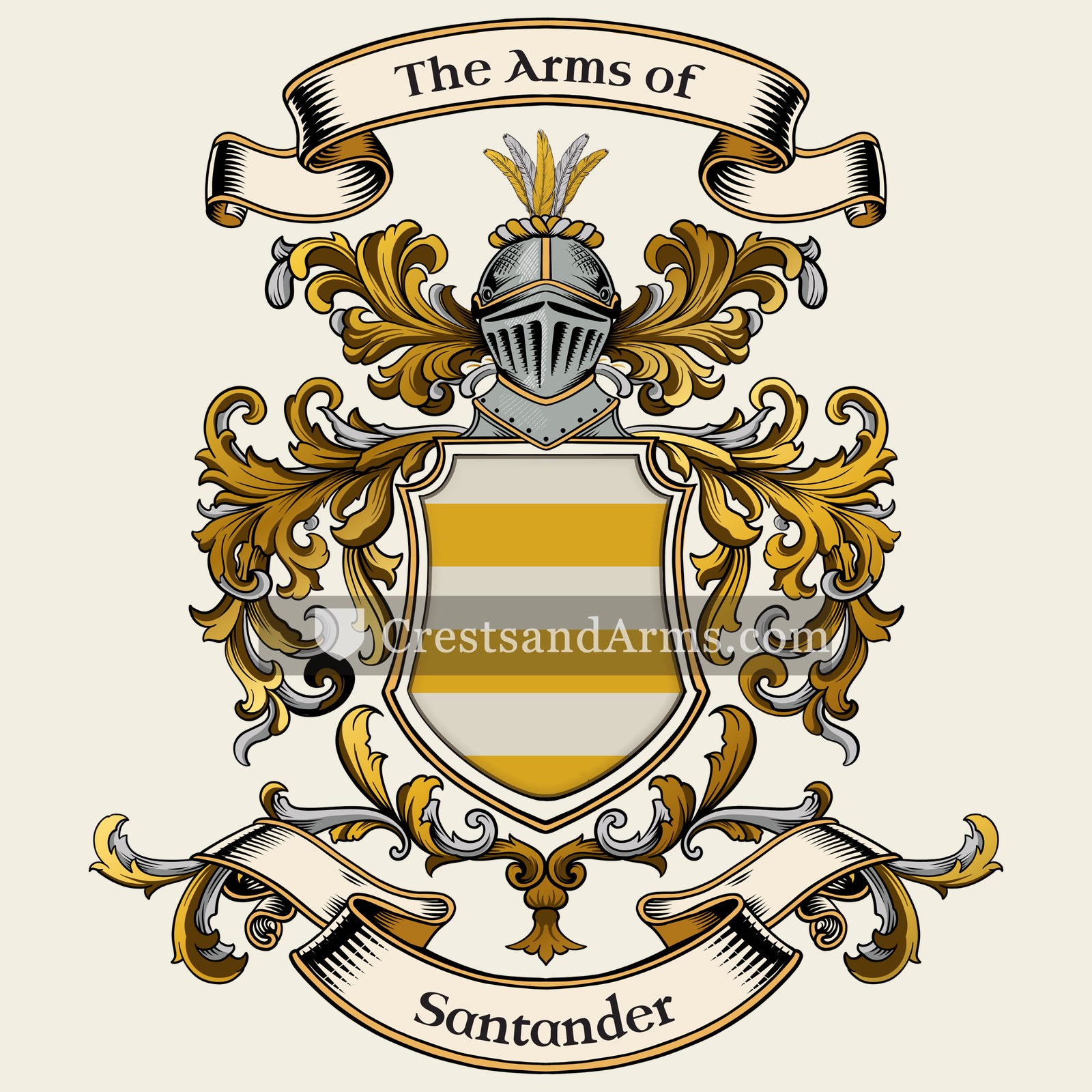
The Santander arms were recorded in Italy, c. 1775.
Arms such as these were typically recorded in Venice.
Venice ran on trade, and its great families were merchants before they were anything else. The city kept a formal list of its noble houses, and a name on that list carried arms as a matter of record.
This is where the arms were entered in the register. Families often moved to other parts of the country, so the same name can turn up in more than one region.
The body that granted and recorded arms in Italy in this period.
Alvise Giovanni Mocenigo
Sovereign of the period
Alvise Giovanni Mocenigo
1763–1778
Reigning in Italy when the Santander arms are first recorded.
How Arms Worked in Italy
In the Italian states, coats of arms were often used by noble families to show their status and history. These symbols were passed down through the generations to all legitimate male descendants. Younger branches of a family usually kept the original design but sometimes added small changes to distinguish their specific line from the main branch.
Granting authority
Various local rulers and city governments controlled the use of coats of arms across the different Italian states.
How they got arms
Families often assumed their own arms or received them as official grants from local lords, popes, or city councils.
Where arms were recorded
Arms were recorded in local city archives or private family books rather than in one single national register.
The family's standing
Recorded among the armigerous families of Italy.
Origin & History of the Santander Family in Italy
The name Santander originates from the northern coast of Spain, specifically from the port city of the same name in the region of Cantabria. The name itself is derived from the Latin phrase Sanctus Emeterius, which refers to a local saint honored in the area during the Middle Ages. Families who carried this name often moved along established maritime trade routes that connected the Iberian Peninsula to major Mediterranean hubs. By 1775, records confirm that members of the family had established a significant presence in Venice. During this period, Venice served as a vital center for international commerce and diplomacy. The family likely integrated into the city’s merchant class, utilizing their background in coastal navigation and trade to thrive in the complex economic environment of the Venetian Republic.
Related Branches & Arms
Root word
Sanctus
Latin term meaning holy, sacred, or saintly.
This name
SantanderRefers to a person from the town of Santander, derived from Saint Andrew.
Documented Sources
J. B. Rietstap, Armorial Général, Gouda: G. B. van Goor Zonen, 1884–87
García de Cortázar, José Ángel, La historia de Cantabria, 2002
Lane, Frederic C., Venice, A Maritime Republic, 1973
Archivio di Stato di Venezia, Senato, Dispacci degli ambasciatori, 1775
Digital archive packCoat of arms PNG, gold border print PDF, vector SVG and the certificate of authenticity. Sent to your email in minutes.


 fessThe military belt, and readiness to serve
 fessThe military belt, and readiness to serve