Map of Belgium showing where the Sarvas arms are recorded
The Sarvas arms were recorded in Gand, c. 1737.
This is where the arms were entered in the register. Families often moved to other parts of the country, so the same name can turn up in more than one region.
The body that granted and recorded arms in Belgium in this period.
Charles VI, Holy Roman Emperor
Sovereign of the period
Charles VI, Holy Roman Emperor
1711–1740
Reigning in Belgium when the Sarvas arms are first recorded.
How Arms Worked in Belgium
In Belgium, a coat of arms is considered personal property that is passed down through the male line to legitimate descendants. Families often use the same shield design across generations to show their shared heritage. If a branch of the family wants to change the design, they must apply for an official update to their specific version of the arms.
Granting authority
The Conseil héraldique is the official body that regulates and approves all coats of arms in Belgium.
How they got arms
Families obtain their coats of arms through formal royal grants or by confirming their historical right to use existing designs.
Where arms were recorded
All approved coats of arms are officially recorded in the public registers of the Conseil héraldique since 1844.
The family's standing
Recorded among the armigerous families of Belgium.
Origin & History of the Sarvas Family in Belgium
The history of the Sarvas name in Belgium begins with its documented presence in the city of Ghent, known locally as Gand, during the early eighteenth century. By 1737, records indicate that members of the family were already established within this bustling center of trade and textile production. During this era, Ghent was a significant urban hub in the Austrian Netherlands, attracting skilled workers and families who sought opportunities in the growing local economy. The name likely functioned as a way to identify these individuals within the dense social and parish structures of the city. As the family integrated into the local community, they participated in the daily life of a region defined by its complex history of shifting borders and industrial growth. Their presence in the city archives from this period suggests that the Sarvas family was part of the foundational fabric of Ghent's working population during the Enlightenment era.
Meaning of the Sarvas family crest colors & symbols
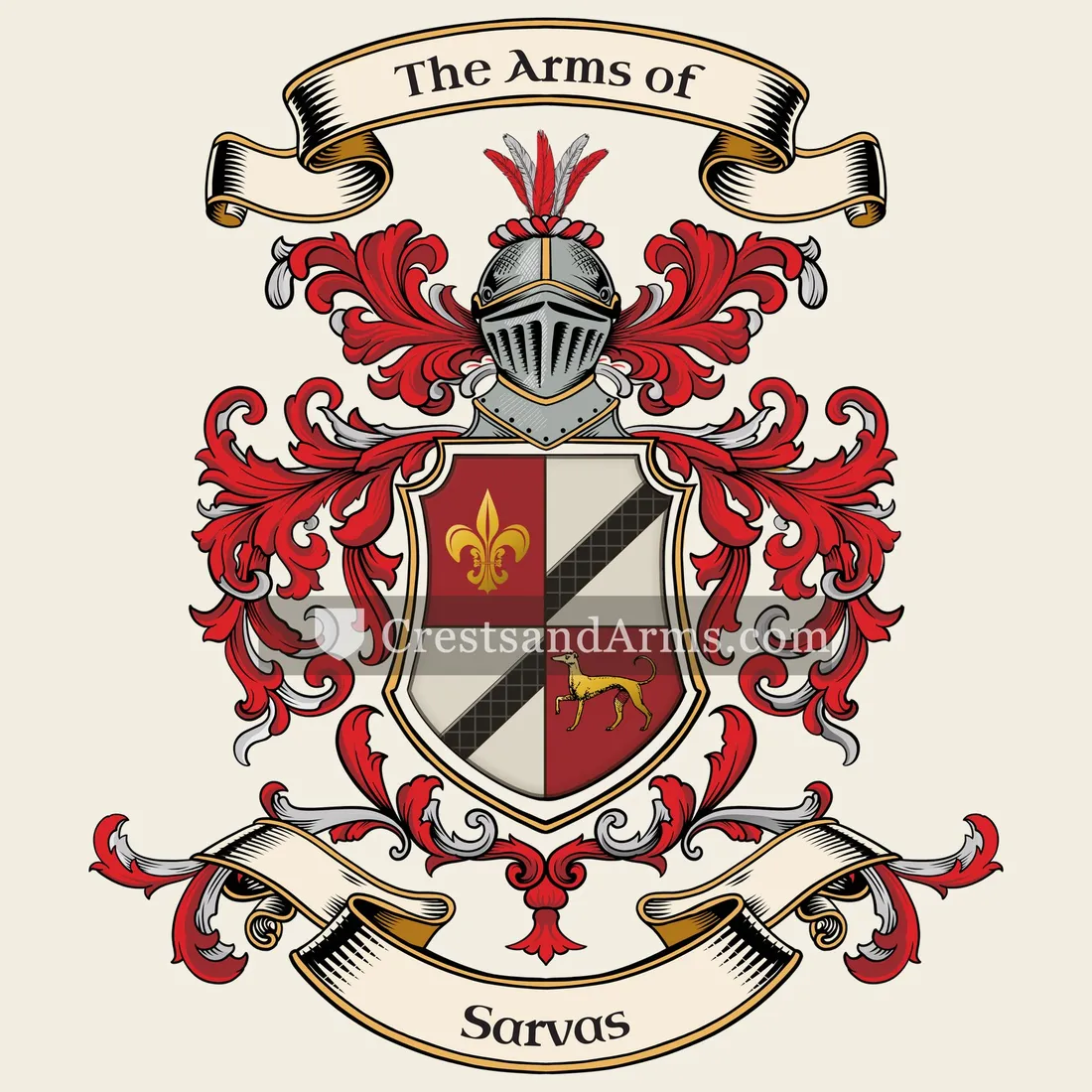
Symbols on this shield
fleur de lisPurity, light, and the sixth son
greyhoundCourage, vigilance and loyalty
Colours
Red (Gules)Means: Military strength
Silver (Argent)Means: Peace and sincerity
Gold (Or)Means: Generosity
Historical info
Source
J. B. Rietstap, Armorial Général, Gouda: G. B. van Goor Zonen, 1884–87
Blazon (the actual original written record)
“Ec.: au 1 de gu. à une fleur-de-lis d'or; aux 2 et 3 d'arg. à la barre de sa.; au 4 d'azur à une tête de chien d'or.”
Netherlandsc. 1815
Digital archive packCoat of arms PNG, gold border print PDF, vector SVG and the certificate of authenticity. Sent to your email in minutes.
Map of Netherlands showing where the Sarvas arms are recorded
The Sarvas arms were recorded in Netherlands, c. 1815.
Arms such as these were typically recorded in Friesland.
Friesland was low, wet country on the northern coast of the Netherlands, farmed by families who had held the same land for centuries. Free landholders were unusually common there, and a free landholder could carry arms.
This is where the arms were entered in the register. Families often moved to other parts of the country, so the same name can turn up in more than one region.
Region
Friesland
First recorded
1815
Granting Authority for the Sarvas Arms
Hoge Raad van Adel
Photograph made by me · CC BY-SA 3.0
The body that granted and recorded arms in Netherlands in this period.
William I of the Netherlands
Sovereign of the period
William I of the Netherlands
1815–1840
Reigning in Belgium when the Sarvas arms are first recorded.
How Arms Worked in Netherlands
In the Netherlands, coats of arms were often used by noble families and those who held specific public offices. These arms were passed down through the generations to legitimate descendants. Younger branches of a family usually kept the original design without needing to add special marks. This system ensured that the family identity remained clear and consistent over many years.
Granting authority
The Hoge Raad van Adel is the official body that regulates and manages noble titles and coats of arms in the Netherlands.
How they got arms
Families typically obtained their coats of arms through official royal grants or by proving their long-standing historical use of the symbols.
Where arms were recorded
Coats of arms are officially recorded in the registers held by the Hoge Raad van Adel, which began its work in 1814.
The family's standing
Recorded among the armigerous families of Netherlands.
Origin & History of the Sarvas Family in Netherlands
The history of the Sarvas family in the Netherlands is rooted in the northern province of Friesland, where records confirm their presence by 1815. During this period, the Netherlands underwent significant changes in how citizens registered their surnames due to the introduction of the civil registry under Napoleonic influence. Before this time, many families in rural Frisian communities used patronymic naming systems, where a person’s last name was based on their father’s first name. The appearance of the name Sarvas in official documents suggests that the family had established a fixed surname by the early nineteenth century, likely to comply with new government mandates that required permanent family names for tax and census purposes. This transition reflects the broader modernization of Dutch society, as families moved away from traditional naming customs toward the standardized administrative structures that define the modern era.
Sarvas Meaning & Related Branches
Root word
Servus
Latin term meaning a servant, slave, or attendant.
This name
SarvasA surname derived from a status-based occupational descriptor for a servant or household worker.
also spelled
Servae
Servaess
Servaez
Servas
Documented Sources
J. B. Rietstap, Armorial Général, Gouda: G. B. van Goor Zonen, 1884–87
Stadsarchief Gent, Parochieregisters van de stad Gent (Doop-, huwelijks- en overlijdensakten), 1737
Decavele, Johan, Gent: Apologie van een rebelse stad, 1989
Digital archive packCoat of arms PNG, gold border print PDF, vector SVG and the certificate of authenticity. Sent to your email in minutes.


 chevronProtection, and faithful service completed
 mulletThe third son, and a divine quality from above
 greyhoundCourage, vigilance and loyalty
 chevronProtection, and faithful service completed
 mulletThe third son, and a divine quality from above
 greyhoundCourage, vigilance and loyalty
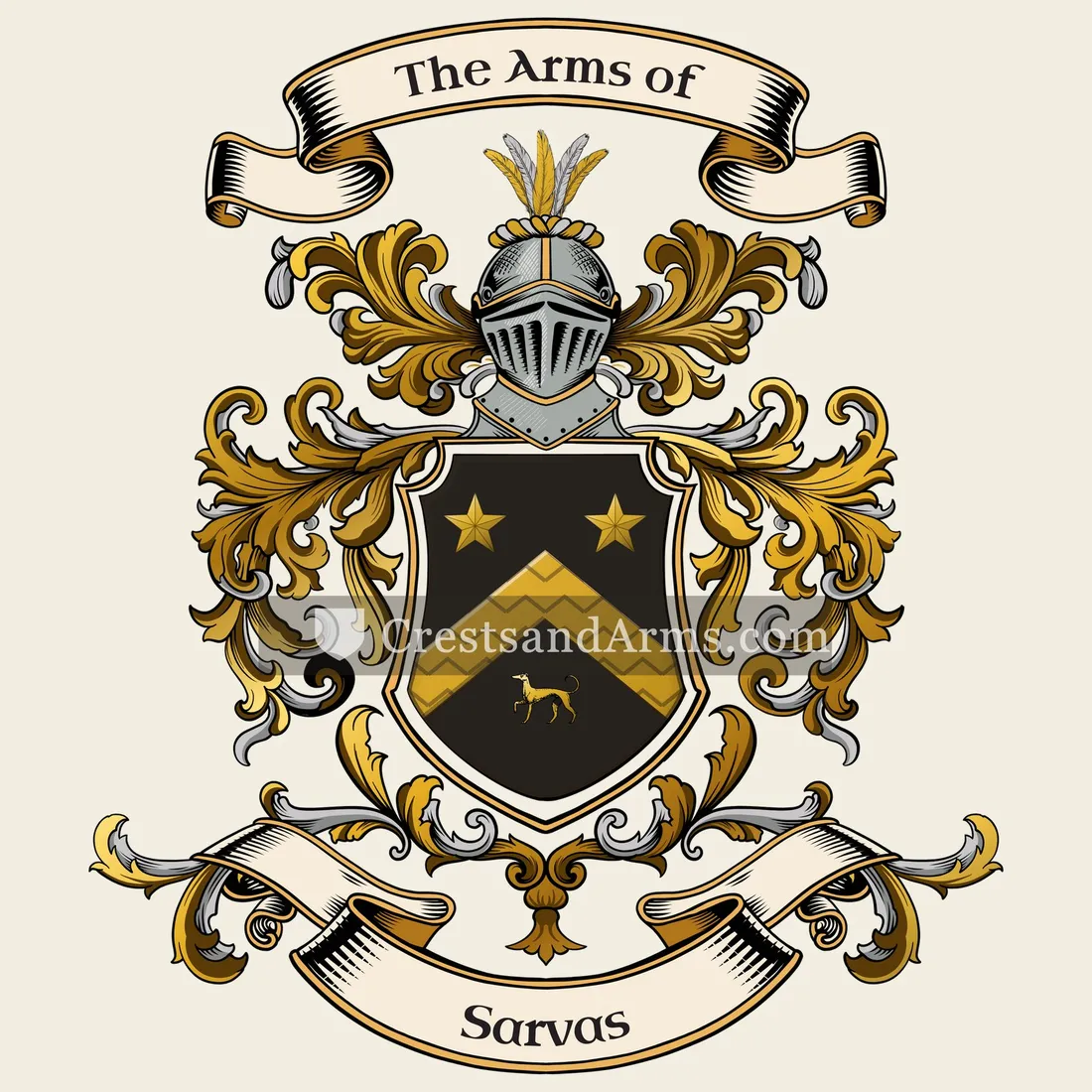


 fleur de lisPurity, light, and the sixth son