A record of documented arms, meaning and origin, researched for the Sauvage family lines. Documented in 2 countries.
Reg. 2905 · Belgian, T–V
Coat of Arms & Family Crest Details
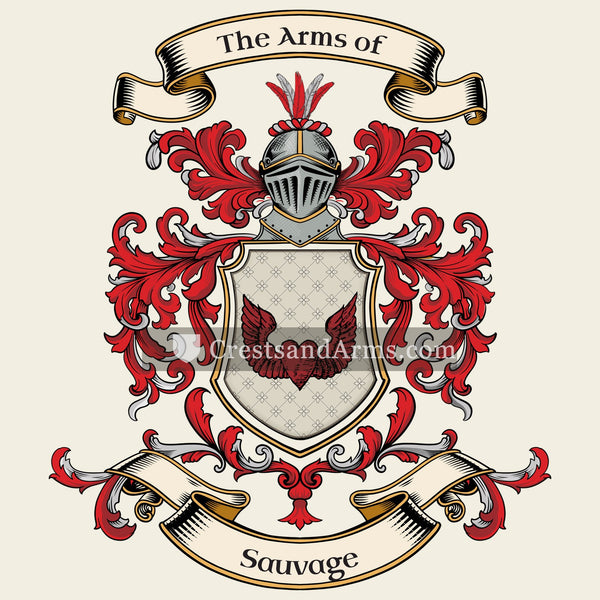
Symbols on this shield
heartSincerity, charity and true affection
Colours
Silver (Argent)Means: Peace and sincerity
Red (Gules)Means: Military strength
Historical info
Source
J. B. Rietstap, Armorial Général, Gouda: G. B. van Goor Zonen, 1884–87
Blazon (the actual original written record)
“D'arg. à un coeur de gu.”
BelgiumGand, c. 1737
Where the Sauvage Arms Were Recorded
Gand
Map of Belgium showing where the Sauvage arms are recorded
The Sauvage arms were recorded in Gand, c. 1737.
This is where the arms were entered in the register. Families often moved to other parts of the country, so the same name can turn up in more than one region.
The body that granted and recorded arms in Belgium in this period.
Charles VI, Holy Roman Emperor
Sovereign of the period
Charles VI, Holy Roman Emperor
1711–1740
Reigning in Belgium when the Sauvage arms are first recorded.
How Arms Worked in Belgium
In Belgium, a coat of arms is considered personal property that is passed down through the male line to legitimate descendants. Families often use the same shield design across generations to show their shared heritage. If a branch of the family wants to change the design, they must apply for an official update to their specific version of the arms.
Granting authority
The Conseil héraldique is the official body that regulates and approves all coats of arms in Belgium.
How they got arms
Families obtain their coats of arms through formal royal grants or by confirming their historical right to use existing designs.
Where arms were recorded
All approved coats of arms are officially recorded in the public registers of the Conseil héraldique since 1844.
The family's standing
Recorded among the armigerous families of Belgium.
Origin & History of the Sauvage Family in Belgium
The surname Sauvage carries a deep history rooted in the French language, where it translates to someone who lived in the wild or was considered untamed. By the early eighteenth century, the family had established a notable presence in the city of Ghent, which was then a major center of trade and industry in the Austrian Netherlands. Records confirm that members of the Sauvage family were active in Ghent by 1737, participating in the local urban life of the region. During this era, families with this name were often associated with craftsmanship or trade, reflecting the growth of the Flemish middle class. As the family settled into the social fabric of Ghent, they became part of the long tradition of families who helped shape the city’s development through the generations. Their presence in the city archives during this period highlights their integration into the local community long before the modern borders of Belgium were established.
Coat of Arms & Family Crest Details
Symbols on this shield
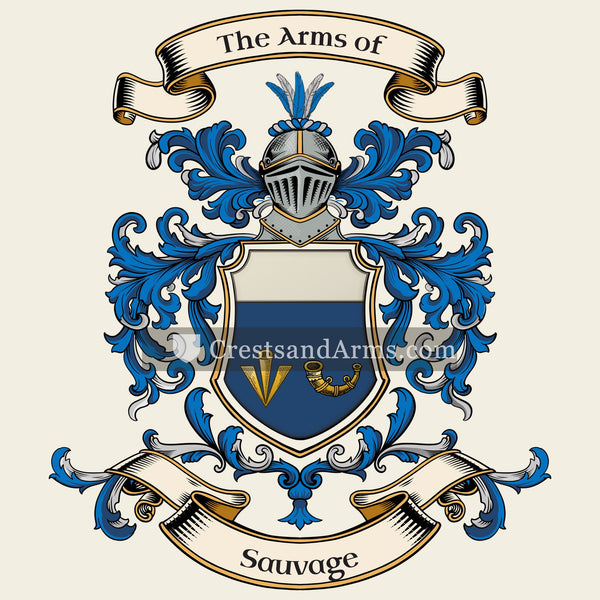
chiefAuthority, wisdom and dominion
arrowReadiness for battle, and affliction endured
hunting horn stringedOne who delights in the chase
Colours
Blue (Azure)Means: Loyalty and truth
Silver (Argent)Means: Peace and sincerity
Gold (Or)Means: Generosity
Historical info
Source
J. B. Rietstap, Armorial Général, Gouda: G. B. van Goor Zonen, 1884–87
Blazon (the actual original written record)
“D'azur à une flèche d'or, en fasce, br. sur un huchet du même [Une branche de cette famille, an. le 10 fév. 1724, porte les mêmes armes, augmentées d'un chef d'arg.]”
LorraineLorraine, c. 1581
Where the Sauvage Arms Were Recorded
Lorraine
Map of France showing where the Sauvage arms are recorded
The Sauvage arms were recorded in Lorraine, c. 1581.
Lorraine sat on the border between France and the German lands, and border country bred soldiers. Families here held small estates and served in arms, and a fighting man was exactly the sort who carried a shield of his own.
This is where the arms were entered in the register. Families often moved to other parts of the country, so the same name can turn up in more than one region.
The body that granted and recorded arms in France in this period.
Henry III of France
Sovereign of the period
Henry III of France
1574–1589
Reigning in Belgium when the Sauvage arms are first recorded.
How Arms Worked in France
In France, a coat of arms was a mark of honor that passed down through the male line to all legitimate descendants. Families often used the same shield without changes to show their shared heritage. If a branch wanted to stand out, they could add a small mark to their shield to show their specific place in the family tree.
Granting authority
The Juge d'armes de France acted as the official authority that regulated and verified coats of arms across the country.
How they got arms
Families typically inherited their arms from ancestors, though they could also receive them through royal grants or by proving their noble status.
Where arms were recorded
Coats of arms were officially recorded in the Armorial Général de France, which began its main collection in the year 1696.
The family's standing
Recorded among the armigerous families of Lorraine.
Origin & History of the Sauvage Family in France
The surname Sauvage originated in medieval France as a descriptive nickname, derived from the Old French word for wild or untamed. During the Middle Ages, this name was often applied to individuals who lived in remote forest regions or those who possessed a fierce and independent spirit. By the late sixteenth century, the family established a notable presence in the Lorraine region, a territory then defined by its complex political position between the Kingdom of France and the Holy Roman Empire. Records from 1581 confirm that members of the Sauvage family were active within this borderland, where they likely engaged in the agricultural and administrative life of the duchy. As the family grew, they integrated into the local social fabric of northeastern France, maintaining their identity through generations of change in a region frequently reshaped by shifting national boundaries and regional conflicts.
Related Branches & Arms
Root word
silvaticus
Latin term meaning of the woods or belonging to the forest.
This name
SauvageRefers to a person who lived in or near a forest or possessed a wild, untamed nature.
also spelled
Sauvaj
Sovazh
Savage
Related arms
Savagevariant spelling
Documented Sources
J. B. Rietstap, Armorial Général, Gouda: G. B. van Goor Zonen, 1884–87
Archives: State Archives in Ghent (Rijksarchief te Gent), Parochieregisters van Gent (Parish Registers of Ghent)
De Potter, Frans and Jan Broeckaert, Geschiedenis van de gemeenten der provincie Oost-Vlaanderen, 1864–1902
Vandenbroeke, Chris, Sociale geschiedenis van het Vlaamse volk, 1981
Digital archive packCoat of arms PNG, gold border print PDF, vector SVG and the certificate of authenticity. Sent to your email in minutes.


 heartSincerity, charity and true affection
 heartSincerity, charity and true affection

 chiefAuthority, wisdom and dominion
 arrowReadiness for battle, and affliction endured
 hunting horn stringedOne who delights in the chase