Coat of Arms & Family Crest Details
J. B. Rietstap, Armorial Général, Gouda: G. B. van Goor Zonen, 1884–87
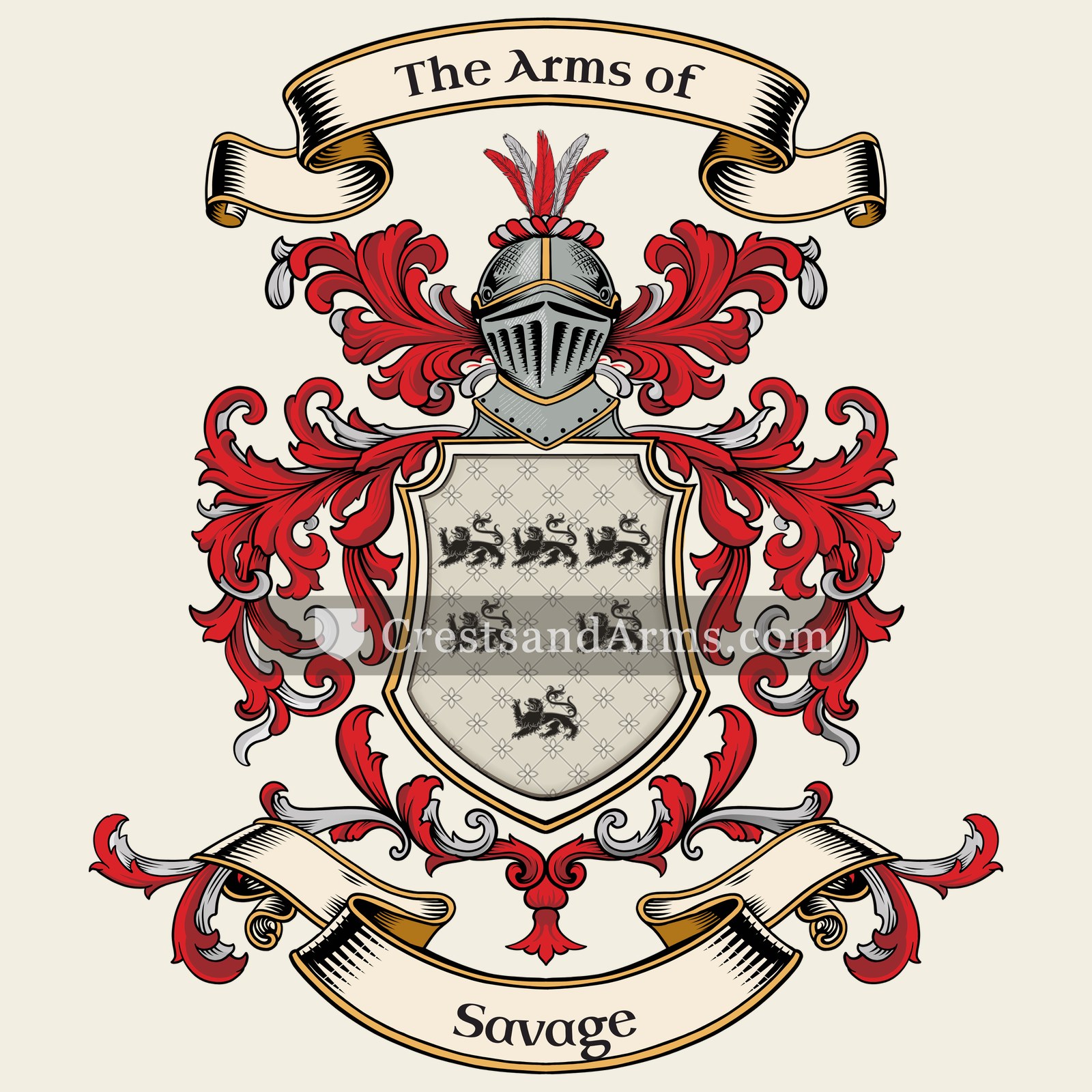
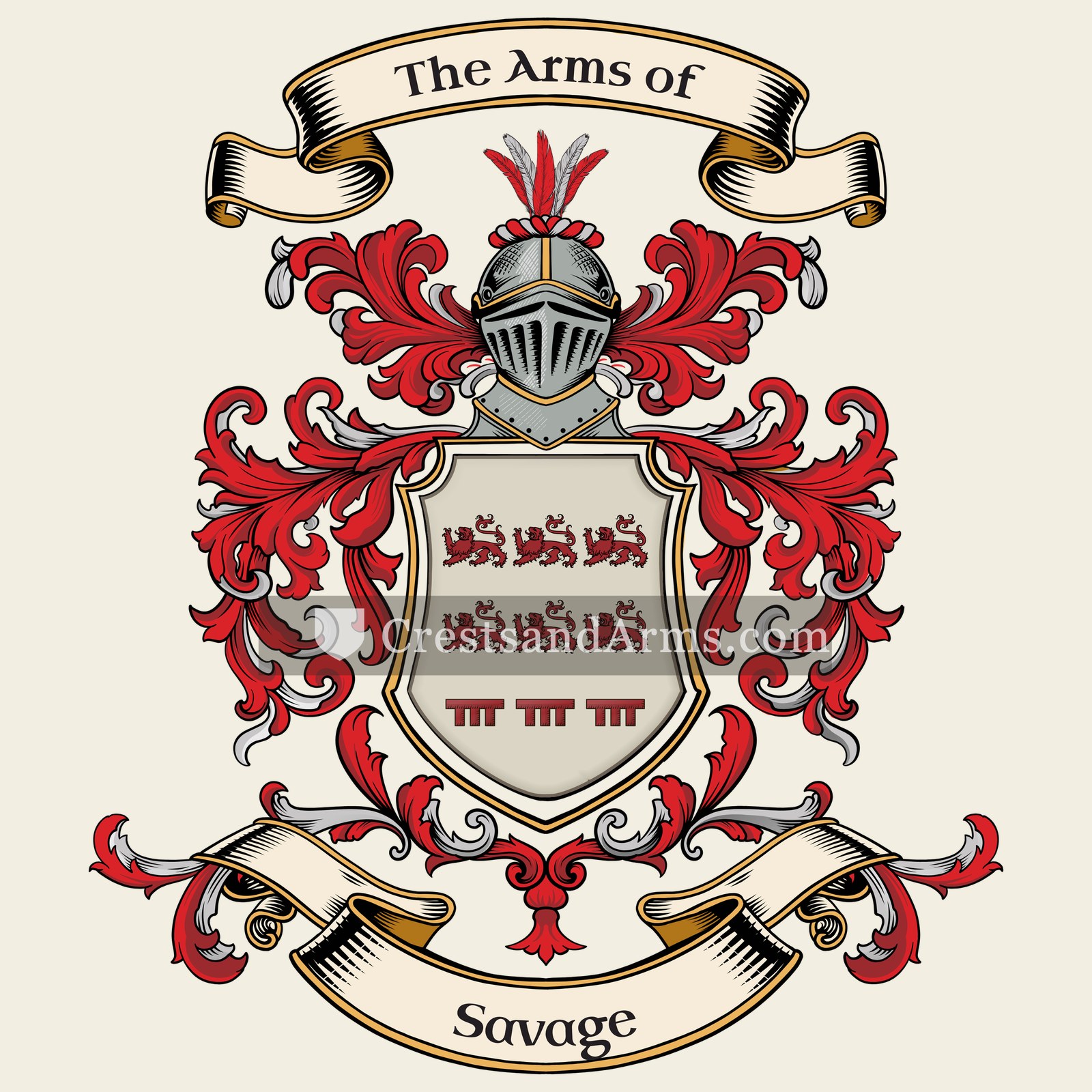
Blazon (the actual original written record)“D'arg. à six lions de sa., 3, 2 et 1. Cq. cour. C.: une patte de lion de sa., en pal.”
A record of documented arms, meaning and origin, researched for the Savage family lines. Documented in 3 countries.
J. B. Rietstap, Armorial Général, Gouda: G. B. van Goor Zonen, 1884–87
Blazon (the actual original written record)“D'arg. à six lions de sa., 3, 2 et 1. Cq. cour. C.: une patte de lion de sa., en pal.”

The Savage arms were recorded in France, c. 1725.
Arms such as these were typically recorded in Bretagne.
More families held coats of arms in Bretagne than anywhere else in France. The land was divided into many small estates rather than a few large ones, so far more households counted as gentry, and each needed a shield of its own to be told apart.
This is where the arms were entered in the register. Families often moved to other parts of the country, so the same name can turn up in more than one region.
In France, a coat of arms was a mark of honor that passed down through the male line to all legitimate descendants. Families often used the same shield without changes to show their shared heritage. If a branch wanted to stand out, they could add a small mark to their shield to show their specific place in the family tree.
The surname Savage carries a deep history rooted in the linguistic shifts of medieval France. The name originates from the Old French word *sauvage*, which translates to wild or untamed. In the context of the Middle Ages, this term was often used as a descriptive nickname for individuals who lived in remote forest areas or those who possessed a fierce and independent spirit. By the time the family was firmly established in the region of Bretagne in 1725, the name had transitioned from a simple descriptor into a formal hereditary surname. Families bearing this name during this period were often part of the rural population, deeply connected to the rugged landscape and the agricultural traditions of the Breton countryside. Over generations, the name became a permanent marker of their identity, reflecting a long-standing heritage that predates their documented presence in the eighteenth-century parish records of western France.
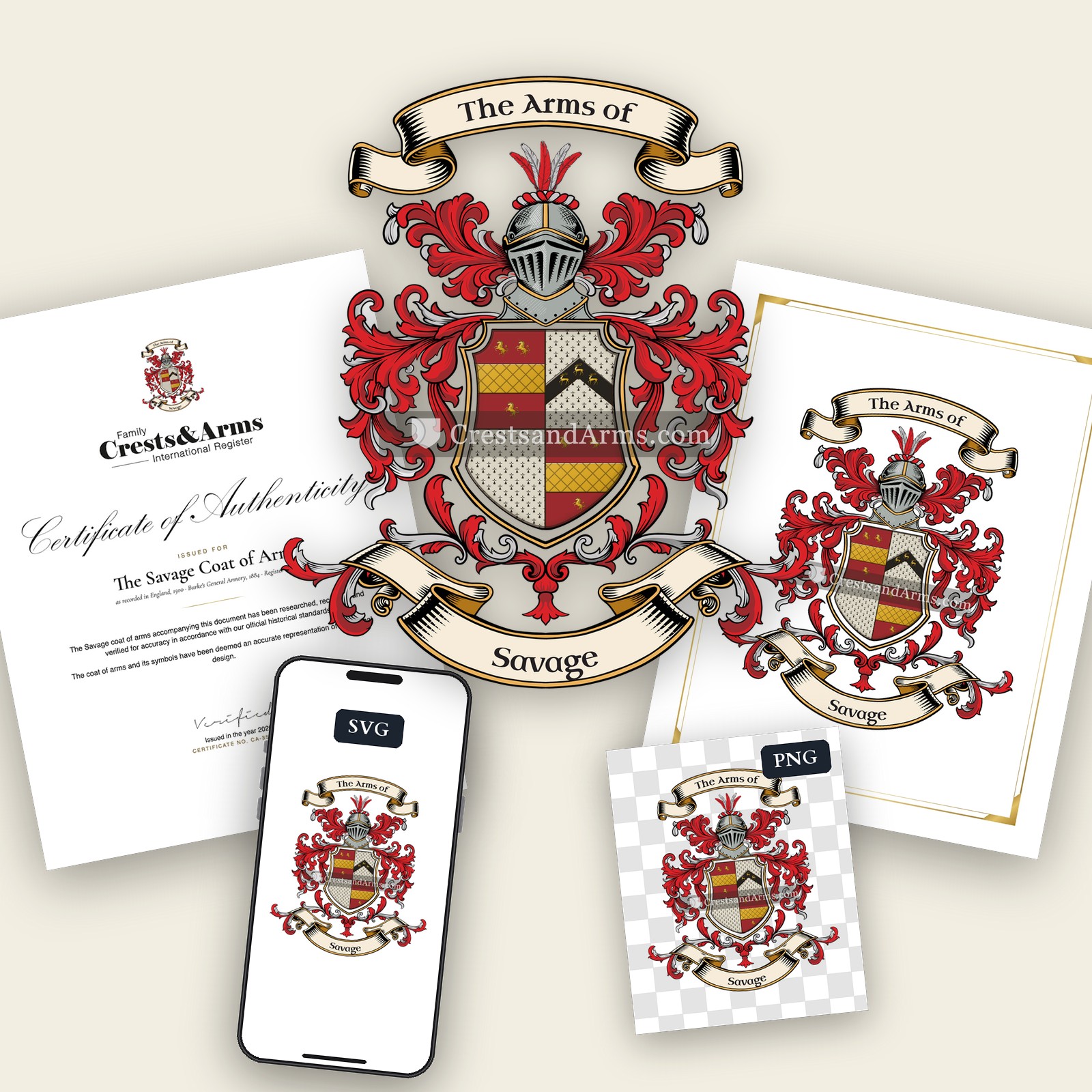
Sir Bernard Burke, The General Armory of England, Scotland, Ireland and Wales, London: Harrison & Sons, 1884
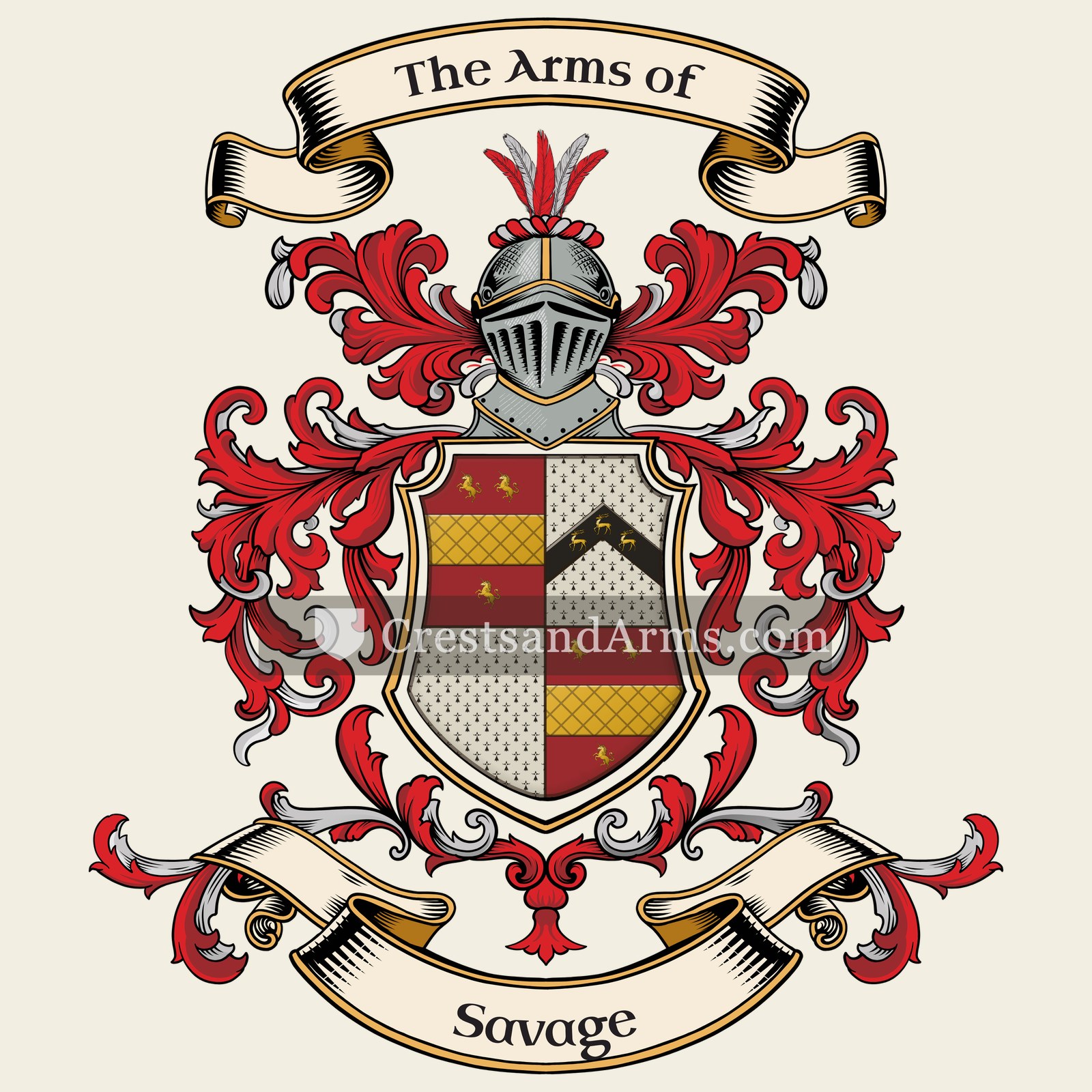
Blazon (the actual original written record)“Savery, or Savory (Great Totnes, in the parish of Modbury; Willinge, in the parish of Rattery; Slade, in the parishes of Cornwood and Plympton; Venn, in the parish of Churchstow; and Fowellscombe, in the parish of Ugborough; all in co. Devon. The SAVERYS, originally from Brittany, have been of considerable note in co. Devon since the year 1500. From that period, the pedigrees in the Visitations exhibit their alliances with the knightly western houses of CAREW, SERVINGTON, STRODE, ELIOT, WALTHAM, HELE, FOWELL, DAVIES, PRIDEAUX, &c. They possessed Totnes Castle until 1591, about which period the head of the family, Sir CHRISTOPHER SAVERY, Knt., High Sheriff co. Devon in 1614, purchased and removed to Shilston. His son, Colonel CHRISTOPHER SAVERY, of Shilston, was an active officer under the Parliamentary banner, during the Civil War, and signed the round robin of 1643. He was father of SERVINGTON SAVERY, Esq., of Shilston, d. 1649. His descendant and heir, JOHN SAVERY, Esq., of Shilston, d. s. p. in 1831, leaving two nephews, viz: JOHN SERVINGTON SAVERY, Esq., of Venn, and SERVINGTON SAVERY, Esq., of Fowellscombe, Receiver of Crown Rents for cos. Somerset, Dorset, Devon, and Cornwall). Quarterly, 1st and 4th, gu. a fess vair betw. three unicorns' heads couped or, for SAVERY; 2nd, erm. on a chev. sa. three stags' heads couped [?]”

The Savage arms were recorded in England, c. 1500.
Arms such as these were typically recorded in York.
Yorkshire is the largest of the English counties, and it held more gentry families than any other. Land there was split among a great many households rather than a few, so a great many of them carried arms.
This is where the arms were entered in the register. Families often moved to other parts of the country, so the same name can turn up in more than one region.
English heraldry allowed arms to be shared by all legitimate descendants of the original owner. These symbols were treated as personal property that moved through the generations to all children. While the eldest son kept the original design, other family members could use the same shield without needing to change it or register their own unique versions.
The surname Savage first appeared in England following the Norman Conquest, originating as a descriptive nickname derived from the Old French word *sauvage*, which translates to wild or untamed. While the name was initially used to identify individuals with a fierce or rugged temperament, it eventually became a permanent hereditary surname as record-keeping practices evolved across the country. By the year 1500, the family had established a notable presence in the city of York, where they integrated into the local social and economic fabric of Northern England. During this period, members of the family were often involved in the city’s bustling trade and civic life, reflecting the broader transition of surnames from simple identifiers to markers of established lineage. This shift allowed the family to maintain a consistent identity as they navigated the changing political and social landscapes of the late Middle Ages and the early Renaissance.
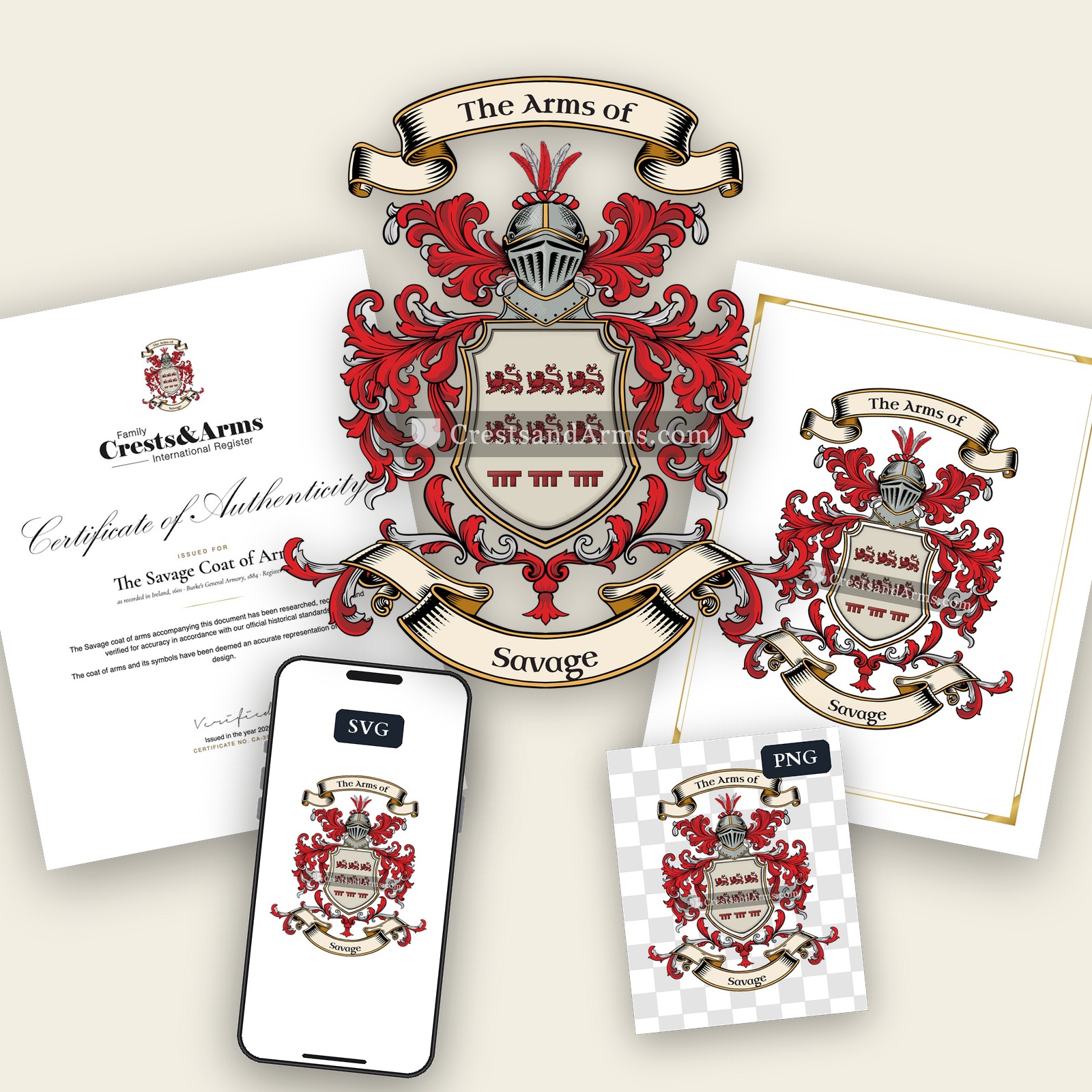
Sir Bernard Burke, The General Armory of England, Scotland, Ireland and Wales, London: Harrison & Sons, 1884
Blazon (the actual original written record)“Ar. six lions ramp. three, two, and one, a label of three points gu”

The Savage arms were recorded in Ireland, c. 1601.
Arms such as these were typically recorded in Dublin.
Dublin was the seat of government in Ireland and the place where grants were sought and recorded. Families with business at the castle or the courts settled nearby, and settling there put their arms on record.
This is where the arms were entered in the register. Families often moved to other parts of the country, so the same name can turn up in more than one region.
The Ulster King of Arms granted coats of arms to individuals who proved their social standing and good character. These symbols were typically inherited by all legitimate descendants of the original holder. If a family branch wanted a unique look, they could apply for a specific change to their design through the office to ensure their identity remained distinct.
The history of the Savage family in Ireland is deeply connected to the Anglo-Norman expansion that began in the late twelfth century. While the name originated from the Old French word *sauvage*, meaning wild or untamed, the family established themselves as significant landowners and political figures shortly after arriving on the island. By the time records place members of the family in Dublin in 1601, they had already spent centuries integrating into the complex social structure of medieval Ireland. They often acted as intermediaries between the English administration and the local Gaelic lords, which allowed them to maintain influence across several generations. Their presence in the capital city during the turn of the seventeenth century reflects their transition from frontier warriors to established urban citizens who played a role in the administrative life of the country.
Latin term meaning of the woods or wild.