A record of documented arms, meaning and origin, researched for the Savigny family lines. Documented in 2 countries.
Reg. 6749 · German, T–V
Meaning of the Savigny family crest colors & symbols
Symbols on this shield
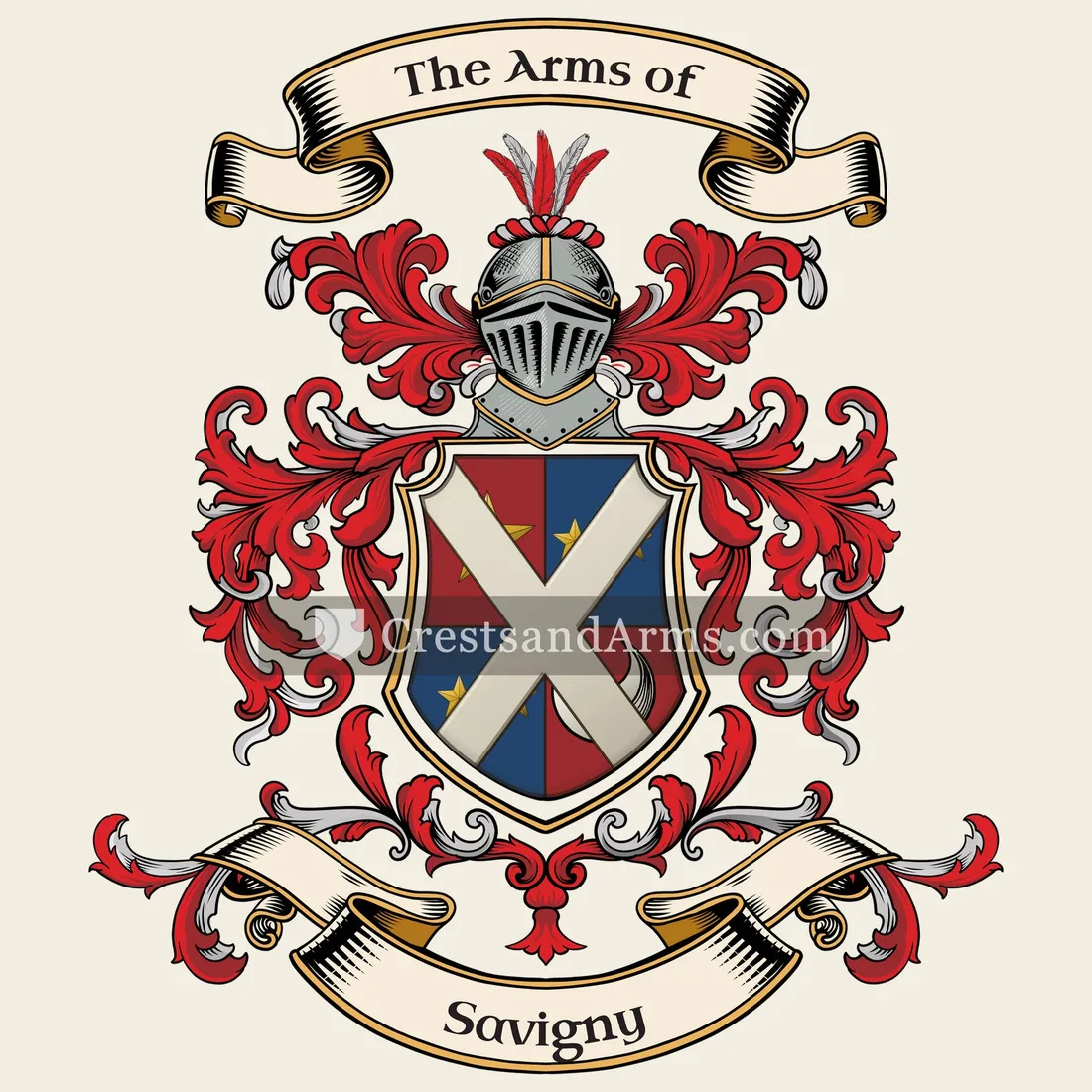
saltireResolution, and St Andrew's cross
mulletThe third son, and a divine quality from above
crescentHonour by the sovereign, and the second son
Colours
Red (Gules)Means: Military strength
Blue (Azure)Means: Loyalty and truth
Silver (Argent)Means: Peace and sincerity
Gold (Or)Means: Generosity
Historical info
Source
J. B. Rietstap, Armorial Général, Gouda: G. B. van Goor Zonen, 1884–87
Blazon (the actual original written record)
“Ec. en saut.: en chef de gu. à une étoile (5) d'or; en flancs d'azur, ch. à dextre et à sen. d'une étoile (5) d'or; en p. de gu. à un croiss. figuré d'arg. Au saut. d'arg., br. sur le tout. [Armes de Friedrich Carl von Savigny, célèbre auteur et jurisconsulte, ministre de la justice en Prusse, 1812-48.]”
Germanyc. 1765
Digital archive packCoat of arms PNG, gold border print PDF, vector SVG and the certificate of authenticity. Sent to your email in minutes.
Map of Germany showing where the Savigny arms are recorded
The Savigny arms were recorded in Germany, c. 1765.
Arms such as these were typically recorded in Bavaria.
Bavaria was a country of old landed families and walled market towns. Estates passed down the same line for centuries, and both the landowners and the leading townsmen kept arms, which is why so many Bavarian names sit in the registers.
This is where the arms were entered in the register. Families often moved to other parts of the country, so the same name can turn up in more than one region.
The body that granted and recorded arms in Germany in this period.
Francis I, Holy Roman Emperor
Sovereign of the period
Francis I, Holy Roman Emperor
1745–1765
Reigning in Germany when the Savigny arms are first recorded.
How Arms Worked in Germany
In the Holy Roman Empire, coats of arms were often granted to individuals by the Emperor or his representatives. These arms were then passed down through the generations to all legitimate descendants of the original holder. Younger branches of a family usually kept the same shield design without needing to change it, as the arms belonged to the entire lineage.
Granting authority
The Holy Roman Emperor held the sole power to grant new coats of arms throughout his vast imperial territories.
How they got arms
Families typically obtained their coats of arms through a formal imperial grant or by proving their noble status to the authorities.
Where arms were recorded
These grants were officially recorded in the Imperial Chancery registers, which began keeping formal records of such honors during the Middle Ages.
The family's standing
Recorded among the armigerous families of Germany.
Origin & History of the Savigny Family in Germany
The name Savigny carries a rich history that reflects the movement of families across European borders. While the name is often associated with French origins, the family established a notable presence in Bavaria by the middle of the eighteenth century. Records confirm that members of the family were living in the region by 1765, where they became integrated into the local social and professional landscape. During this era, the family name was carried by individuals who participated in the intellectual and administrative life of the German states. As the family settled into their new environment, they maintained their identity while adapting to the customs and traditions of their Bavarian home. This transition highlights how families moved across borders to seek new opportunities during a time of significant political and social change in Central Europe.
Meaning of the Savigny family crest colors & symbols
Symbols on this shield
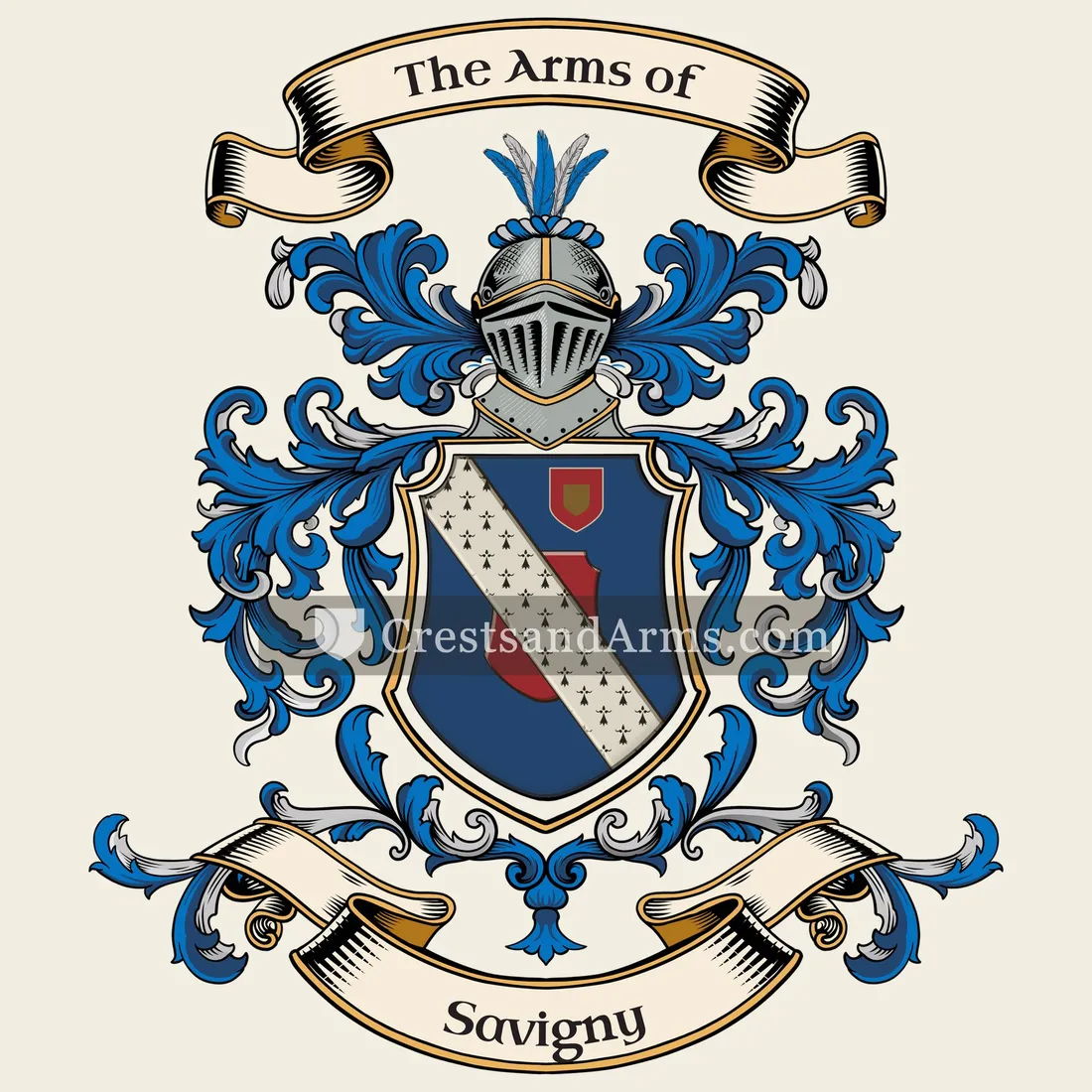
bendDefence, and the scarf of a commander
escutcheonA shield within a shield, and a claim inherited
Colours
Blue (Azure)Means: Loyalty and truth
Red (Gules)Means: Military strength
ErmineMeans: Dignity
Historical info
Source
J. B. Rietstap, Armorial Général, Gouda: G. B. van Goor Zonen, 1884–87
Blazon (the actual original written record)
“Gironné d'azur et d'or, de douze pièces; à un écusson de gu., br. en abime et ch. d'une bande d'herm.”
ChampagneChampagne, c. 1663
Digital archive packCoat of arms PNG, gold border print PDF, vector SVG and the certificate of authenticity. Sent to your email in minutes.
Map of France showing where the Savigny arms are recorded
The Savigny arms were recorded in Champagne, c. 1663.
Champagne made its money at its great trade fairs, where merchants from across Europe met. Wealth of that kind bought land, and land brought arms, so the region carries a lot of names.
This is where the arms were entered in the register. Families often moved to other parts of the country, so the same name can turn up in more than one region.
The body that granted and recorded arms in France in this period.
Louis XIV of France
Sovereign of the period
Louis XIV of France
1643–1715
Reigning in Germany when the Savigny arms are first recorded.
How Arms Worked in France
In France, a coat of arms was a mark of honor that passed down through the male line to all legitimate descendants. Families often used the same shield without changes to show their shared heritage. If a branch wanted to stand out, they could add a small mark to their shield to show their specific place in the family tree.
Granting authority
The Juge d'armes de France acted as the official authority that regulated and verified coats of arms across the country.
How they got arms
Families typically inherited their arms from ancestors, though they could also receive them through royal grants or by proving their noble status.
Where arms were recorded
Coats of arms were officially recorded in the Armorial Général de France, which began its main collection in the year 1696.
The family's standing
Recorded among the armigerous families of Champagne.
Origin & History of the Savigny Family in France
The family name Savigny is a locative surname, which means it originated from people who lived in or owned land in a place called Savigny. In France, there are several towns with this name, and the family likely took it to identify their geographic roots. By 1663, records confirm that members of the family were well-established in the Champagne region. During this period, Champagne was a vital area for trade and agriculture, and families living there often held positions of local importance or managed significant estates. The name reflects a deep connection to the French landscape, as families during the seventeenth century were frequently identified by the specific villages or provinces where they held property and conducted their daily affairs.
Savigny Meaning & Related Branches
Root word
Sabinius
Derived from the ancient Italic tribe known as the Sabines.
This name
SavignyA habitational name referring to someone from a place named after the Sabine people.
also spelled
Savignie
Saviny
Related arms
Ellersimilar arms
Documented Sources
J. B. Rietstap, Armorial Général, Gouda: G. B. van Goor Zonen, 1884–87
Stintzing, Roderich von, Friedrich Carl von Savigny: Sein Leben und sein Wirken, 1862


 saltireResolution, and St Andrew's cross
 mulletThe third son, and a divine quality from above
 crescentHonour by the sovereign, and the second son
 saltireResolution, and St Andrew's cross
 mulletThe third son, and a divine quality from above
 crescentHonour by the sovereign, and the second son


 bendDefence, and the scarf of a commander
 escutcheonA shield within a shield, and a claim inherited